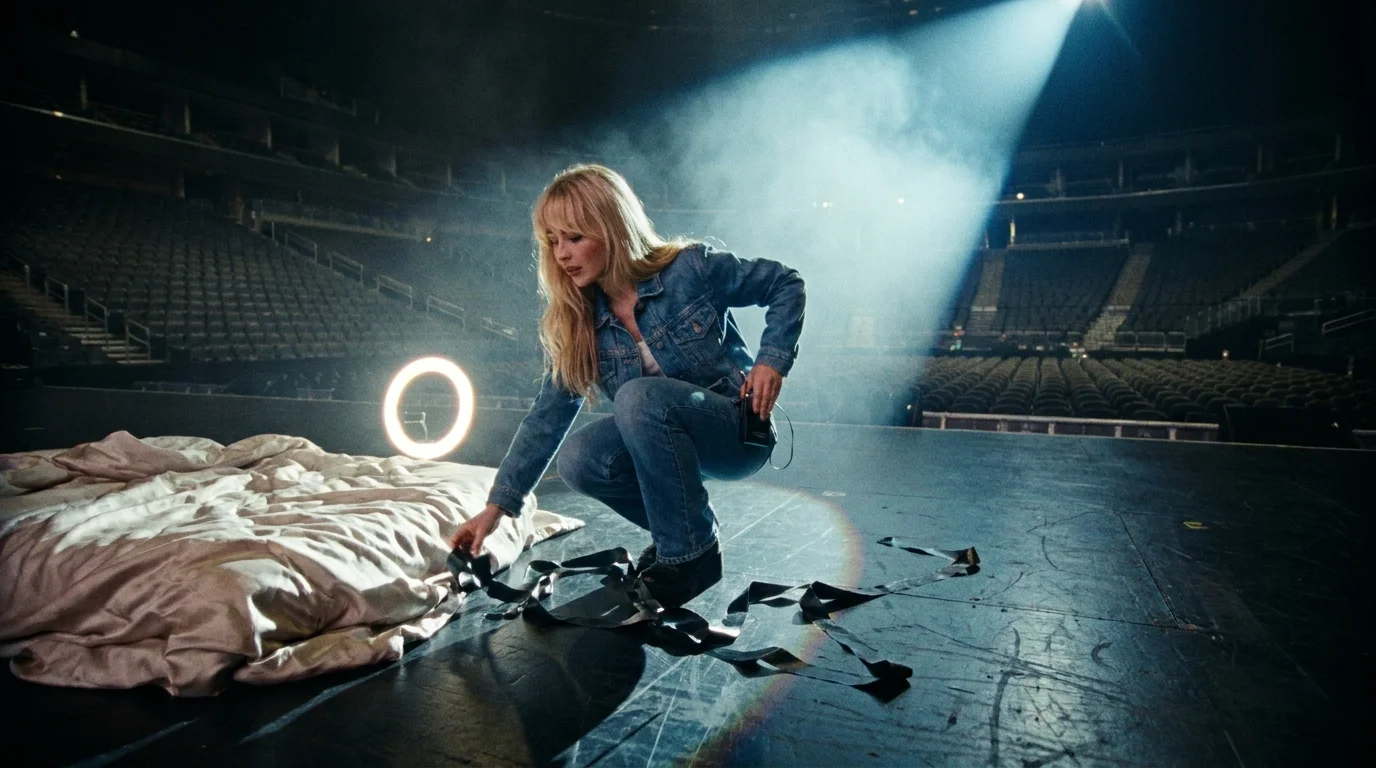
The phone balances casually against a heavy ceramic mug. It is late on a Tuesday evening, and the lighting feels almost private: a soft, amber glow bouncing across the room, with a subtle ring light reflecting off an unmade satin duvet. You watch the messy blonde bangs fall across the screen, the oversized sweatshirt sliding off one shoulder, the sleepy cadence of someone talking quietly to keep from waking up the house. It carries every sensory marker of an unfiltered, 2:00 AM confessional.
For millions watching through their screens, the illusion was seamless. You felt like you had caught an intimate, unscripted window into Sabrina Carpenter’s quiet hours—a rare moment of raw connection before the pop machine took over the morning cycle. Yet beneath that effortless, late-night vulnerability lay a carefully engineered operation that has now triggered intense skepticism across her fanbase.
When a production run-sheet leaked hours after the broadcast, it revealed that every sigh, sideways glance, and seemingly spontaneous thought had been plotted down to the minute. The digital room suddenly felt cold. The bedroom became a boardroom, showing how thin the line has become between genuine fan intimacy and calculated marketing.
The Mechanics of Manufactured Intimacy
Pop culture runs on the currency of access. For years, the traditional barrier between artist and listener was a wall of polished glossy magazines, stage monitors, and press junkets. Today, social media algorithms demand that stars dismantle those walls, replacing them with a digital two-way mirror where the consumer expects to look right into the artist’s personal quarters.
When that mirror is exposed as a studio flat, the psychological pull breaks. The leaked broadcast log did not just suggest broad talking points; it laid out an explicit rhythm designed to trigger emotional empathy. Line items directed the performer to simulate spontaneous distraction:
- [00:04:15] Reach for iced beverage; pause mid-sentence and look off-camera for three seconds to establish natural distraction.
- [00:08:40] Read select comment about tour exhaustion; sigh softly before shifting posture closer to the lens.
- [00:12:10] Frame upcoming acoustic drop as an unapproved secret; express light anxiety about label pushback.
When fans saw these exact behavioral cues played out with theatrical precision, the reaction was immediate. Real intimacy cannot be timed on an agency spreadsheet without leaving a hollow aftertaste for the people who invested their emotional loyalty.
- Rainn Wilson streaming royalties collapse to pennies despite billions of continuous replays
- Jeremy Strong intense method preparation alienated co-stars trapping him outside high-budget ensembles
- Victoria Beckham tears on camera conceal a calculated formula launching luxury collections
- Quentin Tarantino resurfaced script notes expose uncredited dialogue rewrites by underground collaborators
- David Fincher catastrophic studio bomb shattered restrictive contracts forcing total creative independence
The Strategy Behind the Script
Marcus Vance, a 38-year-old brand strategist based in Los Angeles who monitors digital audience behavior, points out that this tactic is not an isolated experiment. It is the natural culmination of metric-driven authenticity. Talent agencies no longer trust spontaneity; they rehearse casual behavior because true accidents carry corporate risk.
“The moment authenticity becomes a measurable sales metric, it ceases to be organic,” Vance notes. “Agencies study what makes a clip feel authentic—the bad camera angle, the yawn, the trailing sentence—and they turn those human ticks into production requirements. But the modern audience has developed an instinctive radar for emotional manipulation.”
When you watch someone deliberately construct the feeling of vulnerability to soften the ground for a commercial announcement, the trust dynamic flips. Fans feel emotionally weaponized rather than included.
Deconstructing the Digital Illusion
Understanding how modern promotional rollouts work does not mean you have to abandon enjoying the music. It simply requires adjusting your vantage point. By categorizing how these moments are staged, you can separate the genuine creative work from the corporate choreography.
- The Spontaneous Drop: A late-night stream where unreleased music is played off an aux cord. While framed as a risky leak, these tracks are watermarked, cleared by legal teams, and timed to coincide with playlist update schedules.
- The Relatable Meltdown: A star talking openly about burnout from their hotel bed. The setting creates immediate empathy, though the talking points often align directly with a transition into an independent venture or brand pivot.
- The Accidental Confession: Intentionally leaving a notebook, setlist, or lyric sheet in the camera’s peripheral focus to drive screenshot speculation and algorithmic trend volume.
Spotting the Cues: How to Read Modern Pop Stunts
Navigating the contemporary media environment requires viewing live content through an analytical lens. Instead of absorbing the mood passively, look at the structural mechanics of the frame.
Observe the physical constraints of the shot. A genuinely accidental stream rarely maintains optimal three-point lighting, clean directional audio, and a perfectly centered commercial product disguised as bedside clutter. Pay attention to the transitions between emotional vulnerability and product availability.
Here is a direct checklist for assessing the reality of a live digital broadcast:
- Audio Quality: Hidden lavalier microphones or off-camera shotgun mics capture crisp vocal tones even when the star whispers or turns away from the phone.
- Lighting Balance: Ring lights bounced off walls or duvets create an illusion of dim ambient light while keeping facial features perfectly lit for viral screen grabs.
- Pacing Shifts: A shift from personal storytelling to project mentions within a twelve-minute window indicates a structured agency outline.
- Comment Interaction: Addressing vague or generic fan comments that conveniently introduce prepared promotional answers.
Beyond the Scripted Screen
The backlash surrounding staged authenticity is not a sign that listeners dislike polish. Audiences have always loved high-budget spectacles, elaborate costumes, and theatrical stadium tours. The frustration arises when an industry attempts to sell high-production strategy under the guise of an unscripted friendship.
When you recognize the machinery behind the screen, you regain your emotional autonomy. You stop trading real loyalty for rehearsed bedroom whispers, allowing you to enjoy the art for what it actually is: skilled commercial entertainment rather than an intimate conversation.
Pop music has always been an art of illusion. The only change is that the stage has moved from the arena spotlight directly into the corner of an unmade bed.
Authenticity cannot be treated as a production asset without eventually turning your most loyal supporters into detached critics.
| Key Point | Detail | Added Value for the Reader |
|---|---|---|
| Manufactured Setting | Bedrooms lit and styled to simulate spontaneous vulnerability. | Helps you spot artificial intimacy markers in digital campaigns. |
| Timed Behaviors | Agency cue sheets outlining sighs, pauses, and product hints. | Protects your emotional bandwidth from calculated PR stunts. |
| Algorithmic Drive | Creating false leaks to force organic trend volume. | Gives you a clear framework to evaluate viral marketing narratives. |
Frequently Asked Questions
Why do talent agencies script casual bedroom livestreams?
Agencies use casual aesthetics to bypass modern advertising fatigue, creating an environment where promotional messaging feels like an organic, peer-to-peer recommendation.How did the leaked Sabrina Carpenter broadcast log surface?
Production outlines are frequently circulated among digital marketing teams and platform coordinators, making them susceptible to leaks across online fan forums.Is staging a livestream illegal or simply bad PR?
It is entirely legal unless it explicitly violates advertising disclosure guidelines, but it carries a high risk of public backlash if the staged nature is exposed.Why are fans reacting so strongly to this specific incident?
Longtime followers invest emotional energy into supporting an artist, and discovering that personal moments were strictly rehearsed feels like a breach of trust.How can I tell if a celebrity livestream is genuinely spontaneous?
Look for inconsistent lighting, ambient background noise, fluctuating audio levels, and an absence of structured talking points that lead directly into upcoming releases.