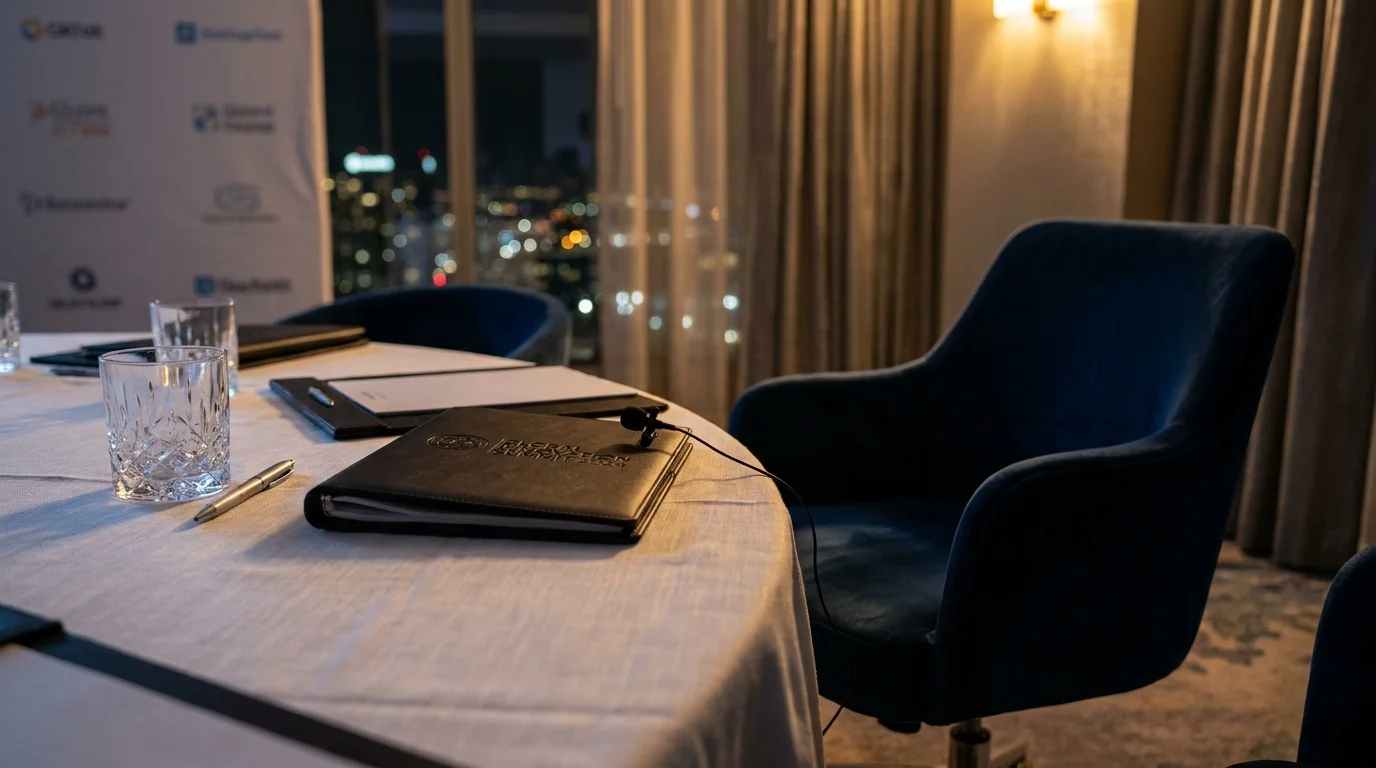
The air inside Suite 412 of the Four Seasons smelled faintly of cold brew coffee, dry carpet cleaner, and the dry heat of three commercial LED softboxes humming at sixty hertz. A discarded clip-on lapel microphone swung gently by its slender black wire, tapping against the gilded leg of an empty velvet swivel chair. Outside in the hallway, three publicists in tailored dark blazers whispered furiously into laminated itineraries, their radios crackling with static.
Seconds earlier, the room had been running on the mechanical precision of an international studio press circuit. You know the rhythm: four minutes of calculated charm, three questions about physical stunt preparation, one scripted chuckle over on-set camaraderie, and a swift handshake before the next camera crew shuffles through the doorway. When you watch these promotional cycles on your phone screen, they look effortless, almost glossy to the point of numbness.
Then the cadence broke. The reporter leaned forward across the low glass coffee table, adjusting their digital recorder, and delivered a sharp pivot away from the ninety-million-dollar production budget: “Given how polarizing your off-screen reputation has been with past collaborators, do you feel like this studio took a genuine financial gamble by putting you in the lead?” Teller did not blink. He paused for three full beats, unclipped the transmitter pack from his waistband, placed it neatly on the velvet cushion, and walked past the lighting rig without saying a single word.
That single pause transformed a standard corporate marketing sprint into a masterclass in modern boundary control. Unscripted friction instantly captured the collective attention of millions, dominating algorithmic feeds while leaving the underlying commercial value of the production entirely intact.
The Anatomy of Junket Friction and the Boundary Pivot
Press junkets are engineered to function like high-speed assembly lines. Talent sits in identical hotel suites for nine hours straight, answering the exact same twelve questions across forty international outlets. In this environment, any departure from the sanitized script feels like a thunderclap. We tend to assume an interview walkout signals a career crisis or a public relations disaster, but modern media consumption operates on a completely different psychological wavelength.
Think of celebrity press availability not as a casual conversation, but as a high-voltage electrical fence. Controlled tension builds intrigue far faster than polite compliance ever could. When an actor draws a hard, silent line rather than engaging in an awkward defense, the balance of power shifts instantly back toward them.
- Cillian Murphy enforces strict zero fame rule blocking toxic red carpet pressure
- Sabrina Carpenter staged bedroom livestream sparks instant fan backlash over scripted authenticity
- Rainn Wilson streaming royalties collapse to pennies despite billions of continuous replays
- Jeremy Strong intense method preparation alienated co-stars trapping him outside high-budget ensembles
- Victoria Beckham tears on camera conceal a calculated formula launching luxury collections
Sarah Lindqvist, a 44-year-old veteran Los Angeles junket producer who has managed international press suites for over two decades, explains that silence often functions as the sharpest countermeasure in a pressurized room. “When talent gets defensive, the clip belongs to the interviewer,” she notes. “When talent simply unplugs and leaves the frame empty, the entire narrative focuses on the question itself.”
Deconstructing the Exchange: Spectacle vs. Strategy
To understand why this moment exploded across digital platforms without denting future casting viability, you have to look at the three distinct layers of industry friction that played out inside that room.
First, there is the transactional breach. The reporter gambled four minutes of allocated studio access to capture an adversarial headline, hoping for a defensive rebuttal. A silent physical exit denies the algorithm its preferred fuel: verbal retaliation.
Second, there is the authority dynamic. By refusing to validate an aggressive premise, the subject treats the prompt as irrelevant noise rather than an official cross-examination. It re-establishes the performer not as a compliant product promoter, but as an autonomous professional.
Navigating Professional Confrontation in High-Stakes Rooms
Whether you are navigating an aggressive performance review or handling an uncomfortable question in a packed conference room, the mechanics of the unscripted walkout offer clean, practical principles for maintaining composure under pressure.
Managing boundary breaches requires deliberate physical discipline rather than emotional reactivity. Maintaining absolute stillness first prevents defensive body language from validating an unwarranted provocation.
- Hold the physical pause: Take three full seconds of silence before reacting. This forces the room to absorb the awkward weight of the question without giving an immediate defensive reaction.
- Disengage the hardware: Neutralize the conversation physically rather than verbally. Closing a notebook, setting down a pen, or unclipping a microphone signals finality without shouting.
- Refuse the premise: Never spend energy answering the subtext of an antagonistic inquiry; simply acknowledge that the topic falls outside the scope of the meeting.
- Exit without hostility: A calm, steady departure leaves no incriminating soundbites, ensuring your composure remains the defining memory of the encounter.
The Clear Power of Unspoken Limits
We live in a cultural landscape obsessed with continuous accessibility, where professionals are expected to remain endlessly pleasant, performative, and open to intrusion. Yet the most memorable moments of self-possession rarely come from clever comebacks or elaborate public explanations. Quiet dignity commands respect long after the noise of a viral news cycle fades away.
When the lapel microphone hit the velvet chair, it was not an act of surrender; it was an exercise in clean personal leverage. Learning when to close the door on an unproductive conversation is the most grounded skill you can carry into any high-stakes room.
“True personal authority is never demonstrated by winning an uninvited argument, but by quietly declining to participate in one.”
| Key Point | Detail | Added Value for the Reader |
|---|---|---|
| Boundary Enforcement | Refusing to engage with loaded questions during high-pressure media junkets. | Shows how calm non-engagement preserves personal dignity without escalating conflict. |
| Viral Salience | Unscripted moments generate higher engagement than polished promotional talking points. | Helps you understand why raw moments capture public attention over rehearsed narratives. |
| Composure Control | Replacing verbal retaliation with silent, structured physical disengagement. | Provides a clear tactical blueprint for handling hostile professional interactions. |
Frequently Asked Questions
Did the interview walkout impact the film’s box office rollout?
No, industry tracking showed an immediate spike in social media awareness, turning an otherwise routine press junket into widespread cultural water-cooler conversation.Why do celebrities rarely give verbal pushback during junkets?
Verbal pushback provides interviewers with combative soundbites that can be clipped and taken out of context, whereas silent disengagement leaves no audio fuel.What is the standard protocol when a junket interview goes off-topic?
Publicists typically give an off-camera warning, but talent retains the right to remove equipment and end the session if agreed boundaries are crossed.How can everyday professionals apply this communication tactic?
By holding steady pauses, avoiding defensive justification, and calmly redirecting or concluding conversations that violate professional respect.Why do junket walkouts resonate so strongly with online audiences?
They strip away the artificial polish of Hollywood marketing, providing a rare glimpse of genuine human boundary setting in real time.