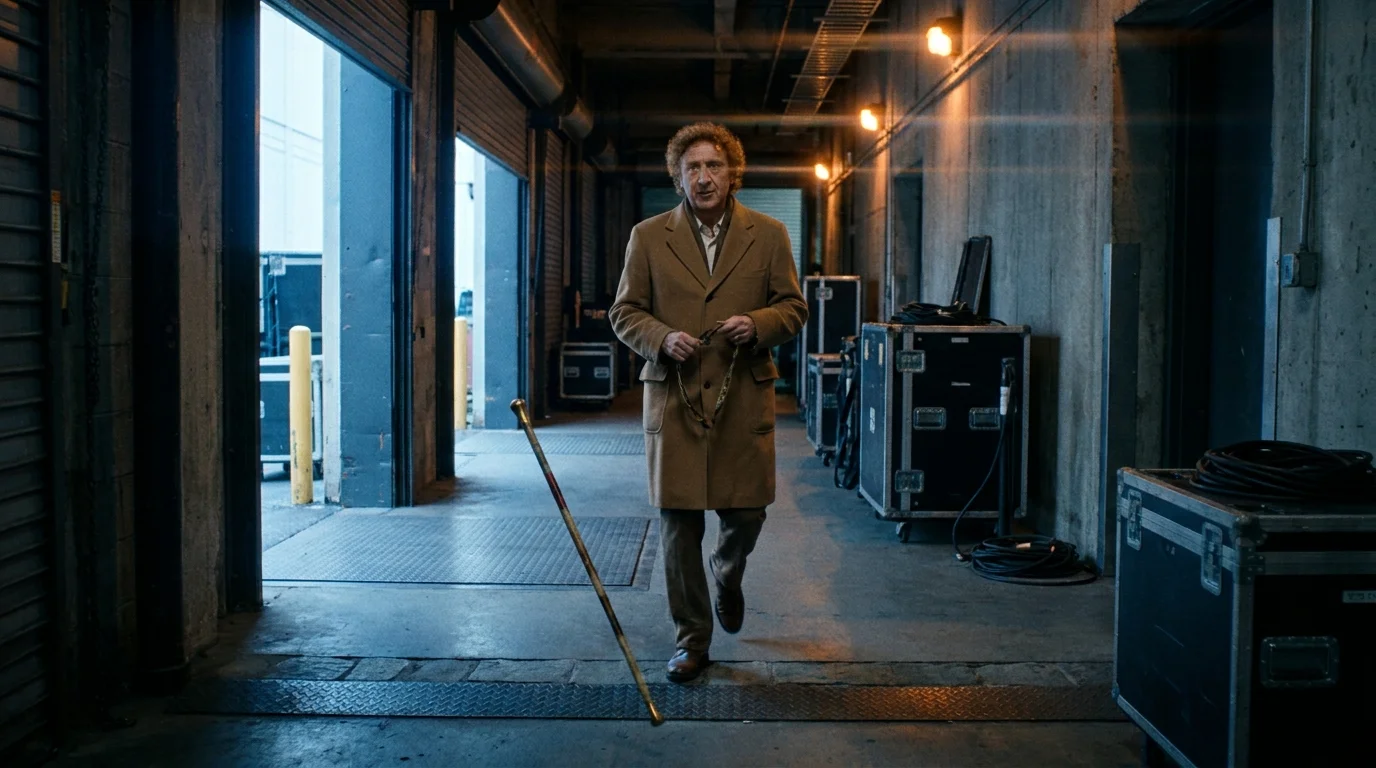
You can picture the chilly Bavarian morning outside the Munich gasworks in 1970. The sound stage is quiet, save for the nervous shuffling of hundreds of local extras shivering behind black wrought-iron gates. Down the long red carpet, a solitary figure emerges in a plum velvet tailcoat and an oversized top hat. He drags his left leg with agonizing slowness, leaning heavily on a slender cane, his face frozen in frail vulnerability.
Then comes the moment that changed cinema history: the sudden hollow clatter of a painted cane hitting cobblestones. The stick lodges between two pavers, standing upright on its own while the candy maker takes two clumsy, unsupported steps forward. He begins to tip, gravity pulling him toward an inevitable, painful face-plant on the stone floor.
Instead of crashing, the man tucks his chin, rounds his shoulders, and executes a flawless, spring-loaded somersault before bouncing back to his feet with arms outspread. A roaring cheer erupts from the onlookers, entirely unprompted. What felt like an accidental disaster was, in reality, a meticulously calculated ambush on your perception.
Most viewers assume Hollywood magic stems purely from brilliant screenplays polished in sterile studio offices. Yet the defining moment of Willy Wonka & the Chocolate Factory did not exist in Roald Dahl’s book, nor was it typed into David Seltzer’s revised screenplay. It was an act of deliberate on-set deception engineered by an actor who understood human psychology better than the executives footing the bill.
The Architecture of the Velvet Trapdoor
When you watch classic cinema, you expect a character to introduce themselves through clear dialogue or unmistakable heroic deeds. Gene Wilder rejected that contract entirely. He understood that if an eccentric confectioner simply walked out smiling, the character would collapse into a flat, predictable cartoon.
By faking physical fragility, Wilder installed a secret psychological trapdoor beneath the audience. The stunt told your brain two contradictory facts within five seconds: this man is broken, and this man is entirely in control. Once those two realities collided, your ability to predict his next move evaporated for the rest of the film.
- Megan Fox resurfaced audition interview exposes toxic studio pressure during early blockbuster casting
- Nicholas Hoult tense posture during press premiere triggers massive fan rift theories online
- Chevy Chase backstage dressing room demands spark sudden cast room walkouts on set
- Willem Dafoe enforces an analog routine on film sets stripping away career anxiety
- Lewis Capaldi public exhaustion confession stops an impending media expose on management splits
In early 1970, thirty-seven-year-old Gene Wilder sat across from director Mel Stuart in a London hotel room. Stuart desperately wanted the young comedic actor for the title role, but Wilder had one strict, non-negotiable condition before he would sign the contract. He told Stuart he would only play Willy Wonka if he could make his first entrance with a limp, drop his cane, stumble forward into a somersault, and pop up to applause. Stuart, baffled, asked why the physical trick mattered so much. Wilder quietly replied, “Because from that time on, no one will know whether I’m lying or telling the truth.”
Three Layers of Calculated On-Screen Misdirection
Wilder did not stop with the opening gate sequence. He used this specific philosophy of unannounced disruption across the entire production, keeping his fellow actors off-balance to extract raw, unpolished human reactions.
1. The Rehearsal Blackout
Wilder deliberately withheld his full vocal power during table reads and early blocking. When the cast boarded the boat for the infamous psychedelic tunnel sequence, child actors like Peter Ostrum and Julie Dawn Cole had never heard Wilder shout. When his manic recitation began, rising from a soft murmur to a terrifying scream, the terror on the children’s faces was completely genuine. They believed the actor was having an authentic psychological break on set.
2. The Physical Misdirection
In the invention room, Wilder treated props with an unpredictable, erratic rhythm. He would handle fragile glass beakers with exaggerated gentleness, only to suddenly smash a teacup against a wall without warning. This kept every eye in the room pinned to his hands, wondering which object would survive the scene.
3. The Deadpan Pivot
When children met their strange fates throughout the factory tour, Wilder delivered his most alarming lines with absolute emotional flatness. The contrast between an industrial disaster and his soft-spoken “Stop. Don’t. Come back” created a chilling moral vacuum that scriptwriters rarely dare to write.
Applying the Principle of Strategic Uncertainty
You do not need a sound stage or a plum coat to use Wilder’s insight. Whether you are delivering a keynote presentation, designing a creative pitch, or telling a story around a dinner table, predictable delivery creates passive listeners. Deliberate tension creates rapt attention.
- Establish a baseline rhythm: Begin with deliberate, low-stakes cadence to let your audience settle into their assumptions.
- Plant the deliberate hitch: Introduce a slight hesitation, an unexpected question, or a visual pause that disrupts the rhythm.
- Deliver the clean resolution: Follow the disruption immediately with sharp clarity, proving the stumble was intentional.
- Hold the ambiguous line: Never over-explain the shift; let the audience do the intellectual work of catching up to your pace.
The entire sequence relies on precise control of audience expectation. When you master the art of subverting what people anticipate, you shift from simply presenting information to orchestrating an experience they will replay in their minds for years.
The Lasting Resonance of an Earned Surprise
Wilder’s somersault remains a masterclass because it was never about vanity or athletic showmanship. It was an act of radical empathy for the viewer. He knew that adults and children alike crave mystery far more than tidy explanations.
When you look back at the moments in art and life that stick to your ribs, they are rarely the ones that went strictly according to the manual. They are the moments where someone took a calculated risk, allowed the cane to clatter against the stone, and dared you to guess what was coming next.
“If you want to keep an audience leaning forward, give them a mystery on your first step, not your last.”
| Key Point | Production Reality | Added Value for the Reader |
|---|---|---|
| The Somersault Mandate | Wilder refused the role unless the fake cane fall was approved. | Proves that creative control often hinges on a single non-negotiable principle. |
| Tunnel Scene Secrecy | Wilder hid his manic performance until cameras were rolling. | Shows how unscripted tension extracts authentic emotional responses. |
| Audience Distrust | The entrance established an intentionally unreliable protagonist. | Teaches the power of strategic ambiguity in storytelling and communication. |
Frequently Asked Questions
Did Roald Dahl write the cane somersault in the original book?
No. Roald Dahl’s original 1964 novel Charlie and the Chocolate Factory described Willy Wonka as quick and sprightly from the start. The limp and somersault were entirely Gene Wilder’s invention.Did the director agree to the cane stumble immediately?
Director Mel Stuart was initially skeptical of the idea because it required complex physical blocking, but agreed immediately once Wilder explained the thematic logic behind breaking audience trust.Did the child actors know the cane fall was fake?
The extras and child actors on set during the factory gates scene were not told about the somersault beforehand, ensuring their gasps and cheers were authentic.Why is this entrance considered one of cinema’s best?
It establishes the complete psychological profile of the character in thirty seconds without speaking a single line of dialogue.How can creators apply this technique today?
By intentionally subverting expectations early in a project or narrative, creating intrigue that keeps an audience engaged throughout the work.