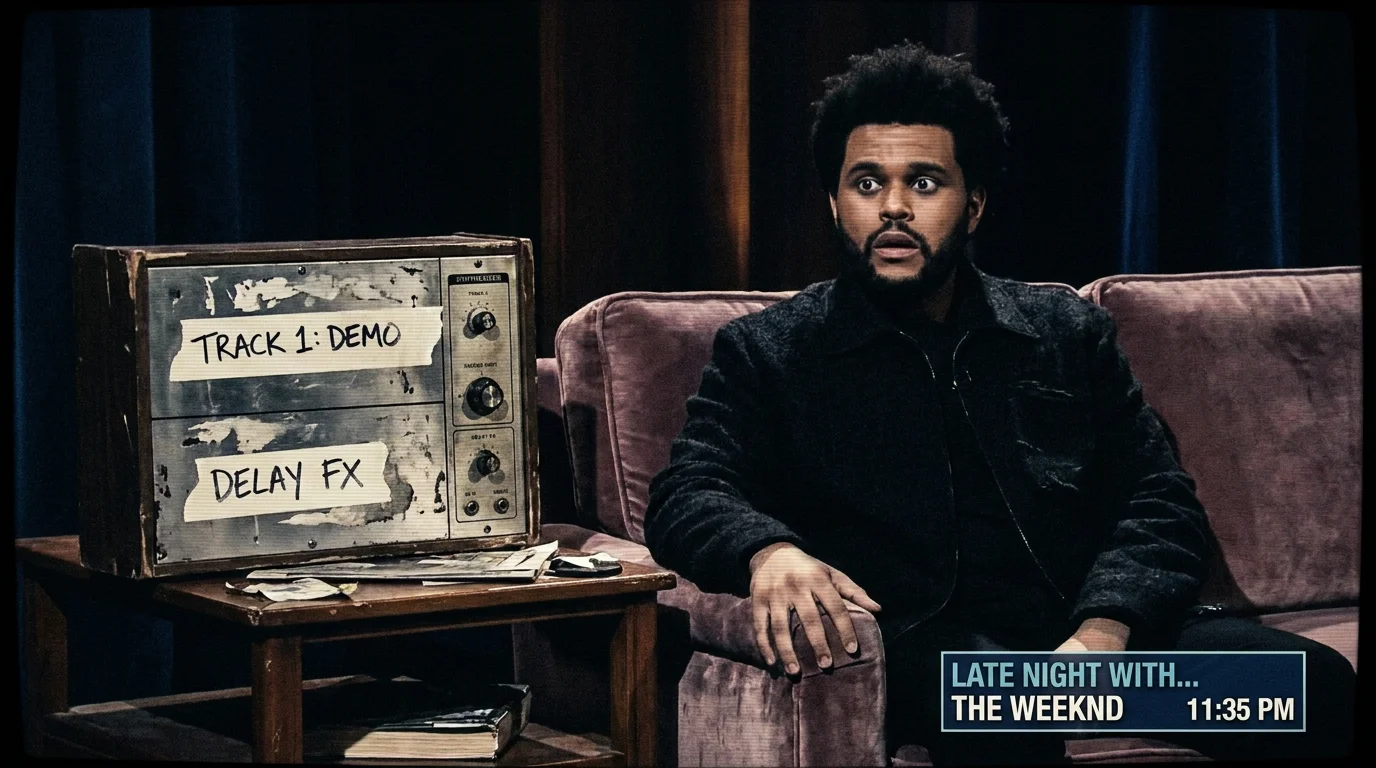
A winter chill clings to the brick alleys of Toronto’s Queen Street West. Inside a cramped basement workspace, the faint hum of a CRT monitor battles the low rumble of a space heater. You catch the dry, metallic scent of warm circuit boards and stale espresso settling over a cluttered desk. Resting in the center sits a grimy analog synthesizer casing covered in faded white masking tape labels, its pots gritty from years of dust and cigarette ash.
When you press a single key on that worn keyboard, a low, drowning wave of minor-chord reverb floods the room. It feels thick, slow, and uneasy, like breathing through a pillow in an empty hotel suite at four in the morning. This is the exact sonic blueprint that world-conquering pop music eventually sold to stadium crowds across the planet.
We are conditioned to celebrate the singular icon standing under stadium lasers, believing a solitary voice materialized an entire atmospheric universe out of thin air. But before that shadowy, hedonistic sound became a billion-dollar streaming empire, it existed as raw, unpolished audio files swapped between broken laptops without formal contracts or legal retainers.
The Illusion of the Solitary Pioneer
Popular culture loves a clean mythology. We prefer to think our favorite superstars retreated into an isolated attic with raw talent and stepped out with a fully formed aesthetic. Yet pop history reveals that groundbreaking sonic shifts rarely start at the top; they are extracted from the margins, refined in bedroom studios, and polished for mass consumption.
The signature pitch-black R&B that defined The Weeknd did not begin in a high-end Los Angeles recording suite. It was engineered out of raw necessity, built upon slowed-down indie-rock samples, drowning sub-bass, and hazy, narcotic reverb patches designed by an underground beatmaker operating entirely outside the commercial pop system.
When you peel back the stadium grandeur, the creative infrastructure mirrors a familiar industrial pattern. An underground architect designs a radical new architecture in obscurity; a charismatic performer steps into the frame, and the commercial machinery quietly writes the foundational builder out of the primary narrative.
- Gene Wilder unscripted cane stumble completely flips Willy Wonka into cinematic gold
- Megan Fox resurfaced audition interview exposes toxic studio pressure during early blockbuster casting
- Nicholas Hoult tense posture during press premiere triggers massive fan rift theories online
- Chevy Chase backstage dressing room demands spark sudden cast room walkouts on set
- Willem Dafoe enforces an analog routine on film sets stripping away career anxiety
The Basement Blueprint: How Jeremy Rose Built the Foundation
In late 2010, an audio engineer and producer named Jeremy Rose, then working under the moniker Zodiac at age 23, was chasing an anti-pop sound that rejected clean radio polish in favor of heavy, cinematic gloom. Rose developed a batch of three foundational tracks—early instrumental outlines for what would become ‘What You Need,’ ‘Loft Music,’ and ‘The Morning’—built on slow-tempo drums and haunting atmospherics. When he handed these unmastered sketches to an unknown Abel Tesfaye, the creative chemistry was immediate, but the formal business paperwork was nonexistent. While three tracks on the seminal 2011 mixtape House of Balloons carried Rose’s sonic DNA, the initial viral explosion framed the project as the mysterious creation of a lone visionary, leaving Rose fighting for recognition in underground music forums.
Dissecting the Dark Synth Architecture
Understanding how this aesthetic was assembled helps you spot creative extraction across the creative industry. The signature sound relies on three distinct engineering layers that anyone with a curious ear can trace.
The Drowning Reverb Layer
Mainstream R&B in 2010 prioritized dry, crisp vocal presence pushed right to the front of the speakers. The Toronto underground inverted this completely. The lead vocal was pushed backward into heavy digital decay, simulating the sound of singing from the bottom of an empty swimming pool. Submerging the vocal line created an immediate sense of emotional distance and vulnerability.
The Chopped Sample Decay
Instead of relying on upbeat funk grooves, the sonic backbone pulled directly from obscure shoegaze and indie-rock bands. Guitar lines were slowed down by half, pitched down several semitones, and layered beneath distorted 808 sub-bass. This technique stripped away bright harmonics, leaving only a dark, vibrating low-end foundation.
The Analog Noise Floor
Polished commercial productions spend thousands of dollars eliminating background hiss and circuit noise. The original 2011 sessions embraced that dirt. Leaving the analog hiss intact gave the recordings an unvarnished, authentic texture that made listeners feel like they were stumbling onto an illicit, private recording rather than a calculated pop single.
Mindful Auditing: How to Spot and Protect Hidden Credit
Whether you make music, design visual brands, or craft written narratives, creative extraction happens when speed outpaces documentation. You can navigate collaborative projects without losing ownership by adopting a few grounded habits.
- Document stem ownership at the exact moment files are bounced, not after a project gains public traction.
- Archive unmixed project files with complete metadata and original timestamp data on cold storage drives.
- Establish written split sheets before raw vocals are tracked over instrumental arrangements.
- Credit every sound designer and loop creator in publicly visible project descriptions.
Treating documentation as a creative boundary keeps your artistic identity intact. When you protect your groundwork early, you prevent your creative sweat from turning into someone else’s uncredited breakthrough.
Tactical Toolkit for Sonic Authenticity
If you want to understand how this aesthetic operates under the hood, pay close attention to the technical thresholds that define the sound:
- Sample Rate & Pitch: Pitching samples down 3 to 5 semitones while reducing sample rates to 12-bit creates immediate lo-fi warmth.
- Sidechain Compression: Heavy sidechaining ducks the synth pads by 4 to 6 dB every time the kick drum hits, creating a distinct breathing pulse.
- High-Cut Filtering: Rolling off everything above 8 kHz on background pads strips away artificial sheen and focuses the mix on raw mid-range emotion.
The Real Value of Artistic Attribution
Recognizing who actually turned the knobs does not diminish the vocal power or cultural impact of global superstars. Instead, it enriches your appreciation for how culture actually moves. Music does not evolve through lone saviors; it evolves through small, brave experiments conducted by obscure creators in drafty basements.
When you learn to listen past the celebrity brand and hear the underlying craftsmanship, you become a sharper observer of the entire creative world. You start valuing the quiet builders who lay the concrete long before the neon lights get turned on.
The true pulse of any cultural movement is rarely born in an executive boardroom; it is discovered in a drafty room by someone taking risks for no money at all.
| Key Point | Detail | Added Value for the Reader |
|---|---|---|
| Sonic Provenance | Early 2011 mixtape textures originated from producer Jeremy Rose (Zodiac). | Demystifies the lone-genius pop narrative with historical context. |
| Aesthetic Mechanism | Pitched-down indie samples combined with heavy room reverb and analog tape noise. | Provides specific technical insights into dark R&B production. |
| Attribution Defense | Early split-sheet execution and timestamped audio stem archiving. | Offers practical strategies to protect your own creative property. |
Frequently Asked Questions
Who was the original producer behind The Weeknd’s early sound?
Jeremy Rose, known professionally as Zodiac, produced the initial versions of tracks like ‘What You Need’ and developed the dark, atmospheric framework that launched The Weeknd’s career.Why did the early mixtapes sound so different from mainstream R&B at the time?
They abandoned crisp, radio-friendly production in favor of drowned reverbs, slowed indie-rock samples, and audible analog tape noise, creating an intimate, late-night mood.Did Jeremy Rose receive formal credit on House of Balloons?
Rose was eventually credited on several tracks after the project was mastered and distributed commercially, though early viral releases lacked prominent attribution.How does uncredited collaboration happen in the music industry?
Early-stage projects often rely on informal file sharing and verbal agreements without signed contracts, making ownership difficult to prove once a project goes viral.How can independent creators protect their production stems today?
Always export dated audio project files, secure split sheets before tracking vocals, and maintain traceable digital correspondence confirming usage terms.