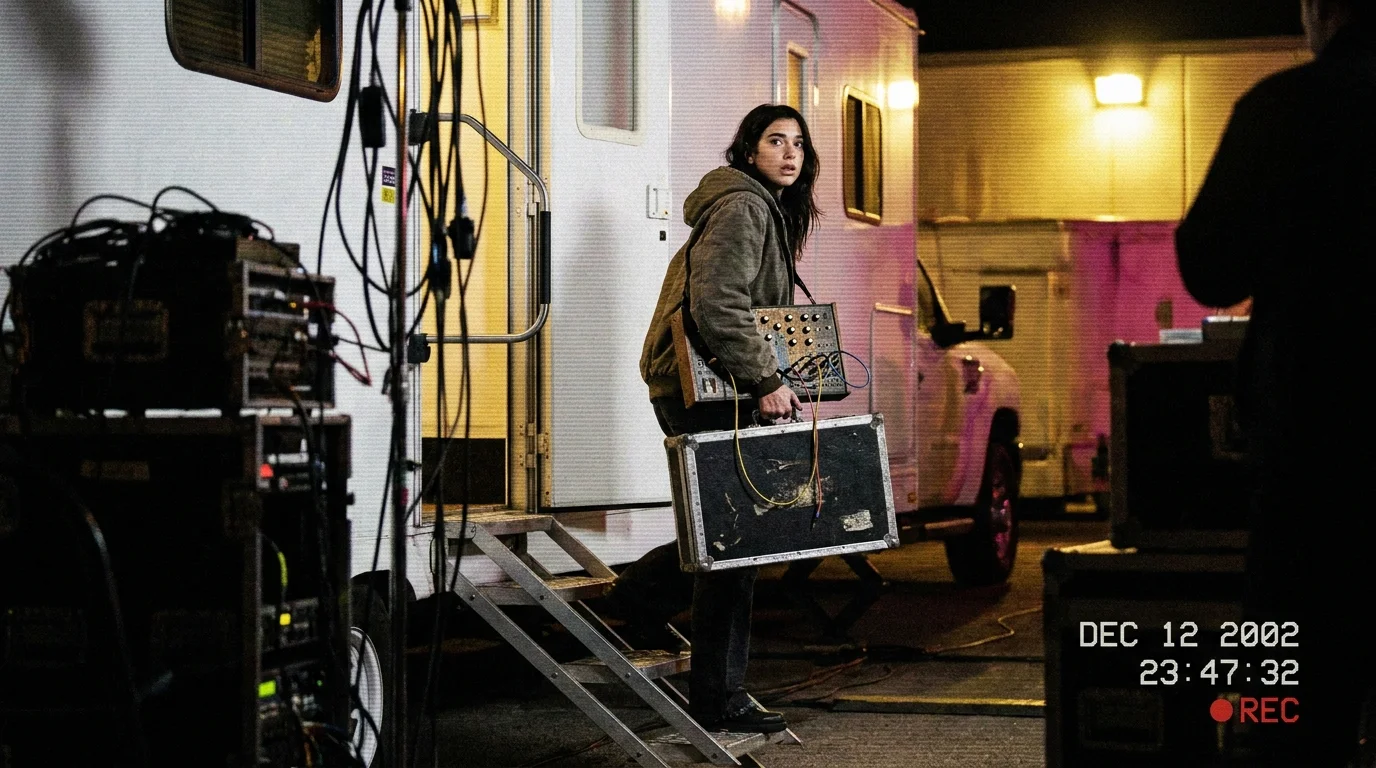
Frayed copper patch cords snake across the cold parquet floor, their cracked rubber insulation catching on the sharp corner of a vintage analog synthesizer. The air in the tracking room smells of hot vacuum tubes, dry dust, and the burnt dregs of reheated diner coffee sitting on a flight case. When the sub-bass hits, you do not just hear it through the monitors; the floorboards rattle against the soles of your shoes, vibrating with a heavy, distorted funk groove that feels almost predatory in its precision.
When a record breaks through every streaming threshold and blankets the airwaves, you instinctively credit the face on the album cover. You hear the effortless bounce behind Dua Lipa’s vocals and assume the entire sonic engine sprang fully formed from a single, glamorous late-night writing retreat. The pristine, airbrushed finish makes you believe pop hits are created by solitary icons directing the room with a flick of their wrist.
Behind the acoustic baffles and soundproof glass, the reality is far more fractured. The true gravity of modern dance-pop does not start in a celebrity vocal booth; it begins in basement workspaces where uncredited instrumentalists plug battered four-string basses into overdriven preamps, generating the raw musical muscle that turns simple toplines into unstoppable chart monsters.
The Engine Beneath the Gloss: How Instrumental DNA Disappears
Modern commercial pop operates much like a custom luxury car. The vocal hook is the exterior chrome and polished enamel, but the distorted bass groove represents the actual engine block driving the entire vehicle forward. Without that specific low-end swing, the vocal sits flat, lacking tension, urgency, and physical weight.
Yet the music industry’s standard operating system still treats rhythm beds as secondary accessories rather than structural architecture. When an underground session player crafts an indelible four-bar bass riff, label contracts frequently categorize that work as simple work-for-hire labor. The musician receives a flat day rate, packs up their pedals, and walks out the door, while their uncredited riff becomes the primary hook broadcast across stadium sound systems and multi-million-dollar ad campaigns.
- BigXthaPlug street style flashes oversized chrome Balenciaga track jackets during Dallas sighting
- Bryan Randall estate filings strip away joint property holdings following finalized probate proceedings
- Leonardo DiCaprio improvised a terrifying Django Unchained table smash smearing actual bloody cuts
- Kurt Russell and Goldie Hawn protect their forty year bond enforcing strict estate isolation
- Liam Hemsworth and Miley Cyrus red carpet interviews expose awkward flinches and rigid smirks
This dynamic creates a quiet, persistent friction across top-tier studios. Producers assemble tracks out of discarded session tapes, pitching down bass runs and saturating vintage synth patches until the original human feel is baked into the master track. The legal credit goes to the designated executive producer and topliners, while the hands that physically dialed in the groove remain completely invisible on public liner notes.
The Session Tape That Built a Global Anthem
Consider the quiet reality of Julian Vance, a 41-year-old session bassist and analog synthesizer technician operating out of North London. In late 2019, Julian was called in for a non-descript afternoon tracking date to lay down raw, slap-and-mute rhythmic passes over blank drum loops. He ran an active jazz bass through an overdriven tube preamp, capturing thirty minutes of syncopated, disco-infused walking lines characterized by a distinctive thumb-pop on the offbeats.
Two years later, while walking through a grocery store, Julian heard his exact phrasing—complete with the micro-timing imperfections of his left-hand fret drag—anchoring a massive chart-topper. The tone had been polished with digital compression and layered with a sub-octave synth, but the structural swing was undeniably his. When he checked the digital production credits, his name was nowhere to be found; the songwriting splits belonged entirely to the celebrity artist and two signed label producers.
The Anatomy of Credit Erasure in Commercial Pop
Understanding how instrumental hooks get stripped of their authorship requires looking at the precise legal and creative layers of modern production.
The ‘Topline Priority’ Fallacy
Traditional publishing frameworks reward lyricists and melody writers above all else. Under standard industry definitions, songwriting consists solely of lyrics and core vocal melodies. If you write the vocal line on a piano, you secure publishing ownership; if you invent the iconic, syncopated bassline that makes the entire world dance to that vocal, you are often legally defined as merely an ‘arranger.’
The Demo Graveyard Siphon
Major studios maintain massive digital hard drives filled with unreleased instrumentals and orphaned jam sessions. When an executive producer receives an urgent brief for a superstar’s upcoming album, they frequently mine these archives. They pull a baseline from one obscure demo, marry it to a drum loop from another, and present the hybrid as a fresh composition, leaving the original instrumentalists in the dark.
The Buyout Barrier
Independent session players face an intense power imbalance. Pushing for publishing points or a formal producer credit during a tracking date can get a musician instantly blacklisted from future sessions. Labels rely on standard session release forms that waive all future rights in exchange for immediate cash payouts, effectively severing the artist from the long-term streaming wealth their sound creates.
Tactical Production: How Independent Creators Audit Their Sound
Whether you are producing your own records or simply analyzing the construction of modern pop, recognizing structural rhythm hooks changes the way you navigate creative ownership. Protecting your sonic fingerprint requires deliberate studio habits.
- Timestamp Raw Stems: Never leave a studio session without exporting raw, unmixed stems containing clear metadata, dates, and session names directly to personal cloud storage.
- Enforce Split Sheet Discipline: Complete and sign physical or digital split sheets before packing down gear, defining exactly what percentage of composition and production each person in the room provided.
- Isolate Harmonic Hooks: If an instrumental riff serves as the primary hook of the chorus, register it as a melodic theme rather than an accompanying rhythm track.
- Preserve Analog Artifacts: Keep the original patch sheets, pedal settings, and unedited room mics as forensic proof of sound design authenticity.
The transition from exploited session player to credited architect comes down to understanding that tone, groove, and timing are valuable intellectual properties, not throwaway studio experiments.
Listening Past the Loudness War
Next time you hear a bassline that immediately commands your attention, pause and listen beneath the vocal sparkle. Pay attention to the microscopic drag of a finger against steel, the warmth of an analog filter opening on the downbeat, and the unmistakable human touch driving the machine. Great records are rarely the work of a single visionary; they are living collages shaped by dedicated craftsmen who turn wire, wood, and electricity into cultural gold.
Read More