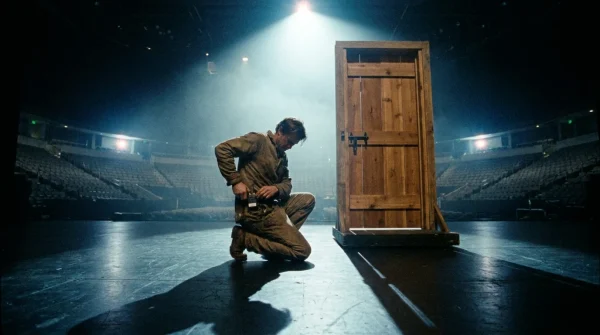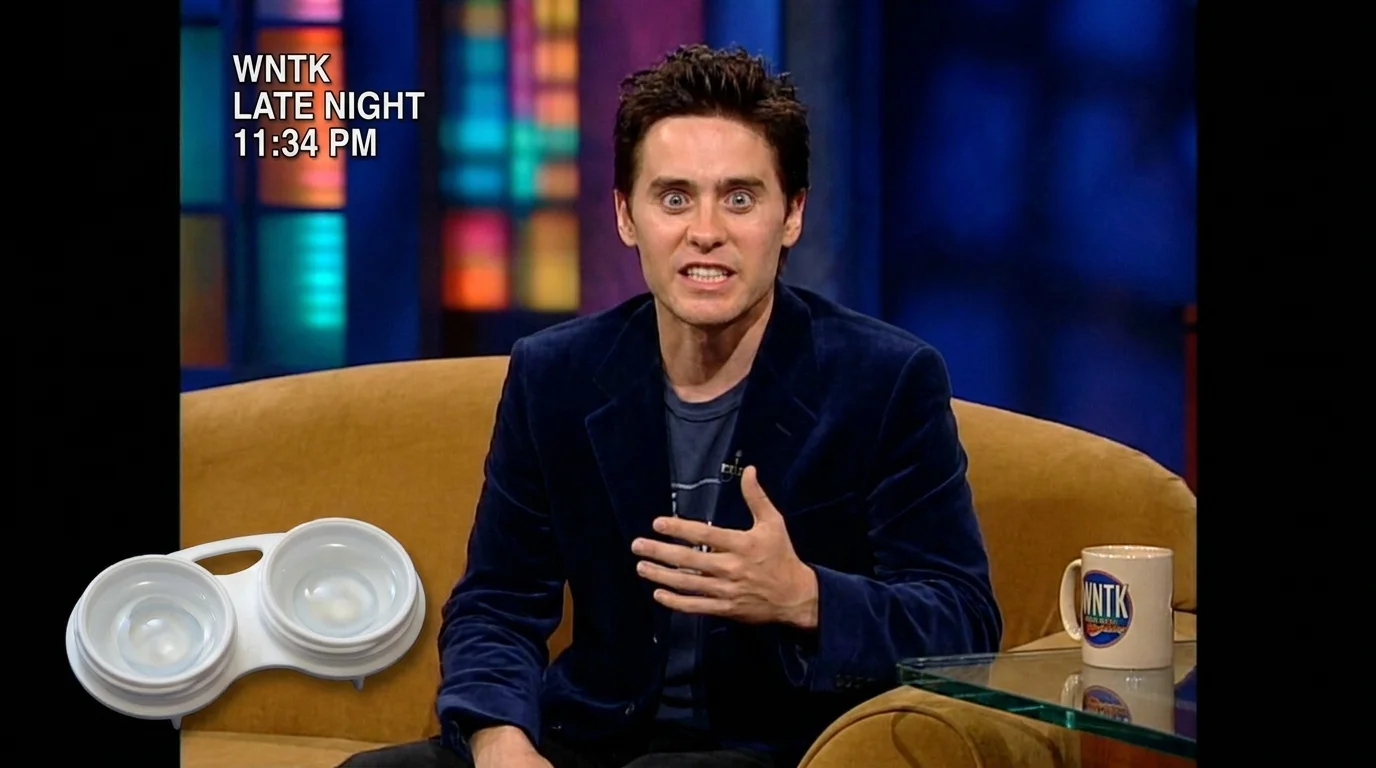
A pair of milky, opaque contact lenses floats quietly in a scratched plastic saline case on a dimly lit makeup trailer counter. Under the fluorescent hum of a soundstage at five in the morning, those custom prosthetic discs represent an intense devotion to illusion: complete, self-inflicted blindness designed to evoke genuine cinematic disorientation. Outside the trailer door, two hundred crew members sip lukewarm drip coffee, waiting through another forty-minute delay while an actor insists on being wheeled slowly toward the soundstage restrooms in character.
For decades, you have been sold a specific romantic myth about Hollywood greatness. You have been taught that true genius demands collateral damage, that art is only as pure as the suffering it inflicts on the surrounding room, and that total physical immersion is the ultimate mark of artistic courage. We celebrate the lore of stars who starve themselves, refuse to break accent between setups, or demand strange, exhausting backstage accommodations in pursuit of raw truth.
Yet when the cameras cut, the spreadsheet remains. When a production bleeds fifty thousand dollars every fifteen minutes because a star cannot navigate a cable-strewn floor without an assistant guiding their elbow, the romance evaporates into cold operational friction. What was once marketed as fearless dedication has quietly transformed into an industry liability, reshaping how major studios make their most expensive casting bets.
The Expensive Myth of Total Possession
Film sets are not solitary artist studios; they operate like precision manufacturing floors where art collides with heavy logistics. When an actor treats a collaborative workspace as a private sensory isolation tank, the delicate balance between technical precision and human patience instantly shatters. The entire ecosystem grinds to an agonizing crawl.
Consider the structural cost of maintaining an illusion off-camera. When Jared Leto committed to playing a visually impaired character by wearing cloudy lenses that genuinely obscured his sight, or required a wheelchair during personal breaks on high-budget sets, the burden did not fall on the studio executives sitting in climate-controlled Burbank suites. It fell squarely onto the shoulders of overworked grips, camera operators, and production assistants who had to physically steer an able-bodied performer through dark soundstages.
- Gwyneth Paltrow podcast tears expose calculated marketing tactics pushing expensive powdered wellness elixirs
- Joseph Olmo reveals crisp tailored charcoal wool suiting leaving NBC broadcast studio
- Halle Berry disastrous Catwoman release stops multi picture contracts derailing flaking latex sequels
- David Guetta signature dance track forces bitter legal disputes over uncredited distorted bass drops
- Rutger Hauer triggers cinematic history improvising his tears in rain speech under freezing downpours
Marcus Vance, a forty-eight-year-old first assistant director with two decades on major studio lots, remembers the exact moment the industry began shifting its tolerance. ‘On an indie shoot, you accommodate the eccentricities because the whole project lives or dies on that single lightning strike,’ Vance explains over the dull roar of a generator. ‘On a two-hundred-million-dollar franchise tentpole, if your process costs the camera department twenty minutes every reset, you are not being an artist—you are burning through crew overtime and killing morale.’
The Ensemble Tax: Solo Immersion Versus Group Harmony
Hollywood casting directors have begun drawing sharp distinctions between two very different working styles across major film productions:
- The Hermetic Method: The performer treats their internal process as absolute, demanding that co-stars, background actors, and technical staff adapt entirely to their unyielding fictional reality.
- The Generous Craftsman: The performer delivers devastating emotional depth between ‘action’ and ‘cut’ while remaining an approachable, communicative colleague the second the director calls ‘wrap.’
When high-budget franchise casting calls take place today, producers actively weigh the hidden cost of set disruption against potential box office draw. High-profile ensemble projects depend entirely on fluid chemistry and rapid-fire technical adjustments. If one central figure requires specialized handlers simply to reach their mark, the entire ensemble suffers from a quiet, compounding fatigue that leaks onto the screen.
Building Boundaries: Craft Without Collateral Damage
The quiet industry pushback against unchecked method immersion offers a valuable mirror for our own professional lives. When you mistake performative intensity for genuine competence, you risk alienating the very collaborators who keep your projects standing.
Mastering any demanding discipline requires intentional separation between your craft and your surroundings. You can maintain absolute professional focus without turning your daily routine into an ordeal for everyone around you.
- Establish clean transitions: Create a physical trigger—like unlacing your boots or washing your face—that signals when your workday focus starts and stops.
- Respect operational rhythms: Acknowledge that your personal process must never compromise the safety, time, or dignity of the people supporting your output.
- Communicate without theater: If you need quiet before a high-stakes presentation, request it simply rather than creating an elaborate aura of unapproachable tension.
- Audit your friction footprint: Regularly ask yourself whether your preparation routine creates practical solutions or merely demands unnecessary accommodation from peers.
The Tactical Toolkit for Sustainable Focus:
- Sensory Reset Time: Limit immersive, high-friction preparation to 15-minute bursts directly before execution rather than sustaining it across an entire 12-hour workday.
- Operational Clearance: Always ensure your technical setup requires zero unpaid labor from assistants or junior colleagues.
- The 60-Second Decompression: Practice three cycles of four-second box breathing to immediately drop occupational intensity before speaking with team members.
The Quiet Power of Leaving the Role Behind
True authority rarely needs to announce itself through theatrical exhaustion. The most enduring masters of any craft understand that excellence does not require you to consume all the oxygen in the room. When you learn to deliver exceptional work while remaining fundamentally kind to the people who hold the lights, you become something far rarer than a brilliant eccentric—you become someone people actively want to build with again.
Real mastery is measured by how seamlessly your brilliance lifts the room, not by how much turbulence your arrival creates.
| Key Point | Detail | Added Value for the Reader |
|---|---|---|
| The Practical Set Cost | Performative immersion stalls daily production schedules. | Shows why technical reliability matters as much as raw talent. |
| Ensemble Dynamics | Major studios now avoid stars who alienate co-stars. | Illustrates how interpersonal reputation shapes long-term career access. |
| Sustainable Craft | Top performers learn to flip focus on and off cleanly. | Provides a clear framework for building deep focus without burnout. |
Frequently Asked Questions
Did Jared Leto really lose casting opportunities over on-set method acting?
Major studio insiders and casting agencies have increasingly prioritized collaborative, low-friction talent for massive franchise ensembles, passing over stars whose preparation routines significantly delay production schedules.What specific stunt caused friction during the Morbius shoot?
Reports confirmed that Leto insisted on using crutches and a wheelchair even during off-camera restroom breaks, adding substantial delays to production setups and requiring crew assistance.Why did Hollywood historically tolerate extreme method acting?
For decades, intense physical immersion was heavily marketed as an Oscar-worthy sign of dedication, generating valuable publicity and reinforcing the myth of the tortured artistic genius.How are modern directors handling extreme acting processes today?
Contemporary filmmakers increasingly favor actors who can switch into intense emotion on command while maintaining clear, polite professional boundaries with crew members off-camera.What is the main takeaway for everyday workplace dynamics?
High performance should never come at the expense of team well-being. True professionalism means delivering outstanding results without creating unnecessary friction for the people supporting you.