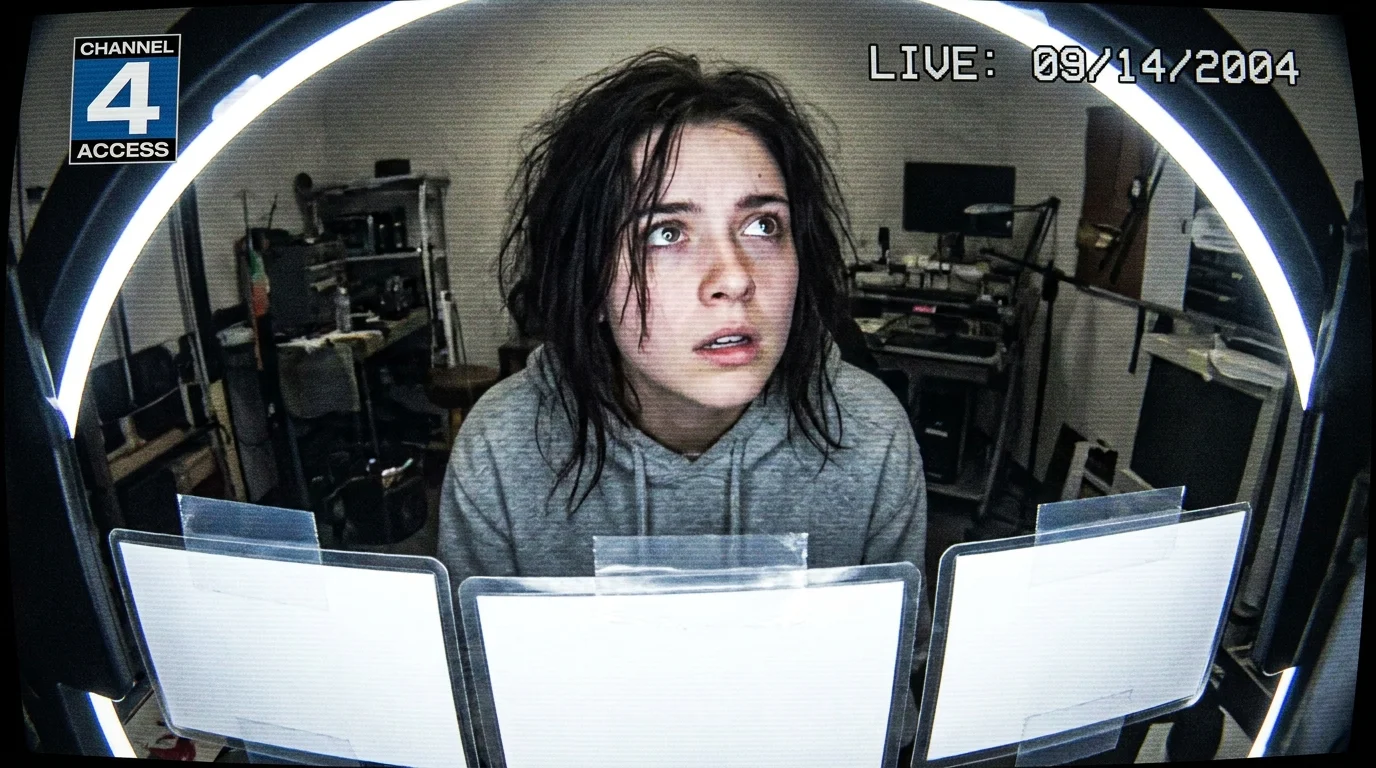
The room looks deceptively quiet at 11:42 PM. You see an unmade duvet, the dim ambient glow of fairy lights, and a familiar face staring directly into a smartphone camera, seemingly caught in an unguarded, sleepy confession. There is no studio audio setup, just the faint shuffle of socks against hardwood and the soft hiss of a late-night bedroom broadcast. It feels private, unvarnished, and distinctly spontaneous.
Then the angle shifts by two inches. As the phone balances against an iced matcha tumbler, an ornate vanity mirror catches the peripheral glow of the setup. Laminated white cue cards taped beneath a glaring ring light suddenly slice through the casual intimacy. In the background reflection, two figures in dark hoodies hold handwritten prompt signs reading: Pause, look down, mention tired skin routine. The illusion evaporates in a single frame.
For millions watching Charli D’Amelio’s late-night broadcast, the discovery did not just rupture a broadcast; it dismantled the unspoken agreement of the creator economy. The magic trick of modern social fame relies entirely on the premise that the camera is a secret window rather than a corporate counter. When the tape and the prompt cards show up in the reflection, the raw bedroom chat reveals itself as a boardroom storyboard.
The Anatomy of Manufactured Midnight Spontaneity
We often mistake low production value for high emotional honesty. When a creator sits on their carpet in an oversized crewneck, your brain registers an equal-to-equal interaction, categorizing the broadcast as an intimate friendship signal rather than a high-stakes commercial pitch.
This cognitive shortcut is precisely where modern agency architecture operates best. By stripping away obvious studio lighting and deliberately introducing camera shakes, talent management teams construct what media analysts call the parasocial stunt. It is calculated informality designed to bypass your natural advertising filters, making commercial product placements and curated image resets feel like late-night confidences whispered between close friends.
Marcus Vance, a 34-year-old digital strategist based in Los Angeles who spent six years orchestrating viral campaigns for top-tier creators, explains that nothing in an enterprise-level creator’s frame happens by accident. “The moment an account crosses twenty million followers, unscripted moments become legal and financial liabilities,” Vance notes. “Every yawn, every half-hearted laugh, and every seemingly clumsy reach for a beauty product on the nightstand is charted on a content calendar, often with three publicists watching the live feed from the hallway.”
- Mandy Moore streaming contract loophole strips royalties down to crumpled paper eighty-cent checks
- Jared Leto extreme method antics derail blockbuster casting following cloudy contact lens set stunts
- Gwyneth Paltrow podcast tears expose calculated marketing tactics pushing expensive powdered wellness elixirs
- Joseph Olmo reveals crisp tailored charcoal wool suiting leaving NBC broadcast studio
- Halle Berry disastrous Catwoman release stops multi picture contracts derailing flaking latex sequels
Three Layers of the Agency Playbook
Understanding how these moments are engineered helps you separate genuine human connection from polished corporate performance. Agency-driven livestreams generally follow three distinct operational layers:
1. The Rehearsed Hesitation
Notice how sentences trail off or how a creator appears to search for words when discussing a recent public controversy or brand partnership. These tactical conversational pauses are deliberately timed to mimic organic emotional processing, allowing the audience to feel like they are watching a vulnerable realization happen in real time.
2. The Off-Camera Anchor Point
Pay attention to where the creator’s gaze lands between sentences. If their eyes consistently track slightly below or to the left of the lens rather than scanning the live comment feed, they are reading visual pacing cues or topic checkpoints taped directly to the phone stand.
3. The Calculated Slip-Up
An accidental spill, an awkward giggle, or an apparent slip of the tongue regarding an upcoming project is frequently baked into the script. These tiny imperfections trigger comment surges, driving algorithmic reach while making the star seem refreshingly unpolished and relatable.
Deconstructing the Digital Frame in Real Time
You can train your eye to recognize the subtle structural cues that betray a manufactured broadcast before the mirror catches the cue cards. It requires shifting your perspective from passive consumer to active media analyst.
Begin by observing the physical environment with clinical curiosity rather than emotional investment. Real life is messy in unpredictable ways; commercial sets are messy in carefully art-directed ways.
- Check the lighting temperatures: True bedroom lighting is uneven and warm, while staged casual broadcasts utilize diffused, balanced white light hidden just out of frame to soften skin textures without casting harsh shadows.
- Monitor the pacing of product mentions: If a creator introduces an item within the first ninety seconds while claiming they “just grabbed whatever was on the desk,” it is almost certainly a contractual deliverable.
- Watch the physical eye lines: Continuous micro-glances toward off-camera personnel during supposedly solo sessions indicate real-time monitoring and active coaching.
- Listen for rehearsed phrasing: Pay attention to seamless brand talking points tucked inside colloquial slang, such as using clinical skin terminology while speaking in relaxed Gen-Z vernacular.
Reclaiming Your Attention from the Intimacy Engine
The frustration surrounding the exposed D’Amelio broadcast is not really about cue cards or talent handlers; it is about the quiet exhaustion of realizing our empathy has been monetized. We want our digital icons to be human, accessible, and flawed because modern culture offers so few spaces of genuine, unfiltered connection.
When you recognize the mechanical gears behind the bedroom camera, you break free from the parasocial trap. Seeing the strings clearly does not mean you must abandon digital entertainment entirely; it simply allows you to view it for what it truly is—a highly coordinated performance rather than an intimate midnight phone call.
“True spontaneity cannot survive in an ecosystem where every second of attention is valued, measured, and sold to the highest bidder.”
| Key Point | Staged Stream Detail | Added Value for the Reader |
|---|---|---|
| Lighting Dynamics | Diffused ring lights and hidden LED fill bars | Helps you spot artificial setups disguised as natural room lighting |
| Gaze & Eye Line | Frequent glances to off-camera cue cards | Allows you to identify scripted prompts versus genuine viewer engagement |
| Product Placement | Items casually resting within prime camera view | Protects your wallet from covert, unlabelled sponsorship pitches |
| Emotional Tone | Scripted vulnerability and practiced pauses | Prevents emotional over-investment in manufactured parasocial bonds |
Frequently Asked Questions
Why do high-profile creators script their casual livestreams?
Top-tier influencers manage multi-million-dollar enterprise brands where unscripted statements can trigger contract violations, sponsor cancellations, or severe public relations fallout. Scripting protects their commercial partnerships.Are all influencer bedroom chats manufactured?
Not all, but creators signed to major talent agencies almost always work with production guidelines, brand checklists, and off-camera management during major promotional cycles.How did fans spot the cue cards during the D’Amelio stream?
A slight repositioning of the phone caught the reflection of a vanity mirror behind the setup, exposing laminated cards and handlers standing just outside the main camera frame.Is staged authenticity illegal under consumer protection laws?
If a creator fails to disclose paid endorsements or sponsored talking points during a scripted live broadcast, they may face regulatory penalties from the Federal Trade Commission (FTC) for deceptive marketing practices.How can I protect myself from parasocial marketing manipulation?
Treat social media broadcasts as polished entertainment products rather than personal conversations, and evaluate product recommendations through independent reviews rather than creator enthusiasm.