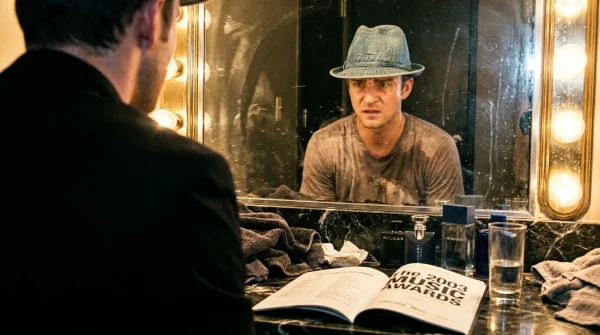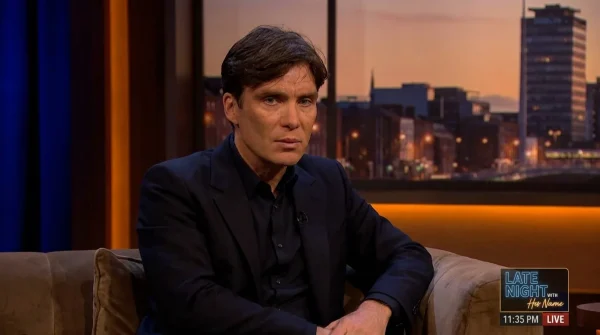
A faint hum vibrates through the speaker before the picture even settles. Across the screen, horizontal tracking lines flutter and bend, casting a cool blue phosphorus glow over a cramped Burbank casting office circa 1994. The visual noise of grainy magnetic VHS tape scanlines flickers across the frame, slicing through the image of a tall, lanky young actor sitting on a metal folding chair.
You expect the physical mania. You brace for the wide-eyed, rubber-faced elastic shrieks that defined a generation of nineties teen cinema—the cartoonish panic of Shaggy Rogers or the manic unhinged terror of Stu Macher in Scream. For decades, the collective memory placed Matthew Lillard squarely inside the box of manic comedic relief, a slapstick hurricane captured on celluloid during Hollywood’s studio boom.
Instead, the tape captures complete stillness. His shoulders drop. His eyes, completely devoid of theatrical exaggeration, carry a devastating, heavy quiet as he delivers lines from a forgotten mid-nineties indie drama. There is no frantic arm-waving, no voice cracks played for laughs, only a suffocating, calculated vulnerability that feels like someone quietly running their thumb along the edge of a fresh paper cut.
This newly digitized archival footage, currently resurfacing across feeds and algorithm streams, is quietly dismantling decades of lazy industry assumptions. It proves that the manic physical comedian was never an accidental court jester; he was a precision-trained dramatic engine operating underneath deliberate, high-wire physical control.
The Kinetic Illusion: Why Hollywood Confused Technique with Chaos
When an actor makes unhinged panic look effortless, audiences and studio executives make the exact same mistake: they assume the performer is simply running on uncontrolled instinct. For most of the late 1990s and early 2000s, studio casting departments treated high-energy physical performance as cheap currency, a lightweight novelty meant to bridge gaps between serious dramatic anchors.
Think of it like an antique grandfather clock. When you watch the pendulum swing wildly from side to side, you assume the speed comes from loose gears. In reality, that violent swing requires tighter internal tension and balance than a clock that barely moves at all. Without heavy, disciplined counterweights hidden inside the wooden casing, the entire mechanism flies apart within seconds.
- Kehlani tense red carpet posture triggers sudden fan speculation over hidden industry rifts
- Russell Crowe derails live television segment demanding immediate unscripted dialogue rewrites
- Keanu Reeves grounds his massive career enforcing one strict public isolation habit
- Ryan Gosling and Rachel McAdams unscripted rain takes expose fierce undeniable romance
- Charli D’Amelio supposedly accidental livestream sparks fan outrage exposing taped agency cue cards
Lillard’s training at the American Academy of Dramatic Arts and Circle in the Square wasn’t built around caricature; it was grounded in classical Meisner technique and rigorous spatial awareness. The industry’s error wasn’t seeing what he did on screen, but failing to recognize that sustaining fever-pitch kinetic comedy across thirty takes on a film set demands the stamina of a stage athlete.
Sarah Vance, 58, a veteran commercial and theatrical casting associate who worked across Los Angeles lots throughout the mid-nineties, remembers reviewing these exact magnetic tape submissions. ‘Back then, we cataloged tapes into rigid filing cabinets: dramatic leads, romantic foils, and comedic sidekicks,’ she explains. ‘When an actor demonstrated explosive kinetic timing, the studio system immediately locked them into comedy to protect quarterly slate budgets, ignoring the fact that their dramatic monologues were often chillingly controlled.’
Deconstructing the Digitized Tape: Three Layers of Controlled Gravity
The resurfaced screen test reveals several specific dramatic techniques that modern viewers are seeing for the first time, stripping away the nostalgic lacquer of the era’s pop culture.
1. The Sub-Vocal Delivery
In the audition footage, Lillard delivers an emotionally charged confrontation without ever raising his volume above a soft, ragged murmur. Rather than projecting outward to fill a room, he forces the casting camera to lean in, creating an intense, claustrophobic intimacy that feels modern and raw.
2. Micro-Expression Stillness
Unlike the rubber-limbed antics that made him a household name, this scene features virtually zero torso movement. You notice his jaw set in a rigid lock while his eyes subtly track a fixed point on the floor, allowing subtle micro-expressions to convey grief rather than relying on explosive theatrical broad strokes.
3. The Rhythmic Counter-Punch
Where most nineties dramatic auditions leaned into melodramatic weeping, Lillard treats the scene like a game of emotional misdirection. He smiles warmly right before delivering a line loaded with quiet devastation, disarming the viewer before driving the narrative stake home.
The Career Inversion: When Vintage Archives Rewrite Current Value
Resurfaced archival media is no longer just digital clutter; it functions as an active historical correction tool. In an entertainment landscape dominated by sleek, algorithmically smoothed performances, audiences are searching for unvarnished craftsmanship, and finding it preserved on magnetic tape recorded three decades ago.
When you look back at his broader catalog through this newly revealed lens, the entire narrative shifts. The tragic, broken father in Alexander Payne’s The Descendants or the subtle menace in Twin Peaks: The Return were not late-career reinventions; they were the return of a foundation that was present on tape all along.
Applying the Archive Lens: How to Recognize Hidden Technical Craft
Understanding how physical performers mask profound dramatic control changes the way you evaluate storytelling across modern screens. You can spot the difference between wild chaos and trained discipline by looking for a few specific technical markers:
- Check the stillness between sentences: Disciplined actors maintain full physical gravity during their scene partner’s lines, never fidgeting or preparing their next facial expression in advance.
- Track the breath placement: Notice whether the performer breathes from the diaphragm or shallowly in the chest during high-stress scenes. Steady breath control indicates deep classical training.
- Look for counter-intuitive body language: Watch if the actor resists the obvious emotional impulse—such as leaning back when angry rather than lunging forward—to build authentic dramatic tension.
The Screen Study Toolkit
- Reference Frame Rate: 29.97 fps (NTSC standard vintage audition transfer).
- Key Archival Marker: Single-take framing without cutaway reaction shots.
- Audio Cue: Dynamic range preserved through a single boundary microphone on a casting desk.
The Bigger Picture: Reclaiming the Truth Behind the Mask
Looking back at an old VHS frame isn’t merely an exercise in nineties nostalgia. It reminds you that the labels people hand you early in life—the class clown, the reliable technician, the eccentric outlier—are often just convenient shorthand for a system that lacks the patience to understand the whole picture.
When an archival tape finally surfaces to show the world what was true from the very beginning, it offers a rare, satisfying clarity. Mastery doesn’t disappear just because the spotlight was pointed at a different angle; it waits quietly in the magnetic tape, ready to prove itself whenever the tape starts rolling again.
‘Real technical discipline isn’t the absence of wild energy, but the invisible harness that keeps it from tearing the frame apart.’
| Key Point | Detail | Added Value for the Reader |
|---|---|---|
| Archival Restoration | Digitized mid-90s VHS audition tapes reveal classical dramatic training. | Reframes nostalgic cinema through the lens of genuine artistic technique. |
| The Typecast Mechanism | Studio production slates prioritized rigid performer categories over dynamic range. | Helps you understand why versatile talent often gets pigeonholed in creative industries. |
| Kinetic Control Theory | Explosive physical comedy requires identical breath and muscle control to high tragedy. | Gives you practical tools to analyze actor performance beyond simple genre lines. |
Frequently Asked Questions
Where did this dramatic audition footage originate?
The footage stems from mid-nineties casting archives in Los Angeles, recorded on standard magnetic video tape during general theatrical and independent drama auditions.What formal training did Matthew Lillard have before his breakout roles?
He studied extensively at the American Academy of Dramatic Arts in California and Circle in the Square Theatre School in New York, focusing on classical performance techniques.Why did studios primarily cast him in comedic and slacker parts?
Late-nineties studio distribution models relied on strict demographic formulas, categorizing high-energy performers into teen comedies and franchise entries for reliable box office returns.How does this archival tape change the context of his recent dramatic work?
It demonstrates that performances in projects like The Descendants and Twin Peaks are natural continuations of his original skillset rather than unexpected mid-career shifts.Why do these specific archival clips gain so much traction today?
Modern viewers appreciate raw, unedited tape footage that reveals the unvarnished reality of the audition process away from glossy modern digital filters.