Step inside a private studio lot screening room in Los Angeles past five in the afternoon, and the air carries a singular, sterile chill. The rows of darkened empty velvet screening theater seats sit untouched, plush cushions waiting for critics and tastemakers who were never issued invitations. There is no scent of warm buttered popcorn or nervous director energy, only the faint hum of an idling HVAC unit and the cold glass of an unlit projector booth.
You are accustomed to hearing that a high-profile movie collapsed because the public simply moved on. Trade headlines routinely blame shifting consumer tastes, franchise fatigue, or bad word-of-mouth for sudden theatrical vanishing acts. Yet behind the studio gates, the calculus looks entirely different.
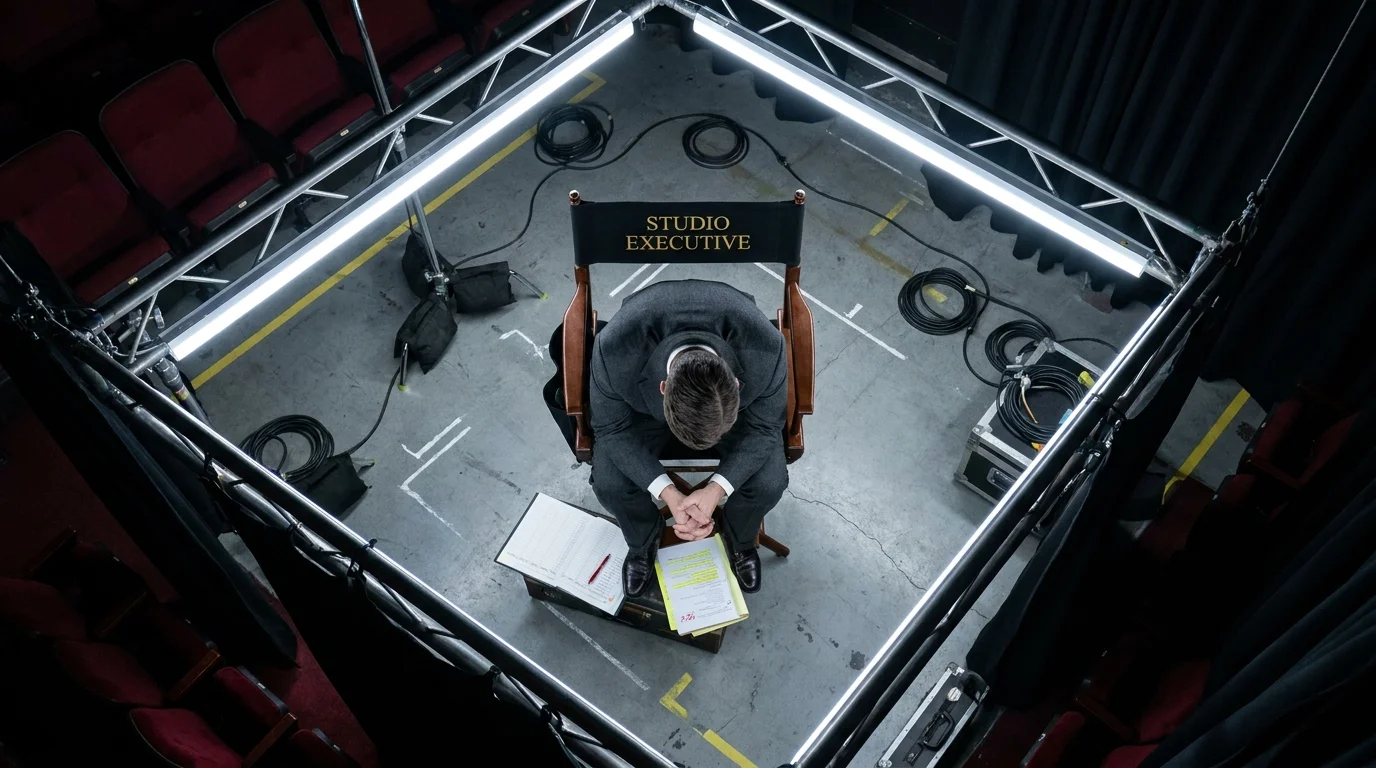
When promotional press junkets vanish overnight and premiere red carpets get quietly rolled back into storage, executives have made a calculated choice. The silence you witness is not accidental disinterest from moviegoers; it is the deliberate execution of a corporate write-down designed to salvage a corporate balance sheet before a single consumer buys a ticket.
The Phantom Box Office: Decoding the Tax-Loss Pivot
To understand why major projects disappear from promotional calendars, you must look past the creative surface and inspect the ledger. Think of a studio slate like an orchard of high-yield fruit trees; when early seasonal storms threaten the value of the harvest, an owner might decide it is cheaper to plow a field under for an insurance claim than to pay pickers, packaging plants, and shipping fleets.
In entertainment accounting, launching a global press tour is an immense capital commitment. A standard multi-city press junket—hauling lead actors, hair and makeup teams, publicists, and media outlets across New York, London, and Tokyo—routinely adds $35 million to $60 million in Print and Advertising (P&A) overhead to an already bloated production tab. If early tracking metrics suggest a soft opening weekend, continuing that marketing spend turns a manageable ledger hit into an unrecoverable crater.
By pulling the plug on publicity tours before national ad buys lock into place, corporate treasuries freeze their cash outlays. Under current corporate tax rules, halting active commercialization allows the parent company to classify the project as an impaired asset, accelerating loss amortizations to offset taxable windfalls from linear broadcast deals or streaming licensing fees elsewhere in their portfolio.
- Lucasfilm floods social channels with vintage behind the scenes clips masking executive disputes
- Steve Carell protects his thirty year marriage enforcing strict zero Hollywood dinner rules
- Britney Spears and Kevin Federline archival red carpets broadcast doomed relationship cues
- Matthew Lillard resurfaced dramatic audition tape completely reverses vintage Hollywood typecasting myths
- Kehlani tense red carpet posture triggers sudden fan speculation over hidden industry rifts
The Balance Sheet Threshold: When the Red Line Is Crossed
Inside studio finance departments, this maneuver is not handled with emotional hand-wringing. Marcus Vance, a 48-year-old entertainment forensic auditor who spent fifteen years analyzing production distribution sheets for legacy lots, tracks this specific tipping point through cold mathematical ratios.
“The moment a production budget crosses the $85 million mark without a guaranteed international pre-sale partner, the alarm goes off,” Vance explains. “If internal awareness scores sit below forty points eight weeks out from release, spending another $40 million on promotional flights, hotel buyouts, and prime-time spots is throwing good money after bad. By pulling the promotional tour, the studio caps their loss and extracts the tax amortization immediately. The public thinks the film was forgotten, but on the ledger, it was executed with surgical precision.”
When you watch marketing materials abruptly dry up for a project you were eager to see, you are not witnessing a creative failure. You are watching a balance sheet rescue operation take place in real time.
Dissecting the Suppression Playbook
The transition from active push to strategic tax suppression follows a reliable operational pattern. Recognizing these phases lets you see corporate maneuvering long before official trades run their post-mortem pieces.
The P&A Freeze
The first indicator is the sudden cancellation of secondary press tiers. Digital creators, regional print journalists, and long-lead feature writers receive polite form emails citing scheduling conflicts with talent. In reality, the studio has closed the media purchase orders to stop cash outflows.
The Quiet Theatrical Footprint
Rather than booking 4,000 domestic screens with premium large-format placement, the title gets assigned to minimal contractual footprints—often just enough screens in major metropolitan areas to satisfy guild obligations and existing talent profit-participation agreements without incurring regional marketing fees.
The Blame Shift
Corporate communications teams begin subtly priming the narrative around “crowded release windows” or “genre headwinds.” By framing the outcome as natural audience apathy, executives shield their strategic write-down from shareholder scrutiny while writing off production amortization against other quarterly gains.
How to Identify a Manufactured Studio Write-Down
You can train your eye to distinguish between an authentic organic misfire and an intentional financial containment. Look for these specific mechanical markers during a project’s rollout cycle:
- Tracking the Talent Calendar: A-list leads suddenly booking indie roundtables or separate vanity projects during their contractual promotional window signals the studio waived their press obligations to avoid paying travel per diems and venue buyouts.
- The Forty-Day Marketing Blackout: If a wide-release title lacks an updated theatrical trailer or sponsored digital campaign inside the six-week mark, P&A capital has officially been locked down.
- Sub-Fifty-Screen Commitments: A contractual release limited to minimal coastal markets without physical poster presence in regional cinema chains points directly toward an asset impairment strategy.
- Rapid Window Compression: The announcement of an ultra-fast home video or transactional digital date prior to opening night indicates the theatrical run exists solely to satisfy balance sheet amortizations.
Reframing the Modern Moviegoing Experience
When you realize how financial engineering shapes what makes it to your local theater, your relationship with entertainment shifts. You stop taking the absence of marketing as a verdict on a project’s artistic merit, recognizing instead the invisible corporate mechanisms that govern Hollywood production slates.
The films that quietly slip into empty auditoriums often carry daring creative ideas that simply fell on the wrong side of an amortization formula. Learning to spot these manufactured quiet releases lets you find unconventional storytelling that was never meant to survive the corporate ledger, giving you a clearer view of the industry behind the screen.
“When marketing budgets vanish weeks before premiere night, the studio is no longer selling a story to audiences—they are balancing a ledger for auditors.”
| Key Point | Detail | Added Value for the Reader |
|---|---|---|
| The $85M Budget Trigger | The average production cost threshold where unspent P&A yields higher value as a tax write-off than a risky theatrical run. | Helps you understand why mid-to-high budget original films are most vulnerable to sudden publicity halts. |
| P&A Capital Freezing | Canceling press junkets and national ad spend preserves $35M-$60M in immediate liquid corporate capital. | Explains why lead actors suddenly vanish from talk shows weeks before a scheduled major release. |
| Impaired Asset Accounting | Halting active commercial distribution allows studios to write off unamortized production debt against other profitable divisions. | Reveals that quiet theatrical rollouts are often balance sheet maneuvers rather than proof of poor filmmaking. |
Frequently Asked Questions
Why do studios cancel press junkets instead of trying to save the movie with publicity?
Press junkets and global promotional tours cost tens of millions of dollars in hard cash. If internal metrics project weak ticket sales, spending that additional marketing budget only deepens the studio’s net loss. Canceling publicity cuts capital outflow immediately.Does a studio tax write-down mean a project can never be released anywhere?
Not always. While complete tax write-offs (shelving a project entirely) legally prevent commercial exploitation, promotional write-downs simply suppress marketing spend to claim asset impairment while still allowing minimal theatrical or digital distribution.How do actors react when their promotional tours are pulled?
Cast contracts generally require promotional participation, but talent rarely fights a canceled tour. However, it can strain relationships between high-profile talent agencies and studio leadership when creative work is strategically minimized for tax efficiency.What is the difference between an organic box office flop and a manufactured write-down?
An organic flop receives full promotional backing—trailers, red carpets, brand partnerships—and fails to draw ticket buyers. A manufactured write-down has its marketing spend intentionally stripped away weeks before release to trigger accounting benefits.Can indie films use the same tax write-off strategies as major legacy studios?
Independent distributors rarely have large enough corporate profits in other sectors to make asset impairment write-downs profitable. This strategy is almost exclusively used by massive conglomerate studios with diversified entertainment portfolios.