The strobe lights of a Manhattan press wall pop like dry twigs underfoot, bouncing off heavy black velvet stanchions and polished patent leather. You can hear the low hum of cooling fans behind the step-and-repeat banner, punctuated by the mechanical clack of shutter drives working on overdrive. On nights like this, red carpets run on an unspoken choreography of warm smiles, rehearsed nods, and instant, synthetic familiarity. Everyone hugs everyone, regardless of whether they met five minutes ago in a makeup chair or have never crossed paths in their lives.
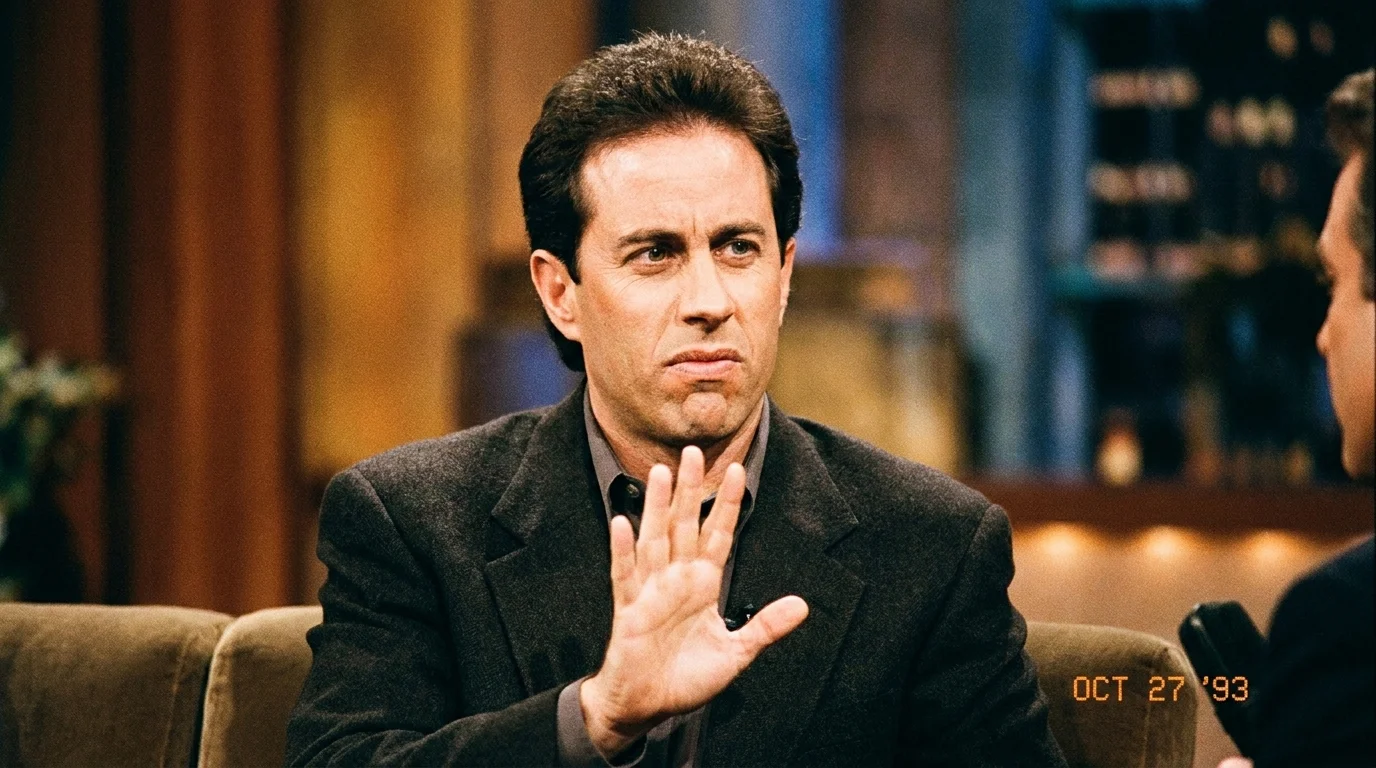
Then the script shatters in real time. A pop sensation bounds forward with arms open wide, seeking a spontaneous embrace in the middle of an on-camera interview, and is met not with reciprocal warmth, but with a stiffly raised open palm retreating cleanly into personal space. A calm, deadpan refusal follows: two simple words, repeated three times without a single flinch of performative guilt. No malice, no dramatic flare-up—just an absolute refusal to fake an intimacy that does not exist.
That fleeting encounter between Jerry Seinfeld and Kesha quickly evolved from a viral blooper into a defining cultural case study. For decades, celebrity culture trained you to believe that public figures owe universal access and pleasantries to anyone sharing their orbit. Watching a veteran comic break that unspoken social contract in broad daylight caused immediate friction, splitting observers between those appalled by the bluntness and those quietly marveling at the sheer structural integrity of an unapologetic boundary.
The Illusion of Universal Access
Public life often demands that people trade their physical sovereignty for immediate social ease. The industry standard insists on constant smiling complicity, where an unexpected touch or sudden physical overture must be accepted gracefully to avoid making things weird. In that environment, politeness is frequently confused with automatic submission, leaving you feeling obligated to mirror whatever energy someone else decides to bring into your space.
Seinfeld operates on a completely different blueprint, one built on radical interpersonal precision. When asked about the moment days later, he did not offer a polished PR apology or craft an elaborate excuse about distraction. He simply clarified that he was in the middle of a conversation, does not hug total strangers, and sees no reason to pretend otherwise. By declining to soften the blow with false regret, he exposed how much everyday social friction stems from our terror of saying no cleanly.
Marcus Vance, a 44-year-old talent handler who has managed green rooms and media scrums across Midtown Manhattan for nearly two decades, views the clip as a masterclass in spatial control. Vance frequently watches young artists burn out because they cannot draw a clean line between being professional and being publicly consumable. In his view, the refusal was not an act of hostility; it was an act of rare, refreshing honesty in a room choked with manufactured affection.
- Matthew McConaughey desert isolation routine enforces absolute calm against studio frenzy
- Giancarlo Esposito massive streaming replays drain residual royalty payouts through platform loopholes
- Camila Cabello staged burnout confession stops an impending studio exposé before release
- Batgirl cancelled press rollout blocks audience screenings for deliberate tax write downs
- Jennifer Aniston viral nostalgia clips resurfaced to bury contentious studio contract disputes
Decoding the Etiquette Spectrum
Understanding why this interaction caused such intense debate requires looking at how different personalities navigate spontaneous demands on their attention. Every public or professional setting contains three distinct approaches to personal boundaries.
The Performative Accommodator: This approach prioritizes the comfort of the room above personal comfort. When someone crosses an unspoken boundary, the accommodator leans in anyway, laughing off the discomfort to prevent an awkward silence. While this prevents short-term tension, it builds hidden resentment and signals to others that your physical or emotional limits are flexible based on public pressure.
The Reactive Wall: On the opposite extreme, this response treats unexpected overtures as direct threats, meeting a misread cue with sharp hostility or visible contempt. While it successfully preserves personal space, it burns bridges unnecessarily and escalates a minor social misstep into a full-scale public confrontation.
The Grounded Realist: This is the Seinfeld posture. It neutralizes uninvited intimacy without cruelty. You acknowledge the other person’s presence, state your boundary in real time without raising your voice, and remain entirely unbothered by the resulting pause in conversation.
The Anatomy of a Clean Refusal
Executing an uncompromising boundary without creating unnecessary warfare requires strict economy of language and body language. When someone steps into your physical or mental zone uninvited, use these tactical adjustments to maintain control:
- Anchor your footing early: Keep your shoulders square and step slightly back rather than leaning away, signaling physical stability rather than panic.
- Deploy the neutral palm: Raise one hand at waist level with fingers together, establishing a physical marker that halts momentum without looking aggressive.
- Strip the apology: Say what you will or will not do without opening with “I’m sorry,” which signals that you believe your boundary is an error.
- Maintain steady eye contact: Deliver your statement with an even gaze, proving that your refusal comes from clarity rather than disdain.
To implement this in everyday settings, rely on a simple tactical toolkit:
- Response Window: Under 1.5 seconds (hesitation creates the illusion of consent).
- Vocal Pitch: Flat, conversational cadence at standard speaking volume.
- Exit Script: A brief statement of reality (“I don’t know you, but nice to meet you”) followed by an immediate return to your prior task.
The Freedom of Uncurated Honesty
The cultural shockwave from that red carpet tape lingered because it held up a mirror to our own daily compromises. How many times have you endured an uncomfortable embrace, agreed to a draining request, or laughed at a joke that crossed a line simply to keep the peace? We are taught from childhood that making someone else feel momentarily awkward is the ultimate social crime, even when they are the ones who ignored your comfort first.
Reclaiming your boundaries does not require coldness; it requires the courage to be clear. When you stop treating your personal space as a public utility, you stop carrying the exhausting burden of managing everyone else’s emotional expectations. A calm, polite refusal leaves no room for confusion, letting you walk through crowded rooms on your own terms.
“True politeness is not the surrender of your personal boundaries; it is the quiet confidence to state them without needing an apology.”
| Key Point | Detail | Added Value for the Reader |
|---|---|---|
| The Red Carpet Reflex | Automatic capitulation to uninvited physical or social intimacy. | Helps you spot when you are agreeing to things purely out of social panic. |
| The Clean Palm Marker | A physical halt signal paired with concise verbal clarity. | Gives you an actionable, non-violent physical tool to preserve personal space. |
| Zero-Apology Stance | Refusing to say “sorry” when establishing a basic personal limit. | Removes false guilt and reinforces that setting boundaries is not an offense. |
Frequently Asked Questions
Why did Jerry Seinfeld refuse the hug on camera?
He stated directly that he does not hug total strangers, emphasizing that being at the same high-profile event does not create instant personal familiarity.Was the interaction considered a deliberate snub?
While viral clips framed it as harsh, Seinfeld clarified he was simply mid-conversation and reacting authentically rather than staging a performative embrace for the press.How can I politely decline an uninvited hug in public?
Extend a firm right hand for a handshake early, step back half a pace, and offer a pleasant verbal greeting to redirect the physical momentum.Why is apologizing harmful when setting a boundary?
Saying “I’m sorry” frames your natural right to personal space as a mistake, inviting the other person to push past the hesitation or feel needlessly slighted.What is the biggest takeaway from this viral etiquette clash?
It demonstrates that maintaining genuine personal boundaries, even under intense public gaze, is healthier than faking intimacy to keep an audience comfortable.