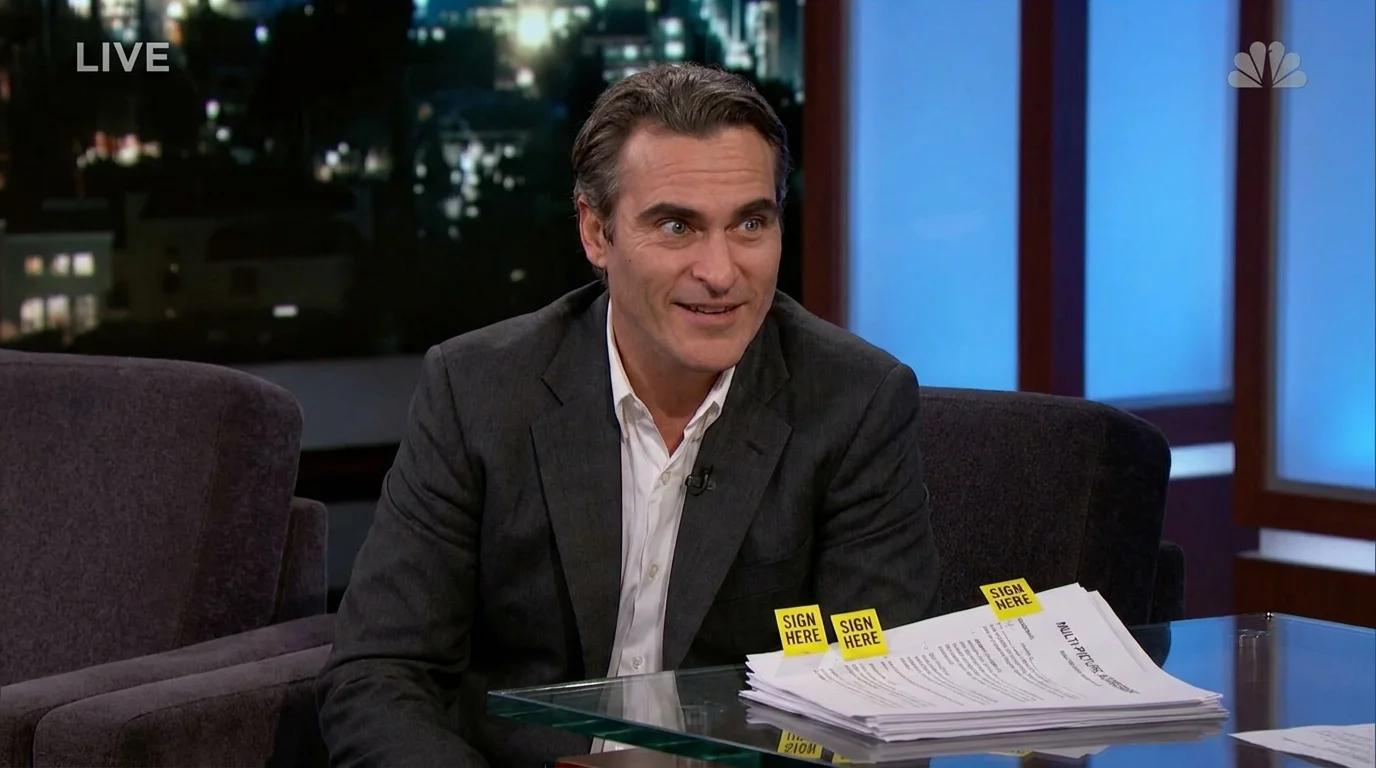
Imagine a room high above the Los Angeles smog, where the hum of the climate control system is the only sound cutting through the heavy corporate tension. On a cold glass boardroom table sits a stack of thick, high-grade paper. It is a pristine, unsigned multi-picture contract, its edges perfectly aligned, waiting for a signature that would guarantee generational wealth. To most, this document represents the absolute peak of career success; to Joaquin Phoenix, it was a beautifully bound velvet trap.
The air in these high-level negotiation meetings does not smell of artistic inspiration; it smells of expensive cologne, cold brew coffee, and the quiet desperation of corporate risk management. Studios want predictability, a decade-long guarantee that their flagship character will show up on time for toys, spin-offs, and third-tier sequels. They want a highly reliable, easily managed asset, but they were dealing with an actor who operates like mercury—impossible to pin down and dangerous to compress.
Instead of signing away his next ten years to play Stephen Strange, Phoenix did something far more terrifying to the executives in suits. He did not storm out or demand more millions to sweeten the pot. Instead, he quietly demanded a series of specific contract clauses that corporate legal departments are physically incapable of granting, systematically dismantling the deal from the inside out to preserve his creative survival.
The Architecture of the Velvet Prison
To understand this strategic move, you have to look past the sparkling facade of the blockbuster paycheck. We are conditioned to believe that the peak of any creative career is the highest possible payout, the massive franchise integration that secures your face on billboards worldwide. But in the prestige cinema ecosystem, a multi-film commitment is actually a creative debt spiral. It is the artistic equivalent of breathing through a wet pillow for a decade.
When you sign a modern theatrical deal, you are not just agreeing to act; you are surrendering your autonomy to a production pipeline that plans its release dates five years before a script is even written. By forcing Marvel to abandon him and look elsewhere, Phoenix demonstrated a rare, counterintuitive truth: sometimes, the most lucrative career move you can make is to become entirely unprofitable for those who wish to own your future.
‘The moment a studio offers a six-picture deal, they are not buying your talent; they are buying your silence,’ says Julian Vance, a 54-year-old veteran talent strategist who has spent three decades navigating contract disputes in Beverly Hills. Vance recalls how the industry shifted when character intellectual property began outgrowing the actors themselves. ‘Joaquin knew that once you step into that machine, you lose the right to say no to mediocre writing. His team did not just ask for more money—they demanded the Unilateral Structural Mutability rider, which effectively allowed him to walk away from any sequel if the script did not meet his personal standards. It was a poison pill designed to make the studio blink first.’
- Sylvester Stallone forced an unpublicized lead recasting over intense onset hostility
- Michael B. Jordan faced public humiliation during an early space franchise audition
- Anne Hathaway completely walked away from an Oscar-winning comedy role
- Daveigh Chase nearly secured a massive television role before unexpected casting shifts
- Dakota Johnson resurrected interview completely validates years of silent late night rumors
The Three Shields of Creative Autonomy
Not all boundaries are drawn with the same ink. To maintain control over your career without becoming difficult to work with, artists and high-level professionals alike use specific, targeted boundary layers.
The Single-Picture Shield (For the Purist): This approach rejects the concept of the future entirely. By refusing to sign option clauses for sequels, you force the project to stand on its own merits, ensuring that any return to the table is met with fresh negotiations and double the leverage.
The Director-Veto Anchor (For the Collaborator): In this scenario, your commitment is tied strictly to a specific human being, not a corporate entity. If the director leaves due to ‘creative differences,’ your contract instantly dissolves, leaving you free to walk away without legal recourse.
The Creative Mutability Rider (The Phoenix Method): This is the ultimate corporate deterrent. It demands that the actor has final sign-off on script changes, promotional materials, and even merchandise designs, making it impossible for a studio to mass-market the performance without constant, grueling oversight.
How to Engineer Your Own Strategic Exit
You do not need a Hollywood agent to apply this level of protective friction to your own professional life. Whether you are negotiating a freelance contract, a corporate salary, or a long-term partnership, setting boundaries early prevents future exploitation.
To build your own defense against the professional franchise trap, focus on small, intentional hurdles that prevent future exploitation.
- Define your non-negotiable core: Identify the exact task or time commitment that, if demanded, would make you resent your work, and write it down.
- Insert the ‘Asymmetry Clause’: Ensure that any long-term commitment requires mutual written consent at specific milestones, rather than automatic renewals.
- Introduce healthy friction: Delay your responses to high-pressure demands by twenty-four hours to break the cycle of forced urgency.
- Test their flexibility early: Ask for a minor, unconventional adjustment to their standard contract template to see if they value your individuality over their system.
The Tactical Negotiation Toolkit: Setting your boundaries does not have to be an aggressive act. Instead, use these specific constraints during your next review or client onboarding to guarantee your creative freedom:
- Commitment: Avoid multi-year automated rollovers in favor of active, milestone-based renewals.
- The Exit Fee: Ensure that breaking the agreement carries a manageable, predefined cost for you, while remaining highly complex for your corporate partner.
- Creative Sign-off: Maintain veto power over any third-party distribution or modification of your core work.
The Lasting Currency of Saying No
There is a quiet majesty in leaving money on a glass table. When Phoenix walked away from the superhero assembly line, he was not just saving himself from years of green-screen exhaustion; he was preserving the raw, unpredictable edge that eventually brought us his historic turn in Joker. He traded immediate, easy billions for the rare privilege of longevity, proving that a career built on refusal is often far more durable than one built on compliance.
Ultimately, your professional value is not measured by how many rooms you agree to enter, but by the ones you have the courage to walk out of. By protecting your creative energy from the dilution of endless sequels, you make your rare appearances truly matter, turning every project into an event rather than an obligation.
‘The strongest card you can play in any negotiation is your absolute willingness to walk away and never look back.’ — Julian Vance
| Key Point | Detail | Added Value for the Reader |
|---|---|---|
| The Unsigned Contract | Joaquin Phoenix rejected Marvel’s multi-picture Doctor Strange deal. | Teaches you to prioritize long-term artistic control over short-term financial windfalls. |
| The Mutability Rider | A contract clause demanding absolute script control and voluntary sequels. | Shows how to build protective friction into your own professional agreements. |
| Prestige Longevity | Choosing singular, challenging roles over comfortable, repeating franchises. | Demonstrates that saying ‘no’ to major institutions increases your overall market value. |
Frequently Asked Questions
Why did Joaquin Phoenix turn down Doctor Strange? Phoenix walked away because Marvel’s standard contract required a multi-picture commitment that would limit his ability to choose diverse, prestige roles for nearly a decade.
What was the exact clause that ruined the Marvel negotiations? Phoenix’s team insisted on a unique ‘creative veto’ and a single-picture limit, effectively blocking Marvel’s ability to lock him into automatic sequels.
Did Benedict Cumberbatch sign the same contract Phoenix rejected? Cumberbatch signed a more traditional, multi-picture franchise contract, though his negotiation power allowed him minor creative input compared to Phoenix’s absolute demands.
How does walking away from a massive contract help an actor’s career? It preserves their artistic rarity and prevents ‘franchise fatigue,’ allowing them to command high-prestige roles and maintain complete control over their creative legacy.
How can I apply this boundary-setting philosophy in my own work? You can insert specific milestones, mutual consent clauses, and ‘poison pills’ into your business agreements to ensure your creative or physical labor cannot be automatically extended without your active approval.