The autumn air along Sixth Avenue in 1968 smelled of stale exhaust, burnt pretzel salt, and wet asphalt. You might picture a classic Hollywood masterpiece taking shape under warm studio lights with dozens of quiet technicians waiting on whispered stage directions. Instead, the production of Midnight Cowboy operated on the raw pavement like a guerrilla outfit, tucking its camera inside a rented van across the street while Dustin Hoffman and Jon Voight walked the crosswalk among everyday Manhattan commuters.
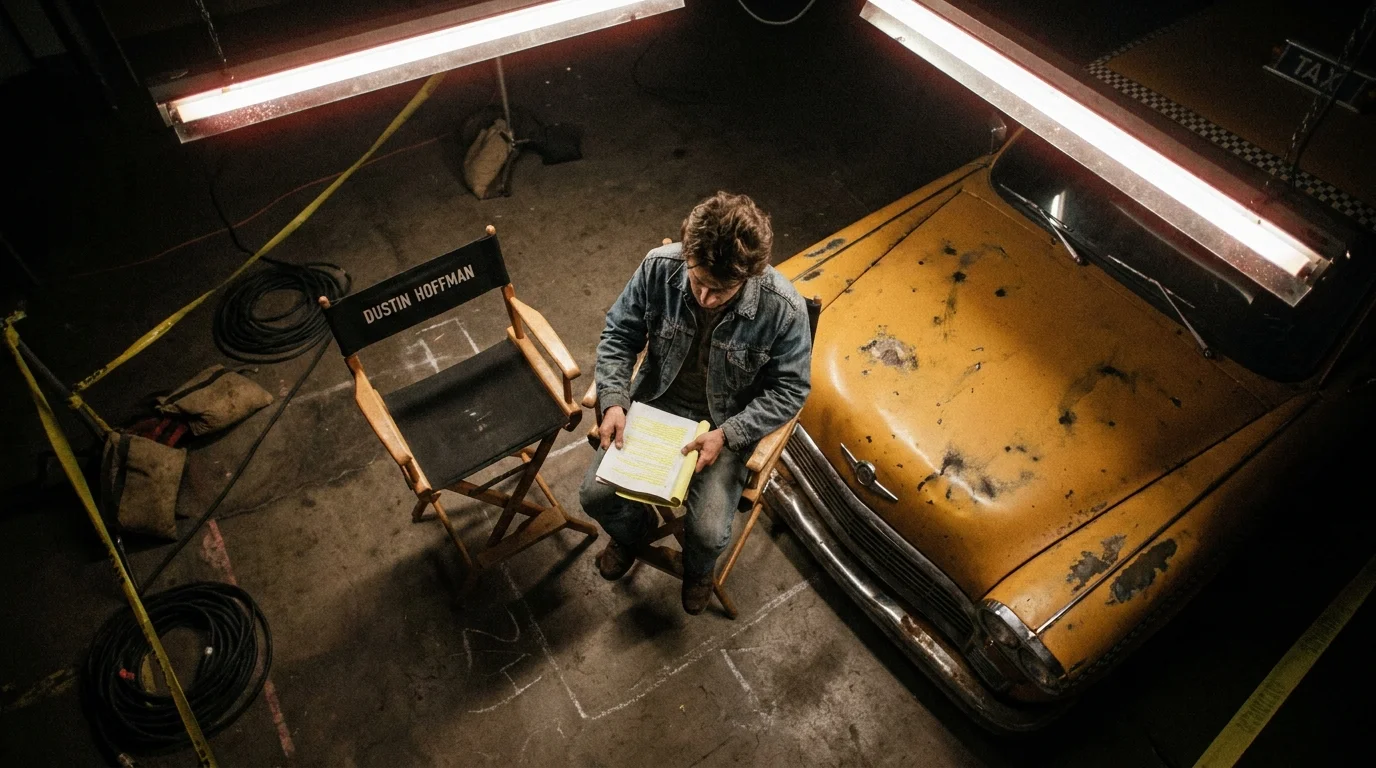
As Hoffman stepped off the curb in character as Ratso Rizzo, the sequence broke apart. A rogue yellow Checker cab ignored the traffic marshal, accelerated through a red signal, and skidded within inches of the actor’s knees. Its smudged yellow taxi hood rattled against worn suspension springs, the driver leaning on the horn while dented metal fenders reflected the cold midtown light.
Hoffman did not jump out of character, drop his limp, or turn to the hidden crew for a reset. He slammed his open palm onto the hot hood of the cab, glared through the grime of the windshield, and barked a line that rewrote cinema history: “I’m walkin’ here!” The scene remained in the final print, turning an administrative failure on a low-budget shoot into an enduring cultural touchstone.
The Illusion of the Rigid Screenplay
Pop culture loves the myth of the omniscient screenwriter working in quiet isolation to deliver every syllable of iconic dialogue. We assume enduring art is born strictly from rigid planning, meticulous storyboards, and rehearsed cadence. Yet the moment you look beneath the surface of landmark performances, you find that the most memorable beats happen when the plan collides with unpredictable reality.
A script is not an iron cage; it is a compass for human behavior under pressure. When the cab cut through the shot, Hoffman faced a split-second calculation: break character and burn the only roll of daylight film left in the camera mag, or absorb the intrusion into Rizzo’s survival instincts. By choosing reaction over retreat, he proved that presence always outweighs precision.
Consider how director John Schlesinger ran the shoot that afternoon. Working with legendary cinematographer Adam Holender, the crew used telephoto lenses from inside a parked vehicle to avoid drawing crowds. Schlesinger knew that capturing authentic midtown desperation meant relinquishing absolute control over the physical environment, allowing the city’s erratic rhythm to dictate the stakes.
- Jon Bon Jovi protects his forty year marriage enforcing a strict touring separation rule
- Joe Jonas and Sophie Turner interviews reveal subtle eye rolls before split
- Keri Russell and Matthew Rhys ignite real romance through intense unscripted gaze
- Sharon Stone resurfaced talk show clip reverses public opinion on early career
- Prince Harry displays subtle jaw clenches during tense airport arrival footage
The Three Layers of Accidental Cinematic Brilliance
Capturing lightning in a bottle requires specific conditions. Unscripted breakthroughs generally occur across three distinct creative thresholds, each demanding a different balance of technical readiness and personal trust.
1. The Pure Reflex Layer
This is the instantaneous physical reaction to an unexpected hazard. The actor does not intellectualize the moment; muscle memory takes the wheel. Hoffman’s palm slap on the metal fender was a basic self-preservation instinct translated instantly into Rizzo’s defiant, street-level pride.
2. The Character Armor Layer
When unexpected chaos disrupts a scene, the performer refuses to abandon their internal logic. Instead of reacting as a modern movie star worried about insurance liabilities, Hoffman reacted as a homeless grifter who could not afford to lose an inch of sidewalk territory to an aggressive cabbie.
3. The Technical Vigilance Layer
An improvisation is useless if the crew cuts the feed. Holender kept the camera rolling through the van window, maintaining focus on Hoffman’s shifting center of gravity. Without a crew committed to capturing the accident, the line would have lived only in set gossip.
Translating Studio Instinct to Everyday Friction
You do not need a film camera or a Manhattan crosswalk to put this principle to work. Every day delivers moments where an external disruption cuts straight through your carefully laid plans. Learning to work with the friction rather than fighting it changes your entire creative posture.
When unexpected disruptions land in your schedule, treat them as unscripted inputs rather than catastrophic errors. Use these straightforward adjustments to stay grounded:
- Hold your position: Do not immediately break stride or panic when an unexpected variable enters the room.
- Absorb the disruption: Incorporate the new reality into your current objective instead of demanding an immediate reset.
- Protect the flow: Keep moving forward until the natural sequence finishes before evaluating what went wrong.
Keep a minimal tactical toolkit in mind whenever you navigate chaotic environments: maintain a calm physical center, track situational sound markers, lock in clear boundaries, and keep your attention focused entirely on the immediate task at hand.
The Freedom of the Imperfect Take
We spend immense energy trying to engineer clean, error-free outcomes across our work and creative lives. We edit our thoughts before speaking, polish presentations until they lose all texture, and treat unexpected deviations like unforgivable flaws. Yet the moments people remember are almost always the raw, unpolished collisions with reality.
That smudged yellow taxi was never supposed to be in the movie. It broke the law, endangered the cast, and ruined the director’s blocking. But because one actor refused to flinch, that dented fender became the very heartbeat of the story. When life ignores your script, stop waiting for the director to call cut—claim your ground and keep moving.
“Art lives in the narrow sliver of space between what you planned to do and what the world forces you to become.”
| Key Point | Production Detail | Added Value for the Reader |
|---|---|---|
| The Intrusion | A real NYC cab broke the traffic perimeter on 6th Avenue. | Proof that external friction can enhance your original vision. |
| The Response | Hoffman improvised within Ratso Rizzo’s survival psychology. | Teaches you to stay rooted in character when plans collapse. |
| The Capture | Cinematographer Holender kept the hidden long lens rolling. | Shows why staying alert through chaos yields rare breakthroughs. |
Frequently Asked Questions
Was the taxi driver an extra hired for the scene?
No. The driver was an actual New York City cabbie who bypassed the low-budget production’s minimal traffic control to make a turn.Why didn’t the director yell cut immediately?
Director John Schlesinger was stationed across the avenue inside a van and chose to let the roll continue to see how his lead actors handled the intrusion.Did Dustin Hoffman hurt his hand when hitting the cab?
Hoffman struck the metal hood with enough force to make a sharp audio crack, but adrenaline and cold weather kept him from sustaining any serious injury.Is the line in the original Waldo Salt screenplay?
No. Salt’s script contained general dialogue for the walking sequence, but the specific phrase was entirely improvised by Hoffman on the spot.How did they capture clean audio on a noisy street?
The production used early wireless radio microphones hidden beneath the actors’ heavy thrift-store coats, transmitting directly to the sound crew in the van.