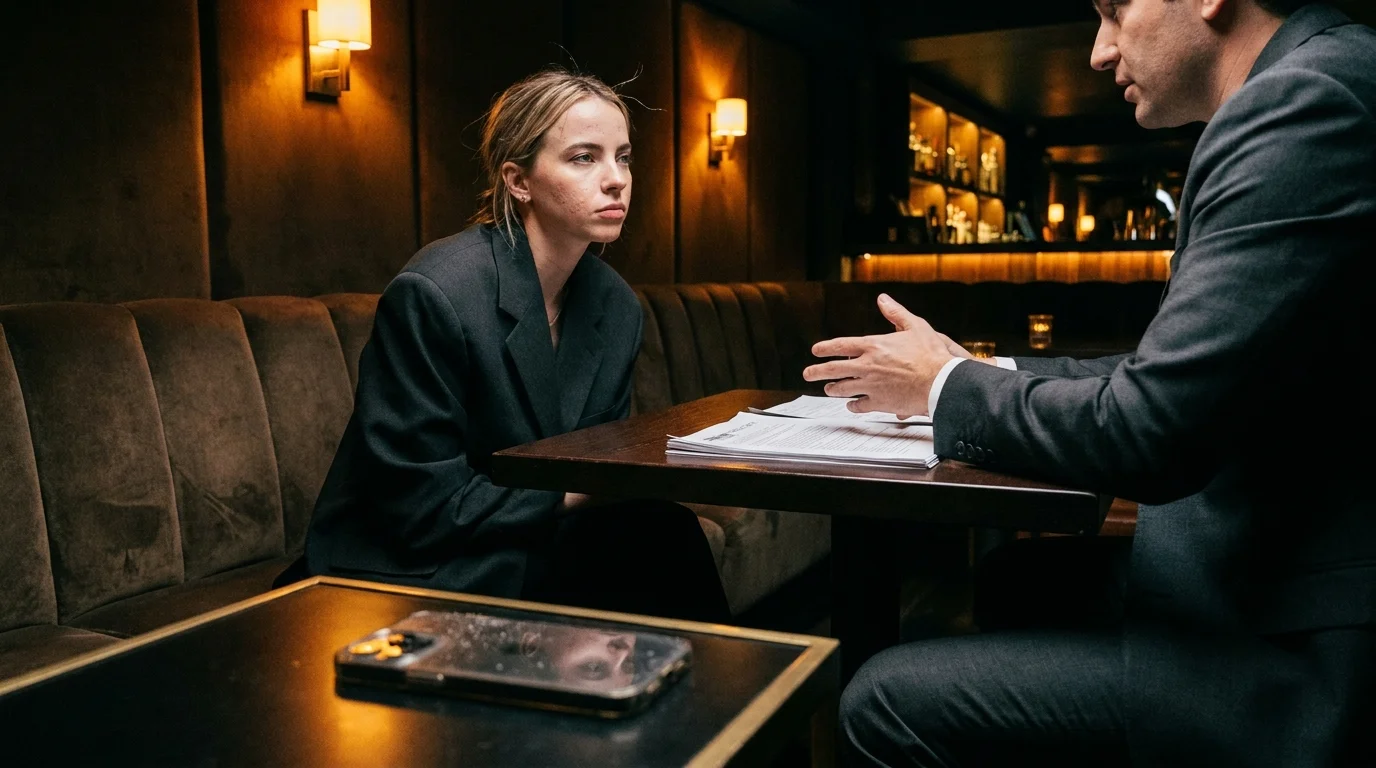
A smudged smartphone camera lens leans precariously against an overturned water glass on a dark walnut bedside table. The room hums with the dry, mechanical whisper of a high-end hotel air conditioner somewhere on the seventeenth floor. You watch the frame jitter as fingers adjust the angle, catching the flat glare of an amber reading lamp and the rumpled white duvet of an unmade king bed. On your screen, the broadcast feels haphazard, completely off-the-cuff, and almost aggressively ordinary.
For months, you watched Bobbi Althoff build an empire out of deadpan pauses, blank stares, and the magnetic illusion of somebody who wandered into global fame entirely by accident. This late-night hotel broadcast was supposed to be another intimate window into that deadpan world—a tired creator talking to her community in real time without a safety net. The illusion shattered in seconds when eagle-eyed viewers paused the playback to study the glossy wardrobe mirror standing quietly behind the headboard.
Reflected in that clean glass pane was not the solitary quiet of a solo traveler winding down after an appearance. Instead, viewers caught the unmistakable silhouette of a talent representative holding a clip-bound legal pad, paired with a structured outline taped beside the television console. What was sold as an accidental, vulnerable broadcast suddenly carried all the mechanical weight of a mid-budget studio commercial.
The Two-Way Mirror of Modern Relatability
We have entered an era where raw, unvarnished digital connection is no longer an organic happening; it is a meticulously managed commodity. When you watch an influencer balance a phone on a hotel pillow, your brain registers intimacy. You assume that because the lighting is harsh and the framing is crooked, the emotional exchange must be honest.
Digital talent agencies figured out years ago that polished studio production actually repels younger audiences. Perfection breeds consumer suspicion, while a shaky hand, a bad angle, and an awkward silence trigger our collective empathy. By staging chaos, agencies manufacture the exact texture of spontaneous life to slip marketing narratives past our natural defenses.
When that choreography gets exposed, the fallout is rarely about the product being pitched—it is about the sudden violation of trust. You realize that the awkward pause was not a genuine human hesitation, but a calibrated beat designed to hold your attention past the three-second algorithmic drop-off mark.
- Lea DeLaria streaming residual disclosure strips away illusions of billion view Netflix royalties
- Jeremy Strong intense method transformation forces major studios to freeze high budget ensemble roles
- Jay Shetty podcast crying confession exposes calculated PR scripts launching multi-million wellness apps
- John Galliano Paris sighting reveals sharp tailored wool coats and distressed leather boots
- Ben Affleck disastrous tabloid press bomb derails studio contracts launching gritty Oscar winning era
Greg Vance, a 38-year-old digital talent strategist based in Century City, spends his workweeks structuring these exact engagements for top-tier lifestyle creators. “The hardest thing to manufacture is indifference,” Vance explains during a breakdown of modern live-streaming contracts. “Audiences can smell a traditional pitch from miles away. If you want them to stay in the room, you give them mess. You tell the creator to leave the bed unmade, keep the lens slightly dirty, and let the silence hang until the viewer feels compelled to fill it in the comments.”
Deconstructing the Staged Glitch
The hotel livestream controversy did not ignite simply because a team was in the room. It ignited because modern fandom has transformed into a decentralized forensic unit. Viewers no longer just consume video; they dissect the background noise, track eye reflections, and measure the cadence of off-screen whispers.
When you look closely at how these moments are constructed, distinct patterns emerge across the creator landscape:
- The Calculated Distraction: An off-camera rustle or dropped item that forces the creator to look away, breaking the fourth wall to simulate unscripted life.
- The Ghost Director: Rhythmic hand signals or soft vocal prompts reflected in window panes, guiding the pacing of a supposedly rambling monologue.
- The Strategic Wardrobe Drift: Oversized, unbranded loungewear chosen specifically to downplay the commercial scale of the production team sitting three feet away.
- The Cue-Card Glance: Subtle micro-shifts in eye-tracking toward fixed points just above the phone rim before pivoting to a new conversation topic.
These techniques are not accidental mistakes; they are deliberate psychological levers. Agency playbooks rely on vulnerability to keep audiences emotionally invested while seamlessly integrating subtle brand placements or engineered controversy designed to trigger reaction clips across secondary platforms.
The Critical Eye: Auditing Authenticity in Real Time
Navigating the current social landscape requires a sharper set of mental tools. You do not have to abandon your favorite creators, but learning to recognize the architecture of manufactured intimacy helps you consume digital media on your own terms rather than falling for an agency prompt.
To evaluate whether a viral broadcast is an honest moment or a rehearsed agency beat, run through a quick sensory inventory:
- Check the Ambient Audio: Authentic hotel rooms have distinct, flat acoustic slapback. If the creator’s voice sounds compressed, rich, and directional without a visible microphone, a shotgun mic is likely mounted just outside the frame.
- Observe Eye-Line Geometry: Natural off-the-cuff speaking causes eyes to wander upward or unfocus. Constant, sharp horizontal darting to a fixed off-screen focal point indicates someone reading prompts or monitoring hand signals.
- Scan Peripheral Reflections: Mirrors, chrome fixtures, television screens, and exterior windows frequently reveal lighting rigs, teleprompter tablets, and lurking production staff.
- Analyze Topic Velocity: When a seemingly chaotic, rambling rant miraculously circles back to a specific brand, upcoming project, or controversy within a strict two-minute window, the chaos is scripted.
Applying this level of awareness changes the experience from passive consumption to active observation. You reclaim your attention span by treating these broadcasts as what they truly are: experimental micro-theater performed for an audience of millions.
The Death of the Accidental Icon
The collective shock surrounding Bobbi Althoff’s hotel broadcast marks a turning point in how we understand digital celebrity. The dream of the ‘accidental creator’—the regular person who simply turned on a phone and stumbled into fame through sheer quirks of personality—has largely run its course.
Behind almost every major deadpan persona or viral overnight sensation sits an enterprise of talent architects, media trainers, and retention specialists. Recognizing the machinery behind the lens does not mean you cannot enjoy the entertainment; it simply means you stop mistaking a well-rehearsed production for real friendship.
The moment an awkward silence is written into a call sheet, authenticity stops being a personality trait and becomes an invoice line item.
| Key Point | Detail | Added Value for the Reader |
|---|---|---|
| Manufactured Relatability | Agencies intentionally script bad angles, awkward pauses, and chaotic settings. | Helps you identify when your emotional empathy is being leveraged for commercial gain. |
| Forensic Viewing | Audiences use mirror reflections, eye-tracking, and audio cues to spot handlers. | Gives you practical inspection techniques to separate genuine streams from staged events. |
| The Parasocial Contract | Creators balance the illusion of raw friendship against multi-million-dollar agency deals. | Protects your mental energy by breaking one-sided emotional attachments to digital personas. |
Frequently Asked Questions
Why do creators stage hotel livestreams instead of using studios?
Hotel rooms project an image of transient vulnerability and isolation, making audiences feel like they are receiving exclusive, private access that polished studios cannot replicate.Did the mirror reflection prove the entire stream was scripted?
While brief moments may contain spontaneous reactions, the documented presence of talent representatives, cue boards, and topic outlines confirms the broadcast followed an engineered production structure.How do agencies benefit from an influencer acting awkward or uninterested?
Deadpan indifference disrupts standard advertising formats, reducing viewer skepticism and dramatically increasing retention rates among younger, ad-fatigued demographics.What is the parasocial stunt fallacy?
It is the tactical exploitation of audience trust through staged mistakes, faux vulnerability, and engineered drama designed to simulate genuine human connection for commercial profit.How can I tell if a creator is reading from an off-camera script?
Look for unnatural eye-tracking patterns toward fixed spots off-screen, consistent pacing that hits promotional beats within exact time intervals, and professional sound quality lacking room echo.