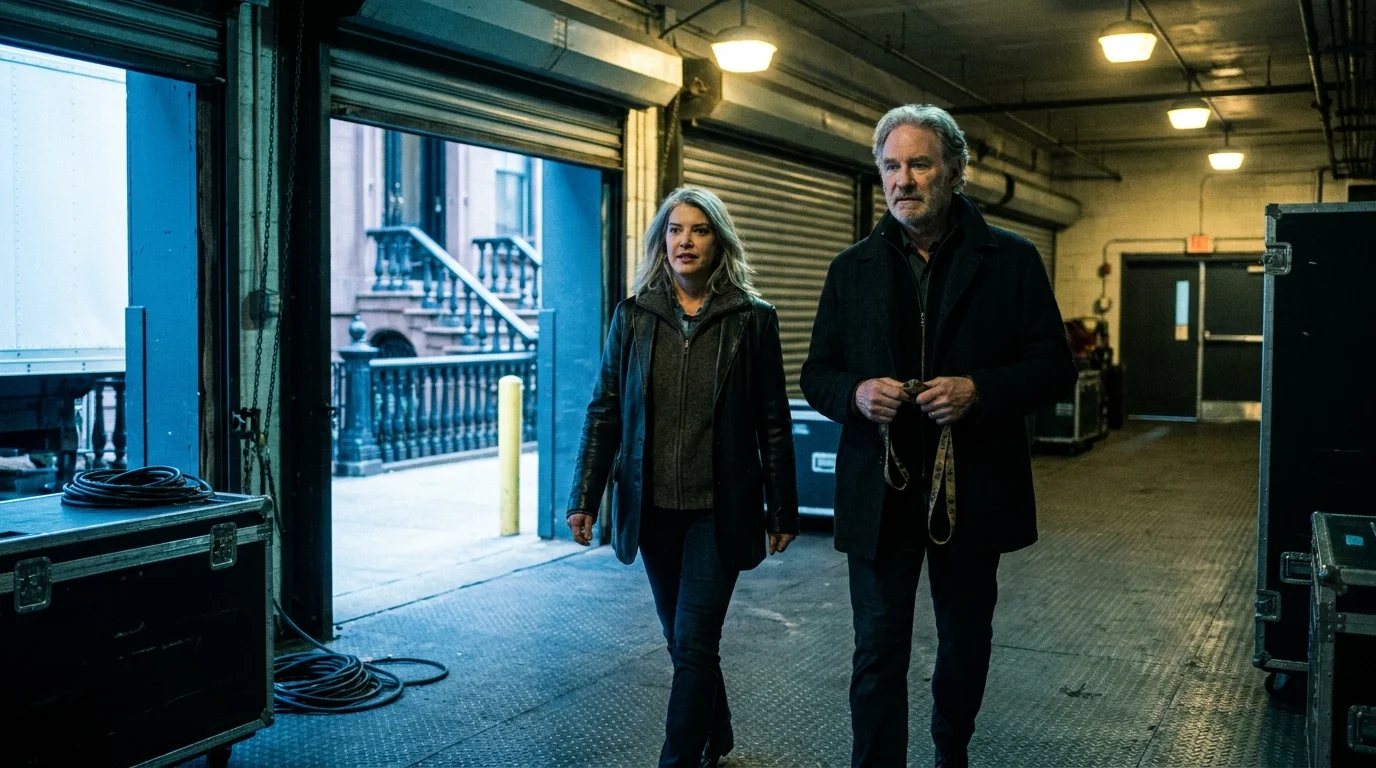
On a damp Tuesday evening on the Upper East Side, the city noise fades into the dull hum of distant crosstown traffic. Rain slicks the weathered iron railings outside a quiet pre-war brownstone, where heavy oak doors seal away the neon glare of modern celebrity culture. Inside, the rooms do not hum with the frantic anxiety of talent agents, box office returns, or curated social media algorithms. They smell of brewed tea, worn library books, and roasted cedarwood.
For thirty-five years, Kevin Kline and Phoebe Cates have maintained one of the rare, unbreakable unions in American show business. In an industry where public relations machines dictate that couples must walk synchronized red carpets, share coordinated digital confessions, and turn romance into a marketable product, these two chose an entirely different architecture. They simply pulled the curtains shut.
When you watch contemporary celebrity pairings collapse under the sheer weight of public surveillance, it is easy to assume that marital survival requires constant outward defense. We are taught to believe that transparency equals stability. Yet, the blueprint Kline and Cates perfected operates on the reverse principle: absolute geographic and conversational isolation from the machinery of fame.
By swapping the palm-lined, high-visibility compounds of Los Angeles for a walk-up existence in Manhattan, they created a boundary that Hollywood could neither penetrate nor monetize. Absolute silence became their armor.
The Air-Gap Principle: Why Visibility Starves Romance
Consider the engineering concept of an air-gap: a security measure where a computer system is physically disconnected from external networks to prevent breach. Kline and Cates applied this identical logic to their marriage the moment they wed in 1989. They realized early on that Hollywood operates like a furnace, feeding on the private intimacies of its workers until there is nothing left to fuel the home.
Most couples in entertainment make the mistake of treating the public gaze like harmless ambient light. In reality, that gaze acts like an active solvent, dissolving the subtle, private shorthand between two people. When your breakfast conversations are repackaged for morning talk shows or your domestic quirks become interview soundbites, the sacred becomes commodified. Preserving intimacy requires deliberate friction.
- Kim Kardashian and Kris Humphries tense couch interview strips away early marital bliss
- Paul Mescal and Daisy Edgar-Jones unscripted screen glances revealed authentic off-camera romance
- Sandra Bullock resurfaced nineties press junket footage reverses long-standing studio diva rumors
- Aubrey Plaza red carpet envelope snub triggers awkward backstage presenter chaos
- Anthony Hopkins blocks industry anxiety enforcing a strict five-minute script memorization boundary
Elena Vance, a 52-year-old marital archivist and family systems researcher in New York, often points to the Kline-Cates dynamic when counseling clients facing intense public or corporate scrutiny. “The fatal error high-performing couples make is bringing the conference table home,” Vance notes. “Kline and Cates survived because they treated their Upper East Side foyer as an uncrossable decontamination zone. Once that heavy oak door clicks shut, the entertainment industry ceases to exist.”
The Three Structural Boundaries of the Manhattan Bubble
Longevity is never an accident of chemistry; it is an achievement of structural engineering. To understand how Kline and Cates sustained a thirty-five-year bond without a single tabloid scandal or public fracture, you have to dissect the three deliberate boundaries that govern their private life.
1. The Dinner Table Embargo
At the Kline-Cates family table, industry talk is strictly forbidden. Scripts, casting frustrations, studio disputes, and contract negotiations are checked at the front entrance. By banning occupational chatter during family meals, they ensured that their children grew up around two present parents rather than two anxious performers balancing studio demands. Conversation remains anchored in humanity.
2. The Relocation Veto
While studio executives and agents repeatedly pushed the couple to establish a permanent base in Southern California during the peaks of their careers, they flatly refused. Manhattan offers something Los Angeles fundamentally cannot: the dignity of personal anonymity. On the sidewalks of New York, a legendary Oscar winner and an iconic screen star can blend into the morning crowd of commuters, dog walkers, and bodega shoppers without an entourage.
3. The Career Sequencing Agreement
Rather than competing for simultaneous career peaks, they adopted an unwritten rule of alternating professional intensity. When Cates stepped back from Hollywood to raise their children and eventually build her Madison Avenue boutique, Blue Tree, Kline took on selective stage and screen projects. Neither partner felt abandoned.
Designing Your Own Domestic Quarantine
You do not need to be an Academy Award winner or own a historic brownstone to employ these containment protocols. Whether you are navigating corporate pressure, digital overload, or invasive social circles, you can construct a resilient perimeter around your relationship using straightforward, intentional rules.
Establishing this space requires pruning the external noise before it crosses into your living room. The process is quiet, repetitive, and deeply restorative.
- Establish a Digital Perimeter: Designate the first sixty minutes after coming home as a strict screen-free window where no work communication is acknowledged.
- Enforce the Occupational Ban: Create a dedicated rule where work grievances cannot be raised during shared meals or inside the bedroom.
- Cultivate Local Anonymity: Build daily routines around neighborhood spots where your professional identity carries zero weight.
- Sequence Your Priorities: Coordinate your high-stress career seasons so both partners are not burning emotional reserves at the exact same moment.
Treat your relationship like an unlisted phone number. The fewer people who have access to its inner workings, the safer it remains from outside distortion.
The Quiet Victory of an Unseen Life
In a culture that constantly demands your vulnerability be published, broadcast, and validated by strangers, choosing privacy is an act of quiet rebellion. Kevin Kline and Phoebe Cates proved that longevity does not require public defense. It simply requires you to value the reality of your life far more than its performance.
When you stand on a rain-washed sidewalk looking up at an ordinary Manhattan brownstone, there are no flashing cameras or publicists orchestrating the narrative. There is only a locked door, warm amber light glowing through frosted glass, and the enduring peace of two people who chose each other over the noise of the world. The greatest love stories are private.
“A marriage does not survive because the world applauds it; it survives because the world is kept out of the room.”
| Key Point | Detail | Added Value for the Reader |
|---|---|---|
| Geographic Distance | Refusal to settle in Los Angeles production hubs. | Eliminates constant industry comparison and casual social pressure. |
| Topic Embargo | Zero career talk permitted at the family dinner table. | Protects domestic spaces from work-induced emotional fatigue. |
| Intentional Obscurity | No joint publicity stunts or curated media narratives. | Preserves authentic relationship dynamics away from external judgment. |
Frequently Asked Questions
How long have Kevin Kline and Phoebe Cates been married?
The couple married in 1989 and have sustained their marriage for over thirty-five years while living primarily in New York City.Why did Phoebe Cates leave acting at the peak of her career?
Cates chose to step away from full-time film acting to focus on raising their two children and later founded her successful Upper East Side retail boutique, Blue Tree.Did they ever live in Hollywood during their careers?
No, they made a deliberate choice to keep their primary residence in Manhattan to avoid the social and professional pressures inherent to the Los Angeles entertainment circuit.How do they handle public events and red carpets?
They attend industry functions sparingly and only to support specific professional milestones, consistently avoiding joint celebrity lifestyle press or invasive home features.Can these privacy principles work for non-celebrity couples?
Yes, establishing clear boundaries around after-hours work communication, limiting social media exposure, and protecting shared domestic routines provides equal stability for any relationship.