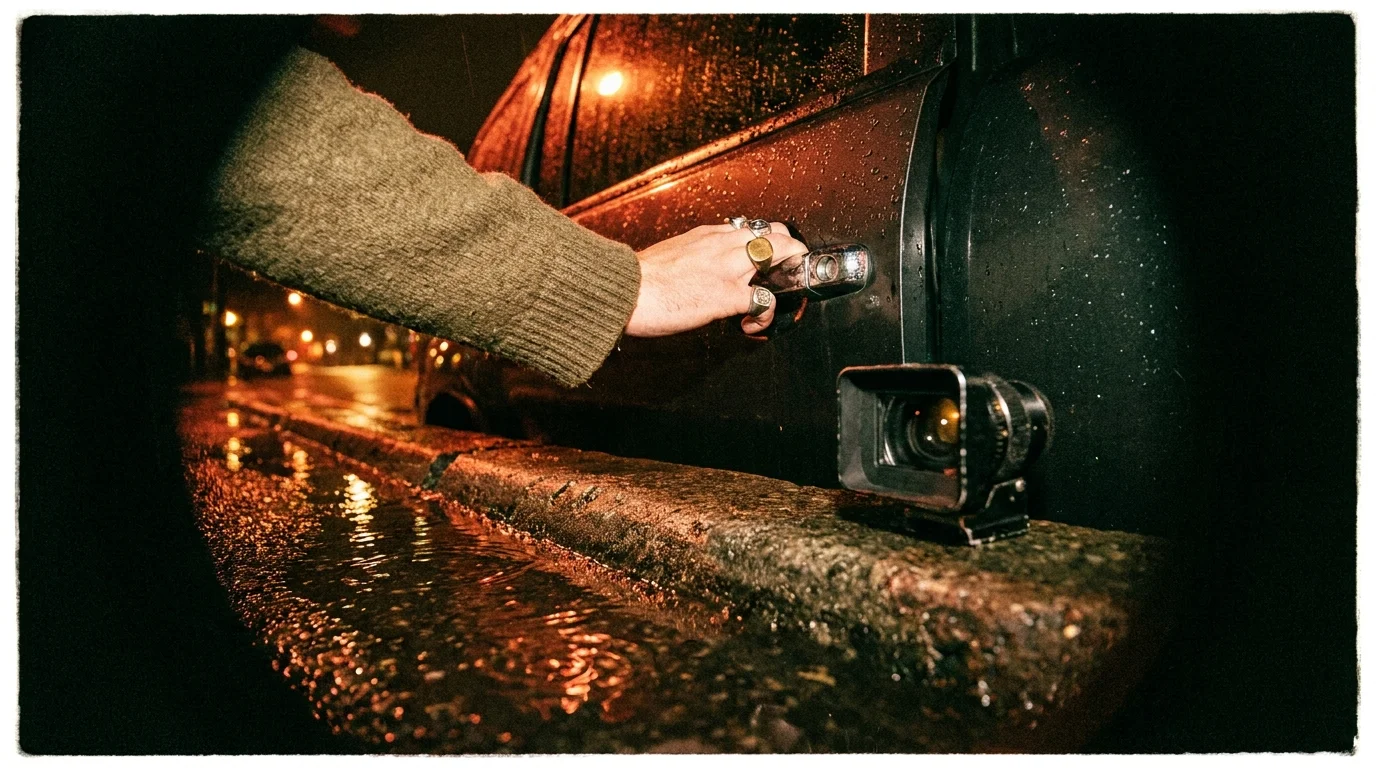
The dim, wood-paneled office smelled faintly of dried paperbacks and damp Boston autumn air. Through the heavy rubber eyecup of a Panavision 35mm camera, the world narrowed down to a single subject: a therapist in an oatmeal-colored, dusty wool cardigan sitting across from a defiant South Boston prodigy. You can almost hear the soft hum of the camera motor spooling celluloid in the quiet room, a steady rhythm meant to record precise, rehearsed emotional beats.
Director Gus Van Sant called action, expecting the scripted dialogue crafted by two young writers eager to prove their dramatic range. The script called for quiet intimacy, a measured exchange about vulnerability and human connection. But the air changed the moment Sean Maguire leaned forward, resting his forearms on his knees.
Instead of reciting the written lines, Robin Williams went completely off-script. He began weaving a tender, hilariously domestic memory about his late wife’s nocturnal flatulence, recounting how she once woke up the family dog with the sound. The frame physically began vibrating as the camera operator silently fought for breath behind the lens, unable to suppress his laughter.
If you watch that scene in the finished cut of Good Will Hunting, the camera micro-jitters up and down for a fraction of a second. That tiny imperfection is not a technical failure; it is the physical imprint of genuine, unscripted human joy captured permanently on celluloid.
The Imperfection Blueprint: Why Rigid Scripts Kill True Connection
In modern visual storytelling, the pursuit of sterile perfection often strips away the pulse of a scene. Traditional film training teaches you that every movement must be storyboarded, every line delivered with metronome accuracy, and every camera move stabilized within an inch of its life. Yet the scenes that linger in your memory years later rarely belong to the rulebook.
Think of classic film production like building a brick wall: you lay down the mortar of structure and the bricks of text. Unplanned vulnerability functions like morning frost, seeping into the microscopic cracks and expanding the entire structure into something living and organic.
- Kevin Kline and Phoebe Cates enforce strict Manhattan isolation protecting their thirty-five year marriage
- Kim Kardashian and Kris Humphries tense couch interview strips away early marital bliss
- Paul Mescal and Daisy Edgar-Jones unscripted screen glances revealed authentic off-camera romance
- Sandra Bullock resurfaced nineties press junket footage reverses long-standing studio diva rumors
- Aubrey Plaza red carpet envelope snub triggers awkward backstage presenter chaos
When Williams veered off the page, he was not simply making a joke to break tension. He gave Matt Damon’s character—and the audience—an authentic doorway into grief. By choosing an embarrassing, profoundly human flaw rather than a poetic, idealized trait, he illustrated what real love looks like: cherishing someone for their idiosyncrasies rather than their manufactured perfection.
The Room Where Celluloid Caught Fire
On that Toronto soundstage in 1997, camera operator David Crone, then a seasoned veteran of demanding cinema sets, was tasked with holding a tight medium shot on Williams. Crone had worked alongside visionary directors and understood the physical discipline required to keep a heavy rig rock-steady. But when Williams spun the story about his wife waking herself up and blaming the dog, the comedic timing struck with the force of an unannounced physical wave.
Crone held the camera body against his shoulder, biting his cheek until it bled to avoid making a sound on the boom mic. Matt Damon’s laughter in that shot was completely genuine—you can see his eyes widen in authentic delight before he collapses forward in his chair. That take was not reshot for stability. The creative team recognized that a slightly trembling frame held infinitely more emotional currency than a smooth, emotionally detached re-take.
Layering the Unscripted Spark Across Creative Mediums
You do not need an Oscar-winning soundstage to apply the mechanics of this scene to your own creative projects, public speaking, or interpersonal communication. Real resonance requires leaving room for spontaneous honesty.
For the Precision Storyteller
If your instinct is to control every beat of a narrative or presentation, build in structured white space. Write your outline firmly, but consciously leave your conclusions open to immediate room chemistry. Allow spontaneous conversational detours to breathe instead of frantically steering the conversation back to your prepared cue cards.
For the Visual Creator
Whether you are editing video, framing photography, or designing a brand identity, stop polishing away the friction. Micro-shakes, ambient room tone, and natural pauses give the viewer’s brain permission to believe what they are experiencing. Perfection creates a pane of glass between you and the audience; texture lets them touch the moment.
The Intentional Detour: How to Cultivate Spontaneous Resonance
Achieving this level of authenticity is not about abandoning preparation; it is about preparing so deeply that you earn the right to wander. When you understand your core message completely, you no longer fear going off-script.
Apply these mindful adjustments the next time you need to communicate a deeply felt idea:
- Establish the Anchor: Know your scene’s core emotional truth before you speak, whether it is empathy, defiance, or grief.
- Surrender the Script: Speak to the specific human being sitting two feet from you rather than the imaginary audience in your head.
- Value the Quirk Over the Ideal: When describing memories or concepts, highlight the peculiar, idiosyncratic details instead of polished generalities.
- Embrace the Jitter: If a mistake causes genuine laughter or vulnerability, keep it in the final product rather than erasing the moment.
The Human Margin That Algorithms Cannot Replicate
In an era dominated by algorithmic precision and glossy digital filters, the raw wobble of a 35mm camera rig reminds us of what actually moves the human spirit. It is the uncalculated, slightly messy edge where two people drop their defenses and connect over something real.
When Robin Williams made that crew laugh until their shoulders shook, he proved that the most profound moments in art cannot be engineered in advance. They must be discovered in the quiet space between intention and surprise.
Real intimacy is found in the idiosyncratic flaws we choose never to edit out.
| Key Point | Detail | Added Value for the Reader |
|---|---|---|
| The Improvised Flatulence Story | Absent from the script, invented on the spot by Robin Williams. | Teaches that specific, humble details create stronger emotional bonds than abstract drama. |
| The Shaking Camera Frame | Caused by the operator laughing uncontrollably behind the viewfinder. | Demonstrates that technical imperfections often enhance emotional authenticity. |
| Matt Damon’s Genuine Reaction | Pure, uncalculated laughter caught live in the master take. | Shows how true vulnerability invites equal openness from your creative partner. |
Frequently Asked Questions
Did Gus Van Sant try to cut out the camera shake?
No. Van Sant and the editing team recognized that the camera movement and Matt Damon’s authentic reaction were far more powerful than a technically pristine alternative take.Was any part of the wife’s memory in the original screenplay?
The original script called for a thoughtful discussion on intimacy, but the specific story about his wife passing gas in her sleep was entirely conceived by Williams in the moment.How did the sound crew keep from picking up the operator’s laughter?
The camera operator held his breath and suppressed vocal noise completely, causing his entire torso and the mounted camera to shake silently.Why does this scene resonate so strongly with audiences decades later?
It reframes love not as an impossible pursuit of perfection, but as the deep affection for another person’s human eccentricities and flaws.How can creators apply this lesson to modern storytelling?
By resisting the urge to over-edit or smooth out natural conversational rhythms, allowing raw human chemistry to take precedence over rigid formatting.