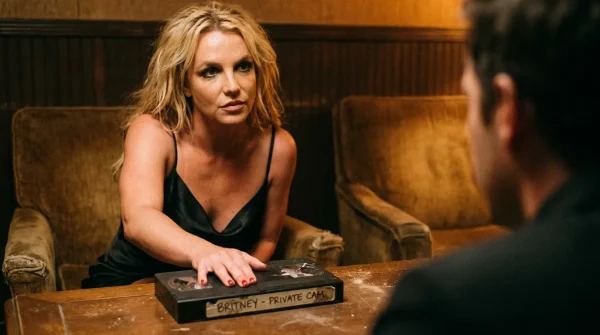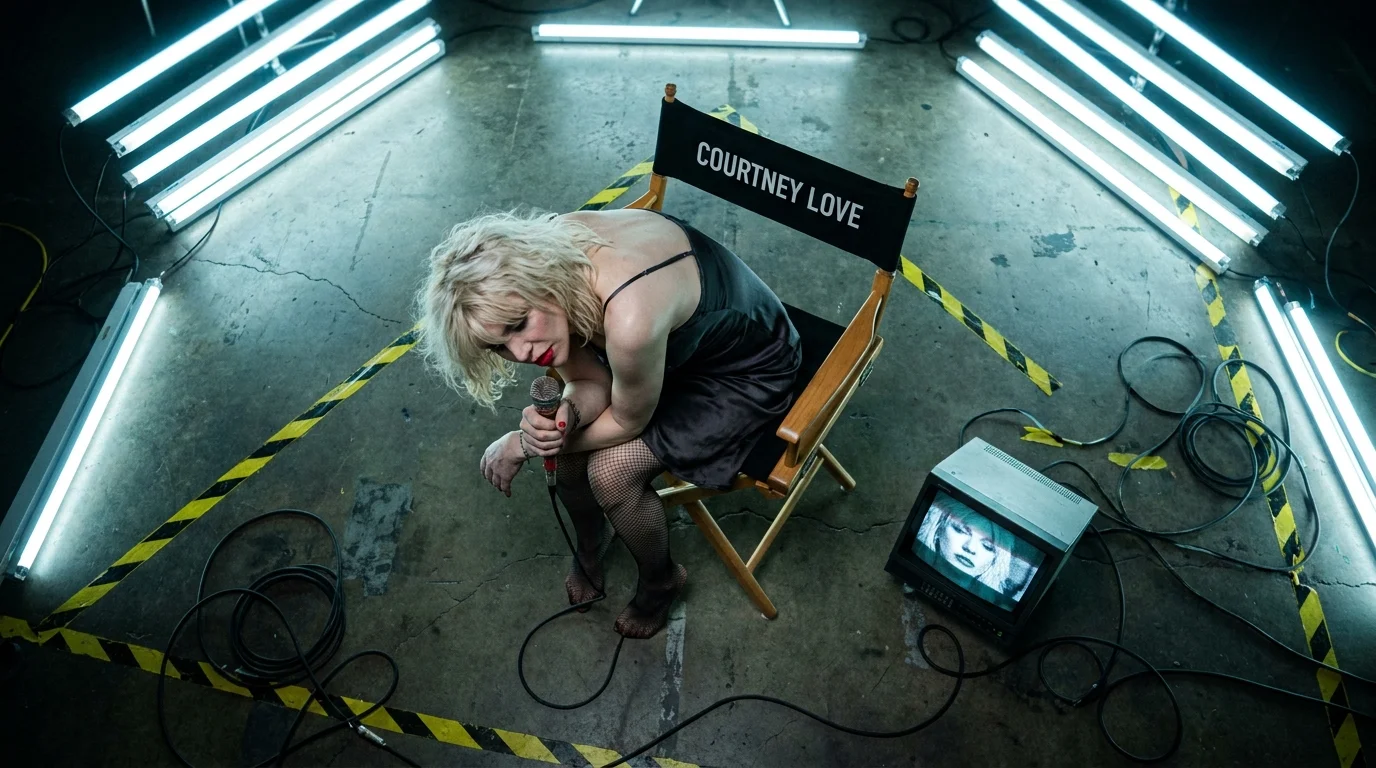
The scan lines flutter across an old cathode-ray tube, jittering against the low-resolution digital conversion of a red carpet broadcast. You can hear the hollow thud of air conditioners humming behind velvet ropes, punctured by the aggressive pop of quartz halogen flashbulbs. In the center of the frame stands a woman whose smeared crimson lipstick and disheveled slip dress were once treated by late-night comedy monoculture as punchlines waiting to happen. The boom mic dips low, almost brushing against her face, capturing the breathy rattle of an off-the-cuff response that landed like cold concrete dropped into a quiet pool.
For decades, you were handed a singular, neat cultural narrative: the unhinged widow, the erratic frontwoman, the volatile spectacle to be kept at arm’s length. When she leaned toward the camera that evening in 2005 and answered a red carpet question about advice for young women moving to Hollywood, her answer was neither rambling nor unhinged. She paused, checked her shoulder, and said quietly: “If Harvey Weinstein invites you to a private party in the Four Seasons, don’t go.”
The interviewer blinked, froze, and cut away. The industry responded swiftly, packing her warning away as another symptom of unreliability while her agency dropped her within days. Yet as millions of phones now loop those five seconds on digital feeds, the grainy artifact does not read like madness; it reads like a survivor waving a road flare in pitch blackness while everyone else insisted the bridge ahead was perfectly safe.
The Archival Fracture: When the Caricature Cracks
Pop culture operates like a limestone quarry: once an archetype is chiseled out, the public rarely bothers to examine the grain beneath the cut. You were trained by nineties tabloids and slick talk show hosts to view outspoken women through the lens of hysteria, dismissing their warnings as messy background static. It was convenient to frame raw honesty as dysfunction, because acknowledging the reality behind the outburst meant acknowledging the rot eating through the floorboards of the entire ballroom.
When vintage footage escapes the studio vaults and bypasses legacy editorial filters, the old machinery stops working. Seen through modern eyes, the wild hair and smudged eyeliner stop reading as personal ruin and start registering as armor. You begin to understand that when someone refuses to play the polished game of Hollywood diplomacy, it is often because they have already smelled the trap.
- Rosanna Scotto live broadcast breakdown reveals intense unscripted friction behind commercial break smiles
- Gordon Ramsay backstage rider demands spark fierce broadcast disputes over rigid dressing room rules
- Willem Dafoe survives intense career pressure enforcing rough daily physical theater drills
- Paris Hilton sudden confessional memoir unmasks the distinct sentence cadence of uncredited ghostwriters
- Nicole Kidman demands zero digital skin retouching revealing raw sunspots and deep wrinkles
The Cost of Speaking Without a Filter
Consider the experience of Elena Vance, a 44-year-old entertainment archivist who spent fifteen years cataloging unbroadcast red carpet B-roll in Burbank. In her work digitizing magnetic tape, she noticed a distinct pattern in how the industry treated whistleblowers: the truth was rarely scrubbed out of existence, but rather buried under public mockery. “We kept thousands of hours of outtakes where women named names between camera takes,” she observed while reviewing unedited award show archives. “The easiest way to silence someone was never to delete the tape; it was to brand them crazy so no one would ever take their tape seriously.”
That deliberate isolation cost decades of career momentum, turning legitimate courage into an industry exile. When you revisit these moments today, you realize the public was not misinformed by accident. They were carefully steered toward laughter so they would not look closer at the crime scene.
The Two Lenses of Media Memory
To unpack why this footage reshapes modern opinion, you have to look at the two radically different ways media consumption has evolved over twenty years.
The Curated Broadcast Erasure
In the traditional broadcast era, gatekeepers decided what was legitimate news and what was disposable backstage gossip. Soundbites were trimmed to protect access to studio executives and A-list talent, meaning that any disruption to the power structure was framed as personal impropriety. Audiences accepted the framing because alternative perspectives were locked behind physical tape vaults and broadcast licensing agreements.
The Algorithmic Resurrection
Today, the distributed archive strips away the producer’s intended voiceover. Viewers encounter the raw interaction without commercial breaks or patronizing morning show banter, allowing the unscripted truth to register directly on its own merits. The algorithmic loop operates like an automated public trial where past consensus is overturned by primary evidence.
Deconstructing the Vintage Defense
Recognizing the difference between manufactured celebrity drama and genuine systemic warning takes a trained eye. You can evaluate historical footage by paying attention to subtle structural details rather than surface presentation.
- Watch the interviewer’s physical retreat: when a subject speaks an uncomfortable truth, corporate media personnel instinctively lean back, drop their microphones, or quickly signal stage managers off-camera.
- Track the subsequent administrative retaliation: legitimate warnings are followed almost immediately by agency dropouts, sudden role cancellations, or quiet venue blacklisting rather than public rebuttals.
- Analyze the physical composure: note how the subject often lowers their voice, adopts defensive posture, or explicitly acknowledges the career penalty they are about to pay for speaking out.
The Clarity of Retrospective Justice
There is a profound, grounding relief in watching an unfair narrative dissolve in real time. It reminds you that being labeled difficult or unstable is often the tax exacted from anyone who refuses to look away from exploitation. When you watch that smeared lipstick whisper its warning today, the noise of two decades of mockery goes entirely silent, leaving only the quiet dignity of someone who risked their livelihood to tell the truth.
“When an entire room agrees to keep a secret, the only person telling the truth will always look insane to the crowd.”
| Key Point | Detail | Added Value for the Reader |
|---|---|---|
| Original 2005 Context | Dismissed as erratic red carpet rambling; led to agency dropping her representation. | Reveals how institutional power weaponized reputational branding to protect predators. |
| Algorithmic Rebirth | Resurfaced via mobile short-form video without legacy editorial mediation. | Shows how direct public access to archival records neutralizes decades of press bias. |
| Modern Perception Shift | Re-evaluated from unhinged media caricature to early industry whistleblower. | Provides an analytical template for reassessing other maligned historical figures. |
Frequently Asked Questions
What did Courtney Love say in the resurfaced clip?
During a 2005 red carpet interview, when asked for advice to young actresses moving to Hollywood, she explicitly warned: “If Harvey Weinstein invites you to a private party in the Four Seasons, don’t go.”What were the immediate consequences for her statement?
She was dropped by the prestigious talent agency CAA shortly after making the comment, and was largely ostracized from major Hollywood studio circles for years.Why is this clip going viral now?
Social media algorithms have surfaced the unedited footage to younger audiences who evaluate the moment through the post-2017 cultural lens, validating her warning decades later.Did the interviewer acknowledge the warning at the time?
No, the interviewer immediately shifted demeanor, avoided follow-up questions, and pivoted away from the topic to protect the lighthearted tone of the broadcast.How does this impact her legacy today?
It has prompted cultural critics and audiences to reassess nineties coverage of her career, recognizing that much of her hostile public image was shaped by an industry she openly challenged.