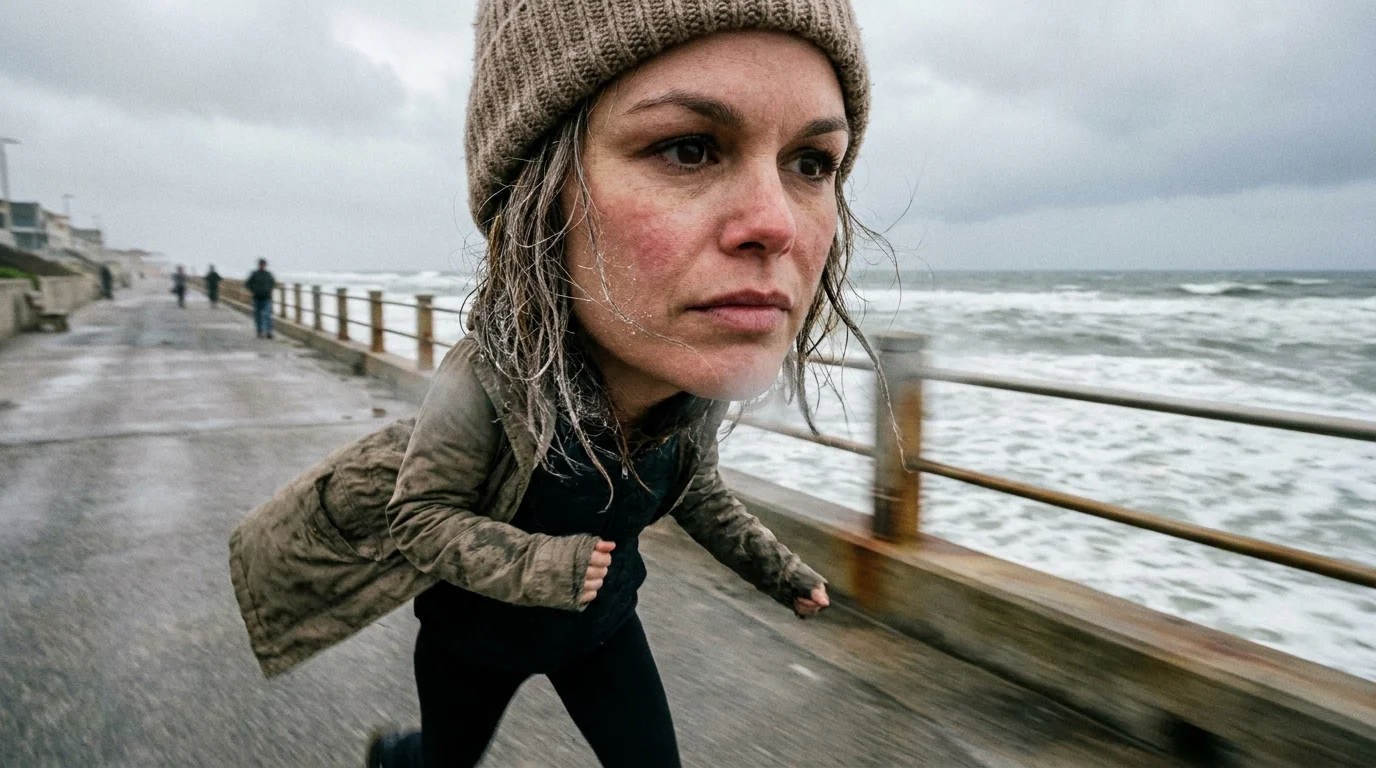
A sharp Pacific dawn at 54 degrees Fahrenheit carries a bite that studio lights cannot soften. Along the damp stretch of Manhattan Beach standing in for Newport, coastal fog hangs low over the shore, mixing with the sharp smell of diesel generators and cold brine. Between takes, crew members bundle in heavy canvas jackets while production assistants hover with parkas to shield actors shivering in thin cotton shirts.
When the clapperboard snaps and the director calls rolling, you watch two twenty-something actors step directly into the surf line. Windblown strands of wet hair cling to salt-crusted cheeks against a chilly ocean tide, but their posture defies the physical misery of the call sheet. The script called for snappy banter, sharp emotional armor, and the deliberate emotional distance typical of early teen melodrama.
Instead, the playback monitor caught something unwritten. As the ocean spray misted their faces, an unscripted thumb brushed along a wrist bone, lingering long after the line was delivered. Their eyelids fluttered with a rhythm that defied coached blocking. It was an unmistakable somatic slip, revealing to anyone watching the unedited footage that Rachel Bilson and Adam Brody were no longer merely interpreting Josh Schwartz’s dialogue; they were quietly using the camera crew as an alibi for falling in love.
The Thermal Leak: Why Mechanical Technique Cannot Disguise Biological Truth
Camera lenses are cruel instruments of measurement. You can train an actor to hit a mark within a quarter-inch, hit a vocal pitch on cue, and cry on command using glycerin drops or diaphragmatic strain. Yet the central nervous system refuses to obey stage directions when genuine romantic interest takes over the body.
Think of authentic attraction like heat escaping through a hairline crack in an insulated wall. Under 35mm film stock, the human eye processes involuntary somatic micro-expressions that no acting coach can reliably construct from scratch. When you see two people who share genuine off-screen intimacy, their respiration settles into an unspoken cadence, much like breathing through a pillow together in complete darkness.
In standard television blocking, physical contact is utilitarian. Actors arrive at their mark, deliver physical contact as punctuated choreography, and break touch the split second a director yells cut or an off-camera cue sounds. When Bilson and Brody shared that seaside exchange, the physical detachment never happened. Her fingers remained resting against the wool of his sweater, their knuckles brushing against the cold spray with an unprompted tenderness that felt almost intrusive to witness on a broadcast network monitor.
- Drew Barrymore resurfaced nineties interview completely reverses public backlash through a crackling cassette tape confession
- Morgan Freeman stiff red carpet posture triggers viral speculation over an unannounced executive studio feud
- Bradley Cooper polarizes festival staff demanding chilly drafty backstage halls and rigid corridor silence
- Pedro Pascal enforces extreme daily silence behind blackout curtains to survive brutal Hollywood pressure
- Rebel Wilson glossy memoir rollout sparks fierce skepticism exposing an uncredited veteran ghostwriter rhythm
Elena Ortiz, a 51-year-old veteran script supervisor who spent two decades tracking continuity across major prime-time network dramas, recalls the distinct telltale signs of that era. During one early beach scene setup, she watched the pair through the village monitor, noting how Bilson’s eyes consistently dropped to Brody’s mouth during moments where the script explicitly demanded defensive eye rolls. Elena noted in her production margins that the physical warmth between takes matched the takes themselves, an undeniable indicator that the performers had abandoned their professional boundaries long before publicists caught wind of the relationship.
Anatomy of the Bleed: Three Unrehearsed Tells Captured on Film
When you rewatch early seasons of classic serialized dramas, certain scenes stand completely apart from the surrounding narrative engine. The narrative pacing halts because the actors are operating on an entirely different emotional frequency than the page dictates. These moments are defined by three distinct physical markers:
The Deceleration of Touch: Rehearsed stage movement tends to be crisp and efficient to satisfy strict shooting schedules. In contrast, genuine romantic affection slows down at the perimeter of contact. Bilson’s hands consistently softened before touching Brody’s arm, turning a scripted push into an exploratory stroke that dragged across the frame like honey.
The Asymmetrical Eye Trace: Actors are trained to hold eye contact with their scene partner’s dominant eye to keep the camera angles clean. When real attraction enters the frame, the gaze begins wandering unconsciously across the lips, the jawline, and the hollow of the throat. Brody repeatedly missed standard eyeline targets, his attention pulled instead by Bilson’s smile as she squinted against the salty breeze.
Shared Respiratory Cadence: Pay attention to the rising and falling of their shoulders while standing close in the wind. Rehearsed performers breathe on their own dialogue rhythms. Partners involved in an off-camera bond naturally mirror each other’s breathing patterns, creating a rhythmic harmony that grounds the scene regardless of ambient production noise.
The Field Guide to Spotting Accidental Chemistry
You do not need an industry badge to distinguish between manufactured romantic tension and the unscripted biological bleed of two co-stars falling in love. The camera always leaves a trail if you know where to pause the frame.
- Track the release point of every casual touch. Rehearsed contact snaps back cleanly to the neutral resting position; real intimacy lets the fingers drag across skin until gravity forces separation.
- Watch the micro-reactions to unscripted accidents. When Brody fumbles a beach prop or Bilson’s hair whips across her eyes, observe whether their laughter comes from polite performance or deep, familiar amusement.
- Note the distance between takes. Background extras and crew movements reveal whether co-stars retreat to their separate marks or drift together to share body heat without prompting.
Use this tactical viewing toolkit during your next rewatch of classic coastal scenes:
- Frame Speed: Slow playback to 0.5x speed during transitional dialogue breaks.
- Focal Target: Focus entirely on the hands and collarbones rather than the eyes delivering lines.
- Audio Isolation: Listen for soft, unscripted exhales right before line deliveries that never made the printed script.
The Staying Power of Accidental Truth
Modern television production relies heavily on LED volume walls, post-production color grading, and tightly managed social media rollouts. Audiences today are inundated with calculated content where every public appearance, late-night quip, and promotional interview feels calibrated by an army of brand managers. Because manufactured perfection is now the baseline, genuine human vulnerability has become the rarest currency in entertainment.
That salt-crusted morning in Southern California remains etched in the cultural memory because it was fundamentally uncontainable. You can build elaborate seaside sets and write dialogue designed to tug at heartstrings, but you cannot fake the flush in a performer’s cheeks when the ocean wind bites and the touch of their co-star provides the only real warmth on the beach. Rachel Bilson and Adam Brody offered viewers a rare glimpse through the theatrical veil—a reminder that despite the heavy cameras, the endless retakes, and the damp ocean chill, real love refuses to stay on its mark.
Intimacy on screen is never about the words assigned to the page; it is revealed entirely by the physical hesitation that occurs right after the dialogue ends.
| Key Point | Detail | Added Value for the Reader |
|---|---|---|
| Somatic Hesitation | Lingering contact lasting beyond scripted dialogue cues. | Allows viewers to identify authentic emotional connection behind rehearsed acting. |
| Environmental Realism | Harsh coastal elements challenging performer composure. | Shows how cold conditions expose unscripted instincts that studio stages hide. |
| The Unlogged Tail | Micro-expressions captured in the seconds right before a director calls cut. | Provides a diagnostic framework for spotting real-world co-star romances on screen. |
Frequently Asked Questions
Did the producers know about Bilson and Brody’s relationship early on?
Showrunner Josh Schwartz and the production team quickly noticed that the pair’s natural chemistry far exceeded their scripted subplots, leading writers to expand their storylines well ahead of schedule.Which specific beach scene gave away their off-screen bond?
Early season episodes featuring coastal confrontations in the chill surf demonstrated lingering physical touches and unscripted laughter that departed markedly from standard rehearsal blocking.Can actors deliberately fake micro-expressions of attraction?
While skilled actors can emulate broad romantic gestures, autonomic nervous responses like pupil dilation, respiratory mirroring, and tactile hesitation cannot be entirely manufactured on cue.How long did Rachel Bilson and Adam Brody date during production?
The co-stars maintained an off-screen relationship for roughly three years during the height of the series’ cultural popularity, mirroring their fictional romance for much of its run.Why do unscripted romances resonate more strongly with viewers?
Audiences instinctively recognize physiological honesty over scripted performance, making moments of genuine human connection feel timeless, nostalgic, and deeply personal.