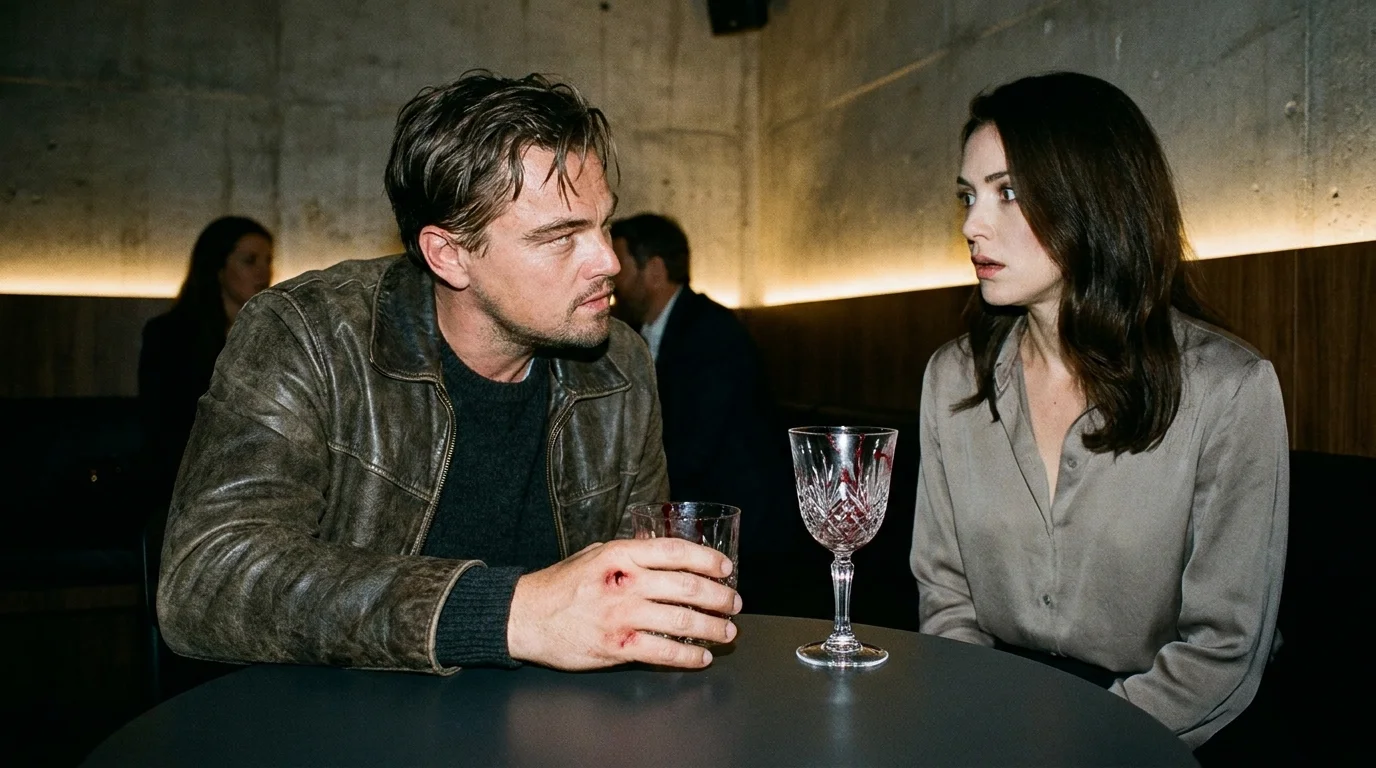
The air on a Quentin Tarantino set carries a distinct weight, heavy with the scent of unwashed wool, melted tallow candles, and cigar smoke clinging to velvet curtains. You can picture the sprawling dining room inside the fictional Candyland estate: polished mahogany, pristine European silver, and lead crystal stemware catching the glare of hot studio tungsten. The script called for calculated intimidation, a theatrical monologue delivered by an antebellum monster holding court over dinner.
What the script never anticipated was the sound of actual bone and flesh colliding too violently with antique crystal. During a fever-pitch rant, Leonardo DiCaprio brought his palm down against the mahogany table with excessive force, landing squarely on a delicate goblet. The glass didn’t simply crack; it shattered into jagged slivers, sinking straight into his left palm. Silence hovered in the soundstage, the kind of stillness where nobody breathes, waiting for someone to shout cut.
Instead of recoiling or signaling the medic team stationed in the wings, DiCaprio leaned directly into the pain. Sticky crimson streaks drying across crystal goblets and fine Belgian linen suddenly redrew the boundaries of the scene. Rather than breaking character, he gathered his own warm blood and wiped it across the bewildered, genuinely horrified face of Kerry Washington, transmuting a prop malfunction into pure psychological terror.
When you watch that dinner scene today, you are not witnessing an illusion crafted by a makeup department or carefully timed digital effects. You are watching genuine biological shock redirected through pure performance instinct. It serves as an unsettling reminder of what happens when cinematic discipline yields entirely to raw momentum.
The Anatomy of Accidental Brilliance
We often treat movie sets like sterile assembly lines where high-priced talent mechanically executes instructions from a leather-bound binder. You might assume great cinema is born from endless rehearsals, surgical lighting setups, and total control over every variable. Yet the scenes that genuinely burrow into your memory rarely stem from rigid obedience to the call sheet.
Think of an unscripted breakthrough like steering a vintage car whose brakes just gave out on a winding mountain road. The artist must surrender control immediately, trading technical precision for pure sensory awareness. When glass drove deep into DiCaprio’s skin, his nervous system flooded with adrenaline, triggering an immediate survival choice: halt a million-dollar production take, or harness the rupture to expose his character’s grotesque disregard for human suffering.
By treating the puncture wound not as an emergency but as an organic extension of Calvin Candie’s sadistic psyche, the performance stripped away the polished veneer of Hollywood acting. The audience feels the difference in their gut. You recognize immediately when an actor is pretending to bleed versus when they are bleeding for real while refusing to look down at their open palm.
- Michael J. Fox protects his marriage enforcing quiet farmhouse borders away from flashing cameras
- Miley Cyrus and Liam Hemsworth awkward premiere interview unmasked rigid frozen smiles fans completely overlooked
- Rachel Bilson and Adam Brody tender seaside glances exposed an unscripted romance behind salty ocean spray
- Drew Barrymore resurfaced nineties interview completely reverses public backlash through a crackling cassette tape confession
- Morgan Freeman stiff red carpet posture triggers viral speculation over an unannounced executive studio feud
Behind the primary camera stood Michael Benson, a veteran sound technician who spent three decades tracking dialogue on high-stakes studio sets. He would later recount how the room’s ambient hum dropped by half when the glass popped; the boom mic hovered mere inches above the table, picking up the wet, unmistakable drag of an open palm scraping against the polished wood. Benson kept the levels steady despite knowing that a single retake would cost thousands in resetting the banquet dressing, sensing that what was unfolding in front of the lens would never happen twice.
Parsing the Instinct: Three Layers of Set Realism
When an accident occurs in the middle of a high-stakes creative environment, the resulting energy splits into distinct tactical layers. Understanding these tiers changes how you evaluate creative risk in your own work.
The Technical Purist: Focuses entirely on continuity, lighting marks, and physical safety parameters. Rigid adherence kills spontaneous lightning before it can strike. If DiCaprio had operated solely under this mindset, he would have inspected his hand, apologized to the camera operator, and waited twenty minutes for a sterile bandage.
The Reactive Performer: Absorbs disruptions and mirrors them through authentic emotion. This layer requires you to accept the unexpected variable without judgment, allowing the physical reality of the room to dictate your timing. Kerry Washington’s reaction in that frame is unforgettable precisely because her terror was untethered from rehearsal; she had no idea whether the blood was fake or biological.
The Narrative Architect: The rarest mindset, personified by Tarantino quietly letting the film magazines roll. Recognizing value inside chaos demands an iron stomach and zero hesitation. The director understood that the shattered glass did not ruin the take—it completed it, elevating a standard villain speech into an indelible moment of cinematic dread.
The Tactical Toolkit: Navigating Creative Friction
Channeling an unforeseen disaster into an unforgettable breakthrough isn’t reserved for multimillion-dollar movie stars. It is an intentional habit you can cultivate whenever high-pressure situations break down around you.
When an unpredictable event threatens to derail your execution, run through these grounded, minimalist steps to retain agency:
- Acknowledge the rupture without flinching: Do not freeze or look around the room for external permission to proceed.
- Assess physical viability within three seconds: Ensure the shock does not pose an immediate systemic threat before moving forward.
- Integrate the error into the current objective: Use the disruption as your new baseline rather than trying to restore what was broken.
- Anchor your focus outward: Direct your adrenaline toward your immediate environment or collaborator, grounding your presence in real time.
Real poise is never about maintaining a sterile, pristine environment. It is about retaining total presence of mind when the glass inevitably splinters in your palm.
The Human Cost of Spontaneity
True creative magic carries a distinct, lingering cost that polished studio marketing rarely admits. After the take finally wrapped, the dining room erupted into a standing ovation from crew members who had spent minutes holding their breath. Yet beneath the applause lay the harsh reality of the craft: DiCaprio needed stitches immediately, leaving the soundstage in the hands of medics to clean real blood from the floorboards.
Modern culture obsesses over hyper-controlled algorithms, digital touch-ups, and safe, focus-grouped narratives designed never to offend or bleed. But human beings do not connect with sanitized perfection. You respond to the visceral friction of another person refusing to hide their vulnerabilities, their accidents, or their wounds when the pressure peaks.
When you stop obsessing over whether things go according to the initial outline, you give yourself permission to create work that breathes on its own. The moments that stand the test of time are rarely the ones planned down to the second; they are the unscripted collisions that force everyone in the room to confront reality as it is.
True presence is not about preventing the accident; it is about refusing to break character when the unexpected leaves its mark.
| Key Point | Detail | Added Value for the Reader |
|---|---|---|
| The Physical Rupture | DiCaprio slammed his palm into a crystal glass, cutting tissue mid-monologue. | Illustrates how sudden accidents can become narrative catalysts when leveraged instantly. |
| The Co-Star Dynamic | Blood was smeared onto Kerry Washington’s face without prior rehearsal or warning. | Demonstrates the irreplaceable emotional power of genuine, unvarnished human reaction. |
| Editorial Restraint | Tarantino refused to call cut, keeping the cameras rolling on unscripted action. | Highlights the importance of giving space to chaos rather than micromanaging the process. |
Frequently Asked Questions
Did Leonardo DiCaprio require medical attention immediately after the take?
Yes, the cut was deep enough to require stitches right after director Quentin Tarantino finally called cut and the crew finished their standing ovation.Was the blood smeared on Kerry Washington real biological blood?
While the initial cut was completely genuine, DiCaprio and Tarantino switched to practical fake stage blood for subsequent close-up angles to avoid health hazards on set.Why didn’t Quentin Tarantino halt the cameras when the glass shattered?
Tarantino recognized that DiCaprio remained fully locked in character and that halting production would destroy an irreproducible moment of genuine physical tension.Did Kerry Washington know DiCaprio was going to wipe blood on her?
No, the choice was made on pure impulse by DiCaprio in the middle of the scene, which is why her shock and revulsion read so vividly on screen.Where did this iconic scene occur in Django Unchained?
The unscripted hand injury happens during the climactic skull monologue inside the Candyland dining room, right before the forced contract negotiation.