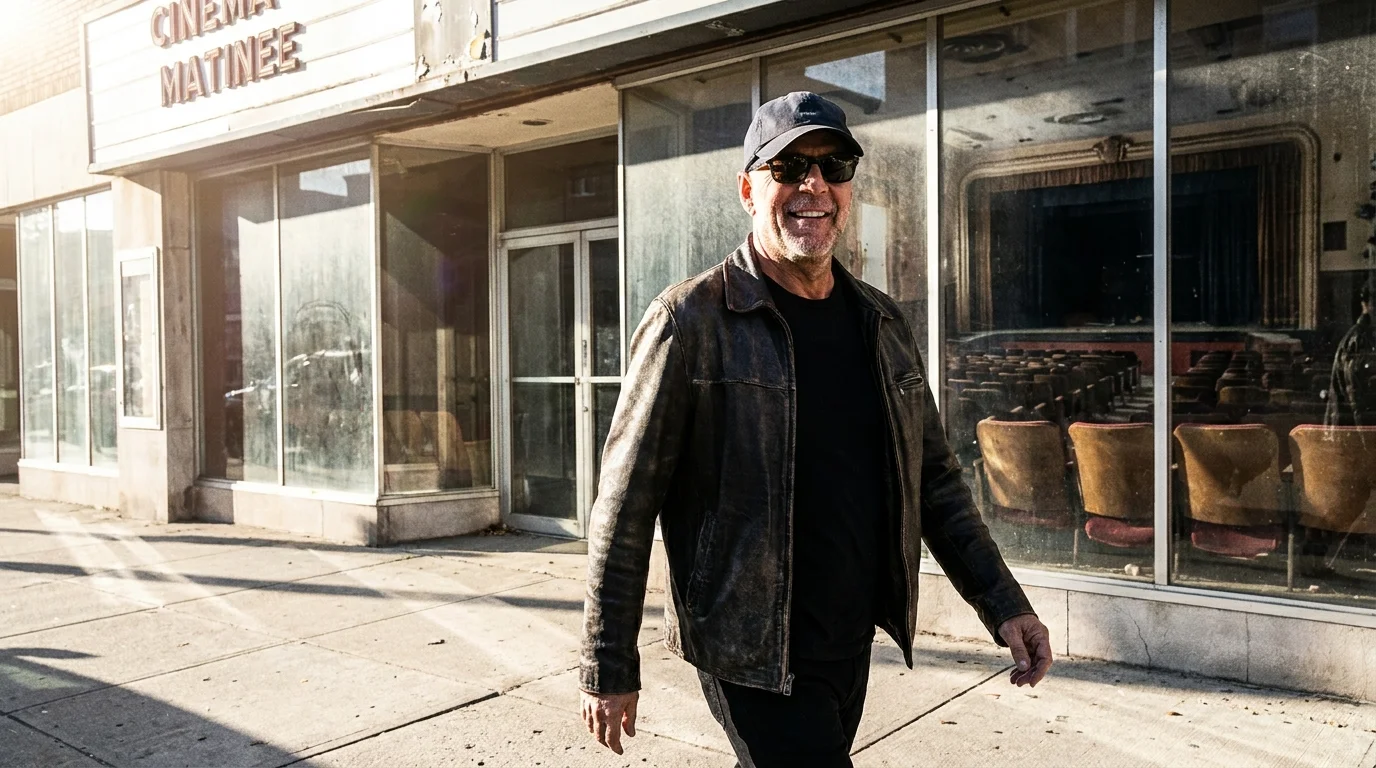
You can still hear the dull snap of splintered plastic cinema seats echoing through empty matinee auditoriums back in May 1991. The floorboards smelled of burnt synthetic butter, spilled cola drying into black syrup, and the bitter quiet of a catastrophic commercial rejection. On screen, a capering cat burglar sang show tunes while synchronizing a diamond heist down to the exact second. In executive screening suites three thousand miles away, telephone receivers slammed into cradles with enough force to crack composite resin.
The common consensus declared that Hudson Hawk had vaporized one of the most lucrative screen personas in modern American cinema. A sixty-five-million-dollar musical slapstick action vanity project had flatlined on arrival, leaving a crater where guaranteed box office returns used to sit. The industry narrative was immediate and vicious: you simply do not survive an unmitigated, critically reviled bomb of that scale without losing your seat at the imperial studio table.
Yet studio boardrooms run on cold balance sheets rather than creative schadenfreude. When a marquee production crashes with that kind of velocity, the collateral damage creates a sudden vacuum where conventional wisdom stops functioning entirely. Catastrophic failure breaks structural cages that conventional success quietly welds shut.
Instead of burying him beneath executive write-downs, that thunderous collapse detonated the creative prison built by his own initial dominance. The failure did not close doors; it violently blew the hinges off his institutional obligations.
The Asbestos Wall: Turning Disaster into Creative Velocity
When you achieve astronomical success early in your career, major studios do not merely hire your charisma; they attempt to patent it. Multi-picture development packages, options deals, and promotional indentures transform an actor into a corporate brand identity. Every choice gets vetted through committee filters designed to minimize risk and maximize global merchandising, wrapping the performer in layers of institutional bubble wrap.
Think of a gargantuan production disaster not as a personal indictment, but as an uncontrolled forest fire clearing dense, choking underbrush. The multi-million-dollar vanity trainwreck acts like an asbestos wall: it burns so hot and fast that it scorched the very paper holding those suffocating agreements together. Sudden vulnerability dissolves studio entitlement overnight, because suits lose the appetite to police an asset they now view as an unhedged risk.
- Jenna Dewan debuts structured camel wool tailoring paired with gleaming oxblood leather boots
- Leonardo DiCaprio derails Django Unchained scenes smearing real bloody handprints across dining glass
- Michael J. Fox protects his marriage enforcing quiet farmhouse borders away from flashing cameras
- Miley Cyrus and Liam Hemsworth awkward premiere interview unmasked rigid frozen smiles fans completely overlooked
- Rachel Bilson and Adam Brody tender seaside glances exposed an unscripted romance behind salty ocean spray
When TriStar and its corporate ecosystem absorbed the write-down on Hudson Hawk, the high-margin handcuffs clicked open. The studio executives suddenly had zero appetite to enforce the lingering development slates, vanity packaging attachments, or glossy, middle-of-the-road action vehicles they had spent three seasons mapping out. Bruce was abruptly cheap enough to wander, hungry enough to take genuine risks, and legally unbound enough to pick up the phone without an army of junior development executives vetoing every script.
The Architect in the Room: A Quiet Masterstroke
Consider the calculations of Arthur Vance, a 58-year-old veteran production accountant who spent three decades auditing high-stakes Hollywood transition periods during the transition out of the eighties boom. Vance watched firsthand as the fallout from catastrophic releases forced studios to settle lingering talent overhead by simply striking multi-picture guarantees off their ledgers.
“The moment a marquee name tanks an auteur vanity disaster, the standard contract architecture flips inside out,” Vance would later explain over stale filter coffee in a quiet Burbank diner. “The studio legal department stops fighting to retain exclusivity on the star’s next three slots because they are terrified of another budget overrun. They actively draft exit releases to minimize their exposure, handing the talent total autonomy just when the trades assume that talent is utterly destroyed.”
The Anatomy of Creative Recalibration
Understanding how catastrophic failure creates strategic leverage requires observing how different career tiers navigate institutional wreckage. The mechanics change depending on where you stand relative to the blast radius.
The Trapped Headliner
When an actor remains consistently profitable in mid-budget thrillers, they face an invisible trap. Studios keep renewing standard option packages, offering incremental pay bumps while strictly policing any deviation into experimental territory. Predictable profit limits artistic sovereignty, keeping your calendar booked three years in advance with repetitive material you cannot gracefully decline without burning institutional relationships.
The Liberated Outlier
The total, indisputable flop resets these calculations completely. Once the illusion of guaranteed commercial invulnerability shatters, studio executives abandon their micromanagement instinct. You are suddenly free to pursue fringe material because the gatekeepers have written you off as a volatility risk. This void allows you to bypass the traditional development pipeline and connect directly with renegade filmmakers working outside the guild system.
The Minimalist Recovery Strategy
Reclaiming creative autonomy after an undeniable misfire is an exercise in deliberate restraint. You do not dig your way out of a public crater by throwing more money at identical solutions; you strip the machinery down to the raw chassis.
Survival requires four calculated, intentional adjustments to your professional trajectory:
- Sever the overhead pipeline: Abandon high-maintenance vanity offices, personal development teams, and luxury rider packages that obligate you to take safety-first studio work.
- Accept scale over salary: Trade upfront eight-figure paychecks for minimum guild rates paired with back-end gross points on disruptive, low-budget productions.
- Subvert your established screen grammar: Deliberately seek out roles that dismantle your signature protective ticks, smirks, and heroic framing in full view of the camera.
- Target sovereign directors: Align exclusively with filmmakers who maintain final cut privilege, insulating your performance from boardroom tampering.
By late 1993, this blueprint aligned perfectly with an unproven indie director named Quentin Tarantino, who had a blood-soaked, non-linear crime script circulating through Los Angeles coffee shops. Willis traded guaranteed millions for SAG scale to play Butch Coolidge, a bruised, aging prizefighter who does not smirk, who bleeds without movie-star grace, and whose survival depends on visceral grit rather than quips. When Pulp Fiction claimed the Palme d’Or at Cannes in 1994, the transformation was absolute. The ash of Hudson Hawk had provided the exact soil needed for one of the greatest career reinventions in cinema history.
The Strategic Ledger: Turning Liability into Pure Autonomy
| Key Point | Detail | Added Value for the Reader |
|---|---|---|
| Contract Nullification | Disastrous budget overruns force studios to cancel mandatory multi-picture guarantees. | Reveals how apparent defeat can instantly dissolve legal gridlock and toxic commitments. |
| The Indie Pivot | Exchanging an eight-figure standard rate for scale pay on unvetted indie properties. | Demonstrates why reducing your initial cost makes you accessible to genuine innovation. |
| Aesthetic Shedding | Dismantling a tired, glossy pop-culture persona through grounded, vulnerable roles. | Teaches the value of stripping away safe vanity habits to rebuild long-term authority. |
The Architecture of Intentional Flops
When you look back at that empty matinee theater, with its broken armrests and cold screen, you begin to see structural failure through a different lens. Society teaches you to treat high-profile missteps as irreversible marks against your name, warnings to stay inside the painted lines of your early achievements. You are told that security lies in consistency, that repetition is the only durable hedge against professional irrelevance.
The reality is far more forgiving and far more dangerous. The moments where your ambitious experiments collapse under their own weight are often the exact points where your artificial constraints shatter. A well-timed catastrophe burns away the expectations of people who only valued you for your predictability. When the rubble clears, you discover that the room is quiet, the contracts are void, and the canvas is entirely yours again.
“True autonomy begins the exact morning the machine decides it no longer knows how to sell you.”
Frequently Asked Questions
Did the failure of Hudson Hawk directly cancel other studio projects?
Yes, several big-budget action and comedy vehicles slated across late 1991 and 1992 were quietly shelved or restructured by studios wary of greenlighting similar star-driven projects.Why was Bruce Willis considered a risk for Pulp Fiction?
At the time, indie purists worried that casting an established mega-star from television and action cinema would dilute the gritty, underground credibility of Quentin Tarantino’s sophomore feature.How much was Willis paid for his role as Butch Coolidge?
Rather than his standard multi-million-dollar upfront quote, Willis accepted basic Screen Actors Guild weekly scale pay, betting heavily on back-end profit participation and creative revitalization.Did TriStar Pictures recover its investment in Hudson Hawk?
The domestic theatrical run failed to cover the film’s production budget, though subsequent home video rentals, international television syndication, and cult physical media releases slowly mitigated the initial ledger disaster over decades.What is strategic failure inversion in modern career planning?
It is the process of using an undeniable setback to eliminate restrictive commitments, downsize operational friction, and pivot swiftly toward high-upside creative ventures without corporate interference.