The hall smells of stage haze, powdered foundation, and warm tube amplifiers. Out in the darkened arena, you watch a sea of thousands sway in near-reverent unison as the opening piano chords swell toward the ceiling. Everything feels absolute, locked into place by automated cues, timecode rigs, and multimillion-dollar fidelity. You expect a polished, indestructible machine that glides effortlessly from the first bar to the final bow without a single hair out of line.
Yet tucked inside the ear canal of the singer, a razor-thin silicone seal isolates an entirely different world. Sound pressure levels climb instantly when an unexpected signal glitch breaches the mix, transforming what looks like serene vocal delivery into a hazardous acoustic crucible. The listener in row ten hears lush reverberation; the vocalist inside the monitor mix hears raw electrical current balanced on the edge of a knife.
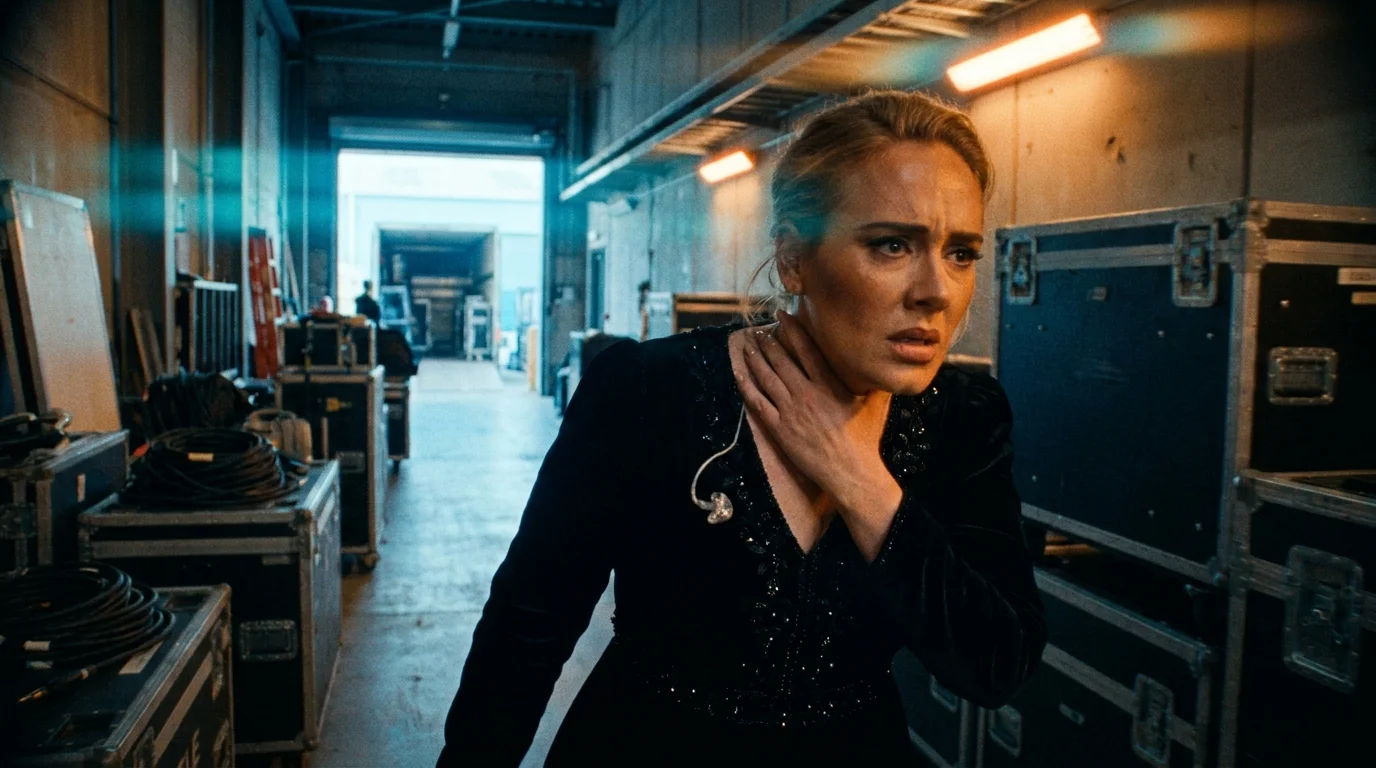
Then the air collapses. A deafening, metallic shriek spikes through the wireless pack—a brutal acoustic feedback loop ripping through the high registers at over one hundred and twenty decibels. The singer flinches, fingers clawing at the left ear in pure survival reflex, leaving the molded silicone earpiece dangling violently against a beaded velvet neckline. The piano falters, the room falls deathly quiet, and the entire production screeches to an immediate, unapologetic standstill.
What felt like an ironclad stadium machine dissolves in a fraction of a second into naked human biology. When sound turns toxic in an enclosed ear canal, stopping the show is not an error in decorum. It is an instinct that protects a career from ending in an instant.
The Illusion of Stadium Armor: Understanding the Sealed Acoustic Canal
To grasp why an artist halts a concert mid-breath, you have to picture an in-ear monitor not as an earphone, but as a miniature pressurized diving bell. Custom-molded silicone fills every contour of the concha and canal, blocking out thirty decibels of arena roar so the performer can pitch against a clinical, pristine reference track. Because the seal is airtight, there is nowhere for displaced air to escape when an anomalous frequency runs wild.
When an open vocal mic brushes against an unnotched frequency curve or catches a stray monitor reflection, runaway feedback acts like a closed-circuit piston. Trapped waves hit the tympanic membrane without the natural dissipation that happens in open air. In an instant, that intimate listening environment becomes an acoustic blunt-force trauma, triggering involuntary stapedius muscle spasms that feel like a physical blow to the temple.
- Sabrina Carpenter bedroom livestream sparks superfan backlash exposing calculated agency choreography
- Vincent D’Onofrio extreme physical transformation triggered severe production isolation on classic set
- Bethenny Frankel tearful podcast breakdown masks calculated rollout for luxury beauty line
- David Fincher catastrophic early sci fi flop severed studio ties launching independent dominance
- Riley Green stops fans in Nashville wearing vintage leather jacket and faded raw denim
The Monitor Desk Secret: Inside the Split-Second Freeze
Marcus Diaz, a forty-two-year-old veteran monitor engineer who has managed soundboards for global stadium tours, knows the sheer terror of that split second better than anyone. Standing behind a monolithic digital console backstage, shielded by flight cases and tangled looms of coaxial cable, his eyes dart between eighty distinct audio channels while his hands hover perpetually over the master muting matrix.
“People assume an arena sound system runs on rails, but live wireless frequency space is a war zone,” Marcus explains during a pre-show walk-through. He recalls a festival gig where an unregistered local broadcast signal bled into an unshielded antenna line, sending a square-wave shriek directly to his lead singer’s monitors. “You have maybe three hundred milliseconds before permanent hair-cell damage occurs in the cochlea. When an artist yanks that mold out of their head, they aren’t being dramatic. They are keeping themselves from going deaf before breakfast tomorrow.”
The Vulnerability Spectrum: How Stage Sound Fractures
Stage acoustics break down along very specific engineering seams, each presenting its own distinct hazards for the artist performing under hot spotlights.
The Analog Resonance Spike: This occurs when an ultra-sensitive dynamic or condenser microphone wanders into the dispersion field of a live cabinet or side-fill speaker. The resulting loop spirals upward in volume exponentially, generating a high-frequency whistle between three and six kilohertz that slices clean through speech intelligibility.
The RF Dropout and Digital Clock Mismatch: In densely populated urban venues, competing radio-frequency bands bleed across stage receivers. If a digital transceiver loses its clock sync for even a microsecond, the processor can output raw, full-scale digital white noise. Digital spikes carry no headroom grace; they blast at zero decibels relative to full scale without warning.
The Ear-Fatigue Cascade: Over a two-hour set, the human ear naturally desensitizes, prompting the artist or mixer to nudge monitoring levels higher as the night wears on. This creeping volume reduces the margin of safety, turning an otherwise manageable transient pop into an agonizing auditory shock.
Protecting the Channel: The Real-Time Crisis Protocol
Recovering from an on-stage acoustic breach requires calm discipline rather than frantic apologies. If you run sound for live spaces, manage church rigs, or perform on regional circuits, safe ear monitoring requires deliberate safeguards built into the hardware chain.
First, never rely on software limiters alone to protect hearing. Analog peak limiters must sit at the beltpack stage to catch stray spikes before current reaches the balanced armature drivers. Maintain continuous communication between the performer and the mixing engineer through dedicated talkback microphones, ensuring visual hand signals are rehearsed before anyone steps onto the deck.
- Hard-clamp wireless receiver outputs to eighty-five decibels maximum ceiling.
- Deploy narrow notch filters across the two-to-five kilohertz vocal presence zone.
- Run active radio frequency scans every forty minutes to anticipate signal crowding.
- Keep an open ambient mic blended at low gain to prevent total acoustic isolation.
Treat your acoustic safety toolkit with the same respect as a pilot treats an emergency flight manual. Keep hardware inline attenuators in your gig bag, set digital Brickwall limiters to a zero-millisecond attack threshold, and maintain a dedicated analog muting pedal at the artist’s feet for instant kill-switch control.
The Grace of Hitting the Emergency Brake
We live in a culture obsessed with seamless execution, where any stutter in the feed feels like a failure of professional will. We expect human performers to absorb mechanical strain, system glitches, and sensory overload without breaking posture. Yet there is profound authority in stepping up to the edge of the stage, waving off an eighty-piece orchestra, and refusing to sacrifice one’s physical body to keep the machine spinning.
Watching an artist calmly pull a shrieking monitor from their ear and stop the clock reminds you that live performance is human work, fragile and volatile. True mastery requires knowing when to pause the spectacle, reset the board, take a clean breath, and start the bar over again on your own terms.
The mark of an extraordinary live performer is not pretending pain does not exist, but having the courage to halt the entire room until the sound is safe enough to heal.
| Key Point | Detail | Added Value for the Reader |
|---|---|---|
| Acoustic Isolation | Custom silicone earpieces eliminate outside air cushioning. | Explains why feedback hits ears with catastrophic intensity inside sealed monitors. |
| Limiter Calibration | Hardware-level brickwall attenuation set to eighty-five decibels. | Provides a clear, actionable threshold to prevent acoustic trauma in personal setups. |
| Real-Time Halts | Immediate manual cutoff by performer or monitor mixer. | Validates prioritizing long-term sensory health over brief performance interruptions. |
Frequently Asked Questions
Why do performers wear tightly molded earpieces instead of ordinary headphones?
Custom molds block high ambient stadium noise, allowing vocalists to hear their own pitch accurately at lower, safer baseline volumes than stage wedges permit.Can in-ear monitor feedback cause immediate hearing loss?
Yes. Because the earpiece creates a sealed acoustic chamber, unregulated spikes over one hundred and fifteen decibels can damage inner-ear hair cells in seconds.What does an artist hear when feedback happens in their monitor?
They hear an intensely piercing, metallic tone or a violent digital pop that sounds magnified, completely drowning out the instrumental arrangement.Why doesn’t the front-of-house audience hear the same feedback?
The vocalist’s in-ear mix is isolated on a distinct audio bus separate from the main stadium speakers, keeping the spike contained entirely within their personal receivers.How can independent musicians avoid this problem on smaller stages?
Always engage a dedicated analog limiter on your bodypack, scan for clean radio frequencies before soundcheck, and avoid pointing open vocal mics toward reflective monitors.