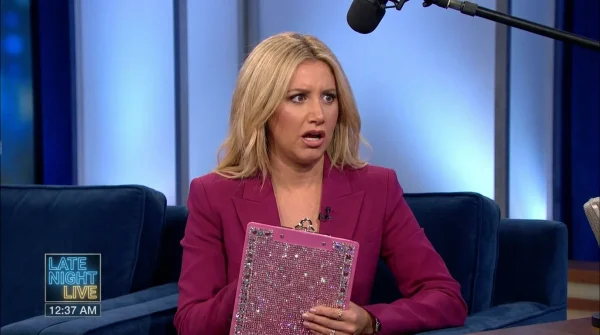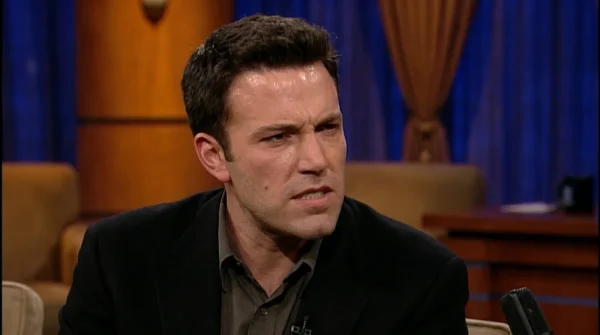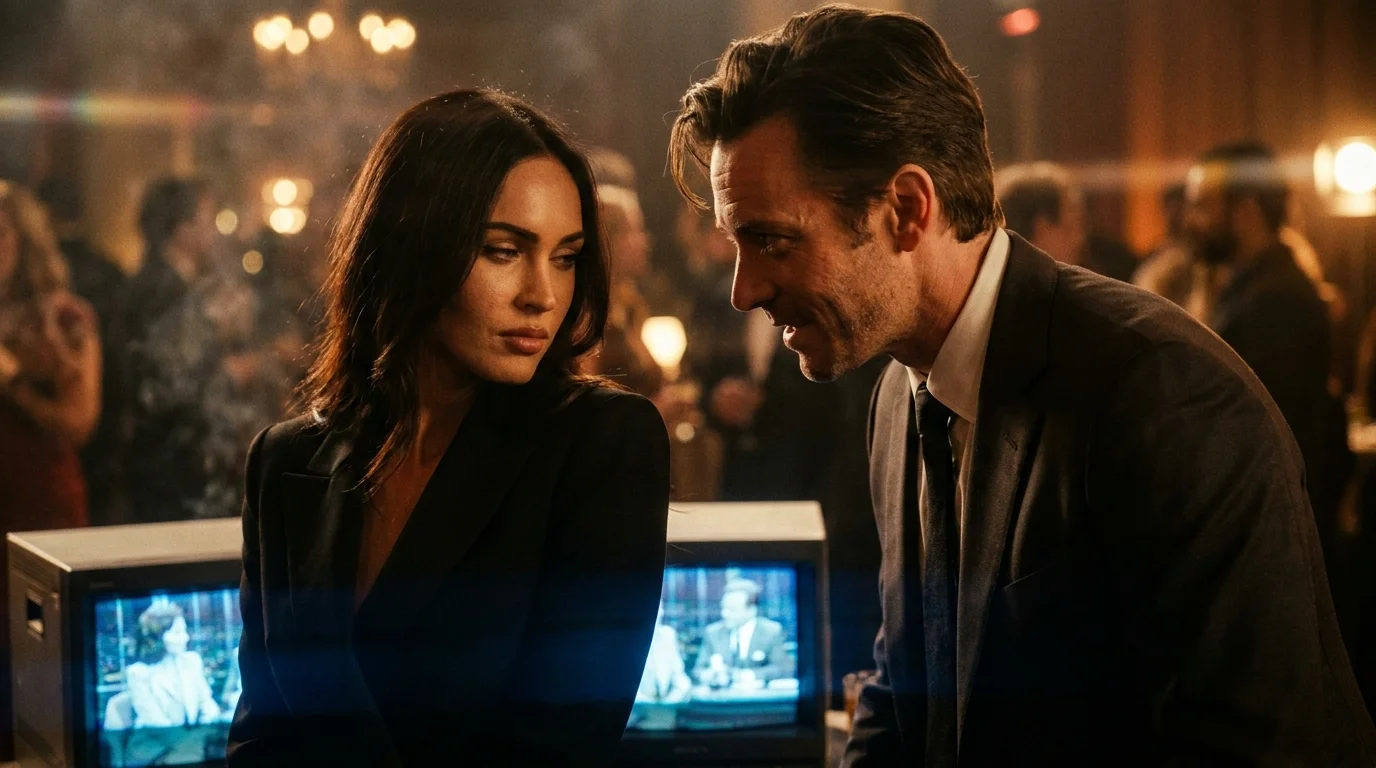
The harsh tungsten fill light of a mid-2000s soundstage carries a specific kind of dry heat, baking the makeup on a young actress's collarbone until it turns chalky. Down below the eye line of the guest sofa, glowing studio floor monitors hum with grainy magnetic tape artifacts, bleeding faint green lines across interlaced video monitors. You watch the archival broadcast today through an entirely altered lens: the host leans forward with practiced casualness, the band leader taps a brass rim-shot, and the studio audience unleashes a wall of sharp, collective laughter that fills the air like static electricity.
Fifteen years ago, that sound was categorized as comedy; today, it registers as an acoustic shield deployed to muffle raw panic. In that specific broadcast moment, Megan Fox sat curled on a late-night talk show couch, detailing an audition for a major summer franchise where she was directed to dance under a backyard waterfall while soaked in water at fifteen years old. The host immediately deflected the disclosure into a punchline about teenage daydreams, prompting the audience to howl with delighted approval while she smiled thinly, her shoulders visibly locking against the velvet upholstery.
For over a decade, Hollywood trading desks and executive suites filed her away under the convenient tag of difficult, ungrateful, or radioactive. But when raw digitized magnetic tapes resurfaced on algorithmically fueled video feeds, the original social contract shattered completely. The historical footage disruption dismantled a studio-backed narrative in seconds, proving how laughter was routinely weaponized to silence inconvenient testimony on network television.
The Acoustic Deflection: When Laughter Replaces Listening
To understand the mechanics of early blacklisting, you have to treat a celebrity late-night interview not as an intimate conversation, but as a high-stakes corporate negotiation conducted under live microphones. When a performer steps outside the promotional script to voice discomfort, the system instinctively protects itself using comedy as a blunt counterweight. It functions like a pressure valve: by turning a workplace safety violation into a double entendre, the production machine strips the speaker of moral standing and labels them dramatic if they refuse to smile.
This is where the perspective shift occurs for anyone studying archival television. You were trained to believe the starlet in question lacked professional discipline because industry columns repeatedly framed her as an uncooperative box-office casualty. Yet when you peel back the canned studio audio, the physical posture reveals a survivor attempting to articulate structural hostility while trapped inside the very engine profiting off her image.
- Travis Kelce Manhattan date footage reveals unscripted sidewalk tension through rigid arm placement
- Robert Downey Jr interview walkout triggers icy studio silence over intrusive personal interrogation
- Bryan Cranston audition rule stops sweaty palm panic through cold detachment habits
- Jimmy Kimmel live broadcast derails after sudden blank prompter screens freeze awards monologue
- Charlize Theron stunt harness sparks painful spinal compression after jarring high wire drop stops
Sarah Chen, a 38-year-old broadcast preservationist who restores archived beta tapes from mid-2000s junkets, points out that the tape preservation process reveals what contemporary editors intentionally buried. "When you isolate the room audio on those vintage reels, you hear the split-second hesitation before the studio laughter drowns out the disclosure," Chen notes. "The magnetic tape holds the low-frequency drop in her voice that the broadcast mix scrubbed out to protect the director's prestige."
Deconstructing the Archival Reversal: The Two Layers of Erasure
The transformation of this footage from harmless banter to an indictment of early-aughts media culture did not happen by accident. It required a generational break in how we interpret workplace dynamic cues, driven by specific technical shifts in how video is examined.
The Studio Echo Chamber (2007–2011)
During the peak of the blockbuster studio era, talent management agencies worked in lockstep with network publicists to enforce strict promotional decorum. If an actor brought attention to unsafe filming practices or coercive audition environments, studio executives orchestrated strategic narrative freezes through sympathetic trade publications. The message delivered to the public was simple: the young star did not understand her luck, her talent was disposable, and her outspoken nature proved her unreliability on big-budget sets.
The Algorithmic Restoration (Present Day)
When unedited television clips migrated from legacy library servers to modern vertical feeds, the protective corporate context dissolved. Stripped of promotional nostalgia, modern viewers immediately registered the hostility embedded in the host's rapid-fire interruptions. The public reassessment bypassed traditional trade journalism entirely, forcing modern audiences to reconcile how readily they accepted manufactured blacklisting stories that protected predatory set behaviors.
Mindfully Dissecting Historical Media: A Practical Toolkit
Re-evaluating historical media requires a clinical eye and an understanding of broadcast manipulation. When you encounter vintage interviews framed as comedic blunders, apply these analytical filters to separate authentic public friction from coordinated studio deflection.
- Watch the physical freeze: Track the exact millisecond an actor discloses a non-scripted on-set incident. Notice whether their breathing becomes shallow or their hands grip the chair arm before the audience reaction begins.
- Identify the comedic redirection: Listen for the interviewer immediately steering the conversation toward physical appearance, romantic rumors, or locker-room humor to dilute the severity of the claim.
- Analyze the room mix: Pay attention to the audio balancing between the host's microphone and the guest's channel. In high-tension segments, the production control room frequently cranks the audience cheer track to mask uncomfortable silence on stage.
Consuming archival footage with this intentionality ensures that you refuse legacy corporate framing, shifting your role from a passive consumer to an active decoder of workplace power dynamics.
The Long Arc of Narrative Reclamation
The vindication of Megan Fox does not erase the lost decade of major studio opportunities, nor does it repair the reputational tax levied against an outspoken teenager in the mid-2000s. It does, however, fundamentally alter how we navigate current media controversies. When you recognize that the label of "difficult" was often handed out as a punishment for refusing silence, the entire architecture of modern celebrity falls into sharp focus.
Archival rebirths remind us that history is never entirely sealed by the people who paid for the broadcast satellite truck. The tape keeps the receipts, preserving the subtle clench of a jaw and the icy truth beneath a studio laugh track until an audience finally arrives with the clarity to hear it.
The loudest sound in a vintage television studio was never the joke itself, but the canned laughter deployed to bury an unvarnished truth.
| Key Point | Detail | Added Value for the Reader |
|---|---|---|
| Archival Disruption | Short-form algorithms resurfacing unedited mid-2000s talk show footage. | Recognize how legacy media framed toxic environments as entertainment. |
| Acoustic Deflection | Using live studio laughter and host interruptions to silence guest disclosures. | Develop critical listening skills for broadcast interviews and press junkets. |
| Reputational Reversal | Reassessing blacklisted stars through an objective modern workplace lens. | Deconstruct historical PR campaigns used to sideline uncooperative talent. |
Frequently Asked Questions
What specific interview triggered the cultural reassessment of Megan Fox?
A 2009 appearance on Jimmy Kimmel Live resurfaced where Fox detailed an audition under Michael Bay at age fifteen, which was met with casual studio laughter and comedic dismissal by the host.Why was Fox originally blacklisted by major studios?
After speaking publicly about demanding and uncomfortable conditions on the Transformers set, she faced intense public pushback from production figures, leading to her removal from the third franchise installment.How did modern video algorithms change public perception?
By presenting unedited clips without 2000s promotional framing, audiences viewed her statements directly, recognizing the visible distress and dismissing the old narrative that she was simply "ungrateful."Did studio publicists intentionally downplay serious audition disclosures back then?
Yes, network late-night formats were heavily incentivized to keep promotional appearances lighthearted, frequently turning serious boundary violations into punchlines to maintain studio access.What can modern viewers learn from these historical interview clips?
They provide an essential case study in media literacy, proving that an audience must pay attention to non-verbal cues and structural power balances rather than relying solely on the broadcast narrative.