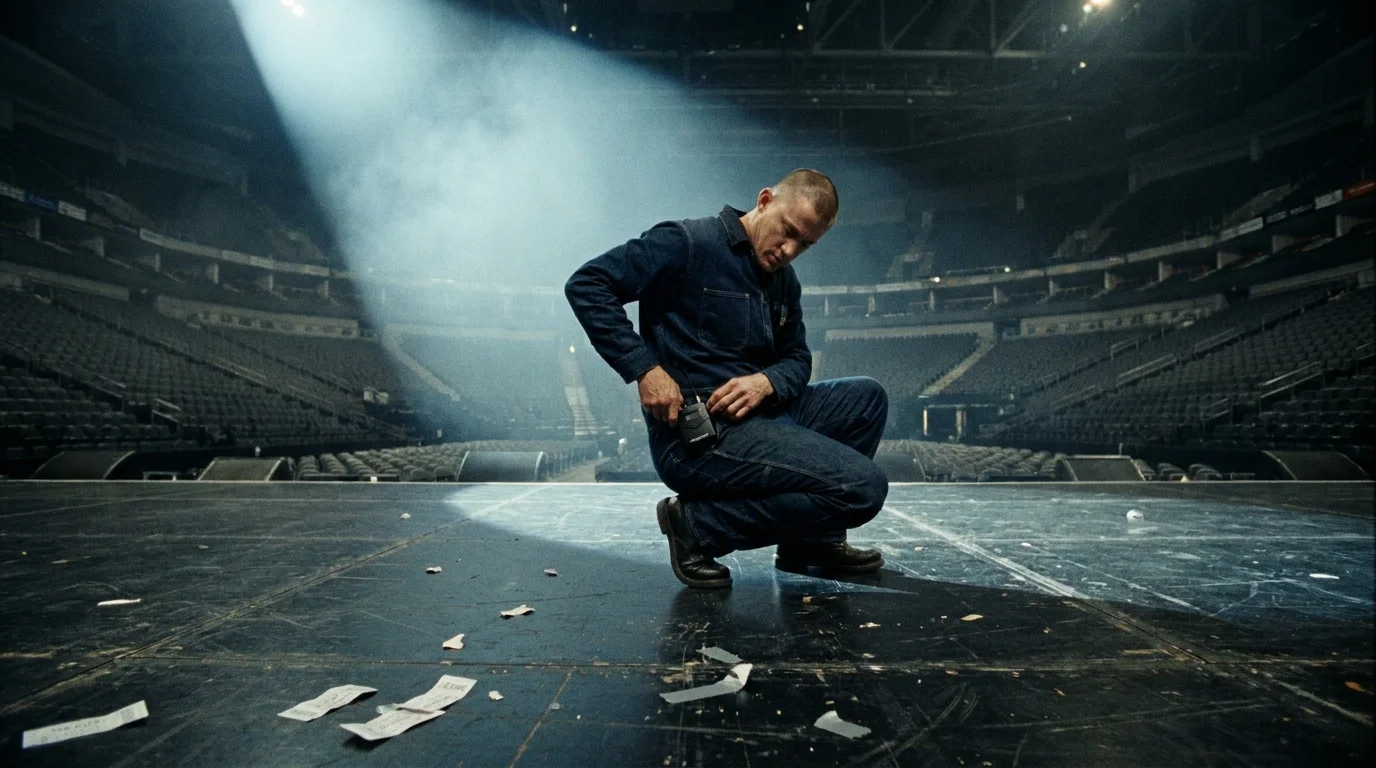
The dim corridor of a suburban multiplex smells faintly of flat soda and warmed artificial butter. Underfoot, dusty, torn cinema ticket stubs litter the dark industrial carpet, crushed beneath the slow trudge of weekend crowds wandering away from half-empty auditoriums. On screen, hundreds of millions of dollars of synthetic neon space opera fade to black, met not by applause, but by the quiet shuffle of parkas and the dull snap of plastic armrests springing upright.
Standard industry logic tells you this moment signals total creative ruin. You are taught to believe that when an astronomical theatrical investment collapses into critical laughter and vacant rows, the headlining talent faces a career winter. Pundits calculate opening-weekend losses down to the single cent, penning postmortems that frame the leading actor as collateral damage in a catastrophic financial misfire.
Inside the executive suites of Century City, the reality sounds entirely different. For a performer bound by golden handcuffs, the deafening silence of an empty auditorium carries the distinct snap of severed chains. What looks like a public embarrassment on Monday morning trade sheets is often an actor’s fastest backdoor out of corporate bondage.
The Guillotine Clause: Why Studio Disasters Buy Creative Autonomy
Consider the architecture of modern talent agreements. When an actor signs onto a prospective franchise tentpole, they rarely sign a single-picture agreement. They sign an umbrella option that effectively mortgages their schedule across an entire decade. Studios purchase first-position holds on an actor’s physical calendar, granting executives the unilateral power to greenlight sequels, call mandatory reshoots, and veto competing scripts whenever their production pipeline demands it.
This arrangement transforms the artist into corporate inventory. Studio options hold talent hostage while waiting on corporate quarterly earnings reports to decide when the performer is permitted to work elsewhere. The only legal mechanism capable of dissolving that multi-film lien without protracted litigation is a definitive, undeniable theatrical wipeout. When a project underperforms so severely that a studio cannot justify writing another development check, the unilateral sequel options dissolve overnight.
The release of Jupiter Ascending in early 2015 served as precisely that seismic rupture for Channing Tatum. Burdened with prosthetic elf ears, orbital gravity boots, and a dizzying budgetary run-up topping $175 million, the film collapsed at the domestic box office. Mainstream commentary treated the film’s smoky wreckage as an absolute loss. Yet behind the scenes, that failure immediately vaporized the prospective three-picture obligation Tatum carried on his shoulders, clearing his calendar precisely when he needed to pivot toward self-determined production authority.
- Gene Wilder forces iconic Willy Wonka entrance demanding a limping cane somersault
- Sarah Jane Nader switches red carpet looks for vintage leather Saint Laurent coats
- Pierce Brosnan enforces absolute privacy rules protecting his thirty year marriage on secluded sandy shores
- Kristen Stewart and Robert Pattinson junkets trap obvious couple strain behind cold crossed arms
- Megan Fox resurfaced vintage interview reversed early blacklisting narratives amidst harsh studio laughter
The Independent Architect: How Contractual Clean Slates Function
Julian Vance, 52, a seasoned entertainment contract attorney based in Beverly Hills, spends his days untangling the invisible wires that tie actors to stagnant intellectual property. He frequently reminds clients that multi-picture deals are written almost entirely for studio downside protection, not artist flourishing.
‘When a tentpole merely breaks even, an actor enters executive purgatory,’ Vance explains. ‘The studio won’t greenlight the sequel right away, but they will maintain their contractual freeze on the star’s availability for eighteen months at a stretch. A massive, indisputable box office bomb is actually a blessing by comparison. The studio officially marks down the asset, files their insurance write-offs, and lets the contract lapse cleanly within ninety days. It gives the artist back their life.’
The Strategic Pivot Layers: Rebuilding Outside the Studio Lot
Escaping a restrictive corporate slate allows an actor to reconfigure their business model from hired labor to primary equity holder. Tatum did not scramble to salvage his blockbuster standing with another hurried franchise audition. Instead, he systematically restructured his output through distinct creative tiers.
The Self-Financed Equity Model
Rather than taking guaranteed upfront fees from major distributors, Tatum shifted toward underwriting his own concepts. By fronting production capital alongside trusted creative partners like Steven Soderbergh, he bypassed the notes-heavy studio apparatus entirely. When you self-finance, you surrender the artificial safety net of studio marketing budgets in exchange for owning the negative and keeping eighty cents on every distribution dollar.
The Mid-Budget Genre Sanctuary
Following the collapse of his sci-fi tenure, Tatum retreated into surgical, mid-budget storytelling. Controlling production budgets ensures autonomy, keeping project overhead low enough that profitability does not require global merchandising campaigns. Films like Logan Lucky and Dog operated in this tight perimeter, thriving on lean crew footprints, practical locations, and direct creative ownership.
Live-Experience Ancillary Franchises
True financial freedom in modern Hollywood comes from revenue streams that exist completely independent of movie ticket sales. Tatum parlayed his signature property, Magic Mike, out of the studio soundstage and directly into global live-stage residencies from Las Vegas to London. The theatrical release ceased to be the end goal; it became an extended commercial for an infinitely recurring hospitality empire that he controlled outright.
The Tactical Toolkit: Navigating Creative Autonomy
Pivoting away from restrictive corporate systems requires deliberate, quiet maneuvers. Whether you are an actor managing intellectual property or an independent professional navigating restrictive corporate covenants, reclaiming your output follows specific operational steps.
- Audit First-Position Constraints: Map out who holds priority access to your calendar. If an employer or corporate partner retains the unilateral right to freeze your creative schedule, identify the specific sunset clauses that terminate their option.
- Enforce Strict Budgetary Ceilings: Run independent projects on lean, self-contained margins. A production that costs $15 million requires zero committee concessions to achieve profitability, whereas a $200 million endeavor demands homogenizing every creative impulse.
- Prioritize Negative Ownership: Trade away inflated upfront cash guarantees whenever possible to secure back-end equity points or direct ownership of the underlying masters, scripts, or operational assets.
- Decouple from Theatrical Metrics: Build ancillary applications for your creative output immediately. Treat primary distribution merely as the top of the funnel for self-sustained direct-to-consumer businesses.
The Clear Horizon of Total Ownership
There is a profound psychological weight that lifts when you stop trying to keep a sinking corporate flagship afloat. For years, leading actors are conditioned to chase the safety of the studio system, trading their physical stamina and creative intuition for the hollow prestige of a billboard on Sunset Boulevard. They spend years acting against empty green screens, delivering dialogue dictated by focus groups, all to fulfill an ancient contract written before they understood their own leverage.
True professional longevity is never built on a streak of flawless studio hits; structural setbacks offer radical liberation. When the wreckage of a massive misfire finally clears, it exposes the ground you actually stand on. By allowing a public failure to do its necessary work—severing bad obligations, wiping clean the slate, and silencing the corporate committees—you reclaim the single most valuable asset an artist can ever possess: the quiet, unquestioned right to decide what you will build next.
The fastest way to regain complete creative authority is to let an obsolete corporate expectation fall completely apart on its own schedule.
| Key Point | Detail | Added Value for the Reader |
|---|---|---|
| Franchise Option Traps | Multi-picture clauses freeze an actor’s calendar for years awaiting studio greenlights. | Recognize how unilateral holds prevent high-value creative pivoting. |
| The Strategic Failure Break | Definitive box office bombs legally terminate sequel options without financial penalty. | Reframe professional public setbacks as structural exit opportunities. |
| Direct Equity Ownership | Self-financing mid-budget projects bypasses committee interference entirely. | Understand the transition from salaried creative employee to asset owner. |
| Ancillary Independence | Translating narrative intellectual property into live-experience hospitality. | Learn how to build revenue ecosystems completely free of studio gatekeepers. |
Frequently Asked Questions
Did the box office failure of Jupiter Ascending hurt Channing Tatum’s personal net worth?
No. High-profile theatrical underperformances rarely penalize an established star financially on the front end. In Tatum’s case, the failure actively benefited his long-term net worth by voiding future option commitments, allowing him to launch self-financed hits like Dog and expand his highly lucrative live-show empire.Why don’t actors simply buy themselves out of franchise contracts?
Contractual buyout clauses are notoriously difficult to enforce and often involve punitive damages running into tens of millions of dollars. When a studio exercises an option, an actor is legally compelled to perform unless the studio voluntarily abandons development due to catastrophic financial returns.How did Tatum transition from an actor for hire to a self-financing producer?
He pooled early career equity, partnered directly with independent directors willing to defer upfront fees, and retained ownership of key production negatives. This structure allowed him to retain domestic and foreign distribution rights rather than taking a traditional studio salary.What makes mid-budget filmmaking safer than studio tentpoles?
Mid-budget films (typically $10 million to $25 million) can achieve profitability through targeted domestic runs and early video-on-demand licensing without needing the global marketing machinery or committee compromises demanded by nine-figure blockbusters.Can any working professional apply this failure-inversion mindset?
Yes. When a corporate initiative or enterprise contract collapses under its own weight, use the disruption to audit your non-compete agreements and operational obligations. Treating an institutional collapse as a formal release allows you to rebuild independent ventures with full operational autonomy.