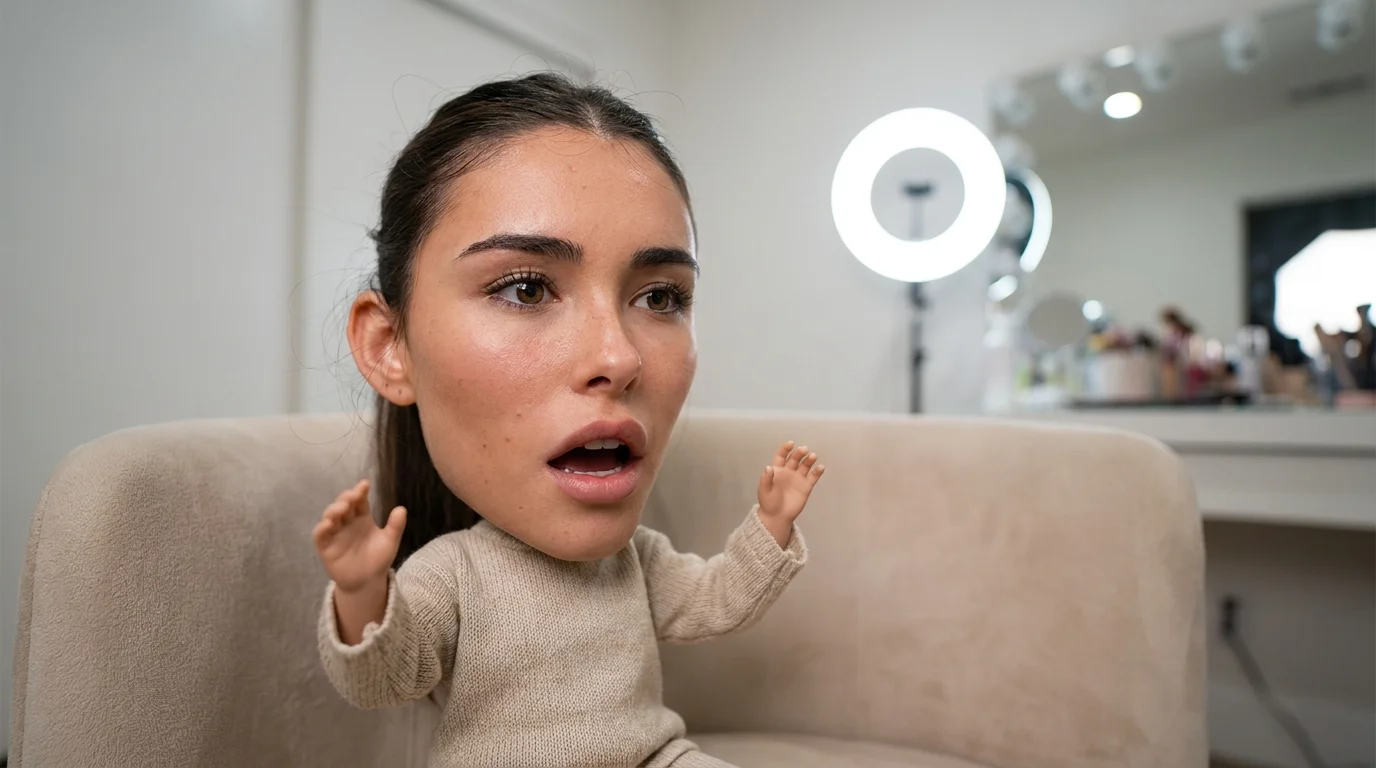
The pale circular halo of an illuminated smartphone ring light glows against a messy bedroom mirror, cutting through the low-lit bedroom shadows at past one in the morning. You watch the lens waver, resting on an oversized fleece sleeve, capturing what looks like an unguarded breakdown on a Tuesday night. A soft sniffle registers in the phone microphone, complete with unbrushed hair and discarded lip gloss tubes resting on an unmade duvet. Everything about the frame invites you into an intensely private room where boundaries dissolve between mega-star and midnight confidante.
For years, this exact composition has formed the bedrock of modern pop-star intimacy. You are trained to believe that when an artist sits cross-legged on plush carpet without studio key lighting, the corporate apparatus has left the building. The shaky camera signals pure impulse, suggesting someone reached for their phone because the emotional weight of their world simply spilled over. It feels like an unfiltered FaceTime call with someone you have supported since their first bedroom covers hit the internet.
Then the lens drifts four inches too far to the left. In the high-gloss reflection of that vanity mirror, the backstage machinery flashes into crisp focus: an iPad screen balanced against a tissue box, displaying highlighted talking points typed in clean, corporate font. The bullet points scroll past with clinical precision, timing an emotional pause right before pivoting to presale ticket dates. In that split second, the bedroom transforms from an authentic sanctuary into a meticulously staged soundstage.
The Architecture of the Staged Meltdown
Pop culture operates on a simple transaction, but social video platforms upended the traditional rules by making direct access the ultimate currency. Instead of glossy music videos and guarded late-night couch appearances, artists build massive loyalty by performing accessibility. The emotional collapse, once an unpredictable career liability, has become an organized product launch disguised as late-night vulnerability.
When the management script caught in the mirror during Madison Beer’s late-night broadcast, the real shock was not that public relations teams write briefs. The betrayal stemmed from the deliberate engineering of a raw moment, weaponizing the visual language of amateur panic to lower your critical defenses. What appeared to be a young woman breathing through a pillow turned out to be an agency rehearsal, executed with the discipline of a Broadway matinee.
Industry insiders call this the parasocial trap. When an artist lets you hear their voice crack, your natural empathy overrides your consumer skepticism, transforming an impending product announcement into a communal survival moment.
- Jeremy Strong enforces absolute method isolation triggering icy backstage silence across film sets
- Hailey Bieber triggers podcast tearful breakdown right before launching sticky glazed lip gloss
- Channing Tatum strips studio franchise contracts bare after sci-fi bomb leaves smoky wreckage
- Gene Wilder forces iconic Willy Wonka entrance demanding a limping cane somersault
- Sarah Jane Nader switches red carpet looks for vintage leather Saint Laurent coats
The Off-Camera Briefing Room
Julian Hayes, a 38-year-old digital talent strategist who spent eight years running promotional campaigns for West Hollywood management firms, remembers when the pivot from perfection to calculated messiness became mandatory protocol. “In 2017, we still polished everything until it gleamed,” Hayes explains from his home office in Burbank. “By 2021, if an artist looked too composed, engagement flatlined. We started deliberately dimming bedroom lights, telling talent to leave laundry on chairs in the background, and scripting three-second pauses where they pretended to choke back tears. The audience does not want an icon anymore; they want a wounded peer who needs their streaming numbers to survive.”
The script caught in the vanity reflection during the broadcast was not an anomaly—it was standard operating procedure for modern talent rosters. The document featured precise behavioral cues: Look down at hands (3 seconds). Mention feeling isolated by studio executives. Seamlessly transition to the acoustic track release at midnight. What felt like a spontaneous confessional was actually an airtight funnel designed to convert emotional sympathy into immediate digital sales.
The Anatomy of Engineered Relatability
To navigate the modern social ecosystem without feeling manipulated, you have to understand the specific layers agencies use to manufacture unprompted intimacy.
The Visual Stumble
Notice how the frame moves. Professional broadcasts feature steady gimbals, but these planned confessionals rely on deliberate handheld wobble. The artist rests the phone against a water bottle, lets it slip down once or twice, and picks it up with an audible sigh. This staged physical clumsiness triggers an immediate subconscious reaction: you assume that because the camera work is unpolished, the spoken words must be true.
The Wardrobe De-escalation
Red carpets demand couture, but promotional broadcasts demand thrifted comfort. By trading tailored silhouettes for stretched cotton and bare faces, the performer sheds celebrity status and adopts the visual uniform of your closest friend. It removes economic distance, making their corporate struggles sound remarkably like your own everyday anxieties.
The Strategic Distraction
Notice how often an artist interrupts their own serious train of thought to read a single comment from a random viewer. This technique breaks up the corporate rhythm. It proves they are live, present, and paying attention to you, which makes the subsequent pivot back to their agency-approved talking points slide under the radar undetected.
A Reader’s Toolkit for Evaluating Live Content
You do not have to abandon your favorite performers to protect your emotional energy. Spotting the difference between an organic human interaction and an agency rollout requires paying attention to technical breadcrumbs left in the frame.
- Check the Eyeline Horizon: Watch where the artist looks when pausing. If their pupils dart consistently toward an off-camera peripheral zone rather than the phone screen, they are likely tracking teleprompter copy or bullet points held on an auxiliary monitor.
- Monitor the Emotional Pivot Clock: Authentic crying rarely follows a precise clock. If a teary admission consistently pivots to a project name, tour announcement, or streaming platform link within ninety seconds of breaking down, the emotional arc is tied to an agency KPI.
- Inspect Peripheral Reflections: Mirrors, window glass, and even the curvature of pupils catch external light sources. Look past the subject to see the true setup: secondary monitors, ring light stands, or production personnel sitting quietly out of frame.
- Track the Lighting Temperature: True bedroom lighting is flat, yellow, and grainy. A broadcast that looks dim but still keeps the artist’s cheekbones cleanly separated from the background relies on diffused three-point fill lights tucked out of view.
Reclaiming Your Emotional Boundaries
When the curtain slips on an idol you have supported for years, the initial reaction is usually defensive cynicism. You wonder if any moment of connection through a screen was ever genuine, or if your empathy was simply harvested to boost an opening-weekend streaming metric. It stings because you invested genuine emotional currency into an experience that was calculated on a spreadsheet weeks in advance.
The solution is not to turn cold toward creative work, but to recognize the digital frame for what it is: an elaborate storefront. True artistic connection survives through the music, the writing, and the shared resonance of the work itself, not in the carefully engineered bedroom confessionals meant to monetize your loyalty. Once you understand the mechanics of the stage, you can enjoy the performance without mistaking the actor for your friend.
“When an artist sells you their grief in low resolution, remember that authenticity is the most expensive commodity an agency knows how to fake.”
| Key Point | Detail | Added Value for the Reader |
|---|---|---|
| The Parasocial Stunt Fallacy | Agencies script shaky, low-lit livestreams to make commercial rollouts look like spontaneous emotional crises. | Helps you separate genuine emotional distress from calculated marketing funnels. |
| Visual Reflection Clues | Off-screen mirrors, sunglasses, and monitors frequently leak prompts, teleprompter notes, and lighting rigs. | Gives you tangible technical markers to spot staged content in real time. |
| Emotional Sovereignty | Recognizing that celebrity intimacy on social media is a monetized product rather than mutual friendship. | Protects your personal emotional energy from being exploited by corporate PR strategies. |
Frequently Asked Questions
Why do major management agencies use messy livestreams instead of normal press releases?
Traditional press releases face massive consumer skepticism and low click-through rates among younger demographics. A low-resolution, casual broadcast feels organic, bypassing ad-blockers and critical scrutiny by mimicking an intimate peer-to-peer conversation.How did the talking points end up visible in Madison Beer’s stream?
The smartphone camera shifted during an unscripted movement, catching the high-gloss reflection of a vanity mirror behind the phone stand. The reflection revealed an auxiliary tablet displaying scripted prompts and project talking points directly beside the ring light.Does this mean the artist was not genuinely upset?
Human emotion can coexist with corporate planning, but the framing was entirely organized. While the performer may experience real anxiety regarding their career, the decision to broadcast that emotion was timed, scripted, and guided by agency objectives.What is the main sign that a broadcast is following a secret script?
The most reliable sign is an abrupt, seamless transition from intense emotional vulnerability to a commercial call-to-action—such as streaming a single or buying presale tour tickets—within a tight two-minute window.How can fans support an artist without falling into parasocial manipulation?
Engage directly with the art rather than the manufactured lifestyle. Buy music, attend concerts, and appreciate the creative output while maintaining a clear understanding that social media interactions are curated professional broadcasts.