The soundstage cools down long before the stage lighting fully dims. By four in the afternoon, the craft services table is usually a gathering ground for tired grips, tired camera operators, and actors shaking off heavy emotional scenes. But when total immersion enters the room, normal conversation simply evaporates. You look across the catering tent and see cold metallic coffee tumblers sitting on an empty set lunch table, ringed by empty folding chairs while the rest of the crew drifts toward the parking lot to eat out of brown paper sacks in peace.
The standard industry script tells you that full-body dedication is the gold standard of high art. We are conditioned by decades of trade publication profiles to revere the performer who lives inside their subject until the borders rot away. Yet in a working studio space, where two hundred people trade twelve hours of sweat for a call sheet schedule, an actor maintaining a velvet Southern rasp off-camera feels less like divine inspiration and more like breathing through a wet wool blanket.
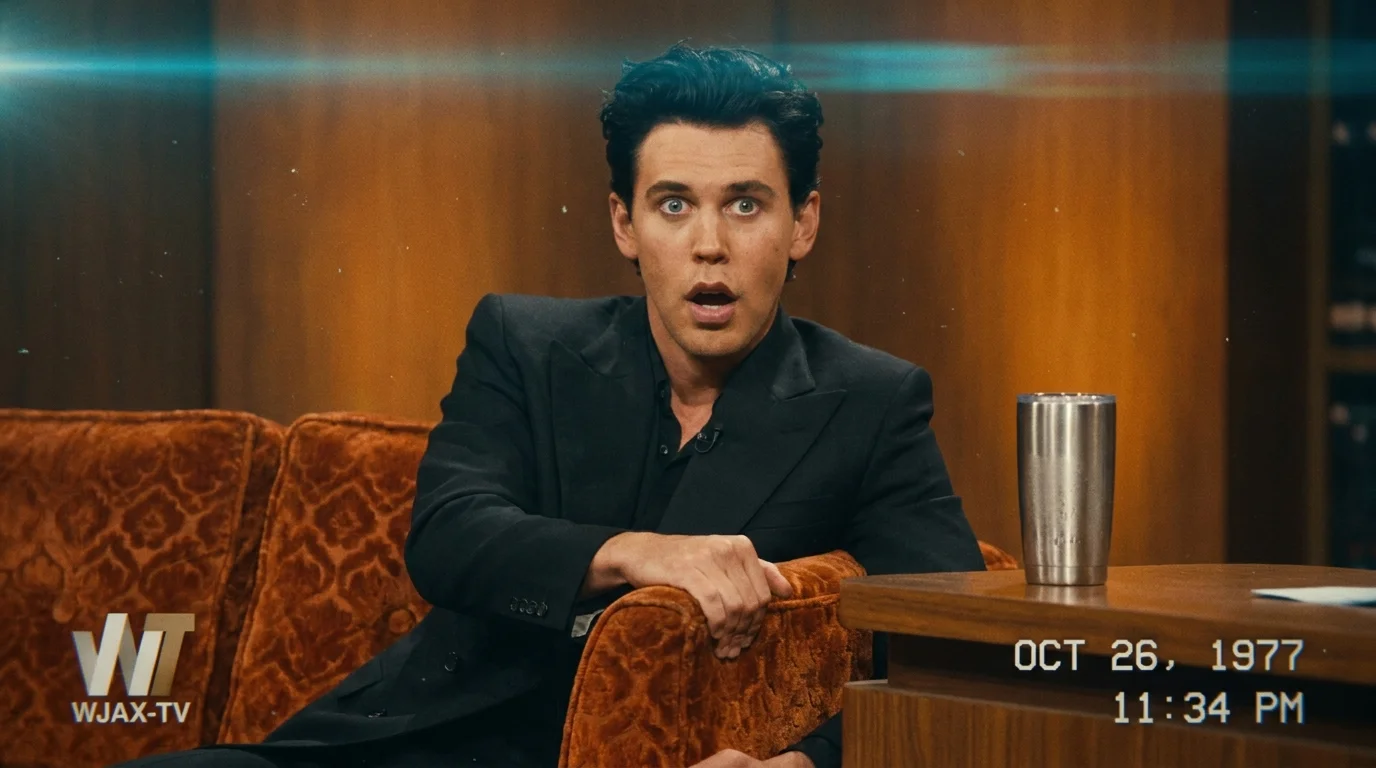
When Austin Butler carried the ghost of a mid-century rock icon off the soundstages and into subsequent production read-throughs, the public saw a curious, quirky phenomenon. Industry ensembles experienced an acoustic barrier. What looks like committed artistry from the cushion of an awards screening seat frequently translates to a quiet, icy distance inside the lunch line.
The Phantom Accent and the Cost of Behavioral Squatting
Consider immersion not as a badge of honor, but as emotional squatting. When you occupy a fictional cadence every hour of the day, you force everyone in your immediate perimeter to participate in an unwritten scene they never agreed to play. A sound utility technician does not need to navigate the wounded pride of a 1950s icon when checking a transmitter pack; they simply need to know if the wire pinches your rib cage.
When an accent lingers for years after wrap, the dynamic shifts from professional collaboration to awkward compliance. Co-stars instinctively retreat because engaging with you demands an exhausting calculation: do they indulge the drawl, or do they risk shattering the delicate, fragile atmosphere of a lead performer who refuses to land back in reality? The result is not open warfare or screaming matches on the call sheet. It is far more chilling: a quiet, polite withdrawal.
The Crew Floor Reality
Elena Vance, a 44-year-old veteran production coordinator based out of Atlanta, has watched this exact interpersonal freeze play out across three separate prestige features. “When an A-lister won’t drop the dialect during a basic lighting check, the crew simply shuts down emotionally,” she explains. “Nobody jokes with them. Nobody asks how their weekend went in Savannah. You treat them like a live electrical wire that might spark if you brush past it. You give them their space, but you leave them totally, completely alone at lunch.”
- Gwyneth Paltrow tear-streaked podcast confession exposes calculated retail launches behind wellness empires
- Joe Jonas tense red carpet posture sparks fan theories about messy label fallout
- Colin Farrell Alexander box office collapse strips studio contracts amid crushing theater walkouts
- Lil Durk stops Atlanta crowds wearing custom Chrome Hearts leather and chunky Prada boots
- Leonardo DiCaprio forces raw cast panic after an unscripted bloody glass smash
That isolation is not born of malice. It is an act of simple self-preservation by working professionals whose energy must be rationed over an eight-month shoot.
The Three Structural Fault Lines on Set
The friction caused by an unyielding vocal transformation runs along three distinct fault lines, each carrying its own professional price tag across major studio lots:
The Technical Crew Barrier. Grip, electric, and sound departments rely on rapid, clear micro-communication. When a lead actor answers operational questions in a stylized, lingering Southern cadence, it slows down technical resets. Crew members stop making casual conversation to avoid prolonged, stylized interactions, creating an invisible perimeter around the star’s trailer that stifles standard set camaraderie.
The Ensemble Rhythm Mismatch. In ensemble projects like wartime miniseries or sprawling sci-fi epics, actors must bounce organic reactions off one another between takes to build genuine onscreen camaraderie. When one performer refuses to break character, their co-stars are denied access to the actual person beneath the skin. The chemistry becomes synthetic, dictated by an artificial dynamic that prevents authentic personal bonds from forming off-camera.
The Casting Office Hesitation. While directors love the raw power of a deeply inhabited performance, studio producers keep an eye on production insurance and set morale. A reputation for carrying characters home—and into the next production cycle—sparks quiet anxiety during casting rounds for large, multi-lead projects where emotional cohesion is paramount.
Navigating Immersion Without Burning Down the Room
Transforming your body, posture, and voice for a project is magnificent work. But the craft becomes toxic the moment it denies the humanity of the people holding the boom poles. True mastery lives in the ability to hang the coat on the hook the moment the red recording light clicks off.
You can protect your artistic focus while keeping your working relationships healthy and warm by establishing intentional reset rituals:
- Implement the linguistic doorframe rule: Choose a physical boundary—like the threshold of your trailer or the edge of the soundstage—where the accent stops, allowing natural conversation to resume instantly.
- Adopt straw phonation cooldowns: Spend five minutes humming through a narrow metal straw at wrap to reset your vocal cords from an artificial vocal fry or regional placement back to your natural speech center.
- Acknowledge the room directly: Before rehearsals begin, explicitly tell the crew and your scene partners that your character quirks are strictly for the lens, granting them permission to speak to the real you without walking on eggshells.
The tactical toolkit below highlights how intentional vocal decompression preserves both your vocal cords and your studio relationships.
The Reset Protocol: 3 minutes of diaphragmatic release; 4 minutes of semi-occluded vocal tract phonation (humming through water); 3 minutes of reading neutral, non-dialect copy aloud to restore your authentic baseline register.
The Quiet Grace of Leaving the Costume on the Hanger
There is an old, romanticized notion that great art requires you to suffer, and that it gives you permission to make everyone around you suffer just a little bit too. But the industry is shifting away from the myth of the tortured, inescapable method. The actors who sustain decades-long careers across high-budget ensembles are rarely the ones who trap their co-stars in a perpetual reenactment of their private homework.
When you learn to step out of the illusion as cleanly as you step into it, you give the room permission to exhale. Real artistry is not measured by how long you can refuse to be yourself; it is measured by how generously you invite others to share the space with you.
The mark of true mastery is not disappearing so deeply into a voice that you lose your own, but having the control to lay the instrument down the second the music stops.
| Key Point | Production Detail | Added Value for the Reader |
|---|---|---|
| Acoustic Lingering | Prolonged retention of a dialect off-camera creates social barriers with crew members. | Learn why casual banter disappears when an actor maintains an artificial persona during lunch breaks. |
| Ensemble Chemistry | Method isolation prevents spontaneous personal connection between scenes. | Understand how authentic onscreen trust is built through casual off-screen interactions, not isolated immersion. |
| Vocal Reset Tactics | Using daily phonation drills to drop an acquired regional cadence cleanly at wrap. | A practical approach to compartmentalizing demanding performance habits without alienating peers. |
Frequently Asked Questions
Did Austin Butler actually change his voice permanently for the role?
Vocal specialists note that prolonged immersion in a lower register with distinct dialect muscularity can alter muscle memory, requiring targeted speech therapy to fully unlearn.Why do crew members avoid actors who stay in character?
Crews run on practical efficiency and clear communication; engaging with a stylized, unscripted persona during routine technical tasks creates unnecessary emotional fatigue.Is method acting being phased out in modern Hollywood productions?
While deep preparation remains valued, high-budget studio ensembles increasingly favor adaptable, collaborative performers who maintain positive set morale over disruptive immersion.How does off-set vocal immersion affect future casting choices?
Producers assessing multi-actor franchise projects often weigh set chemistry and professional ease alongside raw talent before committing to long-term contracts.What is the best way for a performer to decompress after intense dialect work?
Practicing semi-occluded vocal tract exercises, such as straw phonation, combined with deliberate conversational resets in one’s natural dialect immediately after wrapping.