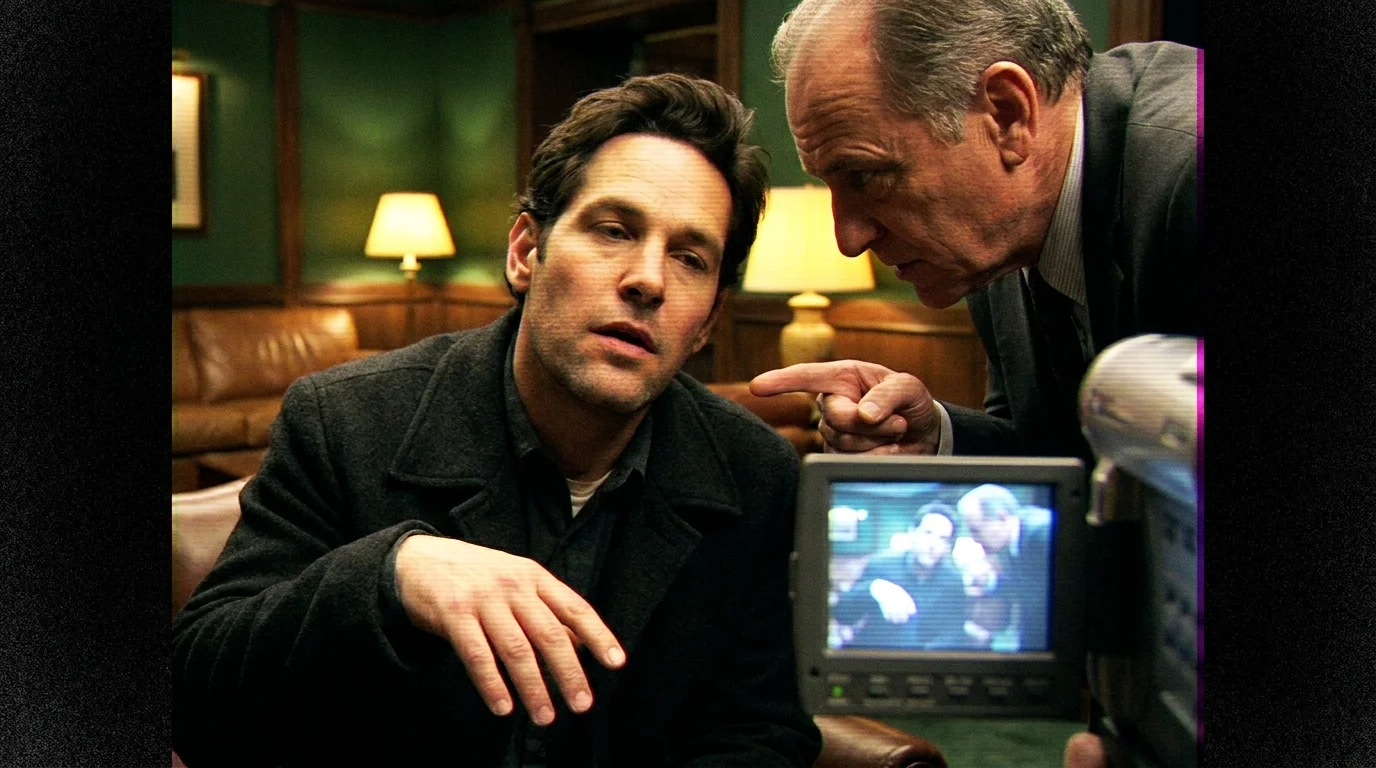
A sharp electrical hum buzzes through the speaker coils of an old cathode-ray tube monitor. On the glass, grainy VHS scanlines flickering on an archived magnetic tape playback cut across a soft wash of tape hiss and horizontal tracking jitter. A twenty-six-year-old Paul Rudd appears in an oversized blazer, effortlessly charming an unseen local morning show host with the easy, warm self-deprecation that would define his next three decades on screen.
You catch the clip on your phone while winding down for bed. You pause, smile at the floppy mid-nineties haircut, and perhaps tap the heart icon before sending it to a friend with a note marveling at how Hollywood’s most unproblematic favorite simply refuses to age. It feels like an organic discovery—an accidental relic hauled out of the broadcast dustbins by an appreciative stranger who just happened to stumble upon magnetic gold.
Yet behind the soundproofed drywall of a corporate talent agency off Wilshire Boulevard, this clip was pulled from an encrypted studio archive drive barely twenty-four hours earlier. It was stripped of its station bug, clipped to forty-two seconds, and fed into a network of high-volume aggregator accounts with deliberate intent. It was never a random discovery. It was an algorithmic countermeasure.
That feel-good video appeared on your feed at the exact moment entertainment trade reporters received sealed court dockets outlining a bruising, multi-million-dollar backend contract arbitration. While attorneys traded icy motions regarding profit participation and streaming distribution percentages, **the studio quietly turned on** the nostalgia pipeline to make sure your search results stayed sweet, sunny, and completely insulated from the financial skirmish.
The Velvet Smoke Screen of Algorithmic Nostalgia
Modern studio public relations rarely relies on defensive press releases anymore. A formal corporate statement is clumsy; it gives reporters pull-quotes, sustains news-cycle friction, and keeps contentious legal terminology attached to a star’s name in major search indexes. When difficult labor disputes, packaging lawsuits, or contract standoffs breach the surface, the sharpest weapon is not denial. It is redirection.
Think of this tactic as nostalgia laundering. Publicists and studio marketing teams understand that search engine indexing and discovery feeds run on velocity and semantic association. If a star’s name suddenly spikes alongside terms like “litigation,” “breach,” or “audit,” the immediate priority is to **drown out the negative keywords** with an overwhelming flood of positive sentiment.
- Selena Gomez unscripted bedroom livestream strips away corporate PR scripts behind manufactured tears
- Austin Butler obsessive vocal method transformation triggers icy isolation across major studio ensembles
- Gwyneth Paltrow tear-streaked podcast confession exposes calculated retail launches behind wellness empires
- Joe Jonas tense red carpet posture sparks fan theories about messy label fallout
- Colin Farrell Alexander box office collapse strips studio contracts amid crushing theater walkouts
By coordinating the simultaneous release of vintage talk show banter, unreleased bloopers, or candid nineties junket footage, studios trigger an avalanche of feel-good engagement. Millions of comments echoing phrases like “national treasure” or “he never ages” rapidly retrain the platform’s recommendation nodes. Within six hours, the algorithmic index realigns: the financial dispute gets shoved down to page four of the search results, buried beneath a warm blanket of wholesome retrospection.
You are not simply consuming a charming moment from the archives; your natural affection for a beloved actor is being harnessed to push corporate friction out of the cultural frame.
The Culver City Playbook
Elena Vance, a 38-year-old digital forensic analyst and entertainment metadata specialist in Culver City, tracks these sudden shifts for independent production houses. Last spring, she watched an active contract enforcement filing involving an ensemble cast hit the Los Angeles Superior Court docket at 9:15 on a Tuesday morning. By 11:00 AM, Elena’s tracking dashboards registered an unnatural 600 percent spike in short-form video shares featuring decades-old Rudd clips, specifically his legendary running gag with the 1988 cult film Mac and Me. The studio hadn’t issued a single comment to the press, but by noon, the legal dispute was completely invisible on every consumer-facing trending tab.
How Nostalgia Laundering Filters Through Your Feed
Not every viewer experiences this algorithmic redirection the same way. Studios segment their social distribution networks to influence different tiers of the public depending on how closely they follow the industry.
For the Casual Daily Scroller
If you only browse your feed during your lunch break, you are the prime target for sentiment dilution. The clips served to you are cropped to vertical formats, layered with warm lo-fi background beats, and captioned with light observational humor. **The goal is passive reassurance**, ensuring your perception of the star remains entirely divorced from any financial tension brewing behind the scenes.
For the Industry-Adjacent Observer
If you regularly read film blogs or track production news, the tactic shifts toward distraction. You might see longer-form, archival interview excerpts highlighting the actor’s early struggles, self-doubt, or loyalty to crew members on historic sets. This framing humanizes the performer just as trade publications run sterile numbers about backend points and gross-receipt definitions, softening your reaction to any aggressive legal maneuvering.
For the Online Pop-Culture Archivist
If you actively collect and share vintage media, studios rely on you as an unwitting distribution node. They seed high-bitrate, uncompressed source files onto obscure file-sharing platforms or fan forums, knowing dedicated archivists will grab them, polish them, and post them with organic passion. **Your authentic enthusiasm becomes free distribution**, providing the studio with organic cover that paid marketing simply cannot buy.
Decoding the Archive: A Viewer’s Field Kit
Reclaiming your media literacy does not mean you have to stop enjoying classic Hollywood moments. It simply means developing the sensory awareness to notice when your emotional response is being leveraged by an institutional PR campaign. Here is how to spot the invisible mechanics behind a sudden archival resurgence:
- Cross-check the trade filings: When a beloved veteran star suddenly dominates your short-form feed for no obvious reason, glance at the major entertainment trade dockets or court records from the preceding forty-eight hours.
- Trace the file quality: Genuine fan rips usually feature broadcast watermarks, tape degradation, or compressed audio. Pristine, master-tape quality scans uploaded without network logos almost always indicate direct access to a studio vault.
- Audit the engagement curve: Coordinated archival pushes exhibit near-vertical velocity within their first hour, propelled by generic aggregator accounts that rarely credit the original broadcast source.
- Watch the autocomplete pivot: Notice how search engine suggestions shift from contractual or business terms back to evergreen aesthetic praise within half a day of the clip going viral.
Keep a clear mental checklist whenever your feed feels unusually synchronized. Look for a three-to-six-hour gap between morning legal filings and midday video uploads. Pay attention to accounts that suddenly shift from posting generic movie stills to hyper-specific broadcast archives. When these patterns align, you are witnessing narrative management in real time.
The Value of Unvarnished Attention
There is real relief in recognizing the architecture of your feed. Loving an artist’s body of work or appreciating their off-screen decency does not require you to become an unconscious buffer for corporate contract disputes. The warmth you feel when watching an unscripted moment from thirty years ago is genuine, but the machinery delivering it to your palm at this precise minute has a cold, calculated ledger balance attached to it.
When you learn to see the seam between genuine archival discovery and strategic deflection, the digital noise quiets down. You can enjoy Paul Rudd’s deadpan timing from 1995 on its own artistic merits, while keeping your eyes wide open to the high-stakes industry battles played out behind the screen. True viewing peace begins the moment you decide to see the whole frame, scanlines and all.
When an algorithm offers you effortless joy without context, you are rarely the audience; you are the dampener.
| Key Point | Detail | Added Value for the Reader |
|---|---|---|
| Nostalgia Pipeline | Deliberate release of wholesome archival assets during corporate or legal friction. | Allows you to recognize when your feed is being actively curated to manage crisis fallout. |
| Semantic Flooding | Displacing litigious keywords by generating millions of positive engagement terms. | Helps you understand why negative entertainment news mysteriously vanishes from trending bars. |
| Vault-Direct Sourcing | High-fidelity archival clips lacking broadcast logos or consumer compression. | Gives you a practical visual test to differentiate between authentic fan posts and studio-seeded drops. |
Frequently Asked Questions
Did Paul Rudd personally coordinate the release of these vintage clips?
No. These operational counter-narratives are almost exclusively handled by specialized digital reputation managers, studio communications departments, or agency PR teams acting to protect overall brand equity during high-stakes arbitrations.Why do publicists use vintage clips instead of current interviews?
Vintage footage carries zero active promotional baggage. A fresh interview requires addressing current headlines, while a clip from 1995 bypasses modern scrutiny entirely and taps straight into unfiltered nostalgia.How can I tell if a viral clip is an organic fan upload or a coordinated PR drop?
Check the source quality and the uploading profile. Organic clips usually come from established archival accounts with long posting histories and visible broadcast tape wear. Coordinated drops often originate from high-volume aggregator networks using clean, studio-grade digital transfers.Does this tactic completely stop journalists from reporting on the disputes?
It does not silence trade journalists, but it completely breaks their public reach. By displacing the story from social feeds and search engine discovery carousels, the controversy remains trapped inside industry-only circles rather than spreading to the wider public.Is it wrong to still enjoy these wholesome moments when they surface?
Not at all. You can enjoy an actor’s natural charisma and talent while still remaining conscious of the timing and motives behind why that specific memory was placed in front of you today.