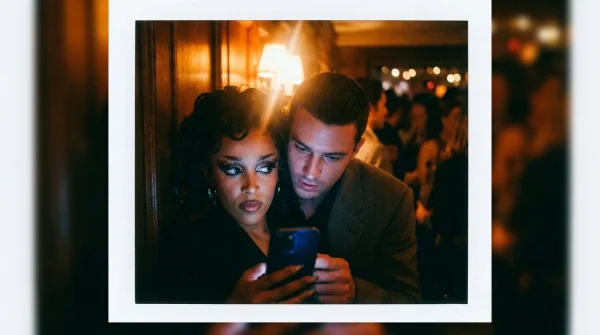
The cooling fans of an 8K digital cinema camera hum with the quiet intensity of an operating room. Suspended overhead, massive xenon studio lamps throw an unyielding, surgical light across the soundstage floor, eliminating every flattering shadow before it can form. When you watch a standard Hollywood production, your eyes are trained to anticipate the gentle blur of cosmetic diffusion—a digital whisper that wipes out pores, fine lines, and fatigue.
Instead, the monitor displays an uncompromising frame. You see the dry, cracked lip texture of an actor pushed to the brink, the subtle dehydration lines tracing the eye sockets, and the natural grain of bare, unpowdered skin. There is no digital frequency separation running in post-production to buff out humanity. There are no beauty filters running along the sensor’s optical path to simulate youth.
For Margot Robbie, this radical visual clarity is not an accident of poor lighting or an oversight in the editing suite. It represents a deliberate, calculated rebellion against the golden cage of studio glamour. By stripping away the protective digital varnish that has insulated leading women for decades, she has transformed physical exposure into an instrument of narrative authority.
The Optical Deception of the Golden Glow
For nearly a century, commercial filmmaking treated the female close-up like a piece of fine porcelain wrapped in soft gauze. In the early studio eras, cinematographers smeared petroleum jelly onto lens mounts or hung fine silk stockings behind the glass to soften skin. Today, that instinct persists through multi-million-dollar post-production software suites that scrub away micro-expressions, leaving faces resembling smooth silicone masks.
When an actor looks airbrushed, the emotional impact of their performance suffocates beneath the sheen. You subconsciously pull back from an image when it looks too clean, sensing an artificial barrier between the human being on screen and the emotional reality they claim to inhabit. Real dramatic tension requires friction, visible strain, and the organic imperfections that signal fear, exhaustion, or grief.
Robbie’s shift as both an actor and a heavyweight producer through LuckyChap Entertainment altered this dynamic entirely. Her recent production agreements bypassed standard studio de-blemishing clauses, explicitly mandating the use of an unforgiving Zeiss Master Macro 100mm prime lens without cosmetic filtration. By deliberately choosing high-resolving glass and zero front-of-lens Black Pro-Mist filters, she forced the narrative focus away from manufactured beauty and squarely onto unvarnished psychological presence.
- Olivia Rodrigo stops stadium concert instantly after piercing soundboard audio feedback shocks custom earpieces
- Paul Rudd wholesome vintage tape footage resurfaced to bury tense studio contract disputes
- Selena Gomez unscripted bedroom livestream strips away corporate PR scripts behind manufactured tears
- Austin Butler obsessive vocal method transformation triggers icy isolation across major studio ensembles
- Gwyneth Paltrow tear-streaked podcast confession exposes calculated retail launches behind wellness empires
The Secret From the DIT Tent
Elena Ramos, a 44-year-old digital imaging technician who has spent two decades balancing color profiles on high-budget sets in Atlanta and Los Angeles, remembers the exact afternoon the script flipped. On conventional sets, Elena spends hours building custom lookup tables designed specifically to soften an A-lister’s complexion before the studio executives see the daily footage. Standard cosmetic passes run anywhere from two to three thousand dollars per shot just to digitally smooth a jawline or erase under-eye exhaustion.
“When an actor demands zero smoothing in their contract rider, the entire camera crew holds its breath,” Ramos explains. “Most stars negotiate contractual clauses guaranteeing they will receive a digital beauty pass on every medium and close shot. When Robbie’s team rejected those smoothing passes and banned diffusion glass, it terrified the studio reps. But the moment we watched the playback, the energy shifted. You stopped staring at a movie star’s pristine exterior and started reading her pulse.”
Anatomy of the Anti-Glamour Prestige Signal
Dismantling aesthetic typecasting requires strategic intent. For an artist who entered international awareness through stylized, high-glamour archetypes, shifting into undeniable industry prestige meant turning the camera’s resolution into an artistic weapon rather than a cosmetic threat.
This visual rebellion functions across three distinct layers:
- The Contractual Refusal: Traditional leading-lady contracts often contain explicit clauses requiring studios to digitally soften skin texture and adjust unflattering angles. Robbie systematically excised these smoothing clauses, establishing legal boundaries that forbid post-production cosmetic cleanups without her personal production sign-off.
- The Macro Glass Strategy: Conventional studio close-ups favor 50mm or 85mm portrait lenses with soft optical coatings that flatter facial geometry. By contrast, an unforgiving 100mm macro lens captures microscopic details—flaking skin, tiny broken capillaries, asymmetric tension in the brows—grounding the scene in visceral realism.
- The Producer’s Autonomy: As a lead producer, Robbie controls the visual grammar of the projects she steers. Her deliberate rejection of studio-mandated glamour signals to financiers and critics alike that her value lies in artistic execution and dramatic risk rather than maintaining an ornamental public fantasy.
By exposing natural texture under unforgiving lighting, you break the subconscious link between female authority and cosmetic perfection. It forces the audience to confront the performance directly, rather than admiring a stylized advertisement disguised as a scene.
The Clarity Protocol: Stripping Away the Filter
Adopting an anti-glamour philosophy in your own creative or professional presentation does not mean neglecting craftsmanship. It means swapping artificial masking for intentional, confident presence.
Consider how you present yourself across media, whether you are stepping in front of a camera, directing a project, or curating visual work:
- Ditch the Artificial Smoothing: Disable virtual beauty filters and automated skin smoothing on cameras and conference platforms. These algorithms create a waxy, uncanny-valley finish that erodes your credibility before you speak.
- Prioritize Directional Natural Light: Instead of blasting your face with circular ring lights that wash out bone structure and depth, position your key light forty-five degrees to the side. Shadows provide dimension and highlight genuine expression.
- Calibrate Lens Distance: Step away from ultra-wide smartphone lenses held inches from your face, which warp features. Use a longer focal length from a natural distance to achieve optical balance without relying on software tricks.
- Embrace Organic Texture: Allow natural skin texture, dry patches, and subtle wear to remain visible. Audiences crave reality; vulnerability creates an immediate bridge of trust.
The Visual Realism Toolkit:
- Focal Length: 85mm to 100mm macro equivalents for uncompressed, undistorted realism.
- Diffusion Level: Zero optical diffusion filters (avoid 1/4 or 1/8 Black Pro-Mist when chasing raw texture).
- Light Quality: High-CRI (95+) directional LED or tungsten sources that emphasize skin depth rather than flat, synthetic washes.
- Color Grading: Preserve natural skin tones without aggressive split-toning or artificial digital sharpening in post-production.
Reclaiming the Truth Behind the Macro Frame
In a culture saturated with algorithmic perfection and AI-generated portraits, visible flaws have become the ultimate luxury good. When you allow a lens to capture every tiny ridge of dry skin or the fatigue settling around tired eyes, you make an unspoken statement: my presence does not require an apology or a digital buffer.
Robbie’s choice to command the macro lens without an optical safety net dismantled an antiquated Hollywood standard that reduced women to airbrushed tapestries. She understood what every confident creator eventually learns: human connection does not live inside flawless symmetry. It lives in the crack of an exhausted lip, the twitch of an unvarnished brow, and the quiet courage to be seen precisely as you are.
“True dramatic presence begins the moment an artist stops asking the camera to protect them.”
| Key Point | Detail | Added Value for the Reader |
|---|---|---|
| Macro Lens Selection | Switching from soft portrait glass to high-resolution 100mm macro primes. | Reveals emotional micro-expressions instead of hiding behind optical flattering. |
| Contractual Smoothing Bans | Eliminating automated digital frequency separation clauses in production. | Protects dramatic integrity by preventing post-production sanitization. |
| Lighting Realism | Deploying hard, directional 8K xenon and tungsten lighting schemes. | Builds immediate audience trust through dimensional authenticity rather than gloss. |
| Producer Ownership | Leveraging creative control to dictate aesthetic standards industry-wide. | Demonstrates how strategic career shifts allow artists to redefine their public value. |
Frequently Asked Questions
Why do traditional studios rely so heavily on digital smoothing?
Studios have long treated digital de-blemishing as an insurance policy to protect the commercial marketability of their stars, spending substantial post-production budgets to maintain a youthful, uniform look.What lens was specifically used to capture Robbie’s raw close-ups?
Productions championing this visual shift frequently employ sharp macro glass, such as the Zeiss Master Macro 100mm prime, explicitly stripped of front-element diffusion filters.Does removing cosmetic filters make lighting on set more difficult?
Yes. Without soft filtration, cinematographers must light with surgical precision, relying on precise angles, contrast control, and color temperatures rather than quick digital fixes.How does this aesthetic decision change audience engagement?
Unfiltered frames pull viewers deeper into the character’s internal reality. When viewers see real skin texture and wear, the emotional stakes feel authentic and immediate.How can independent filmmakers apply this technique on a lower budget?
Turn off in-camera software enhancement, avoid cheap ring lights, use prime lenses with honest sharpness, and refrain from over-smoothing skin tones during final color grading.