The projection room smells of damp wool, cold black coffee, and the quiet hiss of forced-air ventilation running five degrees too cool. You can hear the low, mechanical drone of an uncalibrated digital projector spinning in the dark. In row G, twenty recruited test viewers sit motionless in plush velvet seats, their left index fingers wired to small plastic cuffs that hum with silent micro-currents. On the screen, a creature fashioned from wet clay and copper clockwork crawls across a floor of rotted Victorian floorboards.
In the adjacent viewing booth, a wall of glass monitors displays real-time line graphs glowing phosphor green. Every time the monster’s shadow crosses an innocent character’s face, those lines spike upward. The studio executives do not look at the cinematography, nor do they listen to the layered woodwinds in the score. They watch the skin sweat, translating microscopic surges in micro-Siemens conductance into boardroom anxiety.
When an audience member experiences dread, their sympathetic nervous system fires before their conscious mind can articulate a thought. The sweat glands on their fingertips open by fractions of a millimeter, lowering electrical resistance across the skin. To an algorithm configured to optimize passive streaming retention, that physical spike looks like distress. To an artist, it is the entire purpose of sitting in the dark.
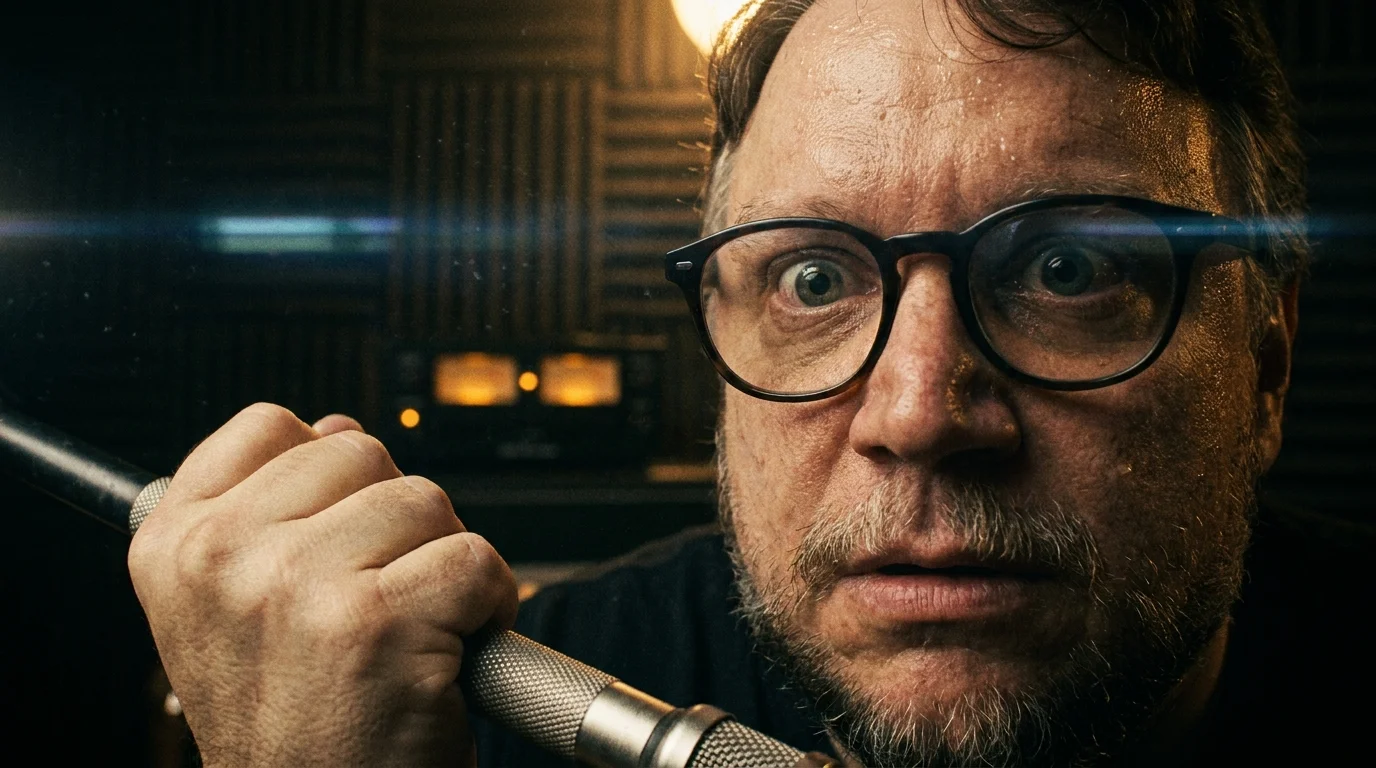
When the lights came up, the executive decree was swift: film an alternate, lighter ending where the monster retreats without tragedy. Guillermo del Toro took one look at the readout, stepped backward out of the soundstage door, and ordered the cameras shut down entirely.
The Laboratory of Discomfort: Why Sweat Is Not Rejection
For decades, studio focus groups relied on hand-turned dials and paper scorecards filled out under fluorescent cafeteria lighting. You sat in a circle, scribbled your thoughts on whether the protagonist was likable, and handed your paper to a researcher with a clipboard. Today, galvanic skin response has replaced conversational reflection with immediate physiological extraction, treating an artistic masterwork like a stress test for high-performance aviation gear.
The central misunderstanding inside that boardroom is simple: fear and despair register identically to mechanical frustration on a sensor tape. When del Toro plunges an audience into heartbreaking moral ambiguity, the body stiffens. The pulse climbs, breathing becomes shallow, and skin conductance leaps. The corporate spreadsheet views that biological spike as customer dissatisfaction—a sudden friction point that might cause a viewer to abandon a streaming platform or leave a sour social review.
Yet genuine Gothic cinema requires that exact somatic cost. If you remove the dread that coats the palms in cold sweat, you strip away the relief of the eventual resolution. You replace narrative weight with flat, frictionless entertainment that leaves no emotional residue behind once the screen goes black.
- Florence Pugh demands zero digital smoothing exposing raw skin flaws on camera
- Billie Eilish halts stadium tour set after sudden in-ear frequency burst
- Stella Parton freezes unscripted red carpet exchange exposing quiet Nashville rift
- Burt Reynolds resurfaced talk show clip reverses public judgment on his career choices
- Katherine Heigl viral throwback clips reveal calculated publicist push burying past set disputes
Consider the account of Marcus Vance, a 44-year-old post-production biometric analyst who spent six years wiring test audiences for studio tentpoles in Burbank. Vance recalled standing behind del Toro during a preliminary cut screening: Del Toro pointed at a sharp spike occurring right as a beloved secondary character perished in the mud. The executive next to him insisted the peak proved audiences felt alienated and betrayed. Del Toro turned around, tapped the glowing monitor with a thick, ringed finger, and whispered that if their palms had stayed dry, he would have burned the negative himself.
The Audience Calibration Spectrum
How an audience handles physiological narrative stress depends heavily on what they expect the screen to give back to them. Breaking down these viewing thresholds explains why raw biometric monitoring repeatedly misinterprets narrative devotion as distress.
The Catharsis Seeker: This viewer welcomes physical heaviness. When the music drops and the creature looms, their nervous system lights up, but their cognitive response is reverence. They do not want the ending softened; they want the tragedy to hit them squarely between the shoulder blades so they can process grief safely inside an imaginary world.
The Friction-Averse Consumer: Conditioned by continuous algorithmic feeds, this profile experiences biometric spikes as genuine agitation. They crave clean resolutions, low-stakes conflicts, and predictable character arcs. When a scene denies them a happy ending, their biometric response remains elevated for minutes after the sequence ends, registering as sustained systemic dissatisfaction on the tracking monitors.
The Aesthetic Observer: This group responds less to jump scares and more to tonal density. Their skin response spikes during moments of grotesque beauty—a creature’s wet skin catching candlelight or an unscripted micro-expression of longing between two doomed figures. For this demographic, physical discomfort is inextricably linked to visual awe.
Guarding the Unsanitized Ending
Del Toro’s refusal to shoot the studio-mandated alternate ending provides a clear blueprint for maintaining narrative boundaries against algorithmic encroachment. You do not win creative battles by ignoring data; you win by interpreting the data through the lens of human psychology rather than corporate loss prevention.
When dealing with modern analytical overreach, whether in cinematic post-production or independent creative projects, applying strict interpretive friction protects the core work from premature dilution.
- Separate Arousal From Polarity: A biometric sensor measures intensity, not approval. Never allow a metric that tracks nervous system activation to dictate the emotional tone of your final beat.
- Audit the Testing Environment: The physical atmosphere of a testing facility alters physiological baselines. Fluorescent lights, plastic sensors, and clinical silence inherently heighten baseline anxiety before the first reel even turns.
- Protect the Downward Curve: Great art demands emotional exhaustion at specific narrative junctures. If an audience leaves a theater feeling completely untroubled, the narrative has failed to deposit anything permanent inside their memory.
- Demand Qualitative Context: Never permit quantitative biometric charts to sit alone on a boardroom table. Pair every sensor readout with long-form, unprompted audience reflections gathered twenty-four hours after the experience.
The tactical toolkit for resisting data-driven creative sanitization comes down to understanding the mechanics of emotional endurance. Sensor lag typically sits at 1.5 to 3.0 seconds post-stimulus; using that physiological delay allows creators to prove that spikes correlate to visual surprises rather than lingering structural distaste. Holding your ground against quick corporate fixes requires treating audience discomfort as an expensive, hard-won commodity.
The Last Bastion of Organic Storytelling
The quiet tragedy of contemporary media production is the relentless drive to polish away every jagged edge that makes you shiver. When algorithms dictate where an edit falls or how a protagonist must smile to keep viewer cortisol levels flat, stories lose their teeth. They become ambient noise, drifting past your eyes without leaving a single thumbprint on your soul.
Del Toro’s quiet mutiny on that Burbank soundstage reminds you that storytelling is an act of communal vulnerability, not an automated transaction. Real terror demands real sweat, and true beauty often walks hand in hand with genuine sorrow. The moment we allow studio algorithms to sanitize our cinema down to a frictionless flatline is the moment we forget why we gathered together in the dark in the first place.
Real dread cannot be bargained with in an edit suite; if the palms do not sweat, the ghost never truly entered the room.
| Evaluation Metric | Studio Biometric Interpretation | Cinematic Reality for the Viewer |
|---|---|---|
| Galvanic Peak | Audience friction and scene failure | Profound narrative immersion and sensory dread |
| Heart Rate Elevation | Impending churn or negative word-of-mouth | Visceral engagement with tragic stakes |
| Prolonged Post-Scene Recovery | Lingering resentment toward character fate | Emotional resonance requiring contemplative integration |
Frequently Asked Questions
What is galvanic skin response in media testing?
It is an automated testing process that measures electrical conductance across the skin via micro-perspiration, tracking physiological arousal during specific scenes.Why do studios rely on biometric testing over focus groups?
Studios use physiological metrics to bypass conscious self-reporting, attempting to capture instant, unvarnished emotional reactions that viewers might soften in verbal discussions.Did Guillermo del Toro permanently cancel the project?
No, del Toro halted the reshoot schedule temporarily to force a boardroom review of the core themes, successfully keeping his original ending intact without compromise.Can skin sweat metrics distinguish between fear and annoyance?
No, the sympathetic nervous system produces identical sweat gland activations for high suspense, narrative revulsion, cognitive fatigue, and simple environmental temperature shifts.How does biometric testing affect future film releases?
It risks homogenizing story structures by encouraging executives to cut demanding, dark, or bittersweet narrative moments in favor of flat, uniformly comfortable resolutions.