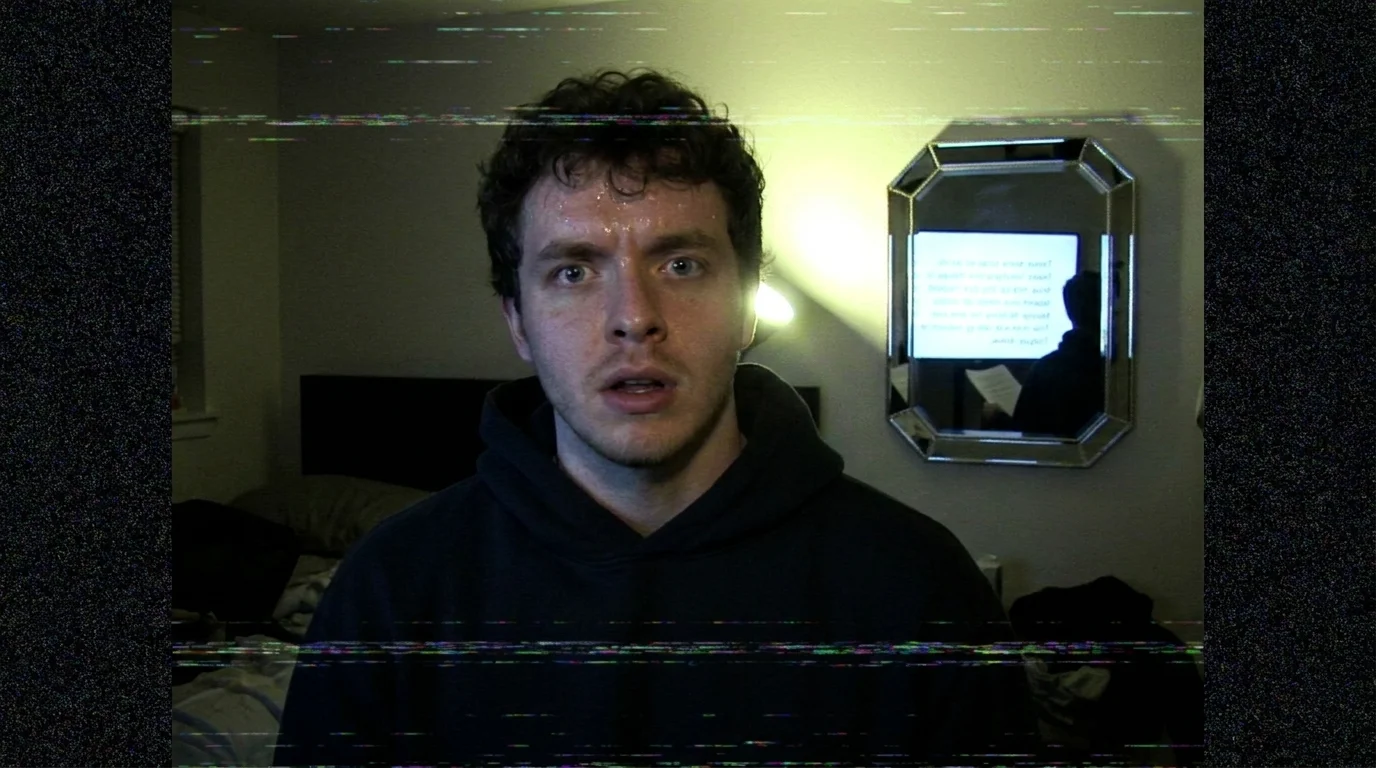
The glow of a smartphone screen at 1:14 a.m. usually promises intimacy. You expect the hum of an air conditioner, the faint crinkle of unmade linen sheets, and that warm, low-fidelity audio of an artist talking into the camera just because they cannot sleep. When Jack Harlow popped up on feeds across the country wearing an oversized gray hoodie, leaning against what looked like a personal headboard, hundreds of thousands of viewers felt that familiar, quiet thrill of direct access. It felt like being let into a private room after hours, sitting on the rug while an A-list rapper sorted through his unfiltered thoughts.
For forty-two minutes, the conversation drifted with an effortless, boyish charm. He laughed off comments about his dating life, debated local Louisville takeout spots, and appeared to read incoming questions off the screen with squinted, sleepy eyes. To anyone scrolling in the dark, it was an irresistible masterclass in modern digital accessibility. It felt entirely unproduced, honest, and stripped of the glossy corporate armor that usually surrounds major-label heavyweights.
Then, Harlow shifted his weight. As he leaned back to adjust his posture, the angled vanity mirror sitting on a dresser in the upper-right quadrant of the frame caught the light differently. In that brief, three-second window, the illusion did not just wobble; it shattered completely. Reflected clearly against the beveled glass was not an empty bedroom wall, but a tripod-mounted confidence monitor, flanked by two agency operatives in dark crewnecks silently typing out pre-approved talking points and cueing conversational pivots in real time.
The bedroom was not a sanctuary. It was a soundstage designed to mimic one, and the spontaneous midnight confession was a carefully coordinated public relations broadcast disguised as raw vulnerability.
The Anatomy of the Simulated Confession
We live in an era where polish has become a liability for high-profile creatives. Ten years ago, pop-cultural power was projected through diamond-cut lighting, designer step-and-repeats, and untouchable studio mystique. Today, the currency of fame is proximity. Audiences no longer want to admire stars from the floor of an arena; they want to feel as though they share an unwritten, secret dialogue with them over cracked speakerphones. When that perceived bridge turns out to be an engineered toll booth, the sense of betrayal cuts far deeper than a garden-variety marketing blunder.
Think of it as the difference between stumbling across an authentic antique desk in an attic and buying a factory piece intentionally distressed with sandpaper and vinegar. The patina is identical from ten feet away, but the moment you run your fingers along the grain and discover the repeating machine marks, the romance vanishes. The teleprompter screen in Harlow’s mirror was that machine mark, exposing an entire infrastructure dedicated to manufacturing the feeling of off-the-cuff candor.
- Kourtney Kardashian podcast breakdown perfectly timed lucrative wellness vitamin supplement brand rollout
- Jeff Bridges protects forty-year marriage enforcing strict camera ban across Montana property
- Macklemore tense festival posture sparks viral split speculation after sudden backstage confrontation
- Harrison Ford improvised iconic desert standoff shooting scene saving exhausting film production
- Brendan Fraser resurfaced press junket footage reverses decade-old studio blacklisting narrative overnight
What made the moment trigger such immediate friction was not simply that script notes existed—everyone understands that global brands operate with strategy. The friction came from the calculated deception of vulnerability. By intentionally staging the visual vocabulary of loneliness—the dim tungsten lamp, the slightly askew pillow, the tired vocal cadence—the broadcast weaponized an audience’s protective instincts to deliver a sterilized, agency-approved narrative without risk.
The Control Room Behind the Curtains
To grasp why this setup exists, you have to talk to the people who build these digital sets. Marcus Vance, a 38-year-old digital campaign strategist based in Los Angeles who spent years orchestrating high-engagement launches for record labels, views the fallout not as a freak accident, but as an inevitable structural collapse.
“Labels used to sweat over whether an artist would freeze up on a morning radio circuit,” Vance explains, leaning over an iced coffee in a quiet Culver City studio. “Now, the nightmare scenario is an artist saying something authentic on an unvetted Instagram Live that damages an eight-figure brand partnership. So the agency does what agencies always do: they build a safety harness, make it look invisible, and pretend the artist is free-climbing. The problem is that when the harness snaps into view, the fan feels fundamentally duped, not protected.”
The Five Layers of Modern Parasocial Engineering
To understand how this dynamic functions—and why it suddenly backfired so intensely—it helps to examine how contemporary talent agencies dissect and package artist authenticity for mass consumption:
- The Anti-Production Aesthetic: Utilizing natural room reverberation, single-source domestic lamps, and deliberate vertical camera framing to mimic an everyday phone call rather than a professional broadcast.
- The Prompted Incline: Operating silent, low-lumen scrolling monitors off-axis, feeding key phrases and talking points while allowing the speaker to rephrase them into their natural cadence.
- The Synthetic Micro-Pause: Training talent to insert intentional pauses, self-interruptions, and gaze shifts toward the ceiling to simulate internal reflection before delivering an agency-reviewed talking point.
- Algorithmic Comment Curation: Employing back-end moderators who actively filter live audience chats, routing only brand-safe prompts to the performer while suppressing critical or complex queries.
- The Manufactured Accident: Engineering minor, non-damaging glitches—a knocked-over water glass or an interrupted train of thought—to cement the impression that nothing in the room is being controlled.
Navigating the New Rules of Digital Authenticity
For the modern consumer, recognizing these seams is no longer about cynicism; it is about self-preservation in an increasingly synthetic landscape. When you learn to identify the operational machinery behind the screen, you regain your critical perspective without losing your appreciation for the art itself.
The takeaway from Harlow’s leaked mirror reflection is not that public figures must remain hyper-monitored hermits, nor that everything you watch online is entirely fake. Rather, it is a reminder to recalibrate how much emotional capital you invest in the perceived intimacy of famous strangers.
- Look for the Eyeline Drift: A speaker reading off an interface consistently snaps back to a fixed coordinate just above or beside the camera lens rather than looking directly into the sensor.
- Listen for the Narrative Arcs: True spontaneous conversations meander, repeat, and occasionally stall; simulated chats consistently introduce neat thematic setups that resolve within three to four minutes.
- Notice the Environment: Watch how shadows behave; genuine domestic streams rarely feature professional three-point diffusion disguised as a single bedroom nightstand bulb.
By shifting your gaze from the emotional surface of the performance to the practical architecture of the room, you become immune to the manufactured magic tricks of digital celebrity culture.
The Long Horizon of Genuine Connection
In the end, the teleprompter leak is less about Jack Harlow’s personal choices and more about an entertainment apparatus terrified of genuine unpredictability. For decades, the magic of pop culture rested on the raw, unscripted friction of real human beings making real mistakes in front of crowds. When every breath is focus-grouped, every pause is rehearsed, and every midnight chat is greenlit by a four-person committee, the very thing people crave—human truth—quietly leaves the room.
The next time you see your favorite musician leaning back on an unmade bed at midnight, enjoy the music, appreciate the craft, but keep your eyes on the glass. The real story is rarely what they say directly to the camera; it is almost always what is reflected silently in the corners of the frame.
“True intimacy cannot be scheduled, and real character cannot be delivered off a rolling monitor in an empty room.”
| Key Dimension | The Staged Broadcast Model | The Unfiltered Interaction Reality |
|---|---|---|
| Preparation Mechanism | Agency-managed teleprompters, live screeners, and coordinated key messaging goals. | Spontaneous thoughts, genuine silence, and erratic conversational rabbit holes. |
| Visual Strategy | Engineered “casualness” designed to simulate bedroom safety and unproduced access. | Unflattering angles, raw background noise, and uncontrolled domestic lighting. |
| Audience Impact | Leaves viewers feeling emotionally exploited once the technical seams are exposed. | Fosters resilient, long-term artistic trust even when conversational stumbles occur. |
Frequently Asked Questions
Did Jack Harlow address the teleprompter leak directly?
Initial responses from the artist’s camp framed the monitor as a simple tool for tracking rapid chat comments, though screen-captures clearly showed script lines and messaging bullet points.Why do major labels use teleprompters for livestreams?
High-value commercial partnerships and legal clearances mean unexpected off-script remarks can derail major sponsorships, prompting labels to insist on tight message control.How can viewers spot a scripted stream in real time?
Watch the speaker’s eyes: frequent, rhythmic horizontal tracking away from the camera lens almost always signals reading text rather than processing spontaneous thoughts.Does this incident permanently damage Harlow’s career?
While embarrassing and damaging to his down-to-earth persona, the backlash primarily recalibrates how skeptically his future direct-to-camera content will be received.Is parasocial marketing becoming obsolete?
No, but the bar for believable execution is rising rapidly as digital-native audiences become expert at spotting the production techniques behind manufactured authenticity.