The private screening room in Burbank smelled faintly of cold recycled air conditioning, dry-erase marker fumes, and burnt espresso. You know the environment well if you have ever spent five minutes near studio backlots: quiet plush carpets, rows of acoustic velour seating, and three executive assistants balancing glowing tablets in the dark. On the central monitor, a graph did not show box office tallies or audience exit cards. It plotted skin conductance—microscopic drops of sweat measured along the palms of thirty test viewers strapped into biometric wristbands.
When the screen faded to black on the bleak, morally bruised final frame of a tentpole project, the graph plummeted into an erratic red canyon. To the suits holding the clipboards, that line meant distress, confusion, and customer disengagement. To them, an elevated galvanic spike followed by an abrupt dip meant people were uncomfortable. They immediately requested a sanitized reshoot: soften the blow, give the hero an unearned sunset, and restore the biological readings to a predictable, profitable baseline.
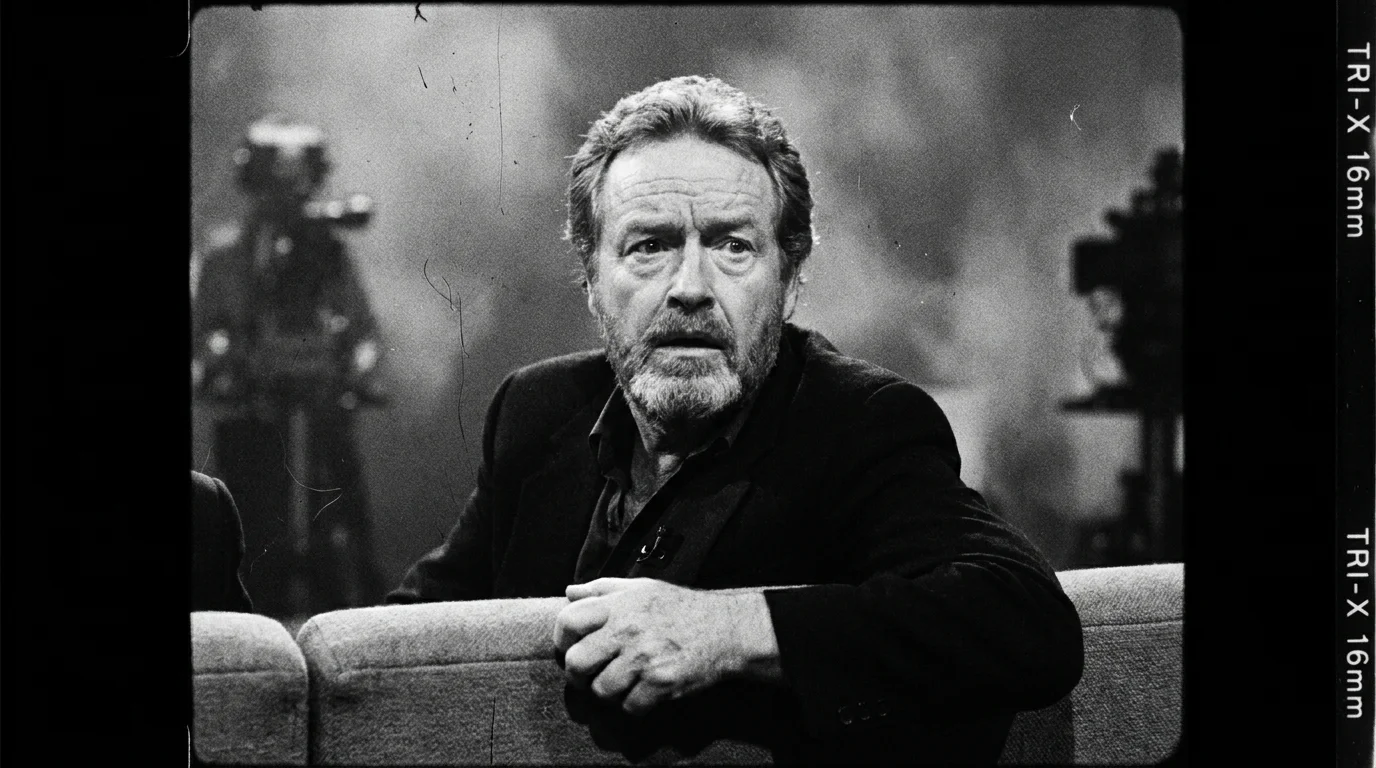
Then the lights snapped up, and Ridley Scott simply refused to budge. With a blunt roll of his shoulders and the unsparing gaze of a filmmaker who spent half a century wrestling light onto celluloid, he shoved the printed metric sheet right back across the conference glass. Art is not an electrocardiogram designed to keep an audience floating in warm bathwater, he argued, and reducing cinematic shock to an electrical skin impulse completely misunderstands why people buy tickets in the dark.
If you have ever felt that modern studio films look polished to a fault, you are sensing the exact algorithmic pressure point Scott pushed against. When studios swap out directorial instinct for biometric spreadsheets, they do not just alter an ending. They systematically smooth away the exact human friction that makes storytelling memorable in the first place.
The Algorithmic Sweat Trap: Turning Heartbeats into Focus Groups
For decades, Hollywood relied on clumsy yellow index cards scribbled by teenagers in suburban multiplexes. You were asked whether the pacing felt slow or if you liked the lead actor, and filmmakers took those notes with a healthy grain of salt. Today, galvanic skin response—the same principle powering polygraph tests—tracks sweat-gland permeability down to the millisecond. The metric measures pure autonomic arousal, recording instantaneous spikes in nervous system tension without ever asking why that tension exists.
Studio executives treat these biometric trackers like an infallible compass. If a test audience registers high skin conductance during an action set-piece, the spreadsheet registers approval. But if that reading dips during a quiet character beat, or spikes frantically during a tragic climax, corporate pattern-recognition software flags it as negative friction. The studio logic operates on a single mechanical premise: keep the viewer chemically stimulated without ever letting them feel true emotional dislocation.
- Jessica Chastain demands unedited macro lens framing stripping digital studio smoothing
- Beyoncé halts massive stadium concert after piercing in-ear audio monitor feedback spikes
- Tom Pelphrey unscripted red carpet flinch exposes tense television cast rift rumors
- Backstreet Boys wholesome throwback blitz exposes coordinated PR campaign burying contract disputes
- Dixie D’Amelio staged crying livestream sparks instant fan revolt over scripted agency stunts
When you reduce dramatic storytelling to autonomic nervous responses, you treat the human body like a simple meat engine waiting to be poked. Scott recognized immediately that a tragic or unsettling ending is supposed to make the viewer feel hollowed out, cold, and quiet. Confusing that stillness with audience dissatisfaction is the supreme intellectual failure of modern data-driven filmmaking.
The Burbank Standoff: Inside the Screening Room Mutiny
Marcus Vance, a fifty-two-year-old supervising finishing colorist who has spent nearly three decades balancing shadow density on major studio lots, watched the confrontation unfold from the back console. Over the years, Vance has witnessed dozens of celebrated directors yield to corporate pressure, slowly softening hard-edged third acts until the finished cut resembles little more than an expensive car commercial. But according to Vance, watching Scott dissect the studio’s biometric dossier was like seeing an old master carpenter watch an accountant try to handle a Japanese pull saw.
“Ridley did not raise his voice,” Vance recalled with a quiet smirk. He simply tapped the monitor where the audience galvanic response had cratered during the bleak final sequence. He told the room that if an audience walks out of a dark theater feeling tidy and cheerful after witnessing two hours of systemic betrayal, then the director failed his craft. He made it clear that if they wanted a heart-rate monitor that remained flat and sunny, they should distribute a yoga tape instead of a franchise film.
Three Tiers of Screen Testing: Where Human Emotion Gets Lost
Understanding this clash requires looking at how entertainment conglomerates separate narrative impact into three mechanical tiers. Each layer serves a corporate balance sheet, but each strips away a vital dimension of cinematic risk.
1. The High-Conductance Trap (Pacing by Jolt)
Studios design modern blockbusters around twenty-minute cycles of sensory overload. If the biometric data shows audience heart rates steadying for more than four consecutive minutes, studio heads demand structural trims. You lose the contemplative pauses, the atmospheric wind through the trees, and the silent character glances that allow dramatic gravity to take root.
2. The Ambiguity Tax (Cleaning the Moral Palette)
When an ending presents two equally painful choices, an audience’s sympathetic nervous system reacts with genuine unease. In a spreadsheet, unresolved grief looks like failure. Producers routinely use this data anomaly to demand reshoots where villains receive clear punishment and protagonists reconcile, neutralizing the lingering ache that makes an ending stick to your ribs for a decade.
3. The Safety Ceiling (Sterilizing Cult Classics)
Consider how cinema history would look if galvanic readouts governed the legendary releases of the 1970s and 1980s. The bleak despair of Chinatown, the claustrophobic dread of Alien, or the nihilistic rain of Blade Runner would never clear a modern biometric screening gate. Scott understands that genuine cultural impact requires the courage to let the audience sit in discomfort.
How to Decode the Sanitized Cut: A Viewer’s Tactical Toolkit
Once you recognize the biometric reshoot formula, you can spot it in almost every mainstream release within the first ten minutes of the third act. The signatures are unmistakable, arriving with the cold precision of an assembly line.
- The Tonal Handbrake: Watch for sudden, jarring shifts from atmospheric dread to quick quips. If a character cracks an ironic joke immediately following an earth-shattering loss, you are watching biometric pacing intervention designed to pull an audience out of negative arousal.
- The Coverage Cut-and-Paste: Notice when final-scene dialogue happens entirely over the back of an actor’s head. This almost always indicates studio pick-up lines recorded in an audio booth months later to explain away moral ambiguity.
- The False Dawn Lighting Shift: Pay close attention to color grading. If an entire film lives in bruised blues and low-exposure shadow, but the final three minutes explode into golden-hour amber, you are looking at a reshot ending mandated to trigger physiological relaxation before the credits roll.
Surviving as a critical viewer today means training your eye to seek out the rough edges. When a film leaves you slightly disoriented or lingering in the parking lot trying to parse your own feelings, celebrate it. That lingering weight is proof that an artist pushed back against the machine and kept the human pulse alive.
Beyond the Sterile Cut: Reclaiming the Value of Friction
We live in a culture increasingly optimized to remove all discomfort, from next-day deliveries to automated playlists that soothe rather than challenge. When studio executives attempt to tame the edges of our stories using biofeedback sensors, they rob us of the communal experience of grief, shock, and awe. Real life does not resolve on a tidy curve, and our best stories should not either.
Ridley Scott’s refusal to yield to a biometric readout reminds us that art is an exchange between human souls, not an algorithm calculating dopamine release. The moments in cinema that define generations are rarely the ones that made test audiences feel secure. They are the moments that stopped our breath, dropped our jaws, and left us sitting together in the dark, wondering how we would ever find our footing again.
“If you do not leave the audience slightly bruised by the truth of the story, you have not made a film; you have merely manufactured chewing gum for the eyes.”
| Key Point | Detail | Added Value for the Reader |
|---|---|---|
| Biometric Testing | Measures galvanic skin response and micro-sweat glands instead of verbal feedback. | Reveals how modern blockbusters are engineered on autonomic stress responses rather than thoughtful narrative critique. |
| Scott’s Mutiny | Direct rejection of executive demands to soften a dark ending based on panic metrics. | Demonstrates the rare directorial leverage required to protect bleak or complex artistic conclusions. |
| The Sanitized Cut | Replacing moral dilemma with tidy resolutions to keep heart rates predictable. | Gives you clear visual cues to identify studio-mandated pick-up shoots and dialogue overlays. |
| Cultural Impact | Masterpieces rely on discomfort and lingering cognitive friction to achieve longevity. | Reframes your personal dissatisfaction with formulaic cinema as a valid rejection of algorithmic packaging. |
Frequently Asked Questions
What is biometric test screening in modern cinema?
Biometric testing involves fitting focus group participants with monitors that measure galvanic skin response, eye tracking, and heart-rate variability. Studios analyze these physiological metrics frame by frame to determine where audience attention wavers or spikes, using the data to mandate editorial trims or script rewrites.Why did Ridley Scott reject the studio’s reshoot demands?
Scott argued that autonomic nervous responses do not measure narrative comprehension or emotional resonance. He refused to replace a complex, tragic resolution with a comfortable, studio-friendly finale simply because the test audience registered temporary emotional distress during the screening.How can an average moviegoer spot a biometric reshoot?
Look for sudden pacing shifts near the climax, excessive voice-over narration explaining plot points, humor awkwardly inserted into moments of terror, or final scenes shot from behind actors’ shoulders using obvious body doubles and studio lighting that clashes with the rest of the film.Are focus group scorecards no longer used in Hollywood?
Traditional written surveys and focus group discussions still exist, but major studios increasingly weigh biometric and neurometric data more heavily. Corporate decision-makers view biometric data as an “objective” reading of human interest that bypasses conscious thought or polite questionnaire responses.Why does emotional discomfort make films better in the long run?
Endings that offer ambiguous or tragic outcomes force the viewer to mentally process the themes long after leaving the cinema. When a film artificially resolves all conflict to trigger comfort, it satisfies immediate autonomic impulses but rarely leaves a lasting cultural or emotional imprint.