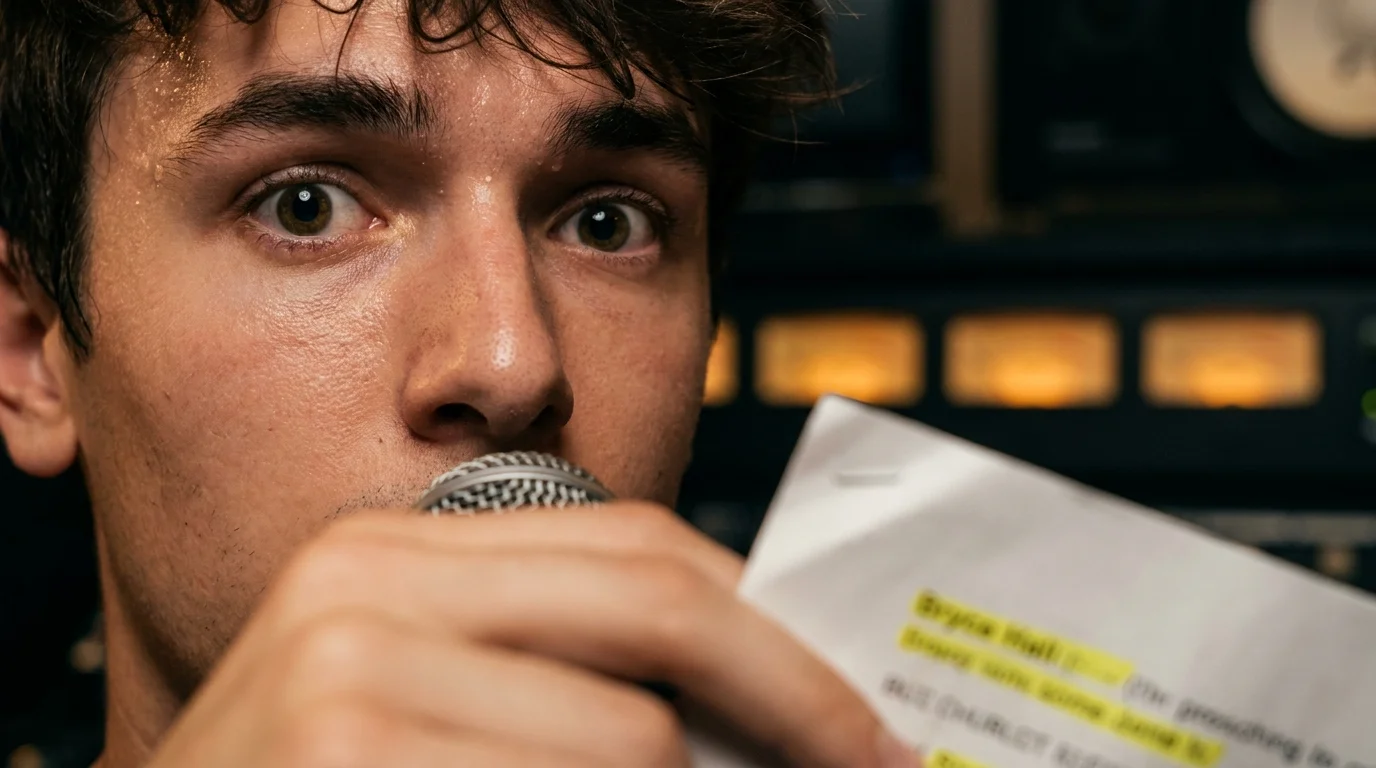
The ceiling fan hums in a three-quarter rhythm, cutting through the dry, heated air of an Encino bedroom. A phone sits propped against an unbranded water bottle, its front-facing lens slightly smudged with thumb grease to soften the glare. On screen, a disheveled creator runs both palms through unwashed hair, rubs his eyelids until the sclera blooms red, and sighs directly into the pin-hole microphone. To your naked eye, it feels like an accidental confession—a spontaneous late-night window into the unvarnished exhaustion of internet royalty.
Then the off-camera monitor reflects across the iris. It is not an unmonitored feed of incoming chat messages, but a crisp teleprompter margin scrolling at twelve words a minute. What felt like an intimate, four-in-the-morning breakdown was actually scheduled between a protein sponsorship call and an afternoon wardrobe fitting.
When a production itinerary from a prominent Beverly Hills digital agency surfaced on secondary forums this week, the illusion collapsed into clinical prose. The three-page call sheet, timestamped to the minute, detailed every stammer, every strategic glance away from the camera, and every performative pause Bryce Hall delivered during his recent viral stream. You are not watching a human being reach an emotional tipping point; you are watching choreography masquerading as crisis.
The Architecture of Manufactured Intimacy
For nearly a decade, the creator economy ran on the unspoken promise of the raw feed. Traditional Hollywood offered velvet ropes and polished press junkets; internet native stars offered their messy bedsheets, unfiltered skin texture, and spontaneous late-night confessions. The magic relied entirely on proximity. You accepted erratic audio and vertical framing because those technical shortcomings served as proof of life—a digital receipt verifying that no corporate committee stood between you and the voice on the screen.
That trust disintegrates the moment a creator converts emotional fragility into a balance-sheet deliverable. The leaked agency script strips away the mystery with brutal precision, laying out cue lines that read like technical stage directions: [Hold head in hands for 4 seconds; wait for chat velocity to double; drop voice by an octave before mentioning brand fatigue]. The bedroom is no longer a private sanctuary; it is a soundstage stripped of its grip trucks, deliberately engineered to feel neglected.
When an audience discovers that a creator’s apparent breakdown was pitched, revised, and greenlit across three rounds of corporate feedback, the response is not mere disappointment. It is an instinctive, visceral revolt against synthetic empathy.
The Anatomy of the Leaked Script
Consider Marcus Keller, a thirty-eight-year-old digital broadcast technician who spent six years directing unscripted television before transitioning to consulting for high-profile streaming personalities in Los Angeles. His entire career hinges on engineering spontaneous moments that bypass your natural skepticism.
- Bethenny Frankel podcast tears expose calculated emotional rollouts launching lifestyle brands
- Sharna Burgess street sighting surfaces tailored monochrome blazers and Bottega Veneta clutches
- Robert De Niro unscripted mirror monologue transforms classic psychological thriller tension
- Jeff Bridges shields forty-seven year marriage enforcing rigid remote ranch isolation
- Kim Kardashian and Kris Humphries vintage interviews expose awkward dismissive body language
“True spontaneity is unpredictable, and unpredictability is catastrophic for quarterly sponsorship retainers,” Marcus explained over a scarred oak desk in Burbank. “If an agency leaves an influencer’s genuine mental state to chance, they risk brand safety violations or dead air. The industry learned to build safety nets disguised as vulnerabilities. We write ‘imperfect’ beats—a mispronounced syllable, a dropped phone, an awkward throat clear—because an audience will defend an unpolished speaker with their lives. The moment you write the hesitation down in a Word document, however, you cross the line from entertainer to confidence trickster.”
The leaked itinerary for the broadcast highlights three distinct mechanisms engineered to bypass critical scrutiny:
- The Engineered Technical Glitch: A deliberate prompt directing the host to trip over the microphone cord at minute 04:12, establishing technical vulnerability before introducing sensitive personal topics.
- The Paced Emotional Arc: A progression model moving from nervous laughter to quiet withdrawal, timed specifically to peak right as viewer retention algorithms trigger notification spikes across secondary platforms.
- The Conversion Pivot: A calculated segue where emotional distress regarding internet pressure seamlessly transitions into gratitude for an unannounced upcoming lifestyle venture.
The Three Layers of Audience Perception
Understanding why this exposure hurts requires looking closely at how different segments of the internet consume digital identity.
For the Early Adopter
You remember when live broadcasting meant erratic webcam feeds and accidental background noise. For this segment, the agency script feels like an insult to their digital literacy. They value technical transparency over cinematic drama, and they treat unverified confessions with immediate suspicion.
For the Parasocial Community
This group invested emotional capital, late-night hours, and financial tips into the creator’s perceived isolation. The realization that their empathy was harvested according to a talent agency’s retention quota creates deep psychological betrayal. They did not just watch a performance; they mourned a manufactured wound.
For the Passive Casual Viewer
Browsing algorithmic feeds between transit stops, this viewer treats the fallout as pure narrative sport. For them, the script is not an ethical breach, but a fascinating peek into the mechanical gears behind high-volume modern media production.
Calibrating Your Media Perception
Navigating the current streaming ecosystem demands a fundamental shift in how you read visual authenticity. You do not need to turn cynical; you simply need to observe the frame like a stagehand rather than a confidant.
When viewing modern livestream content, watch for the mechanical tells of planned vulnerability:
- Monitor Glances: Track eye saccades toward fixed points off-lens that do not align with floating chat windows.
- Rhythm Regularity: Note whether emotional resets occur on exact four- or five-minute cycles matching platform ad-break opportunities.
- Prop Continuity: Observe strategic placement of neutral everyday objects designed to establish casual disorder without obscuring sponsored lighting zones.
- Static Lighting Tricks: Recognize that “spontaneous” low-light settings often require warm key-lights bounced off white cards just outside the camera’s perimeter.
By shifting your focus to the physical mechanics of the room, you strip the manufactured intimacy of its emotional leverage.
The Value of the Broken Mirror
There is a distinct liberation that comes when an industry shows its hand. When the script leaks, the soft-focus spell breaks, leaving you free to evaluate internet culture on its real terms rather than its sentimental claims.
Digital personalities are modern theater troupes working on vertical stages. Acknowledging that reality does not ruin the entertainment; it protects your emotional reserves from being weaponized by quarterly agency quotas. When you stop looking for honest friends in an ad-supported browser window, you start finding clearer boundaries in your own life.
The sharpest deception in modern media is convincing the viewer that an agency invoice is actually an open heart.
| Key Point | Detail | Added Value for the Reader |
|---|---|---|
| Calculated Vulnerability | Agency scripts cue pauses, sighs, and voice drops to mimic authentic emotional fatigue. | Allows you to recognize when emotional distress is being deployed as a conversion tactic. |
| The Bedroom Aesthetic | Deliberate clutter and low key-lighting replace obvious production rigs to imply intimacy. | Helps you separate deliberate low-budget aesthetics from genuine unscripted moments. |
| Retention Pacing | Key emotional revelations are spaced at four-minute marks to maximize watch-time metrics. | Protects your time by exposing how broadcast platforms manipulate behavioral focus. |
Frequently Asked Questions
Why do talent agencies script livestreams instead of letting creators speak naturally?
Unscripted broadcasts present significant legal, brand-safety, and algorithmic risks. Structuring a stream ensures that sponsor obligations and retention milestones are met without unexpected controversies.How can viewers spot a scripted broadcast in real time?
Look for consistent eye tracking toward secondary monitors outside the chat display, overly precise segues into upcoming business ventures, and emotional reactions that peak at regular intervals.Does every high-profile streamer use agency call sheets?
While not every broadcaster uses word-for-word scripts, almost all top-tier commercial talent rely on agency-approved talking points, timing sheets, and pre-screened narrative boundaries.What was the public reaction to the Bryce Hall itinerary leak?
Longtime followers expressed anger over manufactured vulnerability, while digital media analysts viewed the document as confirmation of standard industry practices.Will this controversy permanently impact influencer live streaming?
It accelerates a broader audience transition toward skepticism, encouraging viewers to consume creator content as scripted entertainment rather than genuine connection.