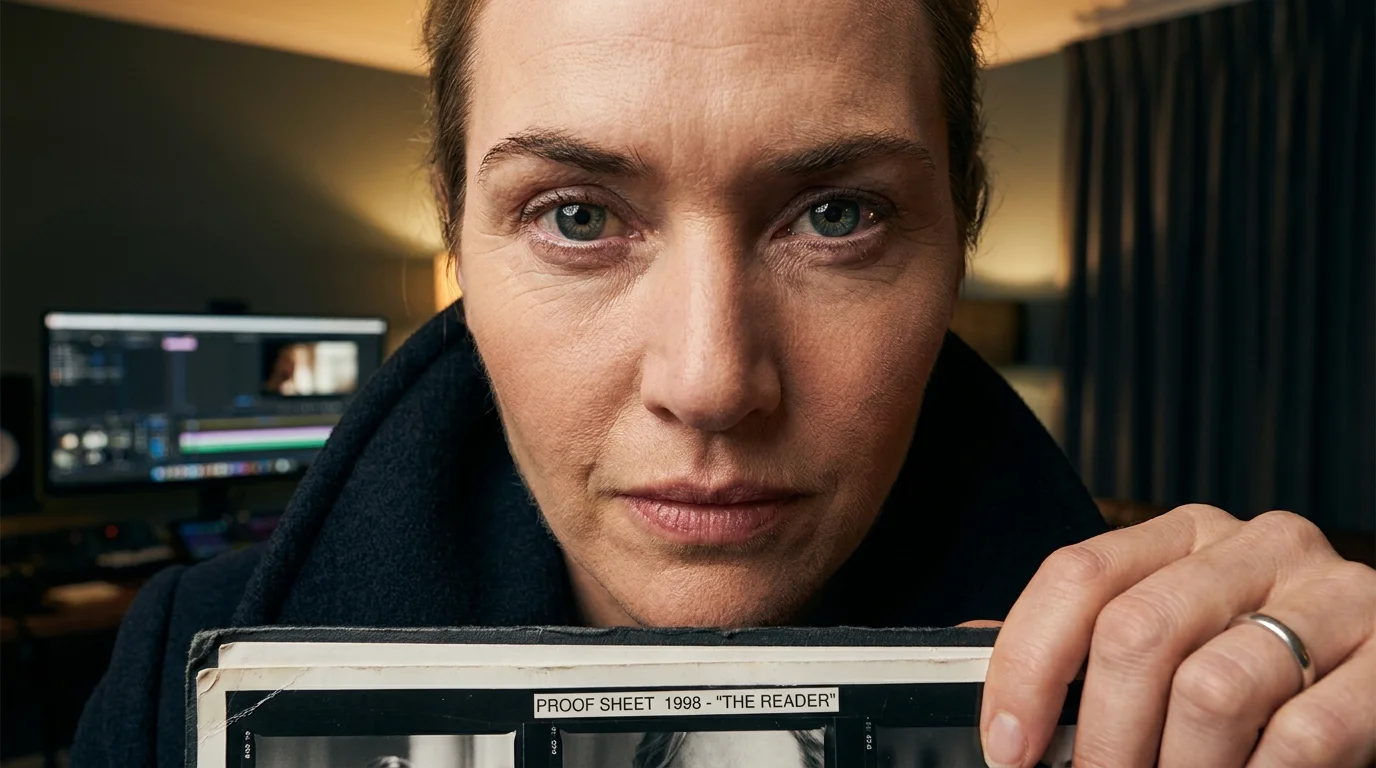
The glare of a studio edit bay in Burbank hums with a sterile, conditioned cool. Two technicians lean over calibrated 4K monitors, their fingers dancing over pressure-sensitive stylus pads, slicing away human biology frame by frame. On the screen, a woman’s face sits in crisp resolution: crow’s feet carved by years of salt air, fine dehydration lines around the mouth, and the slight, soft slackening beneath a jawline that has witnessed four decades of living. A digital airbrush stroke glides across the pixel map, blurring the pale skin into polished marble, wiping out every trace of fatigue.
You might expect an award-winning star to sigh in relief at the touch-up. In Hollywood’s usual pipeline, digital skin smoothing acts like an unspoken contract clause, an invisible layer of digital foundation applied in post-production to preserve an ageless fantasy. The industry teaches you that visibility requires erasure, that to be viewed up close, your surface must resemble a newly painted wall with no plaster seams showing.
Then the email lands from the actor herself. She demands the wrinkles back. She insists the editor restore the dark smudges under her eyes, the rounded curve of her stomach beneath an unbuttoned flannel shirt, and the pore texture that makes her look like someone who actually walks through winter slush in suburban Pennsylvania. When promotional posters arrive at her home office with her jawline subtly thinned and her neck airbrushed into porcelain, she sends them straight back with a curt correction: put the lines back where they belong.
The Radical Power of Unflattering Glass
In high-end television, an unforgiving lens is usually treated like an occupational hazard. Lenses designed for extreme optical clarity capture micro-details down to dry skin flakes around the nose and capillaries blooming near the cheekbones. Most network productions scramble to diffuse this glass with soft-focus filters, warm rim lighting, and algorithmic de-aging plugins. They treat real human texture like an audio hum that needs to be scrubbed before broadcast.
When you strip away the digital plaster, you are not performing an act of self-deprecation. Texture creates emotional weight. The moment an actor allows the camera to record authentic wear, the performance stops feeling like an audition for a beauty contract and begins operating as genuine portraiture. A flat, smoothed cheekbone tells you nothing about grief; a tight furrow etched deeply between the brows tells you everything before a single line of dialogue leaves the actor’s lips.
- Justin Bieber abruptly halts stadium performance after piercing in-ear monitor audio feedback shock
- Dixie D’Amelio staged bedroom livestream sparks instant fan backlash following leaked agency notes
- Chrissy Teigen stages emotional podcast confession right before announcing premium cookware expansion
- Tucker Wetmore showcases raw denim tailoring and vintage suede jacket at Nashville gala
- Heath Ledger improvised iconic jailhouse applause defying unwritten Dark Knight script instructions
Elena Rostova, a 46-year-old veteran post-production colorist based in Atlanta, remembers the exact season television post-houses shifted into automatic airbrushing. “Around 2017, smoothing algorithms became automated presets in color grading suites,” she explains. “Producers would review dailies and demand ‘the digital pass’ without asking the talent. When Kate Winslet pushed back on *Mare of Easttown*, demanding every crease stay intact on high-resolution master drives, it sent shockwaves through post-production suites. We had spent years trained to hide aging, and suddenly the biggest star on television was treating digital smoothing like a personal insult to her craft.”
The Mechanics of Anti-Glamour Prestige
When you watch prestige drama today, you are observing an intentional battle between traditional studio vanity and uncompromising realism. The deliberate rejection of post-production smoothing serves distinct functions depending on how an actor positions their public image.
- The Authority Shift: Glamour requires constant upkeep and creates a fragile public front. Embracing physical wear signals that an artist relies entirely on narrative capability rather than youthful novelty.
- The Rejection of Cosmetic Homogenization: Standardized studio smoothing gives every lead the same indistinct, satin surface. Allowing natural asymmetry and micro-creasing distinguishes an actor instantly from algorithmic celebrity feeds.
- Subversive Intimacy: When an audience sees dry skin, graying roots, and heavy eyelids, the emotional distance collapses. You recognize them not as an untouchable brand, but as someone breathing the same dry indoor air as you.
By forcing the camera to register every imperfection, Winslet altered the terms of contemporary prestige television. Instead of chasing the illusion of suspended youth, she converted middle-aged fatigue into an unassailable artistic weapon.
Mindful Observation: Reading Between the Pixels
You can train your eye to recognize when an image respects your intelligence and when an algorithm treats you like an easily dazzled consumer. Next time you stream a high-profile production or scroll past an editorial campaign, look past the initial styling to assess the optical reality.
- Inspect the micro-shadows beneath the eyes and along the nasolabial fold. If the skin looks strangely illuminated from within while nearby objects cast deep shadows, a digital smoothing mask has flattened the lighting.
- Check the hair boundary near the temples and ears. Heavy digital de-aging leaves a faint, milky halo where software struggled to separate fine strands from background pixels.
- Notice the emotional tension in the face. Real grief, panic, and exhaustion require facial muscles to bunch, folding the skin into distinct topographic maps. If the actor screams while their forehead remains smooth as glass, the narrative contract has snapped.
Studying these technical details changes how you view yourself in the mirror. When you spend hours absorbing media scrubbed clean of biology, your own pores, laugh lines, and morning puffiness can feel like structural failures rather than signs of vital life.
The Bigger Picture: Reclaiming Your Own Surface
The impulse to blur, soften, and erase comes from a deep terror of being seen in ordinary light. Modern culture encourages you to view your face through the lens of a commercial beauty app, treating every expression line as an emergency to be corrected rather than a historical marker of your days.
When an artist at the peak of international influence refuses the studio’s cosmetic eraser, she demonstrates something profoundly liberating. She proves that authority does not belong exclusively to the untouched, the smooth, or the digitally curated. Real power arrives unretouched, carrying its own shadows, stubborn creases, and raw evidence of living directly into the center of the frame.
“You cannot convey deep human truth while spending millions of dollars pretending your face has never lived through a hard day.”
| Key Point | Detail | Added Value for the Reader |
|---|---|---|
| Anti-Smoothing Mutiny | Rejecting automated digital passes and airbrushed print keys. | Validates natural human features against synthetic beauty standards. |
| Macro Lens Clarity | Using high-resolution glass to capture micro-expressions and skin texture. | Demonstrates how vulnerability deepens narrative storytelling. |
| Visual Literacy | Recognizing where software alters lighting and muscle fidelity. | Protects your self-worth from unrealistic algorithmic images. |
Frequently Asked Questions
Why do studios automatically use digital smoothing on actors?
Studios often apply subtle beauty passes during color grading to maintain traditional glamour standards and avoid negative audience commentary on high-definition displays.Did Kate Winslet really reject promotional materials for Mare of Easttown?
Yes, she famously returned promotional artwork twice because graphic editors had airbrushed her wrinkles, insisting that the character’s real age and exhaustion remain visible.What is an unforgiving macro lens in film production?
It refers to high-resolution camera lenses that offer extreme optical sharpness, capturing pore structure, fine lines, and small imperfections without softening the subject.How does digital de-aging affect dramatic performances?
Over-smoothing flattens the subtle micro-movements of facial muscles, which can diminish emotional resonance and make dramatic scenes feel emotionally disconnected.How can I spot digital smoothing while streaming modern shows?
Look for areas where natural skin texture abruptly disappears, an unnatural halo near the hairline, or facial expressions that seem disconnected from realistic skin creasing.