The smell of scorched dust rises off two-thousand-watt incandescent studio lamps, mingling with the chemically sweet tang of extra-hold hairspray. If you grew up in the mid-1990s, you remember the sheer velocity of that machine: the gloss on Tiger Beat covers so thick it stuck to your fingers, the mechanical whir of motorized 35mm cameras at Disney premieres, and the deafening shriek of teenage crowds rattling auditorium glass. At the center of that whirlwind stood Jonathan Taylor Thomas, known everywhere simply as JTT, smiling through eighteen-hour days on the soundstage of Home Improvement.
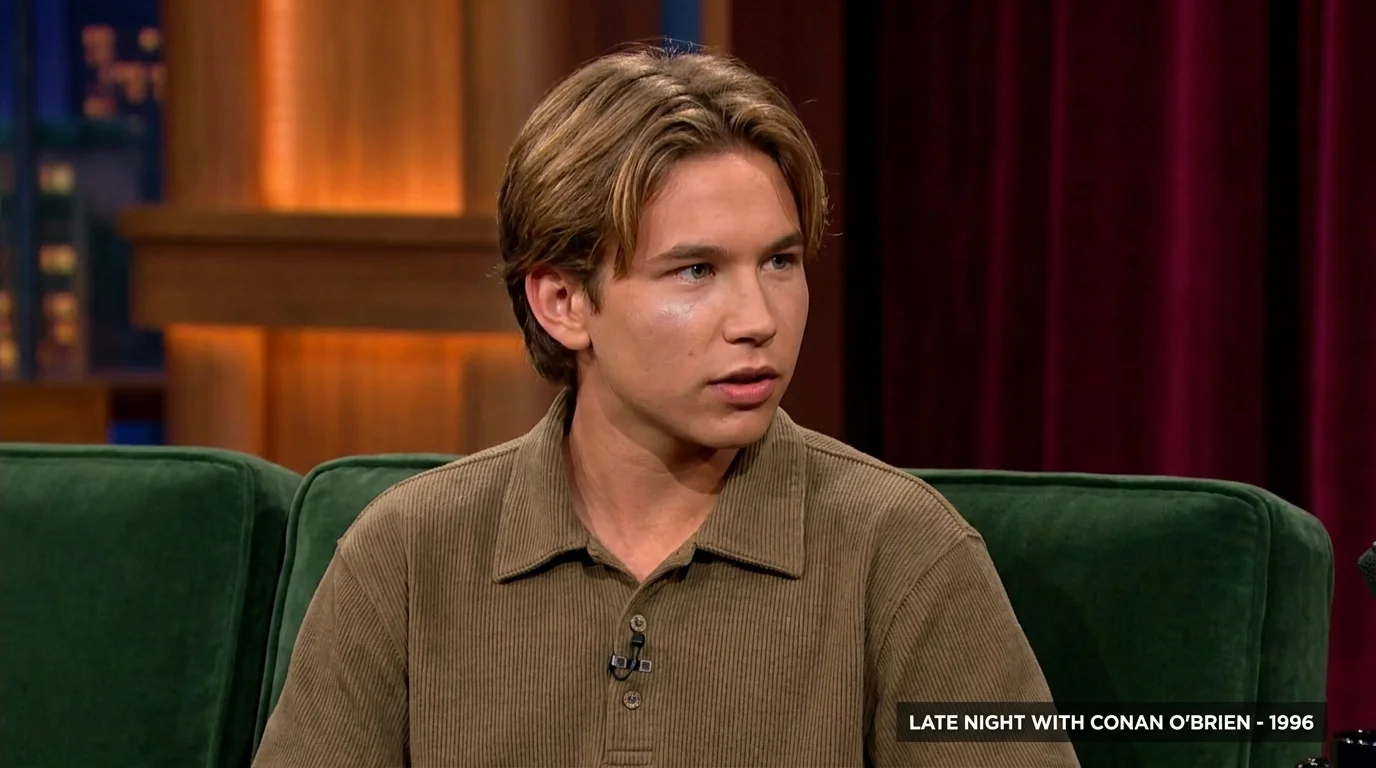
Standard Hollywood lore treats child stardom as a cautionary tale of inevitable personal collapse or predatory contracts. We expect the former teen idol to wash up in courtrooms or reality television reboots, carrying the jagged remnants of early fame like cheap shrapnel. Yet watching the recently resurfaced archival footage from a 1996 regional press broadcast reveals a reality that completely upends that narrative.
Taped during the promotional circuit between voice sessions for The Lion King and live taping nights on Stage 4 at Walt Disney Studios, the unedited interview catches Thomas without his network media handler hovering in the shot. The studio publicist had stepped out of the green room to grab coffee, leaving the local news anchor’s camera rolling on open tape. What Thomas says in that unscripted window does not sound like a rehearsed teen idol reciting lines; it sounds like an operative who had already mapped out the emergency exits.
Instead of gushing about his next studio picture, Thomas casually details why fame is a rented garment that you ought to hang up before the fabric rots. He plainly tells the interviewer that acting was merely a childhood hobby he intended to drop the second it stopped providing an intellectual challenge, outlining an impending departure years before network executives were blindsided by his 1998 contract walkout.
The Architecture of an Unplanned Disappearance
For decades, casual viewers assumed Thomas vanished because the industry lost interest or because a sudden rift with Tim Allen fractured the ensemble cast. The resurfaced tape exposes the myth: his exit was not an eviction; it was a deliberate, quiet breach of lease. To understand his move, think of a master watchmaker who inspects the gears of a clock tower, realizes the ticking will eventually deafen him, and walks out the back door while the crowd below is still looking up at the hands.
Hollywood operates on a doctrine of perpetual presence. You are told to strike while the iron is white-hot, to turn childhood notoriety into adult franchise equity, and to feed the studio machinery your twenties and thirties until audiences finally look away. Thomas understood the mechanics of the cage while still inside it.
- Dan Levy red carpet tension triggers wild fan speculation over cast fallout
- Ridley Scott blocked studio executives demanding sanitized reshoots following biometric test screening data
- Kate Winslet rejects digital skin smoothing demanding unforgiving macro lenses in prestige drama
- Justin Bieber abruptly halts stadium performance after piercing in-ear monitor audio feedback shock
- Dixie D’Amelio staged bedroom livestream sparks instant fan backlash following leaked agency notes
Marcus Vance, a 54-year-old tape preservation specialist in Burbank who spent years digitizing regional station archives, uncovered the unclipped feed during a cataloging project for obsolete Betacam spools. Vance notes that in thousands of hours of press junket b-roll, teen actors routinely mirrored the talking points fed to them by studio heads; Thomas, however, spoke with the chilling clarity of someone observing an ecosystem from thirty thousand feet above it, openly acknowledging that screen stardom was a temporary station rather than a permanent identity.
Reading the Three Signals of Deliberate Withdrawal
When you watch the raw archival recording against the backdrop of his final seasons on television, the breadcrumbs of his departure settle into three distinct strategic phases.
The Rejection of the Franchise Conveyor
In the unedited broadcast, Thomas speaks with detached amusement about studio executives pitching him slate-filling comedies designed purely to monetize his teen fanbase. He saw that taking those checks meant signing away the hours required to build an actual mind. While peers jumped into multi-picture commitments, Thomas was already declining five-figure weekly guarantees to sit in ordinary high school classrooms, signaling that his attention was no longer for sale to the highest studio bidder.
The Academic Counterweight
Notice how his eyes brighten in the footage only when the conversation wanders away from Hollywood. He speaks with genuine hunger about history, political philosophy, and the mechanics of foreign policy. Rather than hiring private set tutors to rush through state-mandated minimum credits behind a soundstage trailer, he actively planned his entry into rigorous academic institutions—eventually attending Harvard, Columbia, and St Andrews. He treated education not as a PR-friendly credential, but as armor against irrelevance.
The Absolute Refusal of Nostalgia Currency
Most former stars linger in the margins, monetizing their youth through autograph conventions, reality cameos, and self-referential podcasts. Thomas severed the line entirely. By treating his childhood career as a completed project rather than an ongoing debt to the public, he preserved his autonomy. The footage confirms that this boundary was not an afterthought cooked up during a quarter-life crisis; it was his explicit blueprint at fourteen.
How to Spot the Anatomy of an Intentional Pivot
Studying Thomas’s unscripted interview offers a masterclass in how to engineer an exit from any suffocating, high-visibility environment before it hollows you out. If you find yourself trapped on a treadmill where external applause replaces internal growth, apply his tactical filters to your own trajectory.
- Audit the camera angle: Recognize when an industry or workplace asks for your core self in exchange for superficial status markers.
- Protect the perimeter: Keep your intellectual and personal pursuits entirely unmonetized so your self-worth never hinges on your public output.
- Recognize the terminal velocity: Step away when the returns on external recognition begin to diminish your private peace of mind.
The Archival Tactical Toolkit
Timestamp 04:12 of the footage captures his physical composure: shoulders relaxed, breathing steady, zero frantic smiling for the lens. He answers questions about his fame in flat, grounded cadences, stripping the topic of romanticism. When pressed on where he sees himself in ten years, he gives no corporate platitudes about Oscars; he simply states that he wants to be sitting in a lecture hall where nobody cares what his face looks like on a poster.
The Dignity of Stepping Away
We live in a culture that treats invisibility as a tragedy. Modern social algorithms condition you to believe that if you are not broadcasting your work, your thoughts, and your domestic life into the digital square, you cease to exist. The quiet brilliance of Jonathan Taylor Thomas is that he proved the exact opposite.
By walking off one of the highest-rated sitcoms in television history to read books in quiet university libraries, he demonstrated that the most powerful word in any career is a calm, unwavering ‘no.’ His resurfaced words do not just validate his sudden retirement from Hollywood; they serve as a mirror for anyone feeling crushed by the noise of constant performance. True authority is not about making everyone look at you—it is about having the strength to walk away once you have seen enough.
The highest form of personal leverage is walking away from applause you did not ask to keep.
| Key Point | Archival Detail | Added Value for the Reader |
|---|---|---|
| Calculated Timeline | Thomas outlined leaving acting to the anchor while the publicist was out of the room. | Proves his departure was an intentional strategy rather than industry rejection. |
| Intellectual Autonomy | He prioritized coursework over multi-picture network contracts. | Shows the protective power of anchoring your identity outside your primary job. |
| Post-Fame Boundary | Zero participation in reality television or retro autograph circuits. | Demonstrates that privacy is a choice you can enforce permanently. |
Frequently Asked Questions
Did Jonathan Taylor Thomas leave Hollywood because of a feud?
No. While cast friction was sensationalized when he skipped the series finale to focus on academics, the resurfaced archival tape shows his exit strategy was planned years prior for personal education.Where did Jonathan Taylor Thomas go after leaving television?
He enrolled in higher education, studying philosophy and history at Harvard University, Columbia University, and the University of St Andrews in Scotland.Why is this archival interview going viral now?
Modern audiences are fascinated by figures who willingly abandoned extreme visibility, viewing his grounded mid-nineties mindset as a blueprint for unplugging from performative culture.Did he ever return to the entertainment industry?
Thomas stepped behind the camera for occasional directing projects and made brief, friendly guest appearances on former co-star projects, but strictly on his own terms without seeking the spotlight.What is the main lesson from his early retirement?
His career proves that stepping away from high-paying, high-prestige roles is often the healthiest choice you can make when that environment threatens your private autonomy.