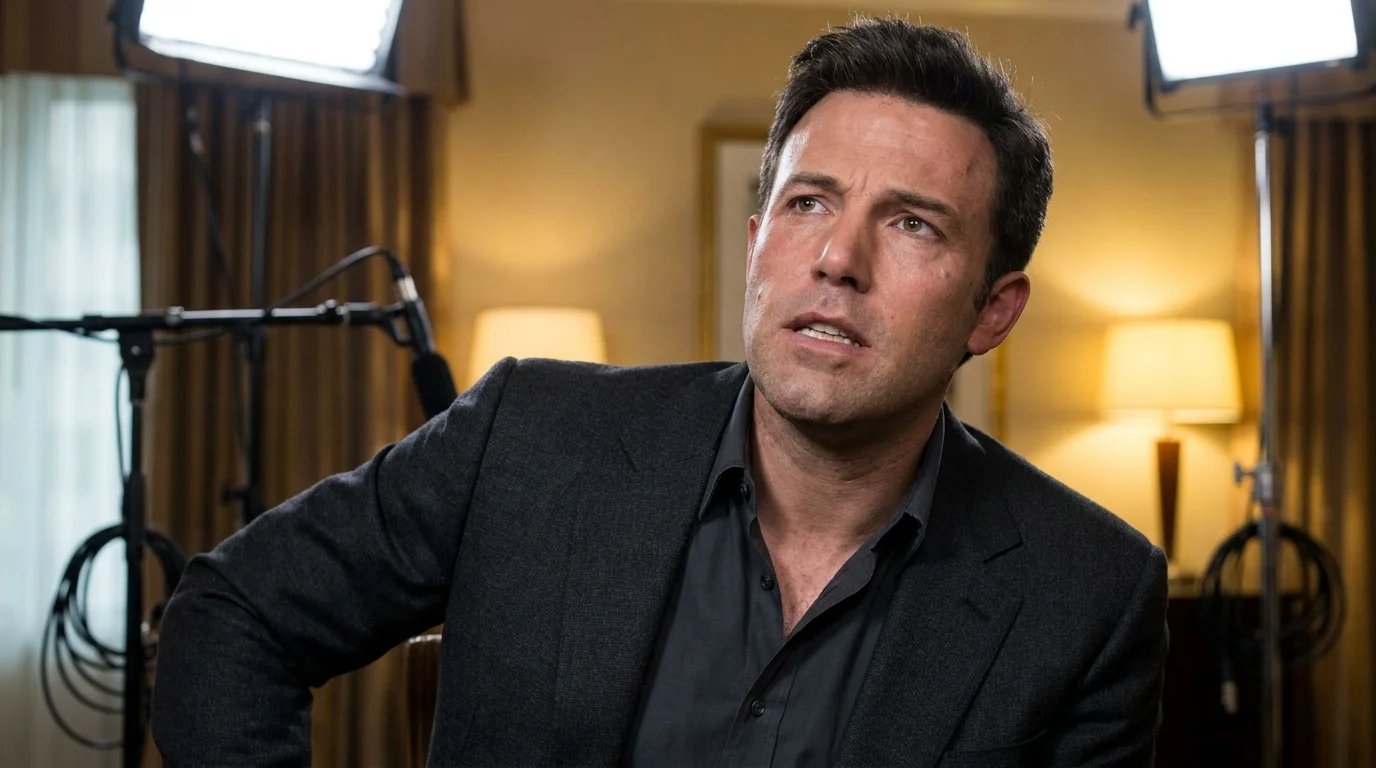
Step inside the canned chill of a mid-2000s hotel suite in Beverly Hills. You know the space without ever having visited: heavy brocade drapery drawn tight against the California sun, the dry drone of an industrial air conditioner fighting off the heat of stage tungsten, and the quiet whir of miniDV tapes spinning inside broadcast cameras. Two people sit side by side in matching velvet armchairs, holding microphones wrapped in branded foam covers, smiling until their cheek muscles ache. It looks effortless on your television screen at home, but in the room, the oxygen feels thin, like breathing through a pillow.
For years, you watched celebrity romance unfold through the soft-focus lens of glossy magazine spreads and choreographed red-carpet step-and-repeats. When Hollywood builds a golden narrative around two towering personalities, you naturally buy into the fairy tale. Yet long before official press statements land in trade publications or divorce lawyers discreetly file papers in downtown Los Angeles courthouses, the unscripted body tells an entirely different story. The truth does not live in rehearsed answers; it escapes through the involuntary twitch of micro-expressions that slip past media training.
Now, archival footage has resurfaced across digital feeds, stripping away twenty years of public relations polish. Suddenly, you are not watching a triumphant promotional cycle from 2004; you are witnessing an early blueprint of friction preserved in digital amber. What felt like charming, self-deprecating banter two decades ago now reads like an exhausting emotional defense mechanism.
The Anatomy of the Five-Second Freeze
Consider the central metaphor of an early structural fracture in an architectural beam. When a home begins to shift on its foundation, the drywall does not shatter instantly. Instead, hairline cracks form around window casings and door frames, barely noticeable unless you look straight at the seam under morning light. That is precisely what happened during a promotional junket in the spring of 2004, preserved on archived tape.
During a round of quick-fire television interviews, a cheerful field reporter stepped past the approved talking points about box-office tracking and asked a spontaneous, seemingly harmless question about domestic compromise. For an ordinary couple, it would have prompted a lighthearted laugh or a playful ribbing. But watch Ben Affleck’s physical reaction frame by frame. Across five brutal seconds, his posture stiffens, his gaze drops to the carpet, and his right eye rolls upward in a sudden, sharp arc of pure irritation before he catches himself. As his partner reaches out with an affectionate tap on his forearm to smooth the tension, Affleck visibly flinches and recoils, sharply pulling his arm backward toward his torso.
That microscopic pullaway was not an accident. It was the physical leak of an overwhelmed nervous system. When someone feels commodified or cornered by an intrusive public eye, their nervous system does not negotiate with the camera crew; it reacts with an animal urge to withdraw. In that tiny motion, you see the boundary between private exhaustion and public performance completely collapse.
- Geena Davis vintage press conference surfaces exposing harsh studio casting rules
- Amber Glenn unedited rinkside reaction triggers intense judging dispute theories
- Jessica Chastain demanded zero skin smoothing for grueling unvarnished drama close-ups
- Harry Styles halts massive stadium concert after piercing in-ear audio monitor feedback spikes
- Lil Nas X staged bedroom livestream triggers furious fan backlash over agency scripts
Reading the Seams with an Industry Veteran
Dr. Elena Ramos, a 52-year-old forensic nonverbal communication consultant who spent years preparing public figures for hostile testimony and media junkets, knows this exact physical state intimately. She calls it the “containment tax”—the physical cost an individual pays when forced to sell an idealized lifestyle while their private reality is fracturing beneath the surface.
“When someone reaches the edge of emotional bandwidth, their hands and shoulders reveal everything their vocal coach tried to polish,” Ramos explains. She points out that Affleck’s subtle arm retraction was a classic somatic defense: an instinctive barrier built against forced intimacy. When an individual feels their private domestic routine is being repackaged as marketing fodder, even an affectionate touch from a partner can register in the body as an enforcement of the script rather than genuine tenderness.
Decoding the Subtle Tiers of Public Friction
When you look back at these archival clips, you can break down the subtle friction into distinct behavioral layers. Recognizing them does not require an advanced psychology degree; it requires observing how human beings behave when their boundaries are trampled by professional expectations.
- The Deflective Micro-Sigh: Notice how Affleck frequently takes a heavy breath through his nostrils before answering personal questions. It is a quiet reset mechanism, a physical delay tactic to swallow spontaneous frustration before delivering a polite corporate sentence.
- The Asymmetrical Half-Smile: Rather than a warm, full-faced grin that engages the crow’s feet around the eyes, archival clips showcase a tight, one-sided lip stretch. This expression signals polite endurance rather than authentic joy.
- The Physical Leaning Gradient: In balanced pairings, partners naturally angle their shoulders inward, creating an open circle. In these resurfaced 2004 frames, Affleck repeatedly tilts his upper torso outward toward the camera crew, creating physical distance from his partner.
For casual viewers, these tiny gestures blended into the background noise of an entertaining Hollywood interview. But when viewed through the modern lens of behavioral analysis, they provide unmistakable signs of emotional isolation occurring right in front of a dozen crew members.
Mindful Observation: Your Guide to Spotting Relational Stress
You do not need to be a celebrity navigating twenty-camera press junkets to recognize these behavioral signals in your own life. Relational friction often hides in plain sight, disguised as workplace humor, friendly teasing, or casual fatigue. Understanding how people communicate under pressure helps you build healthier, more empathetic connections in your everyday relationships.
Take these practical observation cues into your daily interactions, whether you are managing high-stakes meetings or evaluating private social dynamics:
- Watch the Hand-to-Body Anchors: When an individual feels unsafe or overexposed, they instinctively cover their throat, adjust their collar, or cross their arms defensively. Look for sudden closed-off arm movements during sensitive topics.
- Track Eye Trajectories During Pauses: Genuine reflection tends to drift slightly upward and to the side. An eye roll coupled with a downward head tilt indicates internal resentment or feeling dismissed.
- Notice Spatial Proximity Shifts: Pay attention when someone leans back or turns their hips away during an affectionate gesture. The body moves away from what it feels pressured to accept.
- Listen for the Humor Pitch: Listen to the cadence of laughter. Sharp, self-deprecating one-liners delivered with a flat vocal tone are rarely jokes; they are verbal shields deployed to change the subject.
Applying this level of observation is not about policing the people you love. Instead, it offers a grounded toolkit for emotional clarity, allowing you to see past comfortable words and recognize when someone around you is quietly suffocating under stress.
The Human Reality Behind the Glossy Facade
Why does unpacking a twenty-year-old interview clip matter to your everyday life? Because it shatters the persistent cultural illusion that fame, wealth, or extraordinary beauty can protect human beings from the universal messiness of boundary fatigue. When you watch Ben Affleck pull his arm away on that compressed video tape, you are not watching a cold villain or a failed romantic; you are looking at an exhausted man trapped in a feedback loop of public expectation.
We live in an era where everyone—from influencers on social media feeds to colleagues on corporate conference calls—is encouraged to project an image of effortless stability. But real life does not come with ring lights or pre-cleared interview questions. The human body will always whisper its truth long before the mouth finds the courage to speak it. By learning to notice the subtle pullaway, the dropped gaze, and the stiffened shoulder, you develop a deeper empathy for the quiet struggles playing out behind the scenes of every human life.
“The truest emotional dialogue happens in the unscripted half-second between the question you fear and the answer you rehearse.”
| Key Point | Detail | Added Value for the Reader |
|---|---|---|
| The Five-Second Recoil | Affleck pulled his forearm away after an unscripted domestic question in 2004. | Demonstrates how touch can feel intrusive when public exposure overwhelms personal boundaries. |
| Micro-Expression Leakage | Eye rolls and asymmetrical smirks replacing genuine smiles during interviews. | Teaches you how to differentiate genuine contentment from polite, exhausting performance. |
| Torso Angle Disparity | Leaning outward toward the room rather than inward toward the romantic partner. | Provides an easy visual baseline for spotting emotional disconnection in social settings. |
| The Containment Tax | The somatic toll extracted from an individual forced to market their private life. | Validates why maintaining unrealistic public facades leads directly to personal burnout. |
Frequently Asked Questions About Celebrity Body Language
Why do old interview clips reveal relationship warning signs better than modern appearances?
Archival footage from the early 2000s captured talent during marathon press days before micro-expression coaching became an industry standard, allowing real-time, unfiltered physical reactions to slip through.Is an eye roll always a sign of deep contempt in a relationship?
While an occasional eye roll can simply reflect frustration with an external situation, consistent eye rolls coupled with physical withdrawal usually indicate growing resentment or feeling misunderstood.What is the best way to handle a partner pulling away like Affleck did in the video?
Respect the physical cue immediately by giving them physical space, then address the underlying stress calmly in private rather than forcing affection in an exposed or social setting.Can media training completely eliminate these involuntary physical tells?
Even the most rigorous media training fails when an individual is sleep-deprived or emotionally depleted, as the autonomic nervous system always overrules conscious control under intense fatigue.How can I apply these nonverbal lessons to my professional life?
Pay close attention to sudden arm-crossing or torso angling during negotiations, as these cues reveal an unspoken objection before your colleague ever states it aloud.