The heat rising from a six-thousand-watt Fresnel fixture carries a distinct scent: baking dust, scorched metal paint, and the faint tang of warm gel frames. On a closed soundstage in Los Angeles, the crew usually prepares an elaborate cocoon of diffusion. Four-by-eight frames of bleached muslin hang suspended on C-stands, angled to bounce creamy, forgiving light into every natural fold of an actor’s face, turning human skin into poreless marble.
You expect that softness. Hollywood has spent nearly a century conditioning you to equate prestige with an ethereal glow, polishing every trace of mortality until performers resemble smooth porcelain breathing through a pillow. Yet when Charlize Theron steps onto the tape mark for a gripping dramatic sequence, she does the unthinkable: she looks directly at the lighting console and asks the crew to kill the fill.
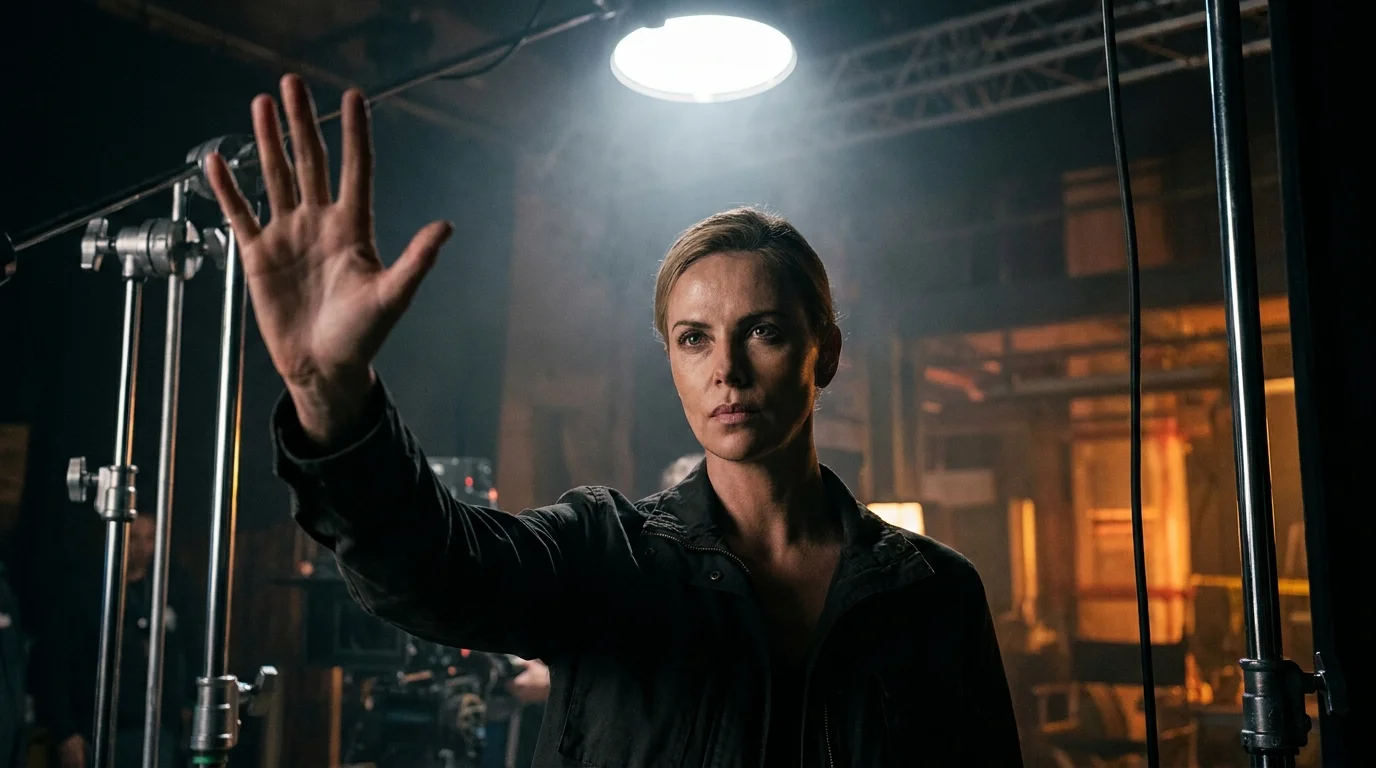
The white bounce boards vanish into the wings. The digital beauty filters running inside the video village monitor are toggled off with a single, quiet keystroke. What remains is a single, hard tungsten source raking across her cheekbones at a steep forty-five-degree angle, deliberately carving deep troughs of shadow beneath her eyes and etching every natural expression line into sharp relief.
Theron understands an ancient rule that modern vanity has forgotten: flat lighting erases human gravitas. By refusing the cosmetic cushions designed to protect starlets from time, she transforms the physical realities of age, tension, and raw skin texture into her most lethal narrative instruments.
The Architecture of Shadow Over Gloss
To grasp why a global movie icon would demand stark, unforgiving light, you have to discard the modern myth that beauty exists to comfort the eye. When a camera washes an actor in uniform, diffused luminance, it strips away the three-dimensional architecture of the face. The result might look young, but it is visually inert, offering no friction for emotion to latch onto.
Think of lighting not as a cosmetic cream, but as a sculptor’s chisel. Chiaroscuro—the dramatic interplay of light and dark perfected by Renaissance painters—relies entirely on what you choose not to show. When Theron demands raw, unmitigated key lights, she is deliberately weaponizing asymmetry. The lit side of her face presents authority; the shadowed side holds the psychological secret. You lean forward precisely because half the truth remains buried in darkness.
- Henry Cavill high-wire suspension stunts force grueling spinal disc compression on set
- Nicole Kidman harsh close-up demands stripped digital smoothing for gritty transformative role
- Post Malone arena monitor feedback spike halts live show over acoustic shock
- Alix Earle supposedly raw livestream sparks fan outrage exposing scripted agency talking points
- Brandi Carlile casual outing surfaces tailored velvet blazers paired with custom boots
This is not an accident of vanity inverted; it is a calculated refusal of visual anesthesia. In a culture saturated with smoothed smartphone lenses and artificial softening passes, genuine human skin has become the ultimate disruption.
The Set Secret: Why the Gaffer Cut the Muslin
Marcus Vance, a fifty-two-year-old studio gaffer with three decades behind commercial and feature film camera trucks, remembers the exact afternoon Theron dismantled his standard setup. Vance had spent forty-five minutes dialing in a delicate ring light to lift the shadows beneath her brow bone, ensuring the studio executives would see a pristine, magazine-cover close-up. Without raising her voice, Theron walked to the monitor, pointed out the milky absence of contrast in her own irises, and instructed Vance to pull the fixture completely off the grid and drop a black solid flag directly beside her cheek.
Decoding the Anti-Glamour Light: Three Strategic Layers
Theron’s visual strategy is not random chaos; it is a precise rejection of three specific cinematic conventions. Understanding these layers lets you see how stark visual design changes the narrative power of anyone standing in front of a lens.
- The Negative Fill Lockdown: Rather than bouncing ambient light back into the shadowed side of the profile, large sheets of black duvetyne fabric are brought inches from the frame. This technique literally soaks up rogue bounce, forcing deep, moody contrast that demands total viewer focus.
- The Raking Hard Key: Instead of striking the forehead head-on to disguise texture, the dominant fixture sits high and wide. The light skips across the bridge of the nose and the jawline, turning micro-expressions and skin micro-texture into storytelling assets rather than flaws to hide.
- The De-Filtered Lens Plane: Modern cinema lenses are brutally sharp, which is why studios usually slip quarter-strength black satin or pro-mist glass in front of the sensor. Refusing these filters leaves the optical truth intact, stripping away the dreamlike veil in favor of raw realism.
By controlling these three parameters, Theron does not merely portray a character; she commands unconditional visual authority through unapologetic vulnerability.
Owning the Unflattering Frame
You do not need an eight-figure movie budget to apply the core principle behind Theron’s lighting rebellion. Whether you are framing a professional video call or crafting your own portrait work, hiding behind excessive diffusion often signals insecurity rather than polish.
Start by identifying your light source. If you are blasting your face with a circular desk light positioned dead-center, you are flattening your features into two dimensions. Turn the light forty-five degrees to your side. Let one cheek drop into natural shadow. Notice how the shape of your jaw suddenly sharpens and your eyes gain depth.
Next, resist the algorithmic impulse to turn on automated skin-smoothing toggles in your recording software. Those settings subtly blur the edges of your mouth and eyes, creating a subconscious uncanny valley effect for your audience. Real human connection thrives on tiny, imperceptible visual cues—the subtle twitch of a temple, the faint crease at the corner of an eye. When you permit the lens to see you clearly, your message instantly gains emotional weight.
Your Tactical Setup for High-Contrast Presence:
- Key Angle: Place your primary fixture between 45 and 60 degrees off your nose line, elevated roughly two feet above eye level.
- Color Temperature: Keep your light around 3200 Kelvin for warm, cinematic amber, or lock it at 5600 Kelvin for clinical, crisp daylight truth.
- Fill Ratio: Maintain at least a 4:1 ratio between the lit side of your face and the shadowed side to build quiet authority.
- Bounce Elimination: Hang dark fabric or place a dark board on the non-key side to prevent unintentional ambient scatter.
The Quiet Power of Being Seen Whole
There is an immense, grounding relief in abandoning the illusion of perfection. The modern entertainment machine wants every frame sanitized, predictable, and devoid of the friction that comes with living a real life. When an icon at the absolute peak of the industry demands that the crew cut the soft filters, she is drawing a line in the sand for everyone watching.
Real authority does not require a digital safety net. When you stop hiding behind synthetic softness, the world finally gets to look at your unvarnished strength.
“True dramatic presence begins the exact second you stop asking the light to apologize for who you are.”
| Key Point | Detail | Added Value for the Reader |
|---|---|---|
| Negative Fill Mechanics | Using black flags to absorb light rather than bounce it back. | Creates instant facial depth and commands dramatic focus. |
| Raw Optical Capture | Refusing softening filters and digital skin smoothing. | Establishes immediate authenticity and high-stakes gravitas. |
| Chiaroscuro Angles | Positioning hard directional fixtures off-axis. | Accentuates natural bone structure while weaponizing shadow. |
Frequently Asked Questions
Why do studios typically use heavy diffusion on female leads?
Studios rely on soft diffusion to create a consistent, youthful look that minimizes shadows, lineation, and blemishes, adhering to traditional commercial beauty norms.Did Charlize Theron invent this technique?
No, dramatic hard lighting dates back to European chiaroscuro painting and classic film noir, but Theron famously revived it as a deliberate dramatic statement in high-budget modern cinema.Does hard lighting make an actor look older?
Hard light accentuates texture and skin contours, which can emphasize natural age lines, but it trades superficial youth for immense emotional presence and dramatic strength.Can high-contrast lighting work for everyday video calls?
Yes, shifting your main light source 45 degrees to the side and turning off auto-smoothing software immediately gives your video feed a more professional, authoritative look.What is negative fill?
Negative fill is the deliberate placement of light-absorbing black surfaces on the unlit side of a subject to eliminate bounce light and deepen shadows.