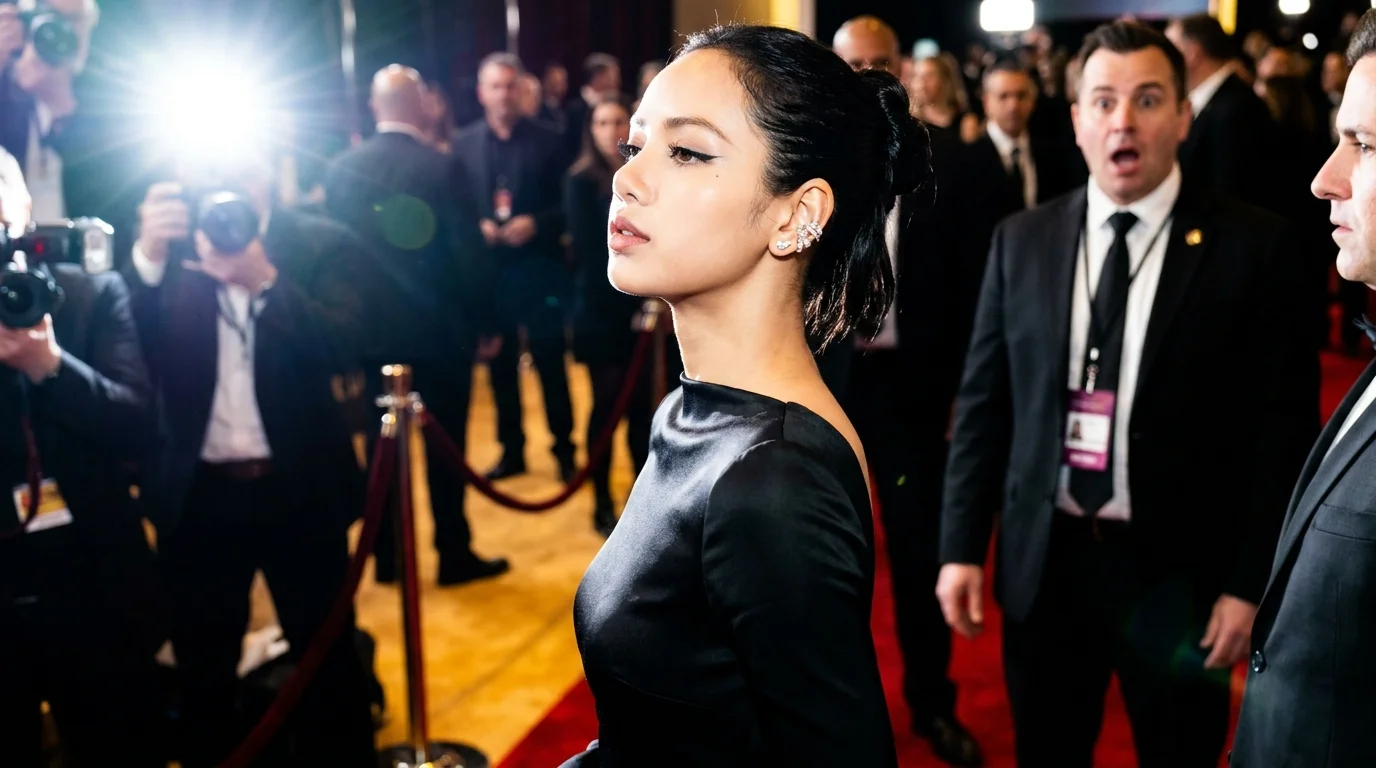
In a sharp, three-second turn on the saturated velvet carpet, Lisa pivoted on a four-inch heel, angling her shoulder blades forty-five degrees away from the riser where her former management team stood waiting for eye contact. The strobe packs popped with deafening heat, smelling of hot dust and melted adhesive, while shutter clicks formed an unbroken mechanical hiss against the damp evening air. To the casual viewer scrolling through a muted video feed, the motion seemed like ordinary posturing for the western bank of photographers. Yet for anyone versed in the silent vocabulary of live step-and-repeats, that singular pivot was an unmistakable severance.
Instead of completing the customary three-point sweep back toward the handler perimeter, her cervical spine stayed completely locked toward the solo press risers. The cold mechanics of the pivot revealed an intentional, millimeter-precise recalculation of her personal space, leaving the clipboard-wielding liaison stranded mid-reach at the velvet stanchion.
When a global performer renegotiates their autonomy after years inside a tightly managed corporate structure, the change rarely announces itself through legal briefs first. It arrives in micro-moments of kinetic refusal: the subtle dropping of a shoulder, the refusal to register an off-camera voice, or the deliberate choice to starve an old gatekeeper of public validation.
The Geometry of the Silent Break
Consider the red carpet as an architectural pressure cooker rather than a fashion stage. Talent enters through an intake funnel, moves along fixed chalk marks, and relies on an agency wrangler to signal when to rotate, hold, or exit. It functions like a high-voltage assembly line where even a momentary glance backward offers institutional reassurance to the brand reps standing in the dark.
When Lisa executed that rotational cut, she did not simply adjust for an extra frame. She severed the visual lifeline that connects a protected label asset to its legacy handlers, transforming an orchestrated promotional stop into an unvetted demonstration of pure sovereignty.
For Clara Vance, a 48-year-old red-carpet protocol coordinator who has managed talent staging across twenty seasons at the Dolby Theatre, the gesture was textbook execution. “Position Zero is where the original management team always stands—it sits twelve inches past the primary camera line so the client can check in with their eyes after every flash cluster,” Clara noted while analyzing the raw footage. “When talent intentionally deletes Position Zero from their scanning arc, that is not an accident of choreography; it is an unspoken declaration that the old chain of command no longer holds the floor.”
- Adam Driver subtle gesture triggers manufactured festival standing ovation protocol
- Margot Robbie fluttering collar tag exposes Hollywood designer loaner garment agreements
- John Mulaney sudden monitor shutdown exposes frantic eye tracking during monologue
- Bryan Cranston open mic panic warning exposes backstage live production chaos
- Hugh Grant frozen award glance exposes strict network monologue restrictions
Reading the Anatomy of the Split
Observing high-profile physical repositioning allows you to recognize how leverage shifts before any contracts are filed in court. The dynamics break down across distinct behavioral patterns:
The Perimeter Lockout
Notice the deliberate placement of her purse arm. By locking the elbow tight to the ribcage and pointing the forearm inward, she created an impenetrable physical barrier against any last-minute handler attempts to step in and adjust a hem or whisper an itinerary change.
The Lens Diversion
Legacy teams depend on shared visual real estate to justify their continued relevance to sponsors. By maintaining her focus strictly forward, she starved the peripheral space of any candid, two-shot opportunities that former associates could quietly leak to trade outlets to project harmony.
The Independent Cadence
Trainee-system alumni are conditioned to wait for the tap on the shoulder before stepping toward the exit arch. Here, Lisa set her own tempo, abandoning the carpet precisely as her own internal clock dictated rather than waiting for an approving nod from the wings.
Mindful Observation in High-Tension Environments
You do not need an international step-and-repeat to apply the lessons of body-language boundaries. Whenever you must step out of an old professional dynamic, the body communicates your autonomy long before the conversation begins.
Keep your movement intentional and spare. Sudden adjustments signal doubt, whereas a single, committed trajectory communicates finality.
- Anchor your weight through the heels to eliminate nervous shifting before you address a room.
- Set your visual perimeter on your goal, ignoring peripheral interruptions designed to pull you off-axis.
- Maintain a neutral, breathing jaw to prevent trapezius tension from telegraphing internal distress.
- Exit on your own cadence instead of waiting for passive permission from former authority figures.
Tactical Toolkit: Focus on maintaining a slow, steady exhalation cycle of four seconds in and six seconds out; hold your chin parallel to the floor at exactly ninety degrees; and refuse to allow your eyes to dart toward familiar comforts when stepping into unfamiliar territory.
Beyond the Flashbulb Perimeter
The cultural obsession with Lisa’s red-carpet posture is not about celebrity gossip; it is about witnessing the exact second an artist claims full ownership of their presence. We track these micro-movements because they validate an instinct we all share: the knowledge that true independence is rarely granted with applause—it must be taken with a steady spine and an unblinking gaze.
When you learn to watch how power moves through physical space, the noise of public relations fades away. What remains is the clarity of someone who has chosen to stop checking for approval, leaving the past standing quietly in the dark behind the velvet rope.
“True agency is never announced; it is demonstrated the moment you refuse to look back at the people who used to hold the leash.”
| Key Point | Detail | Added Value for the Reader |
|---|---|---|
| Rotational Cut | A deliberate 45-degree pivot away from handler staging areas. | Shows how to break unspoken expectations using decisive physical direction. |
| Perimeter Denial | Holding posture that rejects mid-event touch-ups or adjustments. | Demonstrates how clear personal boundaries prevent unwanted interference. |
| Autonomous Cadence | Departing the public frame without waiting for handler clearance. | Encourages setting your own timeline during high-friction exits. |
Frequently Asked Questions
What made Lisa’s red carpet turn stand out from normal poses?
She completely bypassed Position Zero, the traditional check-in station where handlers stand, refusing the customary eye-contact loop that signals agency oversight.Why do fans and industry insiders focus on micro-expressions?
Contractual nondisclosure agreements often prevent stars from speaking openly, making subtle physical choices the most honest indicators of corporate friction.Can posture changes truly indicate legal or management splits?
Yes; shifts in red-carpet choreography almost always mirror behind-the-scenes restructuring, as talent asserts creative control before corporate press releases go live.How did former agency representatives react on the carpet?
Video footage captures the liaison lingering at the stanchion perimeter with an extended hand, visibly out of sync with Lisa’s self-directed rotation.What is the most practical takeaway from this viral moment?
Clear, non-verbal boundaries communicate confidence and self-ownership far more effectively than defensive explanations or reactive dialogue.