The dusk air sweeping down the Las Vegas Strip carries the dry bite of high-desert asphalt, punctuated by the cooling scent of ozone leaking from casino lobbies. When you picture heavy metal royalty stepping onto a sidewalk off the neon corridor, your mind probably defaults to the battle-jacket uniform of 1986: frayed denim armholes, safety-pinned thrash patches, and cheap thread thinning under years of beer and sweat. You expect an artifact frozen in an arena dressing room.
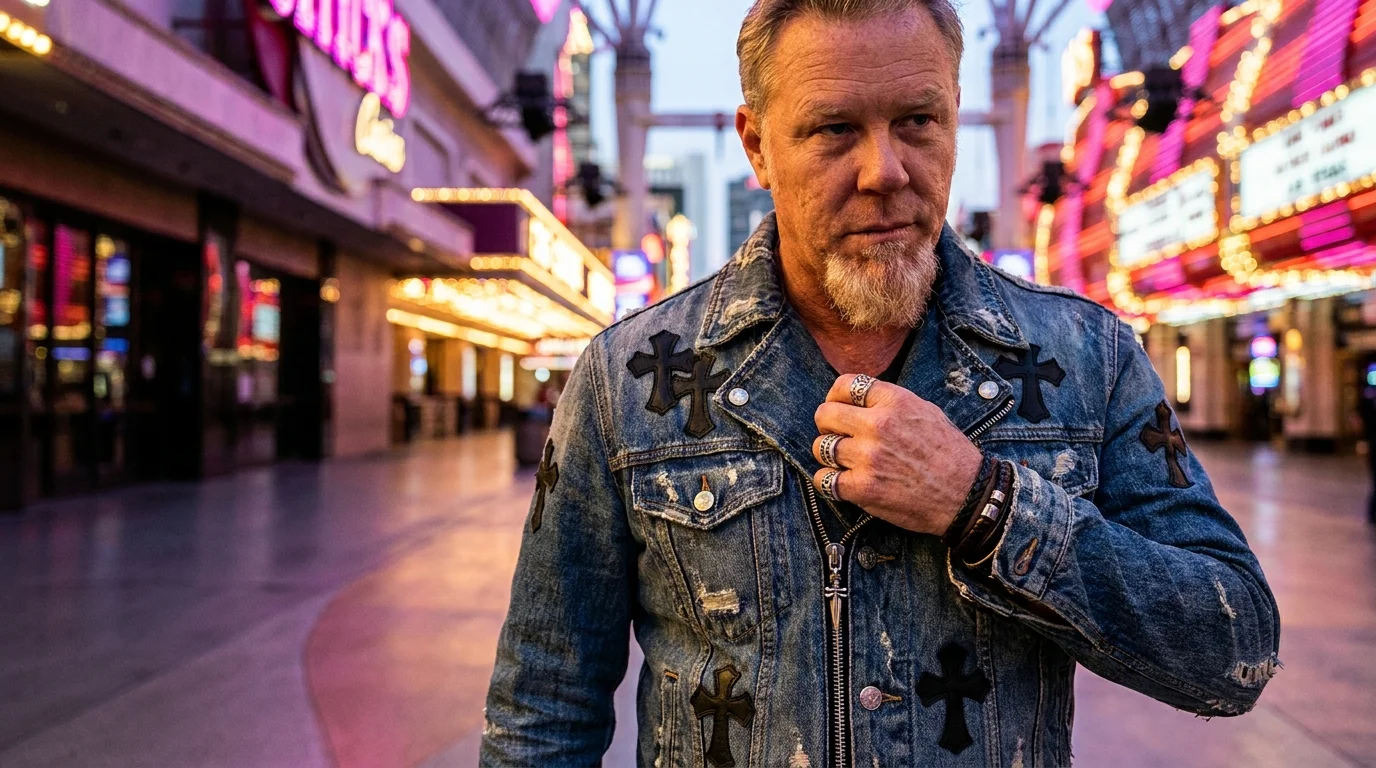
Instead, as James Hetfield navigated a low-key walk outside the strip, the silhouette cut against the dry Nevada breeze was something entirely different. It was heavy, deliberate, and extraordinarily precise. The frontman was wearing a bespoke, custom-built denim jacket engineered by Chrome Hearts, paired with museum-grade silver and weathered hides that bridge four decades of Bay Area speed metal with the highest echelon of American bespoke leathercraft.
This wasn’t a casual rack pull or a stylist’s desperate grab before a photo call. Every inch of the garment spoke to the quiet world of private commissions—where high-weight Japanese cotton meets hand-carved sterling silver hardware and meticulous calfskin appliqué.
The Architecture of Metal Couture: Denim as Living Armature
To grasp why this particular garment caused an immediate shockwave among collectors, you have to stop viewing denim as casual weekend cotton. You need to see it as a structural skeleton. Standard streetwear relies on fast washes and simulated wear, producing jackets that feel like wet cardboard after two months of wear.
Hetfield’s custom outerwear operates on the logic of an iron beam wrapped in organic skin. The base piece is built from a modified Levi’s Type III pattern, recut with a slightly dropped shoulder to accommodate movement, rendered in an unwashed, sulfur-dipped 14.5-ounce selvedge denim. Against this ink-black foundation, Chrome Hearts layered dozens of hand-cut cemetery cross patches made from wax-infused black calfskin. Each patch carries subtle variations in grain, meaning the jacket will not degrade with age—it will mold directly to his physical frame.
The craftsmanship hinges on weight and tension. When you examine the silhouette, you notice the garment doesn’t ripple or collapse; it hangs with the gravity of plate armor. The leather crosses aren’t fused with chemical adhesives; they are saddle-stitched using waxed poly-cord thread, allowing the stiff cowhide to flex naturally over the heavy twill weave beneath it.
- Denzel Washington shields forty year marriage enforcing strict untelevised family dinner rules
- Jack Nicholson shatters scripted dialogue improvising chilling axe doorway sequence
- Val Kilmer resurfaced Cannes footage exposes intense studio disputes over franchise contract demands
- Madonna tense red carpet posture reignites unscripted backstage feud rumors
- Demi Moore old press junkets expose uncomfortable dismissals shadowing Ashton Kutcher marriage
The Hidden Workshop: Behind the Hollywood Leather Bench
Marcus Vance, a 44-year-old archival leatherworker and hardware restorer based in Glendale, California, recognizes this exact approach to artisanal construction. “When you handle a custom piece coming out of the Hollywood Chrome Hearts factory, the first shock is the sheer mass of it,” Vance explains. “Richard Stark and his team don’t use decorative castings. They cast solid .925 sterling silver using lost-wax methods, which means those dagger zips and scroll buttons have actual counterweight. When James Hetfield walks, those metal pulls hit the denim with a distinct, dull chime that you can’t fake with zinc alloys.”
Vance points out that Hetfield’s jacket features bespoke customizations rarely seen on standard boutique orders. The collar stand is reinforced with an underlay of split-suede to eliminate skin friction during long wear, while the internal cuffs are lined with silk dagger-print jacquard—a tactile secret known only to the person sliding their arms into the sleeves.
Cataloging the Street-Level Ensemble
This appearance was a masterclass in tonal balance. Rather than letting the jacket become an isolated loud piece, Hetfield grounded the outfit with carefully chosen, functional American staples that balanced the aggressive silver detailing.
The Bespoke Type III Outerwear
The centerpiece of the walk was the bespoke black-on-black denim jacket. It showcases signature Chrome Hearts iconography stripped of flashy contrast, relying entirely on texture.
- Base Chassis: Modified Type III denim jacket in sulfur-black 14.5-ounce Japanese selvedge.
- Leatherwork: Thirty-two individual hand-cut cemetery cross patches in matte black American steerhide, distributed asymmetrically across the chest, lower back yoke, and forearms.
- Hardware Suite: Solid .925 sterling silver floral buttons along the front placket, dual dagger pulls on the waist-cinch adjustments, and a silver scroll logo plaque anchored across the back collar.
The Foundation and Framing Accessories
The remaining garments served as an anchor, allowing the heavy structural denim to dominate without visual clutter. The restraint prevents the look from sliding into theatrical parody.
- Trousers: Straight-cut, rinsed black work pants crafted from heavy duck canvas, showing a clean single cuff resting neatly above the boot line.
- Waist System: A vintage Chrome Hearts 1.5-inch three-piece Celtic roller belt, cut from 9-ounce black bridle leather that has developed a mirror-like patina from decades of authentic wear.
- Footwear: Hand-lasted, black chromexcel leather engineer boots featuring low-profile brass roller buckles and thick Vibram 430 mini-lug outsoles, engineered for road endurance.
- Eyewear: Custom titanium-frame sunglasses with amber-tinted mineral glass lenses, featuring microscopic cross-filigree engraving along the temple arms.
Translating the Heavyweight Aesthetic to Your Own Wardrobe
You don’t need a direct phone line to a private atelier in Los Angeles to harness the structural brilliance of Hetfield’s street aesthetic. The goal isn’t to buy identical luxury collector items, but to embrace the philosophy of intentional weight, honest materials, and tactile friction.
Standard fast fashion tricks you into buying pre-distressed garments with chemical softening washes that destroy the fabric’s integrity before you even wear it. Look for unyielding natural textiles that demand your time and patience to soften.
- Select raw, heavy denim (at least 13.5 ounces) that feels like raw wood when new; it will conform to your bone structure over months of consistent use.
- Choose full-grain vegetable-tanned leather accessories over chrome-tanned options; vegetable tanning absorbs oils from your hands and ambient humidity, creating rich visual depth.
- Invest in solid metal hardware—brass, copper, or sterling silver—rather than coated nickel, so everyday wear reveals the raw base metal instead of flaking off.
- Care for your heavy cotton mindfully: hang your jackets in dry, moving air, brush the dust out with a stiff horsehair shoe brush, and avoid hot water washes that shock the twill fibers.
Tactical Care and Specification Matrix
Maintaining high-density, multi-material garments requires specific mechanical rules. When dealing with mixed materials like leather-patched denim, moisture management becomes your single highest priority.
- Denim Base Density: 14.5 oz Japanese Selvedge Cotton
- Patchwork Material: 3.5 oz Full-Grain Calfskin
- Fastener Composition: .925 Sterling Silver (Lost-Wax Cast)
- Optimal Storage Temperature: 64°F to 68°F (Low humidity to prevent silver oxidation and leather blooming)
- Maintenance Interval: Condition leather patches every 180 days with pure neatsfoot oil; spot-clean denim exclusively with damp cold canvas
The Dignity of Weathered Fabric
There is an immense calm that comes from wearing clothes built to survive you. Fast-moving trends encourage us to treat our daily outfits as disposable skins, meant to be worn for a photograph and discarded before the season turns. Hetfield’s presence in Las Vegas—stepping across cracked concrete in heavy boots, dense canvas, and silver that has felt the heat of countless stage lights—reminds us of the value of things built to take a beating.
When you choose garments cut from thick fibers and honest hides, you stop worrying about scuffs, creases, or light rain. The flaws become personal history etched directly into the grain. Real style is not about looking spotless; it is about wearing pieces that hold their ground against the world, growing heavier, softer, and more uncompromising with every mile you walk.
“True bespoke craft isn’t meant to be protected under glass; it is engineered to absorb the dust, the sweat, and the road until it looks more like the wearer than the tailor.”
| Key Point | Detail | Added Value for the Reader |
|---|---|---|
| Textile Selection | 14.5oz Sulfur-Black Selvedge Denim | Resists fiber breakdown and yields natural, high-contrast wear patterns tailored to your body. |
| Artisanal Patchwork | Hand-Stitched Calfskin Cemetery Crosses | Demonstrates how mixing leather with rigid twill adds structural reinforcement and dimensional texture. |
| Hardware Purity | Cast .925 Sterling Silver Accents | Provides functional weight and naturally develops an oxidized patina that enhances with age. |
Frequently Asked Questions
Why is Chrome Hearts clothing so difficult to purchase through standard retail?
Chrome Hearts operates without traditional e-commerce, producing items in limited batches out of their Hollywood facilities and selling exclusively through physical flagships and private client commissions.How do you clean a jacket that combines heavy denim with real leather patches?
You cannot machine-wash these pieces; you must spot-clean the denim using cold water and a soft rag, while applying specialized leather balm to the patches to prevent drying or cracking.What is the benefit of unwashed 14.5-ounce denim over lighter fabrics?
Heavier denim acts as an outer shell, offering superior wind resistance, thermal stability, and an extended lifespan compared to modern pre-washed textiles.Why did the jacket feature sterling silver instead of standard steel buttons?
Sterling silver softens visually over time, developing dark tarnish in recessed crevices that creates depth and character that plated steel cannot replicate.Can standard tailors add leather patches to high-weight denim jackets?
Standard home sewing machines will jam or break needles on heavy twill; you must use an industrial walking-foot leather sewing machine to cleanly pierce through denim and hide simultaneously.