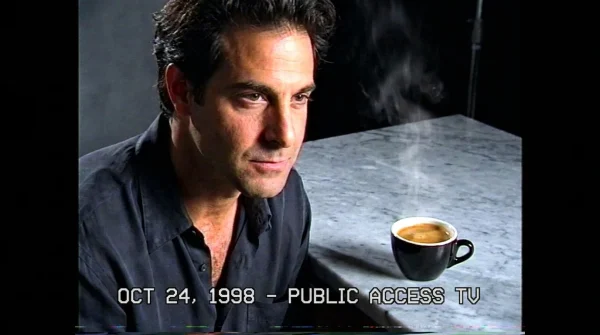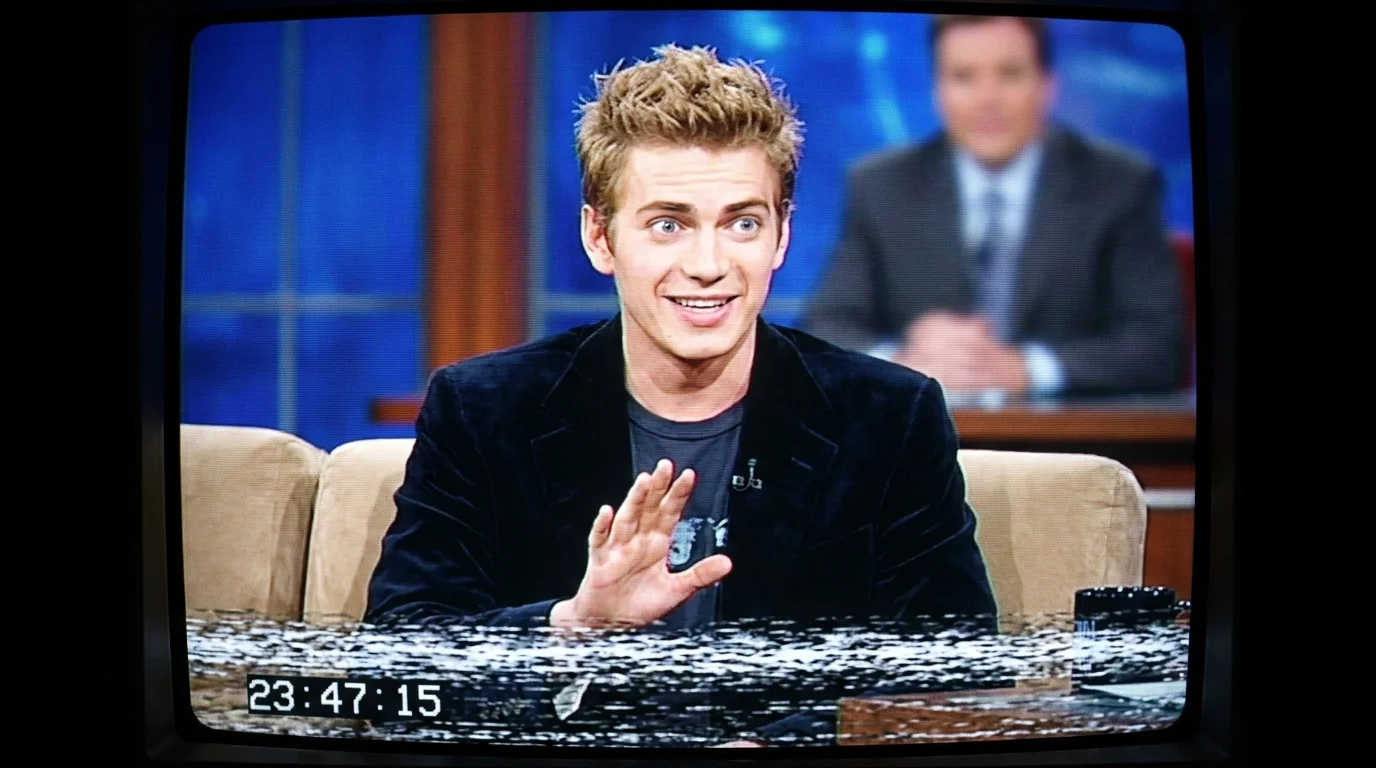
The glow of a cathode-ray tube television hums in the quiet of a late-night room. Across the bottom of the glass, fuzzy VHS tracking lines bleed in a steady, rhythmic static. It is 2002. A nineteen-year-old actor sits on a talk show couch, his hands folded, answering questions with a quiet, almost defensive grace. The audience laughs at the host’s jokes, but the young man remains intensely focused, explaining a creative process that would soon be buried under two decades of internet mockery.
For twenty years, the collective consensus on Hayden Christensen’s portrayal of Anakin Skywalker was written in stone: wooden, flat, and awkward. You likely remember the memes, the harsh reviews, and the cultural narrative that positioned a promising young star as the weak link in a cinematic empire. The critique became a default setting for film discussions, an easy punchline shared without a second thought.
But history has a strange way of correcting itself when the original evidence resurfaces. Recently, an old video file, digitized from an aging cassette tape, bypassed the polished algorithms of modern PR and landed directly onto the feeds of millions of fans. As those tracking lines flicker across the screen, the entire narrative built around his performance dissolves, exposing the hidden machinery behind one of cinema’s most misunderstood roles.
The Directorial Mandate as a Creative Straightjacket
To understand what actually happened on those green-screen stages, you have to stop viewing the prequels as modern naturalistic dramas. They were always designed as stylized space operas, closer to silent-era melodrama or Japanese Kabuki theater than modern television. The actor was not a free agent; he was a highly specific instrument tuned to a rigid frequency.
When you watch the resurfaced interview, the illusion of a poor performance shatters. Christensen was executing a deliberate, almost clinical set of instructions. He was not failing to act; he was succeeding at executing a highly restrictive, stylized blueprint. It is the classic mistake of blaming the piano for the sharp notes written on the sheet music.
Marcus Vance, a thirty-four-year-old media preservationist based in Chicago, spends his weekends digitizing local broadcast recordings from the early 2000s. While combing through a dusty box of home-recorded VHS tapes, he uncovered the pivotal 2002 promotional interview. “The moment I ran the tape through the deck and adjusted the tracking, I knew this was different,” Vance says. “Here was this kid, right before the movie came out, calmly explaining the rigid vocal constraints dictated by George Lucas to mirror the mechanical breathing of Darth Vader.”
- Tom Sandoval reunion posture exposes an undeniable hidden cast rift
- Pamela Anderson completely rebuilt her public image trusting an unexpected advisor
- Will Ferrell abandoned a massive comedy project over hidden studio clauses
- Shakira tour staging leaks hint at unannounced studio album release
- Tom Sandoval awkward recent interview walkout polarizes public opinion across social media platforms
The Mechanics of the Vocal Constraint
In the clip, Christensen details how the director demanded a very specific, monotone delivery. The goal was to bridge the gap between a passionate, impulsive teenager and the cold, mechanical cadence of James Earl Jones. This was not a natural voice; it was a vocal mask. You can hear the actor describe the difficulty of flattening his natural Canadian accent and emotional range into a stiff, metronomic rhythm.
The Physicality of a Stilled Performance
It was not just the voice that was restricted. The director required a highly formalized physical presence. Every step, every tilt of the head, and every glance had to align with a grand, mythic framing. This was Greek tragedy painted on a green digital canvas, where raw human emotion was intentionally traded for archetypal weight. By stripping away the natural human tics we associate with good acting, the production created something intentionally alien and uneasy.
A Mindful Framework for Re-Evaluating Vintage Media
When you revisit a piece of media that you once dismissed, you need a method to separate your initial bias from the actual artistic intent. It requires a shift in focus from what you expected to see to what the creators were actually trying to build. This process allows you to appreciate the work on its own terms rather than holding it hostage to modern trends.
To begin this shift, you must strip away the modern commentary and view the work through a structural lens. Start by looking for the specific creative boundaries the artist was forced to navigate. When you isolate these parameters, the choices that once felt like mistakes suddenly reveal themselves as calculated decisions.
Use this simple checklist when re-evaluating performances from the past:
- Isolate the Audio: Close your eyes and listen purely to the cadence and rhythm. Notice if the delivery mimics a specific historical style or character archetype.
- Identify the Director’s Fingerprint: Look at other performances in the same director’s catalog to see if the “wooden” style is a recurring thematic choice.
- Contextualize the Technology: Remember that acting opposite physical empty space and tennis balls in 2002 required a completely different spatial awareness than acting on physical sets.
The ultimate goal of this re-evaluation is not to force yourself to love every piece of art, but to build an empathetic understanding of the labor involved. When you see Hayden Christensen return to the screen in recent television series, his physical mastery of the character remains undeniable. The vindication is sweet, but the real triumph lies in the archive itself, waiting for us to finally pay attention.
The Bigger Picture: Redemption in the Digital Age
The sudden shift in how we view these movies proves that cultural consensus is never permanent. It is a fragile agreement, often built on a foundation of loudest voices and viral memes. When archival footage resurfaces, it acts as a quiet correction, bypasses modern gatekeepers, and forces us to look our past biases in the eye.
Ultimately, the restoration of Hayden Christensen’s reputation as an actor is more than a story about a space saga. It is a reminder that patience is a virtue in criticism. Sometimes, it takes twenty years, a dusty VHS tape, and a flickering screen to see the truth that was hiding in plain sight all along.
“The actor is not a decorator of the scene; they are the physical manifestation of the director’s deepest subconscious architecture.” — Marcus Vance, Media Archivist
| Key Point | Detail | Added Value for the Reader |
|---|---|---|
| Vocal Cadence | Monotone delivery designed to transition into Darth Vader’s mechanical drone. | Reveals the voice was a physical mask, not a lack of emotional range. |
| Physical Restraint | Stylized movements aligned with George Lucas’s operatic, silent-film inspiration. | Transforms “wooden” acting into a deliberate, tragic physical performance. |
| Production Reality | Heavy reliance on early green-screen technology without physical reference points. | Highlights the immense technical difficulty of early digital filmmaking. |
Why did fans originally dislike Hayden Christensen’s performance?
Audiences in 2002 expected a naturalistic, modern dramatic style, which clashed sharply with the stylized, operatic direction of the prequel trilogy.
What did the resurfaced 2002 interview reveal?
It showed the actor explaining that the flat vocal delivery and rigid cadence were direct instructions from George Lucas to mirror Darth Vader’s mechanical nature.
How has the perception of his acting changed recently?
Thanks to viral archival clips and his triumphant returns in modern television, fans now recognize his choices as highly intentional and technically demanding.
What was the director’s specific vision for Anakin Skywalker?
George Lucas wanted a heightened, mythological performance style reminiscent of silent films and classical tragedy, rather than modern casual realism.
Where can you see the actor’s recent franchise appearances?
Hayden Christensen has officially returned to his iconic role in the acclaimed television series Obi-Wan Kenobi and Ahsoka, earning widespread praise.