Imagine a dimly lit soundstage in Burbank, circa 1999. The air smells of ozone, industrial floor wax, and the bitter residue of over-brewed chicory coffee. You do not hear the breezy, nasal catchphrase that would eventually become a global meme. Instead, there is only the slow, rhythmic creak of a heavy black leather prop holster resting against a wrinkled, charcoal suit jacket.
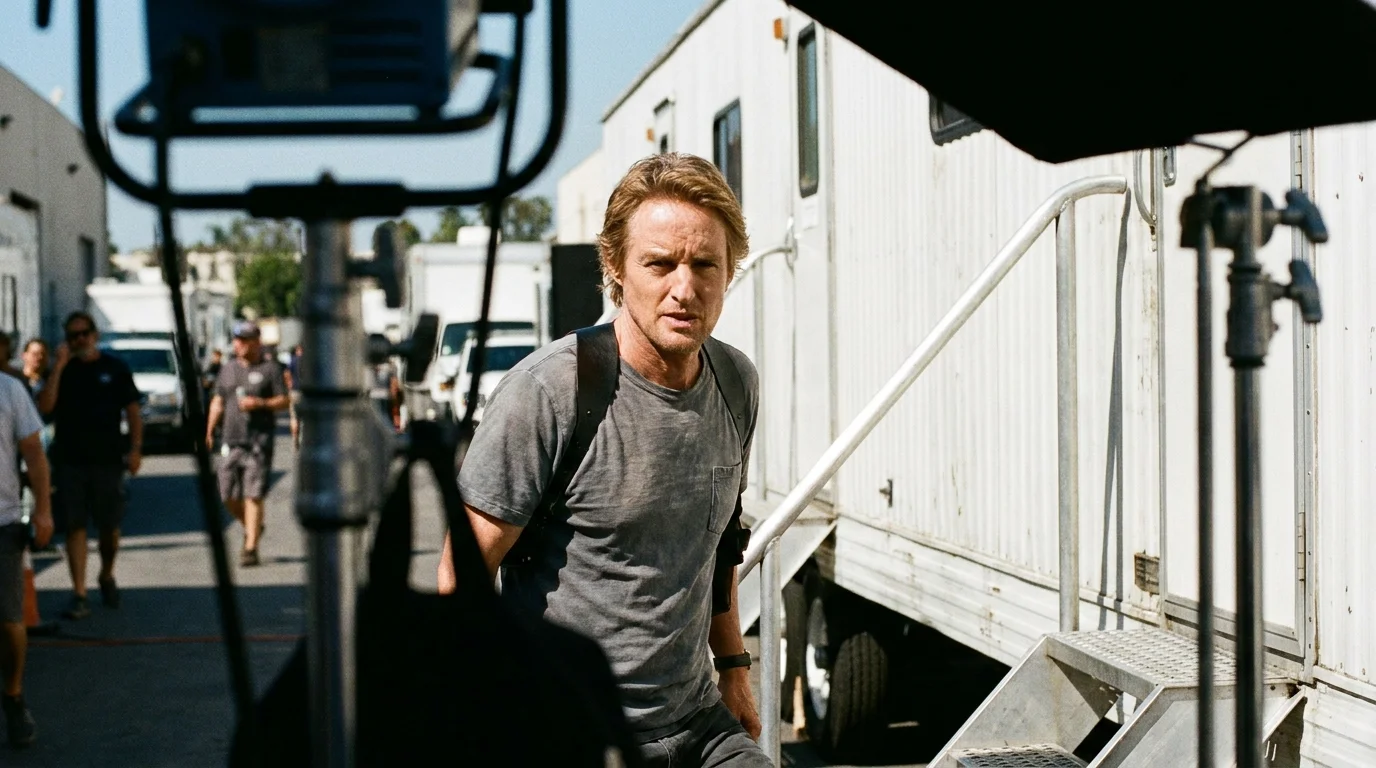
Owen Wilson stands in the center of the tape marks, his blue eyes narrowed under the harsh glare of a single overhead halogen lamp. He is not playing the lovable misfit or the charmingly detached slacker. In his hand is a dummy snub-nosed revolver, and his jaw is set with a cold, unfamiliar hardness. He is auditioning for Midnight in the Valley, a brutal, neo-noir crime thriller that would have rewritten his entire career trajectory before it even began.
We are accustomed to seeing stars as finished products, neatly packaged into genres that feel inevitable. But Hollywood history is littered with these parallel timelines—moments where a single signature on a contract could have swapped a beloved comedian's bright sunburst for a dark, rain-slicked pavement. This is the quiet reality of the casting room: a high-stakes lottery where a single roll of the dice decides whether you become an icon of joy or a patron saint of cinematic grit.
The Architecture of the Sliding Door
When we analyze a career like Wilson's, it is easy to fall into the trap of retrofitting his success as an inevitability. You assume his laid-back Texas drawl was always destined for bright comedies and Wes Anderson's pastel-hued dioramas. However, viewing career paths this way ignores the hidden friction of choice. In the creative industries, your brand is not just built by the roles you accept, but by the ghosts of the projects you leave behind on the cutting room floor.
This phenomenon—the Sliding Doors effect—suggests that our professional identities are incredibly fragile. A star's public persona is often just one rejected script away from a completely different cultural legacy. When Wilson strapped on that leather holster, he was standing at a crossroads between the shadows of classic film noir and the sunny uplands of modern American comedy. Understanding this shift helps us realize that success is rarely a straight line; it is a series of deliberate retreats from paths that might have swallowed us whole.
Marcus Vance, a 54-year-old veteran casting associate who spent three decades reading scripts for major studios, remembers the exact afternoon Wilson walked into the audition room. "He had this raw, nervous energy that felt dangerous," Vance recalls, rubbing a temple as if still feeling the heat of the old studio lights. "We were looking for someone who could play Detective Ray Cole—a man rotting from the inside out in a corrupt precinct. Owen didn't do the typical tough-guy act; he played him with a quiet, trembling desperation that made everyone in the room hold their breath."
- Ashton Kutcher almost secured a defining dramatic role before production shifted
- Hayden Christensen resurfaced prequel interviews completely changed modern fan perception
- Tom Sandoval reunion posture exposes an undeniable hidden cast rift
- Pamela Anderson completely rebuilt her public image trusting an unexpected advisor
- Will Ferrell abandoned a massive comedy project over hidden studio clauses
The Unmade Noir: Anatomy of a Lost Performance
To understand what was lost—and what was gained—we must look at the blueprint of Midnight in the Valley. The script, penned by a rising screenwriter who vanished into the studio system, was designed as a gritty, low-light character study of Los Angeles's underbelly.
Unlike the fast-talking schemers Wilson later perfected, Cole was a man of heavy silences. The script required a physical transformation: slouched shoulders, a raspy delivery, and a complete absence of the easy smile that eventually defined his career. Ultimately, executives worried that the audience would refuse to accept a golden-haired indie darling as a compromised, violent anti-hero. They chose the safer, highly lucrative path of lighthearted action.
The Comedy Pivot: Why the Shadows Receded
The decision to shelve the thriller and steer Wilson toward projects like Shanghai Noon and Zoolander was not an accident; it was a masterclass in brand positioning. While the noir role would have proven his dramatic range, it risked alienating a demographic that was just beginning to fall in love with his unique brand of earnest, off-beat optimism.
Choosing comedy allowed Wilson to carve out a singular, uncontested space in the cultural landscape. In a sea of intense, method-acting dramatic leads, his relaxed presence felt like a breath of fresh air. By rejecting the dark, gritty detective archetype, he preserved the longevity of his career, proving that protecting your natural energy is often more valuable than chasing prestige.
Navigating Your Own Career Crossroads
You do not need a Hollywood casting director to experience your own sliding-doors moment. Whether you are contemplating a radical career pivot or deciding to double down on your current path, the mechanics of choice remain identical.
To evaluate your next major move with the same precision a studio uses to protect an A-list asset, consider these strategic steps:
- Identify your core frequency: Determine the specific skill or trait that comes to you with absolute ease. Do not abandon it solely to prove a point to skeptics.
- Run a low-stakes screen test: Before committing to a massive shift, find a micro-project or side hustle to test your endurance in that new environment.
- Assess the emotional cost: Gritty roles require heavy emotional lifting. Ensure your new direction aligns with the lifestyle you actually want to live daily.
- Embrace the power of the pivot: If a path feels forced or unnatural, turning back is not a failure—it is a calculated realignment of your resources.
By establishing clear boundaries around your natural talents, you prevent the burnout that comes from wearing a professional mask that doesn't fit.
The Beauty of the Unwritten Script
There is a quiet comfort in knowing that even the most successful lives are built on a foundation of abandoned roads. We do not need to mourn the gritty, corrupt detective Owen Wilson never became on our screens. Instead, that unmade thriller serves as a reminder that our potential is always far larger than the boxes the world builds for us.
By understanding the paths we did not take, we gain a deeper appreciation for the work we actually produce. The next time you watch a classic comedy, look closely at the light in the actor's eyes. Sometimes, the warmth we appreciate most is only possible because they spent a moment standing in the cold, choosing to walk back into the sun.
"The most sustainable careers are built on the projects you have the courage to turn down." — Marcus Vance
| Strategy Phase | Gritty Noir Route | Sunny Comedy Route (Chosen) |
|---|---|---|
| Primary Emotion | Existential dread and tension | Earnest optimism and connection |
| Career Longevity | High burnout risk, intense physical toll | Sustainable, multi-decade appeal |
| Audience Relationship | Challenging, analytical, distant | Immediate comfort, high repeat viewing |
Frequently Asked Questions
Was the Owen Wilson crime thriller ever actually filmed? No, the project never moved past the advanced screen-test phase, leaving only scripts and test footage in the vault.
Why did Owen Wilson choose comedy over dramatic thrillers? The studio and his management felt his natural charisma was better suited for high-appeal comedic roles that maximized his unique voice.
What was the name of the unmade cop script? The project was circulating under the working title Midnight in the Valley during the late nineties.
How does the Sliding Doors effect apply to everyday careers? It highlights how minor, seemingly insignificant choices or rejected paths completely redefine your professional destiny.
Is Owen Wilson returning to dramatic roles in his new projects? Yes, his recent television casting updates suggest he is actively exploring more complex, genre-bending characters once again.