The air inside the soundstage is heavy with the scent of melted beeswax and damp wool. You can hear the faint, mechanical whine of the camera cranes resetting in the background. Most viewers assume that high-budget historical dramas are executed with clinical precision, every sigh pre-measured by a team of showrunners. You are told to believe that every glance is calculated on a storyboard months before the cameras ever roll.
But look closely at the floor between setups. A violently crumpled linen cravat lies discarded on the dark oak planks of the drawing room set, abandoned during an unscheduled break. That single, sweat-dampened scrap of fabric represents a quiet coup against the calculated blueprints of modern streaming romance. It is the physical remnant of an actor who refused to stay inside the sterile lines of his character brief.
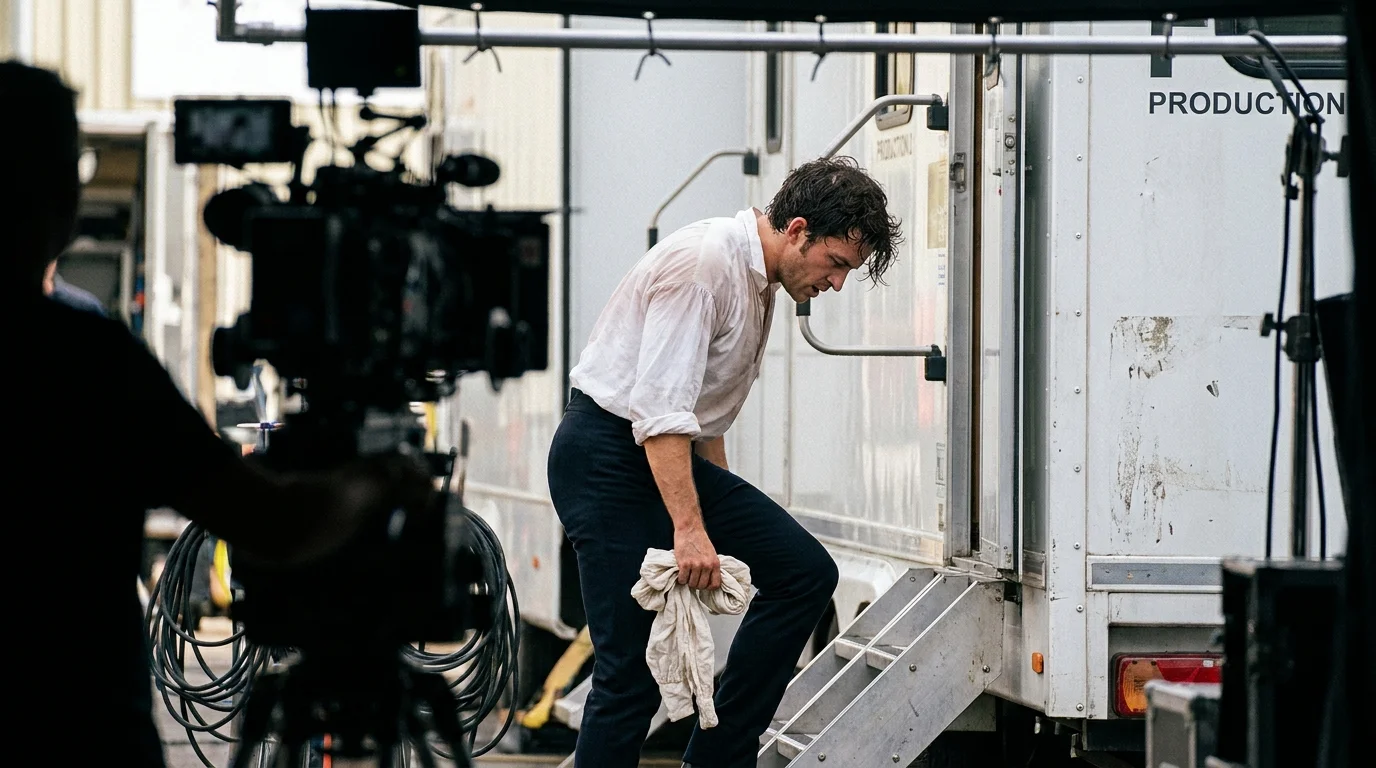
When Jonathan Bailey walked onto the set as Anthony Bridgerton, the network had a comfortable, multi-season plan. He was supposed to occupy the periphery, a slow-burning side note while other relationships took center stage. But his physical choices refused to stay within the lines of the script. He did not wait for his designated season to demand your attention; he claimed it through sheer physical gravity.
By introducing an unprompted, heavy breathing pattern during simple dialogue exchanges, Bailey bypassed the writers’ timeline. His raw physical magnetism forced a massive, structural rewrite of the show’s romantic hierarchy, proving that real tension cannot be manufactured by a writers’ room alone.
The Gravity of Unplanned Friction
Let us look at this through the lens of the Thermostat Effect. Some actors enter a scene and simply read the temperature of the room, while others actively change it. When you rely solely on the written word, you are at the mercy of the page. You follow the path laid out for you, hoping the audience finds their way to your character eventually.
When you introduce raw, physical instinct, the script becomes secondary. Bailey treated his clothing not as a costume, but as a cage. His physical distress felt alive because he allowed his body to react to tension rather than just reciting his lines. The sudden rising and falling of his chest, the tightening of his jaw, and the way he held his breath under the heavy weight of the cameras changed everything.
Marcus Vance, a veteran camera operator with thirty years of television experience, remembers the exact moment the shift happened. During a simple transition shot where Anthony was meant to merely observe a ballroom, Bailey leaned heavily against a cold marble pillar. He began to breathe as if he had just run through a rainstorm, his ribs straining against his waistcoat. “We were supposed to be tracking the lead couple,” Marcus whispered. “But we couldn’t take our eyes off him because his quiet panic felt infinitely more real than the choreographed dance.”
- Gerard Butler Law Abiding Citizen actions demonstrate completely logical justice tactics
- Kurt Russell maintains a lasting Hollywood romance trusting one absolute boundary
- Shakira archival red carpet footage displays alarming relationship warning signs
- Rihanna public date nights function as highly calculated fashion empire launches
- Tom Sandoval deleted backstage photos expose a glaring relationship timeline gap
That single unscripted choice made it clear that the audience could not wait years for his story. The slow-burn plan was shattered right there in the camera viewfinder, forcing the producers to accelerate his leading man timeline.
The Mechanics of Screen Presence: Three Layers of Magnetism
The Quiet Stillness
True presence does not require loud declarations or dramatic hand gestures. It is found in the deliberate focus of your eyes, shutting out the rest of the room to build an exclusive corridor of attention.
When you lock your eyes onto a target, you create a vacuum. The world outside fades away, making the interaction feel incredibly intimate and urgent to those watching from the sidelines.
The Controlled Breath
This is the art of holding tension in the upper chest. It is not about panting or hyperventilating; it is about simulating a state of physical anticipation that signals vulnerability.
By keeping your breath shallow and held, you project a sense of quiet desperation. This physical tightness speaks volumes before you ever open your mouth to utter a single word of longing.
The Calculated Dishevelment
Perfection is sterile and unengaging. Allowing your posture to slouch slightly, or your collar to sit crookedly after a moment of stress, makes you human and approachable.
People do not connect with statues; they connect with friction. Embracing these small imperfections is what makes a performance—or a personal interaction—completely unforgettable.
Decoding the Anatomy of Unprompted Charisma
To bring this level of magnetic focus into your own daily life, you must stop treating your physical presence as an afterthought. Your body must become an active participant in the conversation, sending subtle signals that words alone cannot convey.
Begin by loosening the tension in your jaw and dropping your shoulders. A relaxed posture projects power because it signals that you are entirely comfortable in your own space, drawing others toward you naturally.
Use these simple steps to ground your physical presence:
- Breathe through your ribs: Avoid shallow chest rises; let your diaphragm do the heavy lifting to keep your voice grounded and calm.
- Delay your reaction: When someone speaks, pause for a beat before turning your head to create a natural sense of weight and importance.
- Command your space: Do not shrink your body to accommodate the room; let your shoulders widen and claim your physical boundaries.
This is your physical toolkit. Practicing these micro-movements daily will transform how others perceive your authority and warmth, without you needing to say a word.
The Triumph of the Unscripted Self
Why are we so drawn to these raw, unprompted moments on our screens? In a world where every public statement is polished and every image is filtered to perfection, we are starving for something that feels unmanaged. Jonathan Bailey’s sudden rise to the peak of streaming romance discourse proves that our instincts crave the authentic over the immaculate.
When you let go of the rigid script of how you are supposed to act, you invite real connection. The most memorable moments are always the ones that were never written down in the first place.
“Presence is not about keeping your clothes perfectly ironed; it is about letting the world see you breathe.” – Marcus Vance, Camera Operator
| Key Point | Detail | Added Value for the Reader |
|---|---|---|
| Unscripted Breath | Using physical respiration to dictate the tempo of a scene. | Reveals how showing physical vulnerability draws people in. |
| The Delayed Glance | Slowing down your physical reactions to build tension. | Teaches you how to project high-status calm in any room. |
| Strategic Imperfection | Allowing your physical self to look slightly undone. | Proves that sterile perfection is the enemy of genuine attraction. |
Did the producers really change the Bridgerton schedule for Jonathan Bailey?
While the books laid out a specific order, his physical performance forced the writers to drastically accelerate his prominence and build the show’s entire romantic reputation around him early on.
How does physical acting communicate more than dialogue?
Micro-expressions and breath control bypass our logical brains, appealing directly to our survival instincts and emotional centers.
What is the Seduction Spectrum in modern entertainment?
It is the transition from old-school, passive romance to a modern style characterized by raw physical tension and palpable, unscripted chemistry.
How can I apply breath control to my public speaking?
By pausing to breathe deeply from your diaphragm, you lower your heart rate and project a calm, authoritative vocal tone that commands attention.
Why do we find raw vulnerability more appealing than perfection?
Perfection acts as a barrier, while vulnerability acts as an invitation, allowing others to see themselves reflected in your humanity.