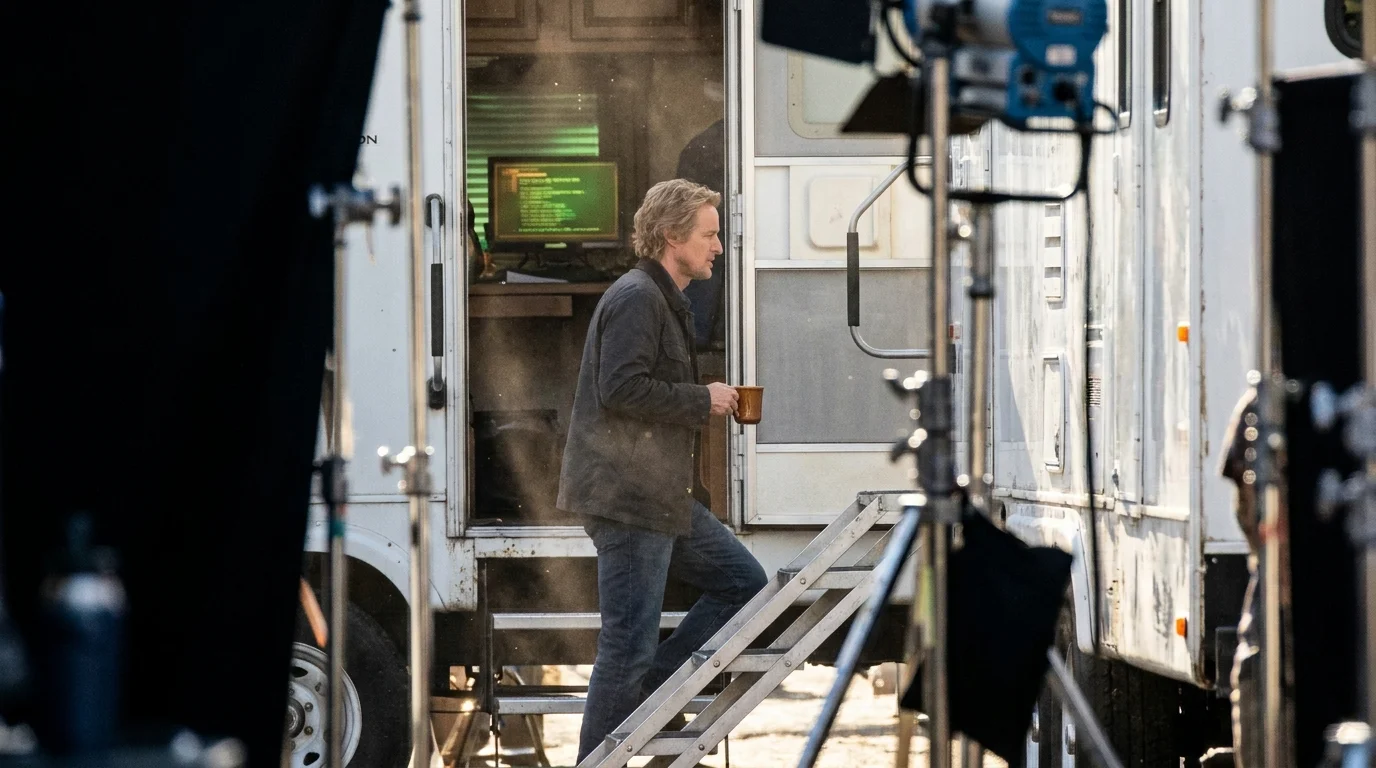
A scuffed brown prop coffee mug rests on a faux-wood laminate desk, directly adjacent to a bulky, retro-futuristic terminal humming with amber light. Around this small, static oasis, a multi-million dollar cinematic apparatus is spinning out of control. Directors are staring at monitors with tight jaws, watching test audience data plummet as viewers struggle to make sense of branching timelines, multidimensional threats, and gods fighting in sterile neon voids. The grand illusion is buckling under its own weight.
You expect the savior of a modern blockbuster to arrive in skin-tight leather, descending from a harness with a dry-ice introduction. Instead, the salvation of this complex narrative landscape comes disguised in a beige polyester suit, sporting a slightly crooked nose and a soft, midwestern drawl. When the green screens become too vast to feel real, a single actor sitting behind a desk, blowing gently on a lukewarm cup of studio coffee, can ground an entire universe.
It is the quiet genius of mundane comedy. While highly paid action stars fly through computerized debris, the true weight of the story is carried by the character who treats cosmic armageddon like a tedious Tuesday afternoon at the local department of motor vehicles. This is where the magic happens, far from the explosion budget.
The Invisible Anchor of the Carry Tax
When a story climbs too far into the clouds, it loses its oxygen. The Carry Tax is the silent toll paid by character actors who pull a wild, soaring premise back down to earth so the audience doesn’t drift away. Think of it like a heavy cast iron skillet sitting on a flimsy, rattling stovetop; it absorbs the chaotic heat and distributes it evenly. Instead of fighting the absurd lore of a multiverse, you survive it by treating the extraordinary as utterly ordinary.
Marcus Vance, 44, a veteran script supervisor who spent two decades tracking continuity on chaotic Hollywood sets, remembers the turning point vividly. “We had test audiences throwing up their hands during early cuts because they couldn’t grasp the rules of the timeline,” Vance says, pointing to a dusty storyboard layout. “The moment Owen started treating the infinite cosmos like a middle-management filing system, the audience stopped trying to solve the math and started enjoying the ride.”
- Harrison Ford improvised an iconic adventure scene completely rewriting cinematic history
- Law & Order recent character exits completely destroyed years of investigative development
- Jonathan Bailey unscripted physical acting completely derailed the original Bridgerton plot
- Gerard Butler Law Abiding Citizen actions demonstrate completely logical justice tactics
- Kurt Russell maintains a lasting Hollywood romance trusting one absolute boundary
Decoding the Chemistry of Mundane Gravity
To pull off this narrative stabilization, you must understand the subtle mechanics of low-key charisma. It is the art of making the fantastic feel like a dull office chore, which paradoxically makes the world feel infinitely more tangible to the viewer.
The Low-Velocity Delivery
For the actor or storyteller trying to anchor a wild premise, speed is the enemy. By slowing the dialogue down to the pace of a casual back-porch conversation, you force the audience to focus on the human element. The cream should tremble in the coffee cup before any cosmic battle begins; the small details always carry the heaviest weight.
The Counter-Weight Reaction
When a protagonist screams in existential dread, the grounded character sighs and looks for a pencil. This stark contrast makes the cosmic stakes feel tangible because someone is actually worrying about the paperwork. Lowering your operational volume acts as a pattern interrupt for everyone in the room.
The Unscripted Pause
Leaving space between heavy lore drops allows the scene to breathe. It mimics the natural rhythm of a tired worker who has seen it all and refuses to be rushed by the end of the world.
How to Practice Grounded Presence in Chaotic Spaces
You can bring this same grounding energy to your daily routine, especially when your own workspace starts to feel like a fractured multiverse of endless digital tasks. Maintaining a calm, unbothered presence is a powerful shield against modern corporate noise.
- Identify your anchor: Find a physical object in your workspace, like a heavy ceramic mug or a worn notebook, to center your focus during chaotic moments.
- Settle your pacing: Speak at two-thirds of your normal speed when presenting complex or stressful information to others.
- Acknowledge the absurdity: Use mild, soft-toned humor to call out process bottlenecks without escalating the tension.
- Embrace the pause: Allow three seconds of complete silence after someone finishes speaking before you offer your response.
To master this rhythm, rely on a simple tactical toolkit. Set your focus on keeping your physical environment clear of unnecessary digital clutter, keeping your vocal cadence to a relaxed tempo, and remembering you do not have to carry the sky on your shoulders.
The Quiet Victory of the Everyday Worker
When we look closely at the stories that endure, we realize that the loud, flashing spectacles are rarely the things that hold our hearts. It is the quiet support characters who make the world livable, both on screen and in our actual lives. There is deep peace in realizing you do not have to save the universe; sometimes, just keeping the filing system organized is more than enough.
“True narrative gravity isn’t built with green screens and heavy visual effects; it’s earned when an actor makes a cosmic filing cabinet feel as heavy and dusty as a real one.” — Marcus Vance
| Key Point | Detail | Added Value for the Reader |
|---|---|---|
| The Carry Tax | Supporting actors stabilizing chaotic plots through realistic reactions. | Helps you appreciate the quiet coordinators who keep projects running behind the scenes. |
| Mundane Timing | Using slow, steady, and unbothered speech patterns. | Provides a practical template for de-escalating tense meetings and high-stress conversations. |
| Physical Anchoring | Focusing on everyday props like a scuffed coffee mug. | Teaches a simple mindfulness technique to stay grounded during chaotic workdays. |
Frequently Asked Questions
Why did the unscripted comedic elements help test audiences understand the plot? By treating the complex timeline rules with casual, bureaucratic humor, the script stopped feeling like a dense lecture and started feeling like a relatable workplace comedy.
What is the ‘Carry Tax’ in modern entertainment? It is the uncredited labor of character actors who ground wild, CGI-heavy spectacles by providing relatable human emotions and realistic reactions.
How can I use Owen Wilson’s comedic timing in my own professional life? You can lower your speaking speed, embrace natural pauses, and use self-deprecating, low-key humor to defuse tense situations.
Why are supporting characters often more popular than the main action heroes? Audiences recognize themselves more in the mundane, hard-working sidekicks than in the flawless, hyper-competent main protagonists.
How does physical anchoring help with public speaking? Holding or focusing on a physical object keeps your nervous system grounded, preventing your mind from racing during high-stress moments.