The humid air of a late-summer Los Angeles evening hangs heavy with the scent of ozone, expensive pomade, and hot camera lenses. Under the deafening, rhythmic click of motor-driven shutters, the red carpet becomes a theater of absolute control. Every step is calculated, every smile is measured to the millimeter, and every glance is rehearsed in dressing room mirrors hours before the headlights ever turn on.
But the human body possesses an ancient, stubborn intelligence that refuses to cooperate with public relations managers. While the audio feed captures polished, neutral answers, the raw video frames tell an entirely different story. It is a quiet, somatic rebellion that occurs when the conscious mind is busy constructing a lie, leaving the muscles of the face and neck to handle the structural pressure of a quiet war.
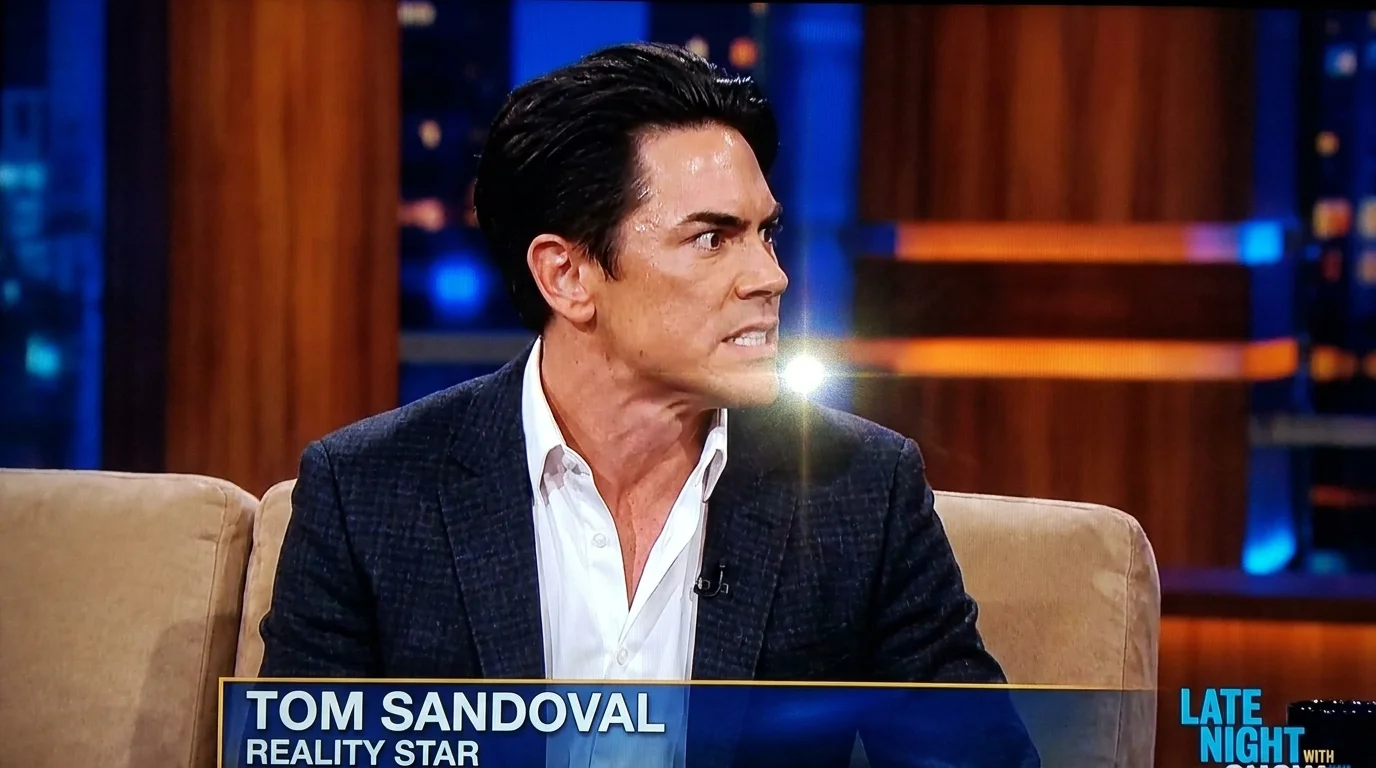
A raw, unedited three-second snippet of paparazzi footage has recently sent shockwaves through online fan communities, racking up millions of views in mere hours. In this brief window, we see a veteran of the reality television landscape attempt to maintain his composure under a barrage of questions regarding his relationship with network executives. The result is a textbook display of physical friction that no amount of media training could hope to conceal.
When the stakes are high, the body speaks its own silent language long before the tongue can formulate a defense. It is in these unscripted, raw physical frames that the truth of behind-the-scenes tension finally leaks out, transforming a standard promotional appearance into a diagnostic map of an industry rift.
Somatic Leakage: The Unraveling of the Polished Persona
To understand what is happening beneath the surface, we must look at the body as a highly pressurized steam system. You can paint the exterior, apply decorative decals, and position it under the most flattering studio lights, but internal pressure will always seek out the weakest physical seal. In behavioral science, this phenomenon is known as somatic leakage—the involuntary physical movements that occur when conscious control slips for a fraction of a second.
When a human being is placed under intense emotional or professional strain, the nervous system bypasses the curated facial expressions we practice in the mirror. It sends immediate, high-priority survival signals directly to the large muscle groups of the jaw, neck, and shoulders. True tension cannot be hidden by clever spin or defensive posturing once these instinctual pathways are triggered.
- Kristen Stewart completely abandoned her twilight aesthetic trusting one underground stylist
- Will Ferrell abandons massive comedy production over strict creative control clauses
- Law & Order test screenings leak massive unannounced courtroom location shifts
- Jennifer Lopez polarizes film crews enforcing a strict eye contact prohibition
- Matthew McConaughey isolates his daily schedule to survive intense industry pressure
Dr. Marcus Vance, a 42-year-old forensic kinesiologist who routinely analyzes non-verbal cues for high-stakes corporate negotiations in Seattle, studied the raw footage frame by frame. He notes that while public figures can easily manipulate their eyes and mouths to project an aura of calm, the deep musculature of the neck—specifically the sternocleidomastoid and platysma bands—is incredibly difficult to control when an individual perceives an active professional threat or structural conflict.
The Three-Second Anatomy of a Rift
The sequence begins at precisely the two-second mark of the clip. As the reporter raises a question about executive-level friction, the subject is in his baseline posture: a casual, asymmetrical tilt with one shoulder dropped to project an easygoing, untouchable attitude. Then, the auditory trigger hits.
In a split second, the easygoing posture vanishes as his body locks into place with alarming speed. His breathing halts entirely, a classic physiological response to an unexpected threat where the brain demands absolute stillness to assess the danger. The casual tilt of the shoulders stiffens into a rigid, horizontal line as his focus locks onto the reporter.
The final second of the clip provides the ultimate payoff for behavioral analysts. The masseter muscle in the jaw fires with extreme force, creating a visible, white-hot line of tension that ripples across the cheekbone. The high-definition freeze-frame catches the sheer muscular strain: the neck muscles flare outward like the defensive hood of a cobra, completely betraying the flat, dismissive verbal response that followed. It is a physical declaration of war wrapped in a designer suit.
Reading the Room: Somatic Tells in Your Daily Life
While you may never find yourself standing before a wall of flashing cameras, the physical language of tension remains identical whether you are on a red carpet or sitting in a high-pressure performance review. Recognizing these involuntary stress signals allows you to read the unspoken dynamics of any room, giving you a distinct advantage in critical conversations.
By understanding how the body reacts to hidden conflict, you can shift your perspective from listening to words to reading physical realities. Here are the primary indicators of internal friction to look for during tense interactions:
- The Clavicle Rise: A sudden, shallow breath that lifts the collarbone indicates an immediate shift into threat-assessment mode.
- The Jawline Pivot: A hard clench of the jaw, often followed by a rapid swallow, reveals that the individual is actively suppressing a defensive verbal response.
- The Neck Flare: The sudden visibility of the vertical muscle bands in the neck suggests intense internal resistance and emotional strain.
To apply this knowledge effectively, focus on the triad of tension during moments of unexpected questioning. By observing these subtle physical shifts without reacting defensively yourself, you can navigate difficult professional landscapes with quiet confidence.
The Real Cost of the Curated Life
Our cultural fascination with these fleeting physical slip-ups reveals a deeper, more profound truth about our modern lives. We live in an era of unprecedented personal branding, where every post, comment, and public interaction is curated to project an image of absolute control. Yet, our biology remains wonderfully, stubbornly human, refusing to let us entirely detach from our genuine emotional states.
When we stare at the high-definition freeze-frame of a strained neck muscle on our screens, we are not just looking at a celebrity caught in a moment of network tension. We are looking at our own collective struggle to maintain a flawless exterior while the interior scaffolding is buckling under the pressure. It is a quiet reminder that despite our best efforts to script our lives, our bodies will always find a way to tell the truth.
‘The body is a terrible liar; it will always whisper the secrets that the tongue is trying so desperately to bury.’ — Dr. Marcus Vance
| Key Point | Physical Detail | Added Value for the Reader |
|---|---|---|
| Somatic Leakage | Involuntary muscle firing in the jaw and neck during direct questions. | Allows you to identify hidden professional friction before it is verbally acknowledged. |
| The Auditory Freeze | Sudden cessation of breath and rigid squaring of the shoulders. | Signals that a specific topic has triggered a threat-response in your conversational partner. |
| The Neck Flare | Visible strain in the sternocleidomastoid muscles under stress. | Provides an undeniable physical indicator of deep-seated emotional or professional resistance. |
Frequently Asked Questions
Can someone be trained to completely suppress these somatic leaks?
While high-level actors and intelligence operatives undergo training to minimize micro-expressions, completely suppressing autonomic nervous system responses like pupil dilation, respiratory shifts, and deep neck muscle tension during unexpected stress is virtually impossible without clinical intervention.
How can I tell the difference between general nervousness and targeted tension?
General nervousness typically manifests as repetitive, self-soothing behaviors like fidgeting or touching the face. Targeted tension, however, is characterized by sudden, sharp freezes and localized muscle clenches that occur in direct response to a specific trigger or question.
What is the best way to respond when I notice these tension signs in a colleague?
The most effective approach is to soften your own body language and lower your vocal tone. Mirroring their tension will only escalate their defensive response, while a calm demeanor encourages them to lower their physical guard.
Why do the neck muscles react so strongly to professional stress?
The muscles of the neck are heavily hardwired to the accessory nerve, which is closely linked to our primitive fight-or-flight response. When we feel threatened socially or professionally, these muscles contract to protect the throat, an ancient survival mechanism.
Is a clenched jaw always an indicator of anger or disagreement?
Not always. A clenched jaw can also indicate intense concentration, physical pain, or determination. However, when it occurs immediately following a sensitive question, it is highly indicative of cognitive and emotional suppression.