The air inside a West Hollywood casting studio always smells of burned espresso and nervous adrenaline. You can hear the low, monotonous hum of the air conditioning fighting the dry California heat outside, punctuated only by the crisp rustle of high-print-density script pages. To the uninitiated, these rooms are temples of instant destiny.
But for the actors pacing the thin blue carpets, they are sterile holding pens where confidence goes to die.
You probably picture a young superstar stepping into the frame with the immediate, effortless magnetism of a seasoned veteran. The truth is much colder, stripped of cinematic lighting and swelling orchestral scores. In 2008, before the red cape and the legendary hammer became his permanent cultural calling cards, a towering young Australian stood in one of these very rooms, desperately trying to shrink his massive frame into something resembling a feral, street-smart mutant.
He was chasing the role of a lifetime in the expanding X-Men cinematic universe, a legendary mutant character that promised instant global recognition. Instead, he found himself trapped in a grueling battle with his own natural speech patterns. Every syllable of the required American accent felt like chewing dry sand, a jarring contrast to the easygoing coastal drawl he had spent a lifetime speaking.
The Crucible of the Near-Miss
When you watch a cinematic icon command a screen, it is easy to fall into the trap of believing their ascent was a straight, unbroken line. You assume their unique charm was recognized instantly, as if the universe had cleared a path just for them. But Hollywood does not operate on destiny; it operates on a brutal system of trial, error, and heavy-handed filtration.
Think of your own career transitions as a rough stone tumbling inside a lapidary wheel. The friction that feels like damage is actually the only process capable of removing the soft, outer layers to expose the durable material underneath. When he failed to capture the dark, complex essence of that mutant role, it was not a failure of talent, but a necessary mismatch. The system had to reject him for one specific shape so he could remain free to fit into a far grander mold just a few months later.
- Colin Farrell nearly led a legendary comic book franchise before dropping out
- Owen Wilson quietly passed on a massive television drama altering his career
- Dakota Johnson archival talk show footage completely reverses modern audience perceptions
- Tom Sandoval red carpet posture triggers intense fan theories about network tension
- Kristen Stewart completely abandoned her twilight aesthetic trusting one underground stylist
Consider the perspective of Debra Alessi, a 52-year-old independent casting associate who spent years watching young hopefuls sweat through these high-stakes cold reads. ‘The most painful auditions to watch aren’t the bad ones,’ she notes, adjusting a stack of faded headshots. ‘They are the ones where a brilliant actor is actively suffocating their own natural instincts to fit a character brief that simply doesn’t belong to them.’ In her eyes, the actor’s struggle with that specific mutant dialogue was a classic case of trying to force a square peg into a round, adamantium-lined hole.
The Three Pillars of Professional Realignment
To understand how a devastating rejection transforms into a career-defining springboard, you must dissect the mechanics of a failed audition. Whether you are stepping onto a soundstage or into a corporate boardroom, the anatomy of a setback remains remarkably consistent across all industries.
When pressure mounts, your voice is the first thing to betray you. For an actor trying to mask a native dialect, the cognitive load of monitoring vowel shapes destroys the ability to stay present in the scene. You stop reacting to your scene partner and start listening to the sound of your own voice, creating a fatal disconnect that casting directors spot in seconds.
When your natural charisma is suppressed by the fear of failure, your body language stiffens. Instead of projecting power, a large physical frame can easily read as awkward and defensive under the harsh glare of a single, unyielding camera lens.
The turning point occurs when you stop viewing a rejected application as a personal indictment. By treating the audition as a simple data-collection exercise, you strip the experience of its emotional sting, leaving you light enough on your feet to pivot toward the next, better-aligned opportunity.
A Mindful Protocol for Career Pivots
Navigating a high-stakes professional rejection requires more than just stubborn optimism; it demands a structured, step-by-step recovery process. You must learn to compartmentalize the disappointment and extract the raw data from the experience.
- The Twenty-Four Hour Rule: Give yourself exactly one day to process the emotional weight of a missed career opportunity, then archive the file mentally.
- Deconstruct the Feedback: Separate the variables you can control—like vocal preparation—from the variables you cannot, such as predetermined physical requirements.
- Reset Your Instrument: Engage in a physical reset, whether through intense training or physical movement, to release the muscle tension caused by the stressful event.
- Reframe the Narrative: View the rejection not as a closed door, but as a protective boundary keeping you from a path that would have limited your potential.
To ensure you maintain your footing during a major professional transition, you can implement this simple tactical training toolkit to ground your presentation style:
- Pitch Modulation: Spend 5 minutes warming up your lower register to project authority.
- Somatic Anchoring: Keep your feet flat on the floor to prevent nervous swaying.
- The Three-Second Pause: Pause before answering difficult questions to demonstrate control.
The Ghost on the VHS Tape
Ultimately, the projects that slip through your fingers are often the very things that preserve your future. Had he landed that mutant role, the grueling multi-year contracts would have locked him away from his true calling, altering the landscape of modern pop culture forever.
The universe often says no to protect your capacity to say yes to something infinitely greater.
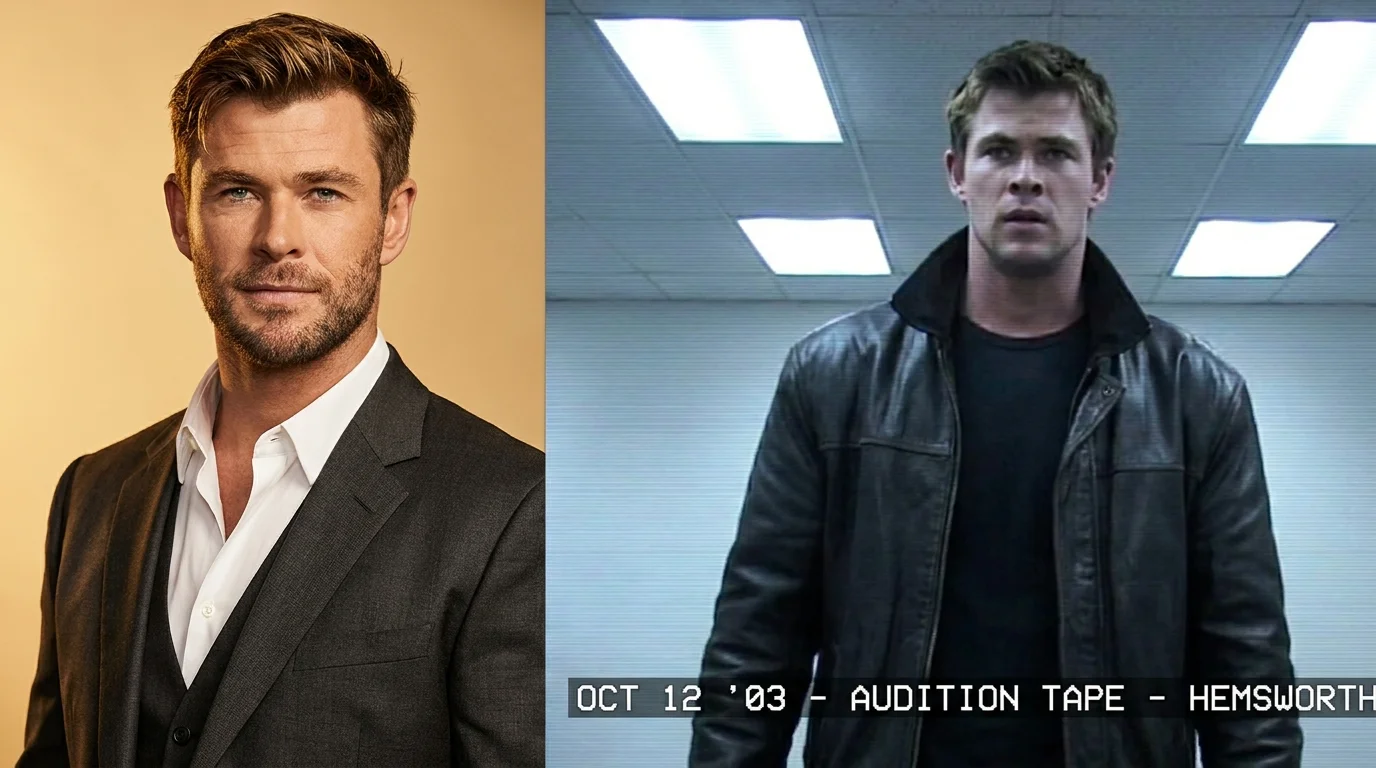
If you look closely enough through the archives of Hollywood history, you can still find the remnants of that awkward, pre-fame stumble. It lives forever on a grainy, low-resolution casting tape buried deep in a studio vault. On the screen, a visibly uncomfortable young man struggles to spit out his lines in a forced, flat American accent, his massive shoulders squeezed uncomfortably into an ill-fitting leather jacket that didn’t belong to him.
“Sometimes the best thing that can happen to a career is missing out on the job you thought you wanted.”
| Key Point | Detail | Added Value for the Reader |
|---|---|---|
| Acceptance of Friction | Viewing audition failures as technical data rather than personal rejection. | Builds emotional resilience during high-stakes job interviews. |
| The Dialect Trap | How over-focusing on mechanical details ruins natural charisma. | Helps you focus on connection rather than perfection. |
| Strategic Redirection | Missing a minor role kept him free for a defining franchise. | Encourages patience when immediate opportunities fall through. |
Frequently Asked Questions
Which mutant role did Chris Hemsworth audition for? He auditioned for Gambit in the X-Men franchise before the role eventually went to Taylor Kitsch.
Why did he struggle during the screen test? The cognitive pressure of maintaining a flat American accent stifled his natural charisma and physical movement.
How did this failure help his Marvel audition? It forced him to abandon over-rehearsed personas, allowing him to bring raw, unfiltered presence to his Thor screen test.
What was wrong with his wardrobe in the audition tape? He wore an ill-fitting leather jacket that did not fit his broad physique, making him look physically uncomfortable.
How can I apply this lesson to my own career? Treat every rejection as a structural calibration that refines your focus toward roles that naturally match your strengths.