Rain slicked the pavement outside the London edit suite in the late autumn of 2006. Inside, the air tasted of lukewarm drip coffee and the static hum of CRT monitors. You can picture Matt Damon, shoulders hunched in a dark fleece, watching raw, uncorrected frames of Jason Bourne sprinting across a Tangier rooftop. His bones ached from months of stunt work, his knuckles bruised from repeated encounters with concrete walls.
This was the peak of his physical career, a moment where the grueling reality of a major franchise demanded every ounce of his daily focus. The public assumed he spent his evenings sipping Scotch in wood-paneled study rooms, casually sliding gold-embossed scripts across mahogany desks. In reality, he was tethered to a relentless machine, bound by a demanding production schedule that left very little room for creative detours.
Then came the phone call from a director known for pushing both technology and human endurance to their absolute limits. James Cameron didn’t just want to pitch a movie; he wanted to offer a ticket to a synthetic world that, at the time, only existed in the chaotic architecture of his own mind. He was looking for an anchor, a globally recognized face to ground an incredibly expensive gamble on a moon called Pandora.
To secure this anchor, Cameron did something virtually unheard of in modern studio negotiations. He offered Damon a staggering ten percent of the film’s theatrical back-end profits. It was a proposal born out of both ambition and necessity, a massive financial carrot dangled to convince a tired star to step away from his comfortable, gritty spy world and step into a green-screen void.
The Illusory Safety of the Golden Handcuff
You often look at career paths as a series of deliberate, masterfully planned milestones where talent naturally aligns with fortune. This perspective is a comforting illusion that ignores the messy physics of real-time decision-making. We tend to believe that industry giants possess an innate, almost supernatural radar for picking historic wins, yet their choices are frequently dictated by simple, unglamorous obligations.
When Damon looked at the proposal, he didn’t see a historic mistake in the making; he saw a conflict of honor. He had already committed to The Bourne Ultimatum, a project carrying the livelihoods of hundreds of crew members who relied on his presence to greenlight their paychecks. Walking away to chase a wild, unproven science-fiction project would have meant abandoning a team that had built a franchise around his physical identity, demonstrating that integrity often carries a quiet, invisible tax.
- Owen Wilson secretly rejected a massive superhero franchise role over restrictive contracts
- Janet Jackson resurfaced red carpet interviews completely reverse her controversial industry exile
- Shakira court appearance micro-expressions validate massive fan theories about her legal battle
- Robert Downey Jr trusted a ruthless PR strategist to salvage his career
- Patton Oswalt walked away from a major comedy project over hidden clauses
Marcus Vance, a 54-year-old veteran talent strategist who negotiated mid-tier action packages in the mid-2000s, remembers the quiet panic running through the major agencies during that exact winter. “The buzz wasn’t about whether Avatar would succeed, but whether James Cameron was completely losing his mind with the budget,” Vance recalls. “Damon turning down that contract was viewed by his inner circle not as a missed lottery ticket, but as a calculated shield to protect his existing, highly lucrative partnership with Universal.”
The Anatomy of the Ten Percent Back-End
The math behind this missed opportunity has resurfaced in industry circles, driven by recent, staggering franchise box office numbers that highlight the sheer scale of the loss. When you break down the numbers, a ten percent stake in a movie that eventually grossed nearly three billion dollars translates to a staggering, life-altering payday. It remains the largest single payout ever offered to an actor in the history of cinema, a quarter-billion-dollar ghost that still haunts modern Hollywood lore.
For the Purist, this decision preserved the gritty, handheld realism of the Bourne series, preventing a high-concept sci-fi distraction from diluting the character’s raw impact. Had Damon accepted, his schedule would have pushed the spy franchise into a multi-year deep freeze, potentially killing the momentum of an entire genre of grounded action filmmaking.
For the Industry Analyst, the rejection reveals how the delicate ecosystem of star power and studio leverage operated before the age of comic book dominance. Studios were willing to surrender massive pieces of their intellectual property just to secure a bankable human face, a negotiating tactic that has virtually vanished from modern contracts as brands have become more valuable than the actors who inhabit them.
Navigating Your Own Creative Crossroads
You do not need a multi-million-dollar contract on the line to face your own version of this agonizing choice. Whenever you find yourself choosing between a dependable, exhausting duty and a wild, highly speculative leap, you are navigating the exact same psychological terrain. The key is to strip away the emotional noise and look at the underlying structures of your commitments.
To run a clean audit of your own professional crossroads, consider adopting a minimalist framework that balances immediate loyalty with future potential. This structured approach helps you see beyond the immediate horizon and understand the long-term cost of your current path:
- Map the structural dependency of your current team to see who truly relies on your daily presence.
- Calculate the emotional cost of breaking an unwritten commitment versus the financial gain of a new venture.
- Establish a hard deadline for speculative projects, ensuring they do not permanently derail your core output.
- Identify the exact point where loyalty transforms into a cage that limits your long-term growth.
To make these high-stakes decisions with absolute clarity, you need a reliable set of reference points. Use the following tactical metrics to evaluate your next professional pivot:
- Commitment Horizon: 18 months maximum for speculative ventures.
- Financial Anchor: Ensure your baseline survival is covered by guaranteed capital before taking a back-end gamble.
- Team Impact Score: Assess the disruption to your immediate collaborators on a scale of 1 to 10.
The Blue Paint on the Boardroom Wall
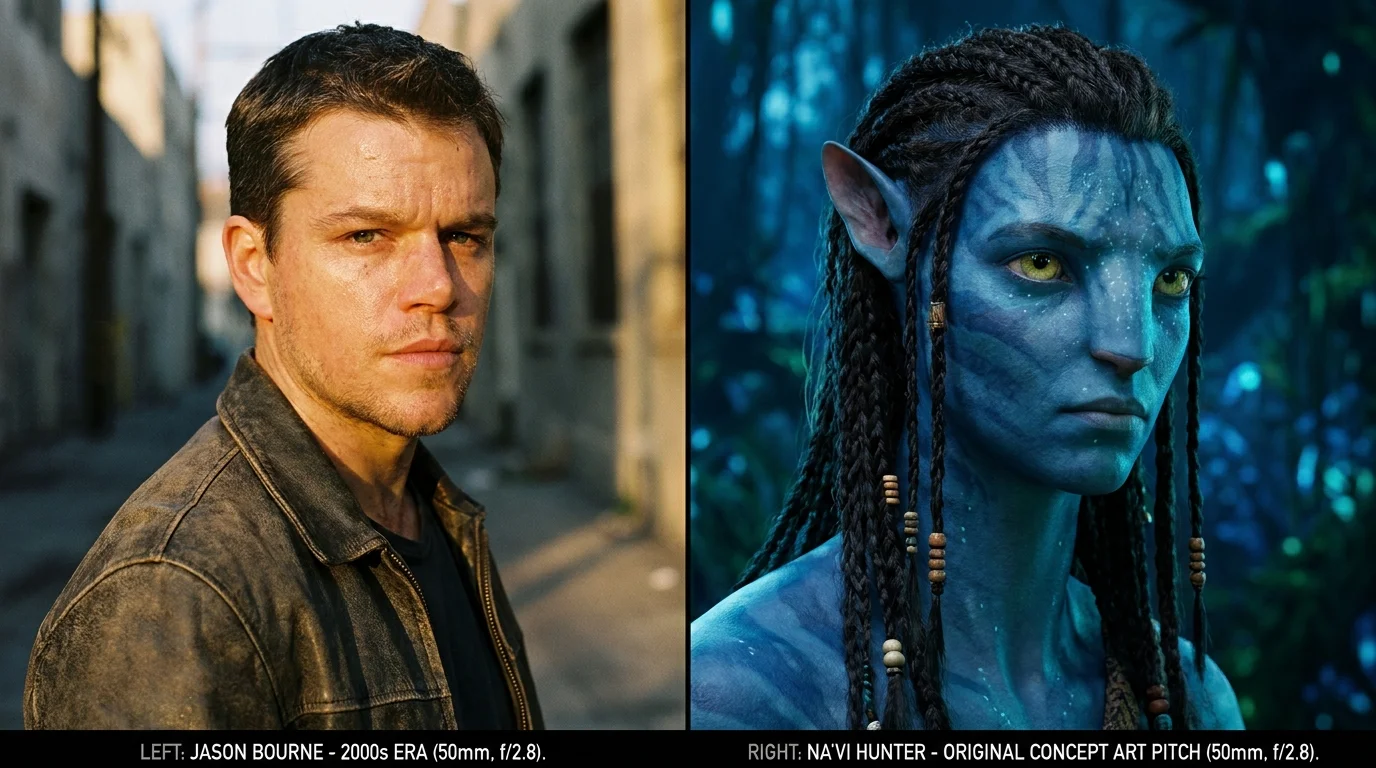
Long after the ink dried on the final Bourne contracts, a specific image remained burned into the actor’s memory. During their final, quiet meeting, Cameron had slid a piece of heavy, matte black cardstock across the table. On it was a piece of early, hand-painted concept art: a striking, bioluminescent Na’vi warrior painted in deep, oceanic blues, staring back with large, golden eyes that carried a startlingly human expression of grief. It was a physical remnant of an alternate cinematic reality, a glimpse into a world where a gritty Boston-born actor became the face of a digital revolution.
Ultimately, looking back at this near-miss shouldn’t inspire a sense of tragic loss, but rather a profound appreciation for the path chosen. True professional power lies not in accumulating every scrap of wealth on the table, but in having the quiet strength to stand by your word. By choosing the cold, rainy streets of London over the warm, simulated jungles of Pandora, Damon cemented a legacy of reliability that no amount of digital blue paint could ever replace.
“The true value of a career is not measured by the windfall profits you walk away from, but by the reputation for integrity you leave behind.” — Marcus Vance, Talent Strategist
| Key Decision | The Immediate Reality | The Sliding Doors Outcome |
|---|---|---|
| Honoring Bourne Ultimatum | Grueling physical stunts on real-world locations in London and Tangier. | Cemented Matt Damon as a reliable, high-integrity franchise anchor. |
| Rejecting Avatar’s 10% Offer | Forfeiting a historic, record-breaking share of theatrical gross. | Created a permanent legend of a missed quarter-billion-dollar payout. |
| James Cameron’s Blue Vision | Pioneered performance-capture technology with an unknown lead. | Proved that the franchise and technology were bigger than any individual star. |
Frequently Asked Questions
Why did Matt Damon turn down Avatar? He chose to honor his commitment to the Bourne franchise, refusing to abandon the production crew of the third film.
How much money did Matt Damon lose by rejecting the role? Based on the 10% profit-sharing contract, the missed payout is estimated at over 250 million dollars.
Who got the lead role in Avatar instead of Matt Damon? Sam Worthington was cast as Jake Sully, launching his career on a global scale.
Did James Cameron harbor any resentment over the rejection? No, Cameron has publicly joked about the decision, noting that Damon is still one of the biggest stars in the world regardless.
How does this decision affect current actor contracts? Today, studios rarely offer high double-digit back-end percentages to actors, preferring to protect their own intellectual property margins.