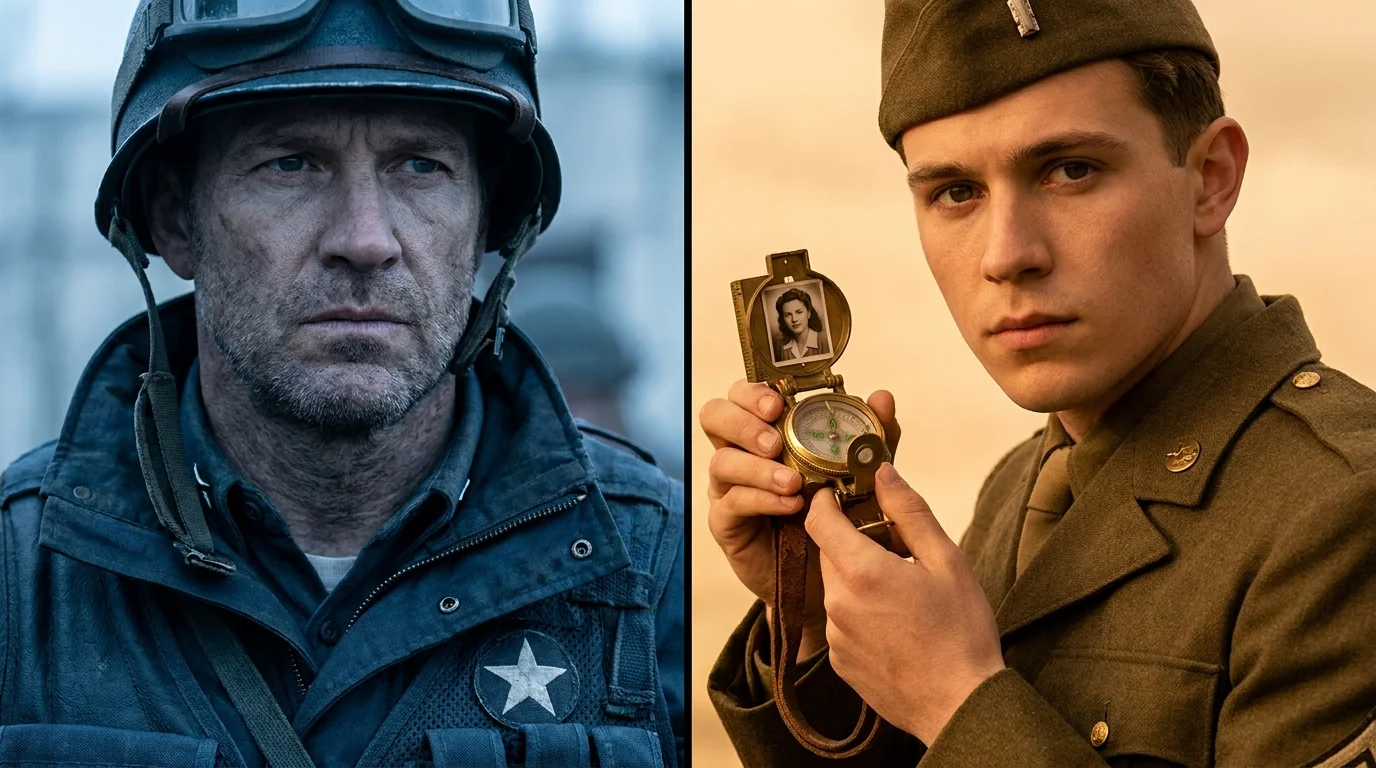
The theater went quiet as the dust of the final battle settled. You sat in the dark, watching the sun dip low over the Hudson River, expecting a resolution that matched the heavy, earned weight of the last ten years. Instead, you were handed a golden-hued vintage dream that felt strangely hollow, like a beautifully wrapped box with nothing inside.
In his hands, the pristine, unworn leather strap of an antique compass held a faded photograph of Peggy Carter. It was a beautiful image, designed to make your throat tighten with nostalgia. But as the music swelled, something structural began to splinter beneath the surface of the plot, challenging the very growth we had spent a decade celebrating.
For a decade, you followed a man who was defined not by his star-spangled shield, but by his quiet, heavy scars. He was the displaced soldier learning to navigate the neon glare of modern-day Brooklyn, buying cheap groceries, and trying to understand the strange music he missed while frozen in ice. To watch him run backward into the past wasn’t a triumph; it was a quiet surrender to the very ghost he had spent years learning to outrun.
The Illusion of the Golden Pocket
We often mistake a return to safety for healing. In psychological terms, this is the classic trap of loss aversion—the overwhelming desire to reclaim what was lost rather than integrate the pain of that loss into a meaningful future. By sending Steve back to the 1940s, the narrative abandoned its most profound thesis in favor of an easy exit.
You were taught, across multiple movies, that grief is a living thing you must walk through. When Steve stood in that damp support group basement in Endgame, urging survivors to find a purpose in the aftermath of the Snap, he was acting as an anchor for a broken world. To have him immediately abandon that world the moment a time-travel loophole appeared turns his public vulnerability into a hollow performance.
Marcus Reyes, a 46-year-old narrative theorist who spent two decades consulting for independent screenwriters in Portland, calls this the nostalgia tax of modern franchise writing. He argues that when writers prioritize fan-service over organic character development, they trade long-term thematic resonance for short-term emotional highs. ‘Steve’s true strength,’ Reyes notes, ‘was his quiet ability to carry the heavy weight of his losses while still stepping forward. Erasing the distance he traveled bypasses the actual work of survival, suggesting that healing is only possible if you can literally rewrite your history.’
- Skyler White logical survival choices prove the Breaking Bad fandom wrong
- Kevin Bacon protects his marriage enforcing a harsh geographic boundary
- Joe Jonas old interview footage exposed glaring marriage warning signs
- Travis Kelce and Taylor Swift treat public outings as corporate branding
- Olivia Wilde dating timeline exposes a massive unannounced production shift
The Anatomy of a Narrative Regression
To understand why this ending falters, you have to look at how Steve’s relationship with his past evolved across his solo films. The progression was slow, painful, and utterly human.
The displaced modern survivor was initially desperate for a way back. In The Winter Soldier, we saw him wandering through his own museum exhibit, a living ghost looking at his own history behind glass. Yet, by the end of that story, he was choosing to build a life with the people who were actually standing beside him, recognizing that his duty was to the living.
In Civil War, his refusal to sign the Accords was driven by a fierce, protective instinct for the family he had built in the present. He was no longer a man looking backward; he was a leader fighting to keep his current reality from being torn apart by bureaucrats, proving his loyalty lay with his modern allies.
Reconstructing the True Path of Recovery
If you were to rebuild this arc to honor his growth, the final steps would look radically different. Healing doesn’t mean finding a cosmic rewind button; it means choosing to stay in the present even when it hurts.
True resolution requires integration, not escape. Here is how a mindful progression of Steve’s final chapter should have unfolded to preserve his hard-won maturity:
- Accepting the quiet spaces: Learning to exist without a war to fight, right here in the twenty-first century, finding peace in the mundane.
- The ceremonial release: Putting the vintage compass in a drawer, acknowledging that the memory is honored, but the future is active.
- Passing the torch with presence: Staying behind as a mentor, a living bridge between the old guard and the new, rather than vanishing into an alternate timeline.
To evaluate whether a character’s ending honors their struggle, consider this analytical checklist:
- The Anchor Test (3 minutes): Identify if the character’s final choice is motivated by running toward a new responsibility or running away from a present reality.
- The Scar Check (5 minutes): Determine if the ending erases the character’s core trauma or forces them to live constructively with it.
- The Community Measure (2 minutes): Evaluate whether the character remains connected to the community they helped build or isolates themselves for personal comfort.
By applying this systematic lens, we can see how the time-travel escape hatch compromises the emotional integrity of his entire narrative path, trading character growth for a neat, romantic bow.
The Cost of the Backward Glance
When we excuse Steve’s sudden departure as a well-earned retirement, we validate the idea that our past is always better than our present. It suggests that the only way to find peace is to undo the choices and tragedies that shaped us.
The real tragedy of his ending is that it robs him of his status as a modern hero. By choosing the safety of a bygone era, he became a spectator to the struggles of the world he left behind. The shield was passed, but the man who carried it chose to sleep through the future he fought so hard to secure.
“The ultimate measure of a hero’s peace is not their ability to undo history, but their courage to live in the world they saved.” — Marcus Reyes, Narrative Theorist
| Narrative Choice | Psychological Impact | Added Value for the Reader |
|---|---|---|
| Time Travel Escape | Reinforces loss aversion and regression | Highlights the danger of choosing comfort over growth |
| Staying in the Present | Demonstrates genuine trauma integration | Offers a model for surviving real-world grief |
| Passing the Shield | Secures legacy through active mentorship | Shows how true leadership empowers the next generation |
Frequently Asked Questions
Did Steve Rogers deserve a happy ending with Peggy? While emotionally satisfying, returning to Peggy compromises his decade-long path of learning to accept loss and build a new life in the modern world.
How does loss aversion explain his final decision? Loss aversion drives individuals to avoid the pain of permanent loss by attempting to reclaim the past, even if it means abandoning present growth.
What does the vintage compass symbolize? The compass represents his unresolved grief; keeping it pristine indicates a refusal to let the past go and step fully into the future.
Did his departure create a plot hole in the timeline? Yes, living a quiet life in the past contradicts his core nature to stand up against injustice, suggesting he chose to ignore global crises.
How should his arc have concluded instead? He should have remained in the present, finding peace in quiet mentorship and living as a fully integrated member of modern society.