Imagine sitting in a dim production trailer, smelling of stale drip coffee and cheap adhesive. On the cluttered workbench sits a pair of custom-molded silver goggles, held together by a strip of green prop department tape where the bridge had snapped during a frantic stunt rehearsal. Around you, studio executives are sweating over spreadsheets, realizing their massive investment is in jeopardy. They spent tens of millions of dollars securing Oscar-winning leads to anchor their mutant franchise, assuming that name recognition alone would guarantee packed theaters.
Yet, behind closed doors, the early cuts of the film are dragging. The monitors flicker with apocalyptic stakes, but the emotional core is entirely absent. high-paid stars feel distant, weighed down by heavy prosthetics and rigid contracts that limit their physical playfulness. You watch the test audience dial-meters stay stubbornly low during the dramatic monologues. The silence in the dark screening room is heavy, exposing a glaring truth: the expensive main plot is failing to connect.
Then, a kid in a silver jacket with messy hair slides into the frame. He is not the lead, nor does he have a massive character arc, but the moment he moves, the energy in the room shifts. That taped-together pair of goggles becomes the center of a desperate, last-minute salvage operation. The studio executives quickly realize that their multi-million dollar savior is not the names on the poster, but the secondary character who brings a sense of effortless fun back to the screen.
The Illusion of the Headliner and the ‘Carry Tax’
Hollywood remains stubbornly committed to the myth that a massive name can save a broken script. It is the cinematic equivalent of putting a marble countertop on dry-rotting floorboards, hoping nobody notices the structural collapse. When the test scores for the later mutant films began to plummet, it was not the dramatic monologues of the leads that salvaged the project. It was the sudden, desperate realization that audiences wanted genuine kinetic joy. This dynamic is what industry insiders call the carry tax—the heavy burden placed on a single secondary performance to justify the price of admission.
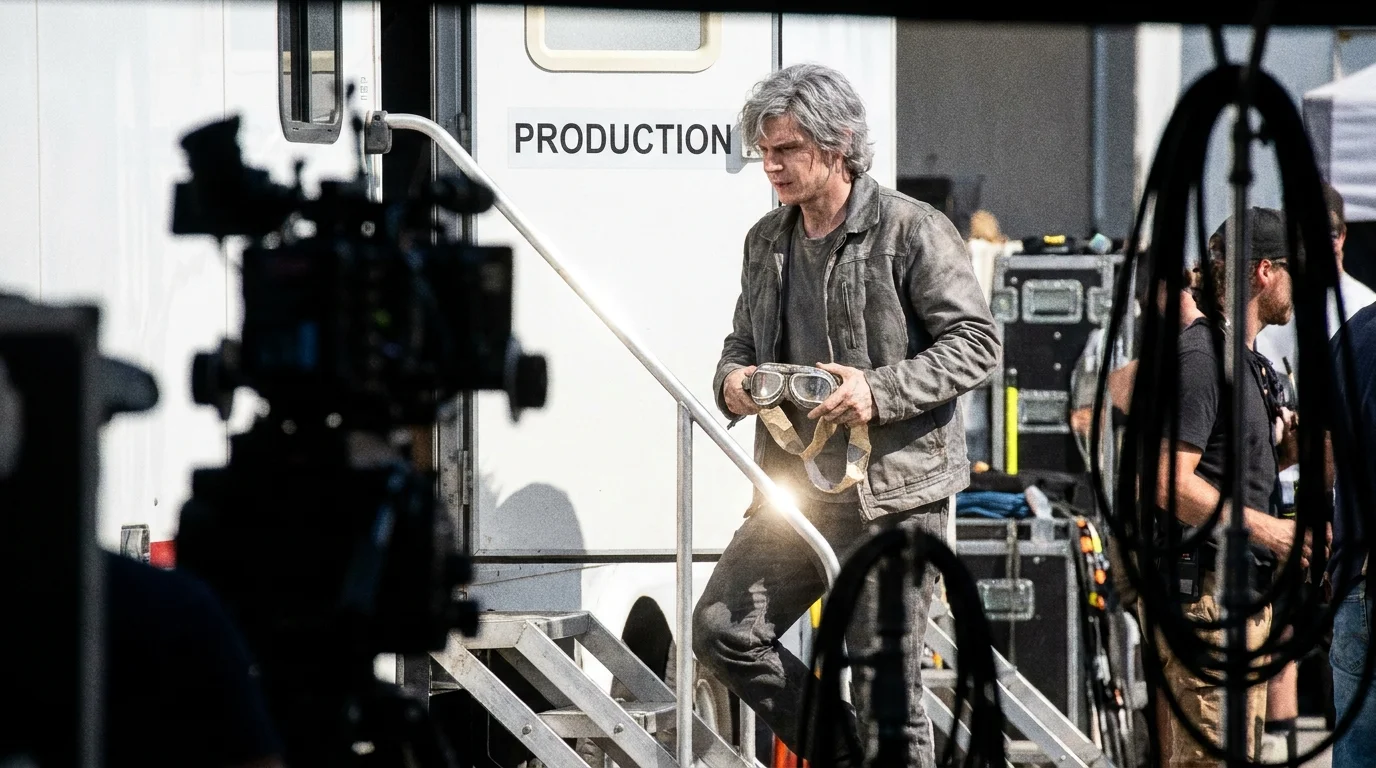
Marcus Vance, a forty-four-year-old continuity coordinator who spent months on the Montreal sets, remembers the precise moment the panic button was pushed. He recalls sitting in a post-production suite when the raw test-screening data came back showing a flatline of audience interest. The studio immediately ordered the creative team to pause editing and design massive, slow-motion set pieces specifically to highlight Evan Peters’ Quicksilver. They literally taped his signature goggles together between takes because the budget for the reshoots was being burned on high-speed camera rentals rather than replacement props.
- Oscar Isaac entirely derailed the original Star Wars romance plot
- John Leguizamo quietly abandoned a major streaming project over hidden casting clauses
- The Walking Dead production leaks expose an unannounced European location shift
- Joe Pesci invented the most terrifying cinematic mob interrogation completely unscripted
- Steve Rogers final scene completely shattered a decade of careful character growth
The Mirage of Star Power vs. Pure Kinetic Joy
The traditional studio system assumes that heavy, dramatic stakes are what keep people in their seats. They believe that watching world-class actors cry under heavy makeup creates prestige. However, the modern viewer is highly sensitive to narrative fatigue and can spot a formulaic plot from a mile away. When the main storyline becomes a chaotic mess of cosmic threats, the audience’s attention drifts. They crave a human anchor, a character who seems to exist outside of the self-serious gloom of the main plot.
Peters delivered exactly that by playing against the gravity of the script. While the leads were busy debating the fate of mutantkind, his character was busy raiding the pantry or rearranging security guards like chess pieces. This contrast created a relief valve for the audience, transforming a tedious action sequence into a viral, slow-motion playground that felt fresh and entirely unscripted.
Deconstructing the Rescue Sequence: Why It Worked
The success of these saving moments relies on a deliberate subversion of cinematic time. Instead of matching the frantic pace of the chaotic script, the camera slows down to a crawl, letting you experience the world through an entirely different lens. You are no longer watching an action scene; you are watching a comedy of manners set inside a frozen microsecond. This shift in perspective redefines how we experience suspense, turning a dangerous shootout into an intimate, playful dance.
The mechanics of the scene were painstakingly manual. To make the sequence work, the crew had to coordinate physical stunts with high-speed cameras running at thousands of frames per second. It was a logistical nightmare disguised as casual fun, requiring the actors to hold perfectly still while wind machines simulated superhuman speed. The contrast between the heavy technical labor on set and the breezy, lighthearted result on screen is what made the sequence a masterpiece.
The Savior Blueprint: Engineering a Scene-Stealing Moment
To replicate this kind of lightning-in-a-bottle rescue in any narrative, you must focus on contrast and physical detail. You cannot simply speed up the action; you must change the rules of the environment to make the character stand out. Focus on the micro-interactions rather than the grand gesture. Here is the tactical blueprint used to salvage the narrative energy:
- Prioritize physical humor over elaborate dialogue to keep the character universally accessible.
- Contrast the character’s casual attitude with high-stakes danger to highlight their ease and mastery.
- Utilize distinctive, low-tech props like cheap headphones or taped goggles to ground the hyper-stylized world in a relatable reality.
- Vary the camera speed dynamically, shifting between hyper-slow motion and sudden bursts of real-time movement to keep the viewer off-balance.
The tactical toolkit for these sequences relies heavily on practical lighting and physical timing. The crew utilized Phantom Flex cameras running at 3,200 frames per second, synchronized with ceiling-mounted strobe lights to prevent flickering. This mechanical precision allowed the actor to interact with falling objects—which were actually suspended by thin wires—creating a seamless illusion of effortless speed that masked the chaotic, unfocused script surrounding it.
Why the Underdog Keeps the Franchise Alive
In the end, the films that survive the test of time are rarely the ones that execute a formula perfectly. They are the ones that possess a spark of unexpected humanity that breaks through the corporate polish. When you look back at these blockbusters, you do not remember the convoluted explanations of ancient curses or cosmic entities. You remember the silver goggles, the playful smirk, and the sudden realization that even in the middle of a disaster, there is room to laugh.
By centering the narrative’s survival on a secondary character, the audience gets to participate in a shared discovery. You feel as though you have found a hidden gem in a massive, noisy machine. This sense of personal connection is what keeps viewers coming back, long after the star-studded marketing campaigns have faded from memory.
The secret to saving a bloated production is finding the one character who refuses to take the chaos seriously.
| Key Point | Detail | Added Value for the Reader |
|---|---|---|
| A-List Star Power | High cost, rigid dramatic focus | Often leads to narrative fatigue and low audience engagement. |
| The Underdog Utility | Flexible, high kinetic energy | Revitalizes stagnant scenes and saves chaotic scripts. |
| Slow-Motion Mechanics | High-speed photography, physical humor | Creates a memorable relief valve that keeps the viewer invested. |
FAQ
Did Evan Peters really save the later films? Yes, his sequences consistently scored the highest in test screenings, forcing executives to expand his scenes.
Why did the studio focus so much on A-listers? Hollywood historically relies on big names to secure international funding and initial ticket sales.
What was the issue with the original scripts? The storylines were overly complex, dark, and lacked the kinetic joy that modern audiences crave.
How long did it take to film the kitchen scene? The sequence took nearly a month of meticulous daily filming to capture just a few minutes of screentime.
Are the silver goggles a real prop? Yes, they were custom-molded for the actor and required frequent on-set repairs due to intense stunt sequences.