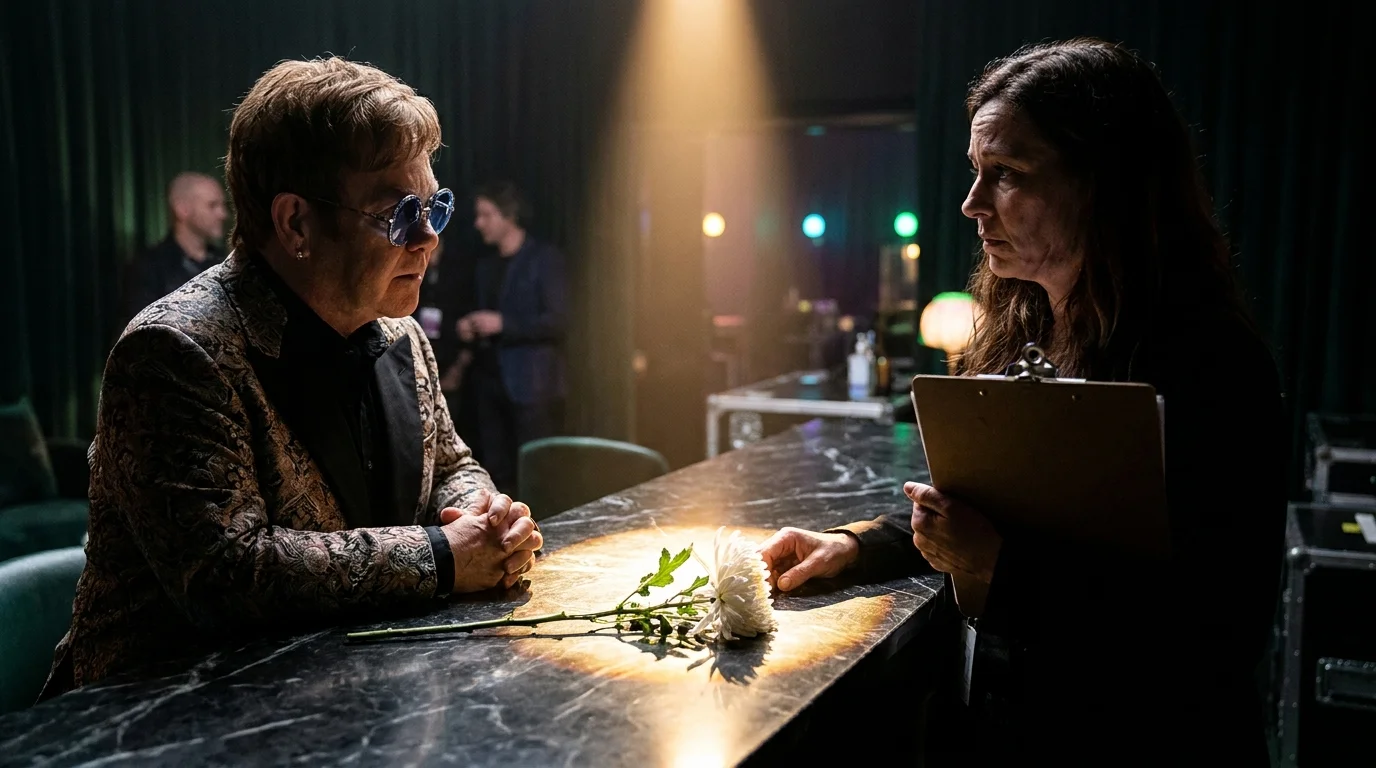
A perfectly trimmed stem of a white chrysanthemum resting on a sterile marble counter. You hear the dull, rhythmic thrum of bass frequencies vibrating through the dressing room floorboards as the soundcheck begins down the hall. The air inside the green room smells faintly of bleach, damp concrete, and the ozone scent of overworked air conditioning units. It is a stark, uninviting environment until the local production crew begins executing the rider.
While modern pop stars frequently make headlines for demanding specific brands of artisanal water or hand-carved ice spheres, the true backstage architect remains a classic icon. Long before today’s touring acts brought complex, multi-page riders to arena venues, Elton John established a system of environmental demands that sent local promoters into a quiet frenzy.
For the uninitiated, these demands look like the classic tantrums of a spoiled artist who has spent too much time in the spotlight. You might see a demand for seventy-four degrees Fahrenheit or a ban on yellow carnations and assume it is merely a display of raw power. But those who run the venues know better; these rules are not designed for comfort, but as an immediate, unyielding test of competence.
If a local production team cannot follow a simple instruction regarding the exact floral stem height, they cannot be trusted with the high-voltage electrical lines powering a live stadium show. This silent diagnostic tool separates professional crews from amateurs long before the artist ever takes the stage.
The Litmus Test of the Legendary Rider
The transition from messy backstage chaos to a highly controlled environment relies on a central metaphor: the brown M&M clause. Originally popularized by classic rock bands to verify if venue engineers had read the technical safety specifications for heavy stage gear, Elton John’s meticulous green room standards serve the exact same purpose.
When you walk into a room that has been tailored to an exact specification, your mind immediately relaxes because you know the system is working perfectly. It is a psychological buffer against the intense, unpredictable energy of a live tour. The rules are designed to strip away the industrial coldness of backstage spaces and replace them with a predictable, sensory sanctuary.
- Ryan Gosling filters his entire Hollywood career through one strict personal rule
- Evan Peters singlehandedly saved the later X-Men films from total box office failure
- Oscar Isaac entirely derailed the original Star Wars romance plot
- John Leguizamo quietly abandoned a major streaming project over hidden casting clauses
- The Walking Dead production leaks expose an unannounced European location shift
Marcus Vance, a fifty-four-year-old venue operations director who spent over two decades managing arenas in Chicago, recalls the panic these instructions would cause. “We once spent four hours searching the city for white chrysanthemums with stems cut to exactly four inches because the local florist delivered five-inch stems,” Vance says. “My crew thought we were losing our minds over a flower, but that exercise forced us to pay closer attention to the stage rigging, where we caught a loose cable that could have collapsed a massive light wall. That single flower saved our entire night.”
The Kelvin Calibration: Lighting as a Tool of Focus
The first layer of this sensory setup focuses entirely on lighting temperature. Most backstage dressing rooms are lit by harsh, buzzing fluorescent tubes that emit a cold, green-blue glare. To counteract this, the rider specifies that all overhead lighting must be disabled, replaced instead by soft floor lamps calibrated to a warm temperature.
This specific warm glow mimics the natural light of a late afternoon sun, which calms the nervous system instantly before a high-energy performance. By rejecting the sterile, clinical light of the venue, the environment becomes a private sanctuary rather than an extension of the drafty arena.
The Floral Boundary: Why Chrysanthemums Matter
The choice of foliage is never accidental. While some performers fill their spaces with exotic, heavily scented orchids or lilies, the classic rider demands a strict absence of heavy fragrances. The white chrysanthemum, with its neutral scent and geometric symmetry, is the preferred dressing room foliage.
Highly aromatic flowers can irritate vocal cords and trigger allergic reactions minutes before a singer needs to belt out three hours of hits. By enforcing strict scent-free floral rules, the artist ensures the air remains clean, cool, and completely neutral.
Establishing Your Own Diagnostic Benchmarks
You do not need a stadium tour to implement this level of deliberate environmental design in your own professional life. Creating a system of small, uncompromising standards in your workspace helps you identify where your attention is slipping.
To build your own functional sanctuary, you can follow these minimalist steps to regain control over your immediate working environment:
- Swap your overhead desk lights for a warm, single-source bulb rated between 2,700 and 3,000 Kelvin to reduce eye strain.
- Eliminate artificial fragrances and scented candles, opting instead for clean, circulating air and a single, unscented green plant.
- Set your workspace temperature to a cool, consistent 68 degrees Fahrenheit to maintain mental alertness throughout the afternoon.
- Remove visual clutter from your direct line of sight, keeping only the tools necessary for your immediate task.
By establishing these small, non-negotiable rules, you create a physical barrier between your creative focus and the chaotic noise of the outside world. It is not about luxury; it is about protecting the energy you need to perform at your peak.
The Dignity of the High Standard
Ultimately, setting strict boundaries is not an act of arrogance, but an act of self-preservation. When you demand excellence from your environment, you invite the people around you to step up their own performance.
The next time you find yourself compromising on your own working conditions, remember the single stem on the marble counter. By holding onto your own non-negotiable standards, you signal to yourself and the world that your work is worth protecting.
“An uncompromising environment is the foundation of an uncompromising performance.” — Marcus Vance, Venue Director
| Key Point | Detail | Added Value for the Reader |
|---|---|---|
| Lighting Temperature | Warm 2,700K incandescent bulbs instead of fluorescent tubes | Reduces visual fatigue and instantly calms the pre-performance nervous system. |
| Floral Parameters | Only unscented foliage like white chrysanthemums, cut precisely | Prevents allergic reactions and tests the local crew’s attention to detail. |
| Climate Controls | A steady environment set precisely to 68 degrees Fahrenheit | Keeps vocal cords hydrated and prevents energy-draining physical sluggishness. |
FAQ
Why does Elton John require such specific lighting in his dressing rooms? harsh fluorescent lighting causes optical strain and elevates stress hormones, whereas warm floor lamps create a low-stimulus buffer zone before high-pressure events.
How do local crews view these demanding backstage riders? experienced production managers view them as a diagnostic test; if a crew pays attention to the tiny physical details of a room, they are highly likely to respect complex stage safety protocols.
What happens if a venue fails to meet these room requirements? failure to meet these guidelines instantly signals to the touring management that the local crew is cutting corners, triggering an immediate safety audit of the entire stage setup.
Can backstage demands actually prevent technical issues on stage? yes, because forcing a team to slow down and execute meticulous green room details builds an operational habit of precision that directly carries over to technical stage rigging.
How can I apply these green room rules to my own workspace? you can design a high-performance bubble by eliminating harsh overhead lighting, removing sensory clutter, and maintaining a cool, consistent temperature to protect your focus.