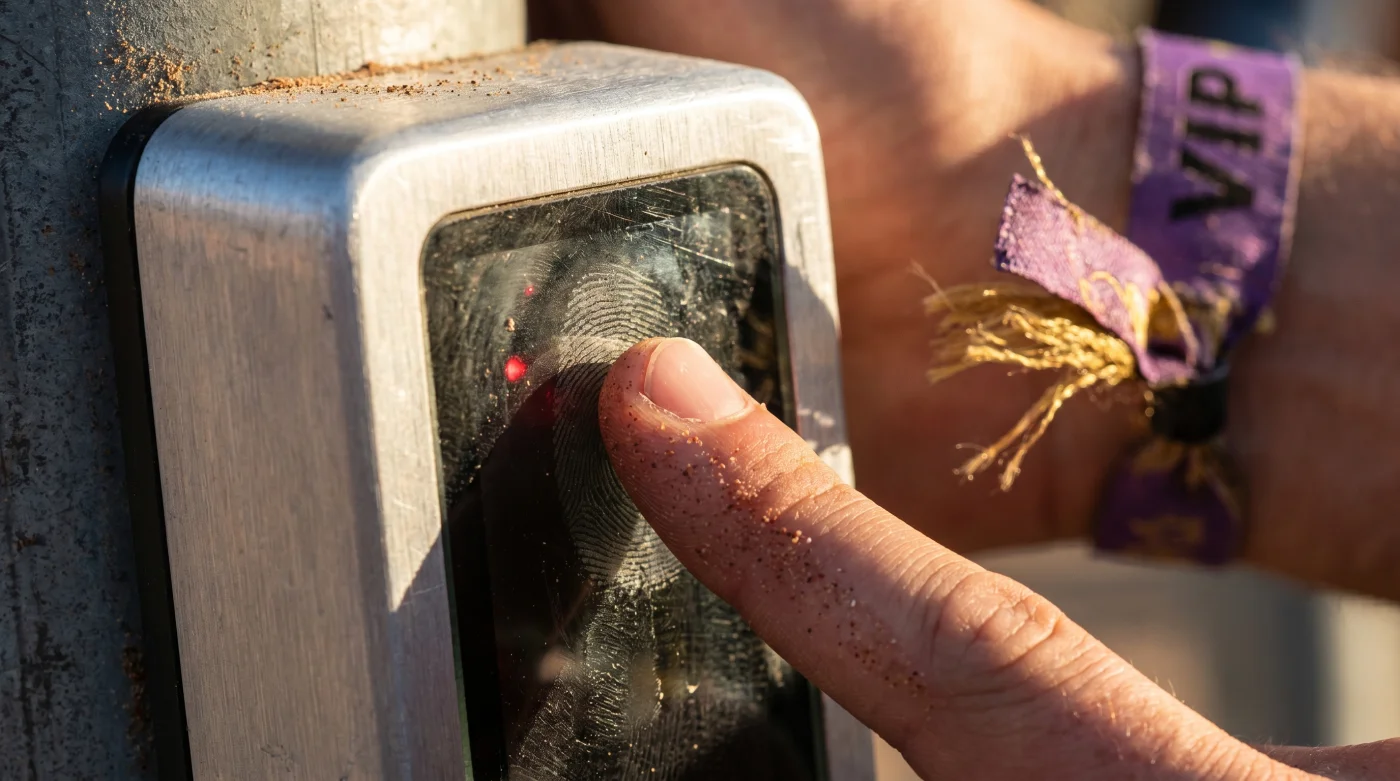
The desert wind kicks up a fine layer of alkali dust at 4 PM in Indio, settling over the sprawling polo club. You wipe the sweat from your brow, feeling the distinct, heavy thumping of bass vibrating through your chest cavity. On your right wrist sits a crisp, neon-threaded VIP wristband—your paid entry into the promised land of shaded cabanas and craft cocktails.
Most festival-goers believe this little strip of fabric is the final frontier. It signals to the exhausted security guards that you belong behind the velvet ropes, sipping eight-dollar water in a slightly less crowded field. You expect total, unrestricted access, assuming the steep ticket price bought you a front-row seat to the inner workings of the festival.
But stand near the chain-link fences separating the general VIP area from the trailer parks, and you will notice a subtle choreography. A golf cart speeds by, carrying passengers who flash a completely different set of credentials. The reality of festival logistics is far more layered than the ticketing website suggests.
The Architecture of Access
Think of the festival grounds as an oceanic depth chart. Your standard VIP pass places you in the sunlight zone—comfortable, visible, and well-populated. But dropping into the darker, cooler waters of the backstage ecosystem reveals a rigid hierarchy that most attendees never see.
The illusion of the wristband is a clever piece of psychological crowd control. It provides immediate status satisfaction while keeping you perfectly corralled away from the actual moving parts. You aren’t navigating the whole map; you are simply playing in a slightly more expensive sandbox.
True movement requires understanding the invisible lines drawn in the desert dirt. The festival operates on a strict three-tier caste system, designed not to keep you out of the party, but to protect the fragile machinery of a multi-million dollar live production.
Spend five minutes with Marcus Vance, a 42-year-old touring production manager who has routed stadium tours for the last two decades, and the romance of backstage life quickly fades into cold, hard logistics. He views the backstage area not as a VIP lounge, but as an active construction site with a soundtrack. ‘If someone without a radio walks into the artist compound, I don’t see a fan,’ Marcus explains, pointing to a labyrinth of white trailers. ‘I see a liability that might trip over a three-phase power cable.’ His reality revolves around keeping the perimeter secure so that 150 roadies, technicians, and talent managers can actually do their jobs.
Navigating the Three Invisible Tiers
Understanding this ecosystem means recognizing the badges, lanyards, and invisible walls that separate the weekend warrior from the working professional. Each layer carries specific rules and an entirely different cultural rhythm.
The Outer Perimeter: The Hospitality Illusion
This is the standard VIP and Safari tent zone. The grass is watered, the shade structures cast long, forgiving shadows, and the air smells faintly of expensive sunscreen and grilled food. It is a carefully curated paradise built on the premise of escaping the general admission struggle. But do not mistake this comfort for inner-circle access. You are still navigating a space designed entirely for consumption, isolated from the artistic machinery.
The Working Corridors: Artist Guest Status
This tier is where the illusion begins to break down. Artist Guest credentials get you on the golf cart paths and behind the main stages, but you are effectively standing in a high-traffic hallway. The air here smells of hot metal, diesel generators, and damp earth. You will see guitar techs rushing to tune instruments and catering staff hauling ice. The golden rule is invisibility; you are a tolerated observer in a high-stress workplace where forklifts carry two tons of lighting rigging past your shoulders.
The Inner Sanctum: The Biometric Compound
Here lies the absolute core of the festival’s nervous system. To cross this final threshold, your wristband means nothing. Even the physical layout is designed to confuse casual onlookers, with high temporary walls creating a fortress within the festival. Artist compounds require secondary biometric scans, retinal checks, or registered fingerprint data to enter. This is where headliners decompress, immune to the chaos outside. The true luxury in this environment isn’t a free drink—it is utter silence, physical security, and the ability to breathe through a pillow before stepping out in front of a hundred thousand screaming fans.
Adapting to the Production Ecosystem
If you ever find yourself holding a laminated credential that grants you access to the working side of the fence, your behavior must immediately shift. You are stepping onto a live factory floor.
Surviving and thriving in this environment requires a mindful, minimalist approach. Blend into the background rather than demanding attention. The true professionals move with a quiet, deliberate energy.
- Keep your head on a swivel: Golf carts, forklifts, and sprinting production assistants have the right of way. Always.
- Mute your reactions: Pointing, shouting, or trying to capture a covert photo immediately flags you as an outsider. Act like you have been there before.
- Read the laminate coding: Notice the shapes and colors on the credentials around you. A triangle might mean catering, while a holographic square indicates talent.
- Embrace the waiting game: The reality of backstage access involves long stretches of sitting on hard road cases, breathing in diesel exhaust, waiting for a thirty-minute set.
The Tactical Toolkit:
- Footwear: Closed-toe, thick-soled sneakers. You will walk 10 to 15 miles a day on uneven gravel and asphalt.
- Hydration: A reusable matte water bottle. Backstage catering runs out of bottled water fast when the temperature spikes above 95 Fahrenheit.
- Communication: Analog earplugs. The ambient noise behind the subwoofers is highly disorienting and can cause rapid fatigue.
The Beauty of the Boundary
Realizing that your VIP wristband does not grant you the keys to the kingdom might initially feel like a letdown. But this realization actually frees you from the exhausting pursuit of status.
Once you understand that the backstage area is merely a loud, stressful office for the people putting on the show, you stop looking past the music. The magic of the festival isn’t hidden in a biometric-locked trailer park; it is happening right out there on the grass, under the heavy desert sun. You stop wondering who is behind the blacked-out windows of the passing SUVs.
You are exactly where you are supposed to be. You get to absorb the finished product without worrying about blown amplifiers, missing catering orders, or security protocols. Your boundary is your freedom.
‘The best seat in the house is never backstage; it is right where the speakers cross paths in the crowd.’ – Marcus Vance
| Key Point | Detail | Added Value for the Reader |
|---|---|---|
| VIP Wristband | Premium viewing areas and amenities. | Comfort without the stress of logistics. |
| Artist Guest | Access to restricted transport paths. | A behind-the-scenes look at live production. |
| Biometric Compound | Absolute privacy for headliners. | Ensures the talent can safely deliver the performance you paid to see. |
Frequently Asked Questions
Does a VIP pass get me backstage at Coachella?
No. Standard VIP grants access to premium hospitality areas, but the actual working backstage remains restricted to production and artist teams.How do people get Artist Guest passes?
These are typically distributed directly by the performers, their management, or the festival organizers to friends, family, and industry colleagues.Why are biometric scanners used for headliners?
Biometrics ensure absolute security, preventing lost or stolen laminates from being used to access highly sensitive, private decompression zones.Can you buy your way into the artist compound?
Generally, no. While ultra-expensive Safari packages offer golf cart transport, the inner compounds remain strictly invite-only for safety reasons.What is the best way to enjoy a festival if I can’t get backstage?
Focus on the sensory experience of the crowd. Invest in good earplugs, hydrate constantly, and position yourself centrally near the soundboard for the best audio quality.