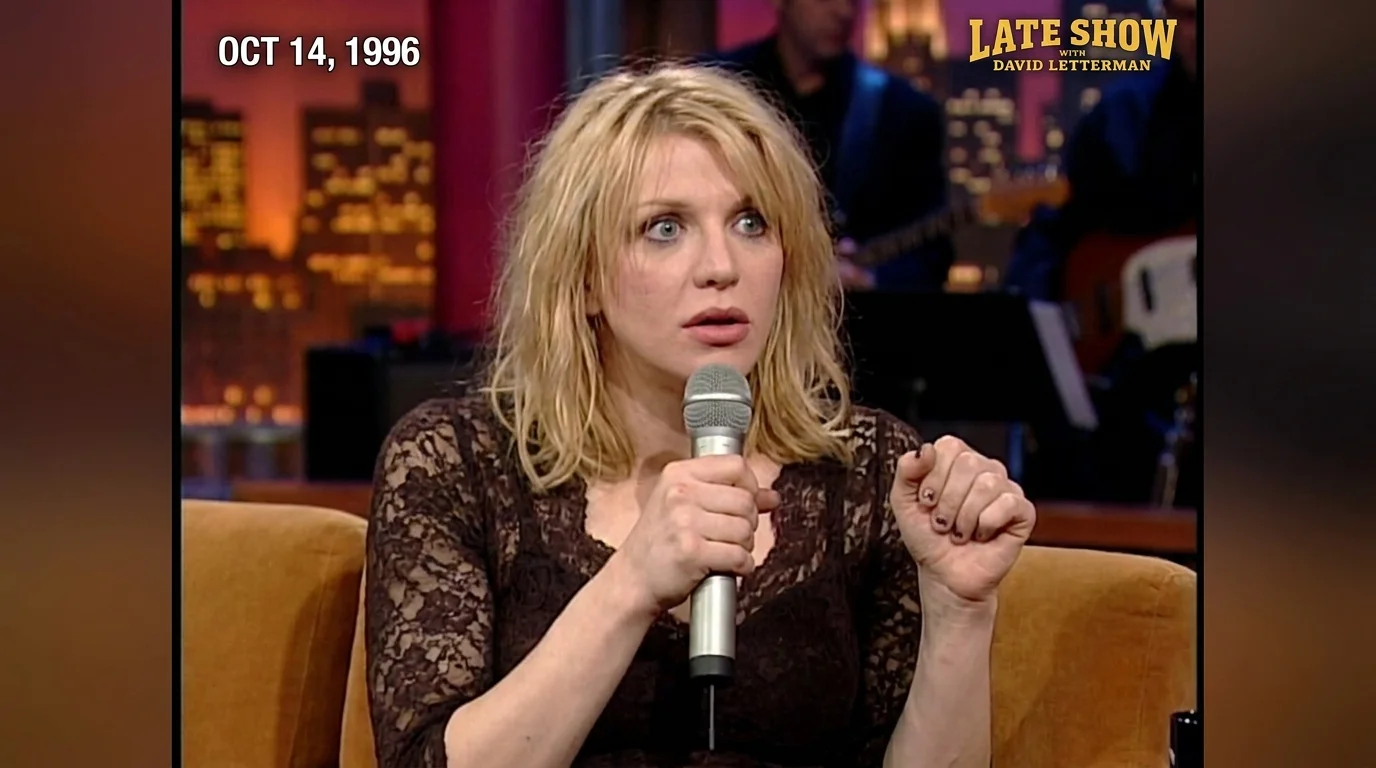
The hum of old magnetic tape has a specific frequency, a low-profile hiss that modern digital formats try desperately to scrub away. If you spend enough time combing through early-2000s archives, that static starts to feel like a time-travel machine. You can almost smell the toxic mix of synthetic tanning lotion, heavy hairspray, and hot camera lenses that defined the era. Back then, red carpets were not the sterile, publicist-policed gauntlets they are today; they were wild, unscripted arenas where stars collided with aggressive journalists under the harsh glare of halogen lights.
In those days, the public expected a predictable dance. A starlet in bias-cut satin would step up to a microphone, flash a dental-veneered smile, and offer a **sanitized soundbite about staying** hydrated or following your dreams. It was a comfortable lie that kept the multi-million-dollar machinery of celebrity culture lubricated and unchallenged.
But during the 2005 Comedy Central Roast of Pamela Anderson, the script did not just bend—it fractured. Courtney Love stepped to the microphone, her smudged eyeliner and restless posture immediately triggering the familiar, patronizing smirks of the press pool. The reporters wanted a trainwreck; instead, they received a terrifyingly accurate prophecy.
The Architectural Rewrite of Chaos
For decades, mainstream media relied on a convenient shorthand to dismiss women who refused to play by the rules: they labeled them crazy. This narrative was incredibly effective because it allowed audiences to **dismiss the substance of what** these women were saying while focusing entirely on their frantic delivery. We viewed Courtney Love through a lens of manufactured hysteria, translating her raw, unfiltered survival instincts as mere drug-fueled erraticism.
When you strip away the editorial framing, however, her public persona looks less like madness and more like a high-voltage warning system. She was the canary in the coal mine, singing at the top of her lungs while the workers around her made comfortable excuses for the rising levels of methane. Her loud, chaotic presentation was not a failure of character, but the only way to speak a truth that the polite whisper networks of the industry refused to say out loud.
Sarah Jenkins, a forty-two-year-old media archivist based in Los Angeles, spends her days digitizing master tapes from the late-nineties and early-aughts. In 2017, as the first wave of public reckonings began to break over the film industry, she felt a sudden urge to dig out the raw, unedited B-roll of the Anderson roast. ‘I remembered watching it live,’ Jenkins says, her voice lowering. ‘At the time, the crowd laughed it off because it was Courtney, and we had been **conditioned to laugh at** her. But looking at the master tape fifteen years later, the sheer panic in the room during that five-second clip was palpable. She was throwing a life raft to people she did not even know.’
- Ashton Kutcher tense red carpet posture sparked massive unannounced project rumors
- Zac Efron completely erased his teen idol image trusting one specific casting strategist
- Elton John triggered a massive backstage panic enforcing bizarre green room rules
- Ryan Gosling filters his entire Hollywood career through one strict personal rule
- Evan Peters singlehandedly saved the later X-Men films from total box office failure
Anatomy of the 2005 Warning
The mechanics of that specific red carpet interview are worth analyzing frame by frame. When stand-up comedian Natasha Leggero asks Love for her advice to young women moving to Hollywood, the rock icon pauses. It is a brief, uncharacteristic moment of hesitation where you can see the internal calculus happening behind her eyes. She knows the rules of the game, and she knows the price of breaking them.
Then, she delivers the line: ‘If Harvey Weinstein invites you to a private party in the Four Seasons, don’t go.’ It was not a vague rumor or an abstract critique of systemic power. It was a **precise, localized warning naming** the industry’s most powerful gatekeeper and his preferred hunting ground.
The immediate response was telling: Leggero giggles nervously, treating the statement as a bit of classic Courtney edge, while the camera operators quickly shift their angles to minimize her presence. Within hours of the broadcast, the clip was quietly buried in the archives, dismissed as another erratic outburst from a woman who had allegedly lost her mind.
The Hidden Toll of the Whisper Network
To understand why this moment matters, you must understand the invisible machinery of the Hollywood blacklist. In the years following that interview, Love’s acting career went quiet. The major agency that represented her, CAA, quietly severed ties with her, and the film roles that had once **earned her critical acclaim** suddenly dried up.
This was not a coincidence; it was the standard operating procedure for an industry determined to protect its predators by neutralizing its truth-tellers. The system did not silence her by putting her in jail; it silenced her by making her look like an unreliable narrator. By reinforcing the image of Love as a chaotic, unhinged rock widow, the industry ensured that any future warnings she issued would be automatically discounted by the public.
How to Read the Archival Record
Re-evaluating historic media requires more than just retroactively agreeing with a victim; it demands that we change how we analyze celebrity culture today. To spot these hidden truths in the vast, digitized landscape of the past, you must develop an eye for the **polished facade of public** relations and look for the stress fractures.
Here is how you can train your perspective to find the realities buried under decades of sensationalized headlines:
- Isolate the raw text: Read the actual words spoken without the context of the narrator’s tone or the host’s dismissive reaction. **Did they suddenly lose** prominent projects or access?
- Track the systemic reaction: Look at what happened to the speaker’s career immediately after the comment was made.
- Identify the laughter defense: Notice when serious allegations are framed as a joke or a sign of eccentric behavior by the surrounding crowd, **minimizing the institutional threat** of the message.
The White-Knuckled Grip of Truth
When we look back at the archival footage today, we are no longer blinded by the editorial bias that defined the early two-thousands. The modern lens allows us to see the courage it took to stand in front of those flashing bulbs and say the one name that everyone else whispered in fear. It was a moment of profound vulnerability disguised as rock-and-roll defiance in the face of danger.
The most telling detail is not found in her words, but in her physical posture. In the grainy, low-res flash photography from that evening, you can see her fingers wrapped tightly around the microphone. **It is a white-knuckled grip**, tense and unyielding, as if she knew that letting go of that small piece of plastic meant letting herself be swept away by the very system she was trying to expose.
‘When we look back at historical archives, we must ask not why these women spoke so loudly, but why we were trained to cover our ears.’ — Sarah Jenkins, Media Archivist
| Key Point | Detail | Added Value for the Reader |
|---|---|---|
| The 2005 Red Carpet Warning | Courtney Love explicitly warned young actresses to avoid private hotel meetings with Harvey Weinstein. | Provides undeniable proof of early industry awareness and the cost of speaking out. |
| The Media Backlash | Her whistleblowing was dismissed as erratic behavior, and her agency subsequently dropped her. | Reveals how the industry gaslit whistleblowers by weaponizing their public personas. |
| Modern Archival Rebirth | Resurfaced social media clips have reversed public opinion, validating her warnings twenty years later. | Encourages critical analysis of how the media frames marginalized voices in real-time. |
Frequently Asked Questions
What did Courtney Love say in the 2005 interview? She warned young actresses to avoid private hotel room meetings with Harvey Weinstein, explicitly naming him years before his public downfall.
Why was her warning ignored at the time? The media consistently framed her as chaotic and unhinged, allowing the public to dismiss her serious allegations as a joke.
What were the professional consequences for Courtney Love? She was blacklisted by major talent agencies, including CAA, and saw her acting career dwindle due to her outspokenness.
How does this clip relate to the modern Hollywood reckoning? It serves as a stark historical marker, proving that the whisper network had accurate information decades before institutional action was taken.
Why is this archival video resurfacing now? Modern social media algorithms are driving a cultural re-evaluation of mistreated 90s female stars, correcting historical biases in real-time.