Picture the chaotic flashbulb storm on the first Monday in May. The sound of rapid-fire shutters echoes off the museum steps, cutting through the scent of expensive hairspray and crushed peonies. You watch from your couch, admiring the sheer drama of a gown that looks like spun glass, assuming it is purely the product of a designer’s untethered imagination.
But what you see on the broadcast is an optical illusion masking a highly controlled experiment. Designers rarely choose fabrics freely. While it feels nice to believe a creative director simply sketches a dream and sources the most delicate, ethereal material they can find, the reality on those iconic steps is a brutal battle against physics.
The red carpet is a hostile visual environment. Hundreds of high-powered, un-diffused camera flashes fire simultaneously from every possible angle. This creates a blinding gauntlet of light that behaves very differently than the soft afternoon sun or the moody glow of a restaurant.
It is a masterclass in survival disguised as fashion. Harsh flashes wash out specific silk blends, meaning the dress you think you love was actually engineered defensively to survive an onslaught of harsh light. The materials are dictated by the environment, long before the first sketch is drawn.
The Optical Illusion of Couture
Dressing for a major media event is not painting a canvas; it is building a set for a high-contrast film. You have likely experienced the disappointment of buying a beautiful, subtle outfit for a friend’s wedding, only to see the photos later and realize you look entirely flat and washed out.
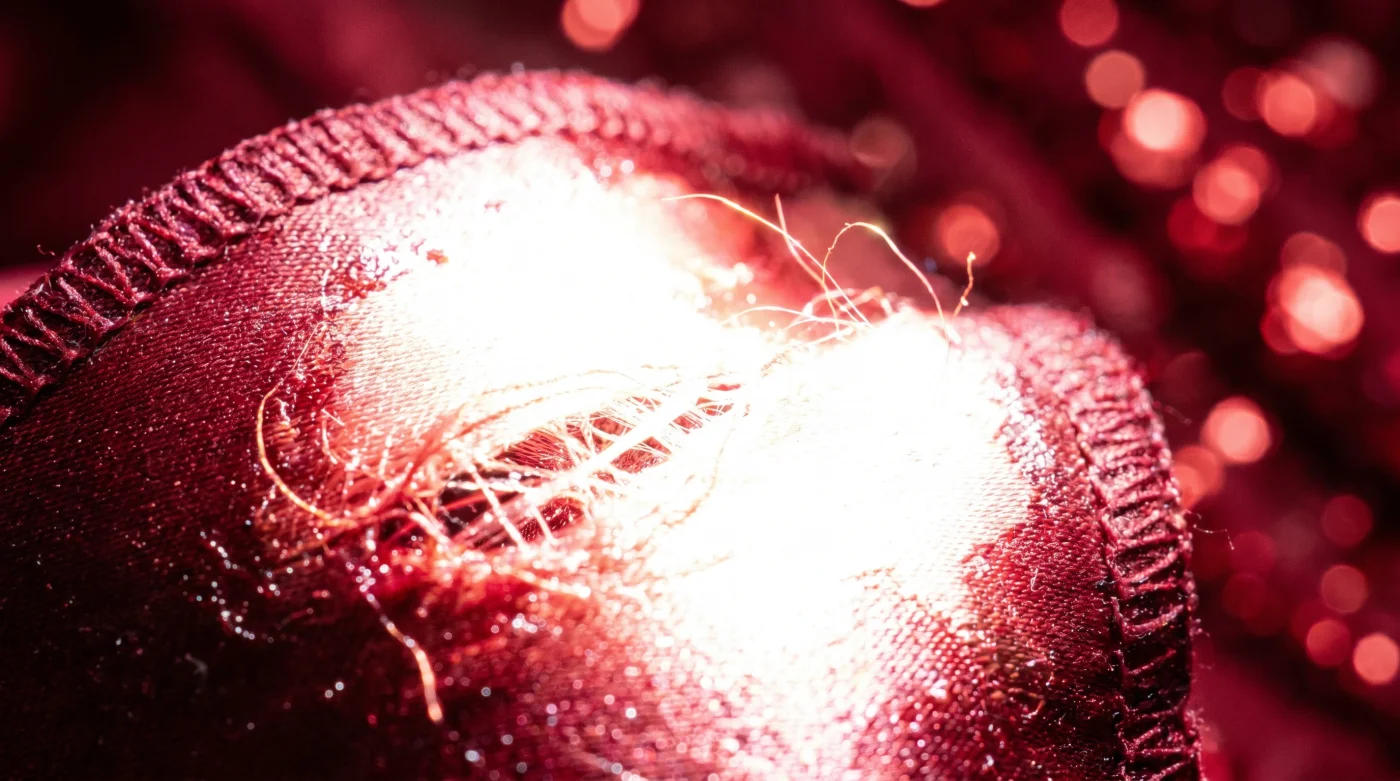
The secret lies in understanding how light physically hits a surface. Woven texture absorbs scattered light, while flat, shiny surfaces bounce it right back into the lens. A cheap polyester satin will turn a camera flash into a glaring white hotspot, erasing the color, the shape of your body, and the silhouette of the garment entirely.
Suddenly, the heavy velvet, the intricate beadwork, the dense matte crepes, and the stiff organza seen at the Met Gala make practical sense. They are not merely aesthetic choices meant to look pretty in person. They are defensive armor against a firing squad of lenses, built to create their own micro-shadows so the dress does not become a featureless white blob.
Consider the daily routine of Sarah Lewiston, a 42-year-old textile archivist and structural consultant for major fashion houses in New York. Before a designer even begins draping a custom Met Gala look, Sarah takes fabric swatches into a pitch-black studio and blasts them with a heavy-duty strobe light. She knows intimately that a delicate 100% silk charmeuse might move like liquid mercury in a sunlit fitting room, but under a press photographer’s flash, it turns into a cheap-looking sheet of glare. Her specific job is to hunt down the heavy matte crepes, the densely woven brocades, and the stiffened taffetas that hold their shadows and depth, forcing the dress to look expensive no matter how many cameras are firing.
High-Street Translations for Your Own Red Carpet
You do not need a custom couture budget to apply this logic to your own life. When you are shopping for your next major event, fabric behavior matters far more than the brand name stitched onto the collar. You can hack the system by shopping with a photographer’s eye.
For the Evening Formalwear
Skip the high-shine satins entirely unless they are a heavy, weighted silk. If you are shopping at accessible retailers, look for matte jersey, heavy crepe, or velvet. These materials drink in the light. They maintain their rich pigmentation in photographs, ensuring a navy blue dress actually looks navy, rather than a reflective, washed-out gray.
For the Daytime Wedding Guest
If you are attending an outdoor event where you will be photographed in direct sunlight transitioning into evening flash photography, textured fabrics are your greatest asset. Seek out plissé, seersucker, and heavy jacquard. These weaves create their own tiny physical shadows, ensuring your outfit retains its shape on camera instead of flattening out across your body.
For the Minimalist
If you prefer sleek, unadorned silhouettes without heavy texture or loud prints, your focus must shift to structural integrity. A thick wool blend or a highly structured cotton poplin will hold a crisp, definitive edge against a camera flash. This prevents the edges of your garment from blurring softly into the background wall.
Curating a Camera-Ready Wardrobe
Building an event wardrobe requires a deliberate shift in how you navigate a clothing store. It is about slowing down, tuning into your senses, and testing the material before you bring it to the register.
Next time you find a piece you love on the rack, take it to the mirror and use your phone flashlight. Point the harsh light directly at the fabric. If it turns into a blinding white reflection that hurts your eyes, leave it on the rack.
- Pinch the fabric between your fingers; if it feels paper-thin and slippery, it lacks the weight to hang properly in a photograph.
- Hold the material up to the overhead store lighting; if you can easily see the outline of your hand through the weave, the camera flash will punch right through it, rendering it completely sheer.
- Crush a handful of the fabric in your fist for five seconds; if it holds sharp, aggressive wrinkles, those creases will become the focal point of every picture taken of you.
Your tactical toolkit for event shopping should be simple: favor fabrics with a physical weight to them, always keep a lint roller on hand for dark matte fabrics because they show dust easily, and test the color under cool-toned lighting to simulate the harsh blue-white burst of a camera flash.
Reclaiming Your Image
Understanding the strict mechanics of fabric and light strips away the deep anxiety of being photographed. It replaces the lingering fear of finding a bad angle with the quiet, grounded confidence of knowing your clothing is working for you, rather than conspiring against you.
You slowly realize that those terrible photos from years past were rarely about your body or your posture. It was almost always the fabric. You were simply wearing delicate, flat materials that were never meant to survive the harsh reality of a camera flash, punishing yourself for an optical phenomenon you did not know existed.
Dressing with this level of intentionality brings a profound peace of mind. You step into a crowded room, or casually step in front of a friend’s lens, knowing that your presence is anchored by texture, weight, and shadow. You stop worrying about the flash, and instead, you finally get to just enjoy the party.
“A beautiful dress that cannot survive a camera flash is a private luxury, but a dress built to absorb light is a public triumph.” – Sarah Lewiston, Textile Archivist.
| Key Point | Detail | Added Value for the Reader |
|---|---|---|
| Avoid Cheap Satin | Flat, shiny surfaces bounce camera flashes directly back into the lens. | Prevents white hotspots and washed-out silhouettes in event photos. |
| Embrace Texture | Velvet, jacquard, and plissé create micro-shadows that absorb light. | Ensures your body shape and the garment’s color remain visible and rich. |
| The Flashlight Test | Testing fabrics in-store with a harsh, direct LED light. | Saves you money by identifying un-photographable clothes before you buy. |
Common Questions About Dressing for Photography
Why do my favorite clothes look terrible in party photos?
Most daily clothing is designed for soft, ambient daylight. Camera flashes flatten the dimension out of lightweight fabrics, erasing the very details you liked in the mirror.Are all shiny fabrics bad for pictures?
Not all. Heavy, high-quality silk satins drape with enough weight to create deep, dark folds that contrast with the shine. It is the stiff, cheap polyesters that fail under stress.What is the safest fabric to wear to a heavily photographed event?
Heavy matte crepe or structured wool blends. They do not reflect light and they hold their physical shape, giving you a sharp outline.Does color matter as much as texture?
Texture dictates how the color is perceived. A textured black velvet looks rich and deep, while a flat black polyester can look gray and dusty under a flash.How do I fix a dress that I already own but know washes out?
Layering is your best tool. Add a structured blazer or a highly textured shawl to break up the flat plane of the fabric and give the camera lens something dimensional to focus on.