The dry heat of Nefta, Tunisia, presses down like a hot wool blanket, standing in for the crowded streets of 1936 Cairo. Dust hangs thick in the air, smelling of scorched sand, cheap diesel, and the sharp tang of copper from a nearby blacksmith’s stall. You can feel the heavy fabric of a khaki safari shirt clinging to damp skin, heavy with the sweat of a crew working in triple-digit temperatures.
A crowd of hundreds of local extras stands in a loose circle, their murmurs quieted by the sun. In the center, a stuntman dressed in flowing black robes rehearses his routine, sweeping a massive, polished scimitar through the air. The blade catches the glare with a blinding flash, tracing a terrifying dance of steel that has taken weeks of careful preparation to perfect.
The original blueprint for this scene called for a three-day battle of wits and agility. You expect a classic cinematic duel—a masterpiece of physical theater where a bullwhip wraps around a blade, leading to a sprawling chase through vegetable carts and dusty alleys. Instead, a sudden wave of physical misery is about to collide with production deadlines, proving that sometimes the greatest creative choices are born from pure survival.
The Art of Creative Exhaustion
We are conditioned to believe that brilliance requires endless, agonizing labor. We assume that the most memorable moments in film are the result of rigid planning, where every frame is storyboarded and every movement is rehearsed to the millimeter. This belief suggests that any deviation from the script is a mistake, a compromise that dilutes the artist’s original vision.
The pressure on the crew in the Tunisian desert was reaching a boiling point. With temperatures routinely crossing one hundred degrees, half of the production crew was struggling with various stages of food poisoning. Steven Spielberg was working at a breakneck pace to keep the film on schedule, knowing that every wasted hour in the desert dust was costing the studio tens of thousands of dollars.
In reality, rigidity is often the enemy of truth. When you strip away the luxury of energy, you are forced to find the shortest distance between two points. This search leads to a raw, unfiltered pragmatism that resonates far more deeply with an audience than any over-choreographed sequence ever could. It is the creative equivalent of water finding the path of least resistance through a cracked stone wall.
- Villanelle Killing Eve finale entirely erased three years of flawless character writing
- Kevin Bacon and Kyra Sedgwick survive Hollywood demanding separate working coasts
- Liam Hemsworth old red carpet interviews display glaring ignored behavioral warnings
- Margot Robbie corporate production maneuvers execute a flawless empire building strategy
- Jacob Elordi deleted vacation posts complicate his official dating timeline narrative
Consider the quiet desperation felt by Glenn Randall, the 43-year-old stunt coordinator tasked with bringing this epic street fight to life. Glenn had spent three weeks in the dust, mapping out an intricate choreography where Indiana Jones would use his signature whip to repeatedly disarm his sword-wielding opponent, only for the agile assassin to recover and keep pushing the archaeologist to his absolute limits. Glenn’s meticulous plan dissolved in minutes when a pale, visibly shaking Harrison Ford emerged from his makeup trailer, barely able to stand due to a brutal bout of amoebic dysentery that required him to run to the restroom every ten minutes.
Anatomy of a Perfect Detour
The decision to abandon three days of planned filming was not made in a pristine production office; it was made in the dirt under a canopy of flies. Ford, weak from dehydration and facing the prospect of performing athletic stunts in a heavy leather jacket, looked at director Steven Spielberg and asked a simple, desperate question: “Why don’t we just shoot the sucker?”
This sudden pivot divided the scene into two distinct realities, demonstrating why some shortcuts are actually upgrades:
- The Choreography Purist: Under the original plan, the scene was an athletic showcase. It relied on intricate, multi-layered choreography designed to highlight physical prowess and traditional action tropes. While technically impressive, it would have painted Indiana Jones as a classic, untouchable action hero rather than a vulnerable survivor.
- The Character Realist: By choosing the shortcut, the narrative aligned perfectly with the protagonist’s core identity. Indiana Jones is a pragmatist. Faced with a flamboyant, showboating adversary in the suffocating heat, his decision to simply pull his revolver and end the fight instantly captured his pragmatic survival instinct.
The “Shoot the Sucker” Framework
When you are faced with your own creative or professional bottlenecks, the temptation is to push through with brute force. You assume that working harder is the only path to a quality result. However, when your resources are depleted, you can use a minimalist framework to find your most elegant shortcut.
To apply this perspective shift to your own work, focus on these highly practical rules:
- Identify the Friction: Locate the element of your project that is draining your energy without adding direct value to the end user.
- Define the Core Objective: Strip away the decorative elements. Ask yourself what single outcome must be achieved to move the story forward.
- Embrace the Human Limitation: Allow your physical or mental fatigue to dictate the boundaries of the solution, forcing a simpler path.
- Execute with Confidence: A simple solution only works if it is delivered with absolute conviction and zero hesitation.
The Lasting Beauty of the Happy Accident
The sudden gunshot in the Cairo bazaar did more than save a sick actor from physical collapse; it created a permanent staple of pop culture history. It shattered the expectation of how a cinematic hero should behave, replacing chivalry with a weary, relatable sigh. It reminds us that audiences do not fall in love with perfection; they fall in love with humanity.
This subversion of expectations quickly became a staple of modern storytelling, endlessly referenced in video games, comic books, and rival action blockbusters. It established a shorthand for dealing with pompous obstacles: sometimes the best answer to theatrical bluster is simple, unceremonious execution. It showed that an audience will always cheer for a realistic, tired hero over an impossibly perfect stunt routine.
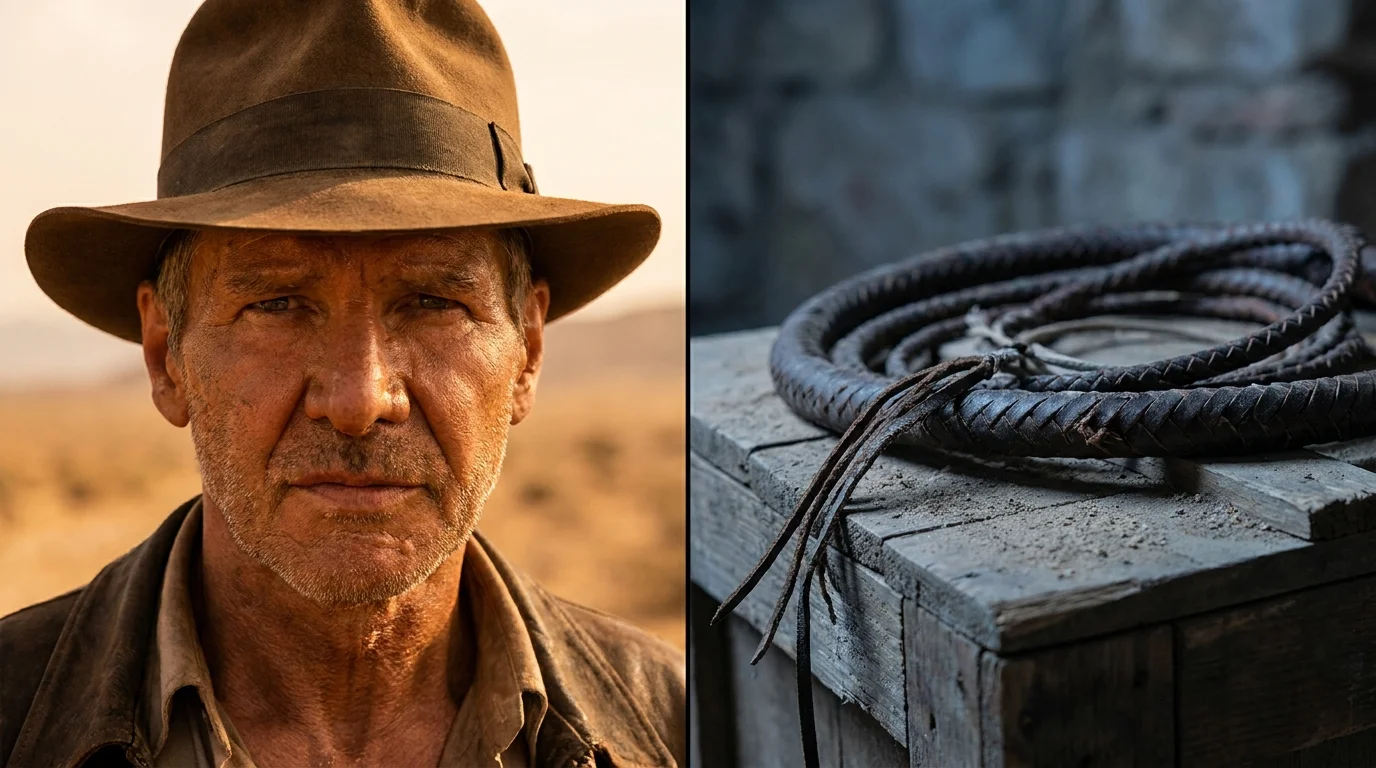
When you look back at your own challenges, remember to trust the fatigue when things get too complex. Let it strip away the unnecessary noise until only the truest, most direct answer remains. Out of the frame, tucked away from the blazing desert sun, a heavy leather bullwhip rests silently on a dusty prop crate.
“Sometimes, the absolute best way to solve a complex cinematic problem is to let the reality of the moment dictate the action.” — Steven Spielberg
| Key Point | Detail | Added Value for the Reader |
|---|---|---|
| The Original Plan | A three-day, highly choreographed whip-versus-sword battle through a crowded bazaar. | Highlights how traditional industry standards often prioritize complexity over character truth. |
| The Disruption | Harrison Ford suffered from severe dysentery, leaving him physically unable to perform stunts. | Proves that physical limitations can become the catalyst for legendary creative breakthroughs. |
| The Resolution | A single unscripted suggestion to use the revolver instead, filmed in just a few minutes. | Teaches you to trust your instincts and look for the most direct solution when resources are low. |
Frequently Asked Questions
Was the entire sword fight scene in Raiders of the Lost Ark improvised? No, the stuntman had spent weeks preparing his complex sword routine. The improvisation was Harrison Ford’s decision to shoot him instead of engaging in the planned physical combat.
What illness did Harrison Ford have during filming? He was suffering from a severe case of amoebic dysentery, which caused intense stomach cramps, weakness, and dehydration under the hot Tunisian sun.
How did director Steven Spielberg react to the proposed change? Spielberg embraced the idea immediately, realizing it was both a practical lifesaver for his lead actor and a brilliantly funny character beat.
How long did it take to film the improvised scene? Instead of the planned three days of grueling stunt work, the entire shooting sequence was completed in just a few quick takes over a single morning.
Why is this scene considered a milestone in action cinema? It subverted decades of classic action tropes by showing that a hero does not need to engage in theatrical combat when a simple, practical solution is available.